Arthritis: Reversing Inflammation and Metabolic Load — Reducing Medication and the Need for Surgery, with CSLC-CAP in Kochi
Arthritis: Reversing Inflammation and Metabolic Load — Reducing Medication and the Need for Surgery, with CSLC-CAP in Kochi
- Dr Jolly Thomson MBBS MD
- August 18, 2026
- 0 Comments
Three people arrive with the same word written on their file. The first has taken medicines for rheumatoid arthritis for sixteen years, is tired of what they do to her, and wants to know whether there is any way out of them. The second has been told his knee has reached the stage where replacement is the only option left, and is not ready. The third has been through rheumatology, orthopaedics and ayurveda, is still in pain, and has quietly concluded that this is simply how the rest of life is going to be.
This article is written for those three people. It is not a list of healthy habits, and it is not the general advice about diet and exercise that already appears in every article on arthritis. It is an account of what changes when lifestyle correction is done as structured clinical treatment — measured, supervised, and checked against reports — and, just as importantly, of what does not change, because that is the part patients are rarely told.
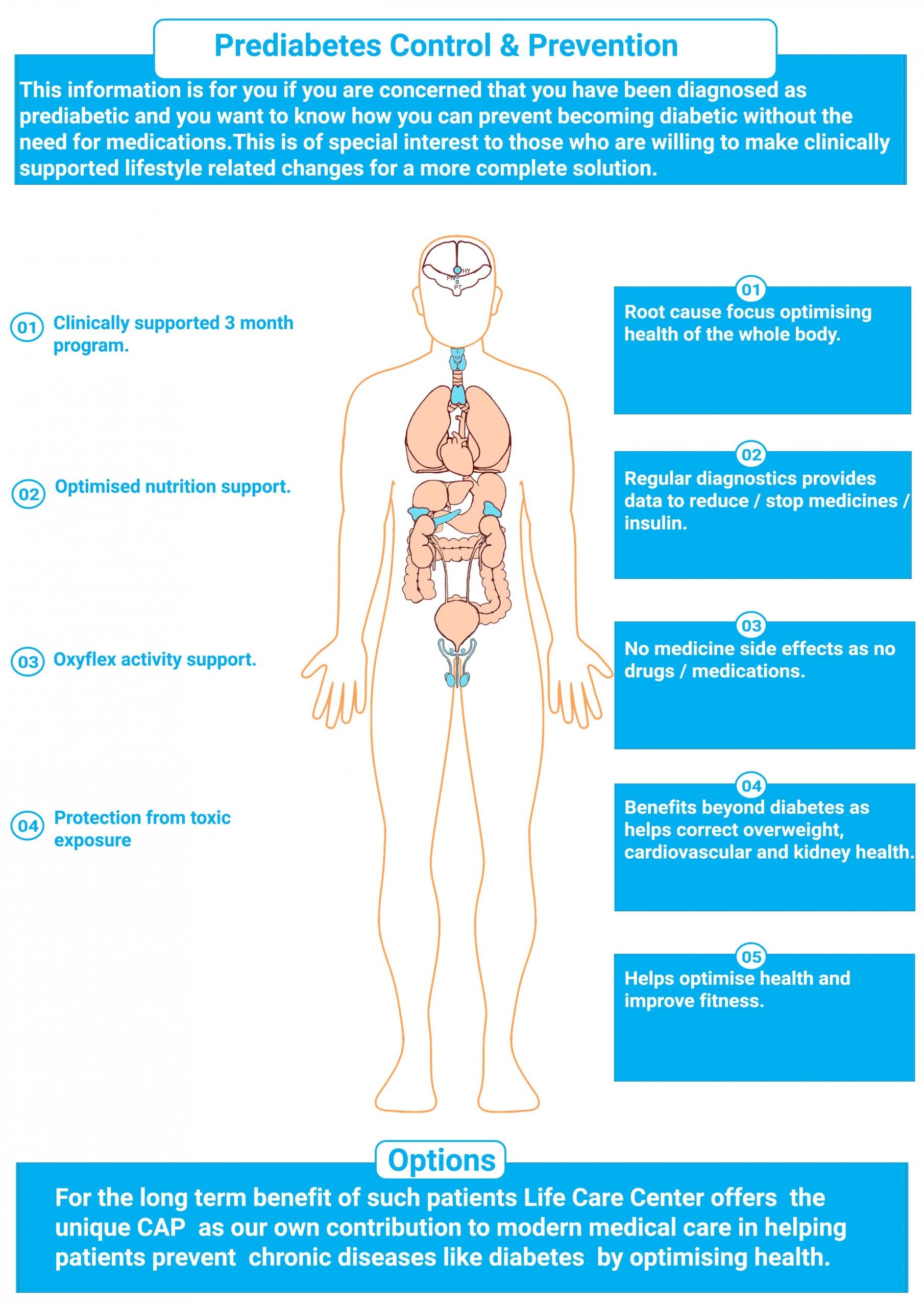
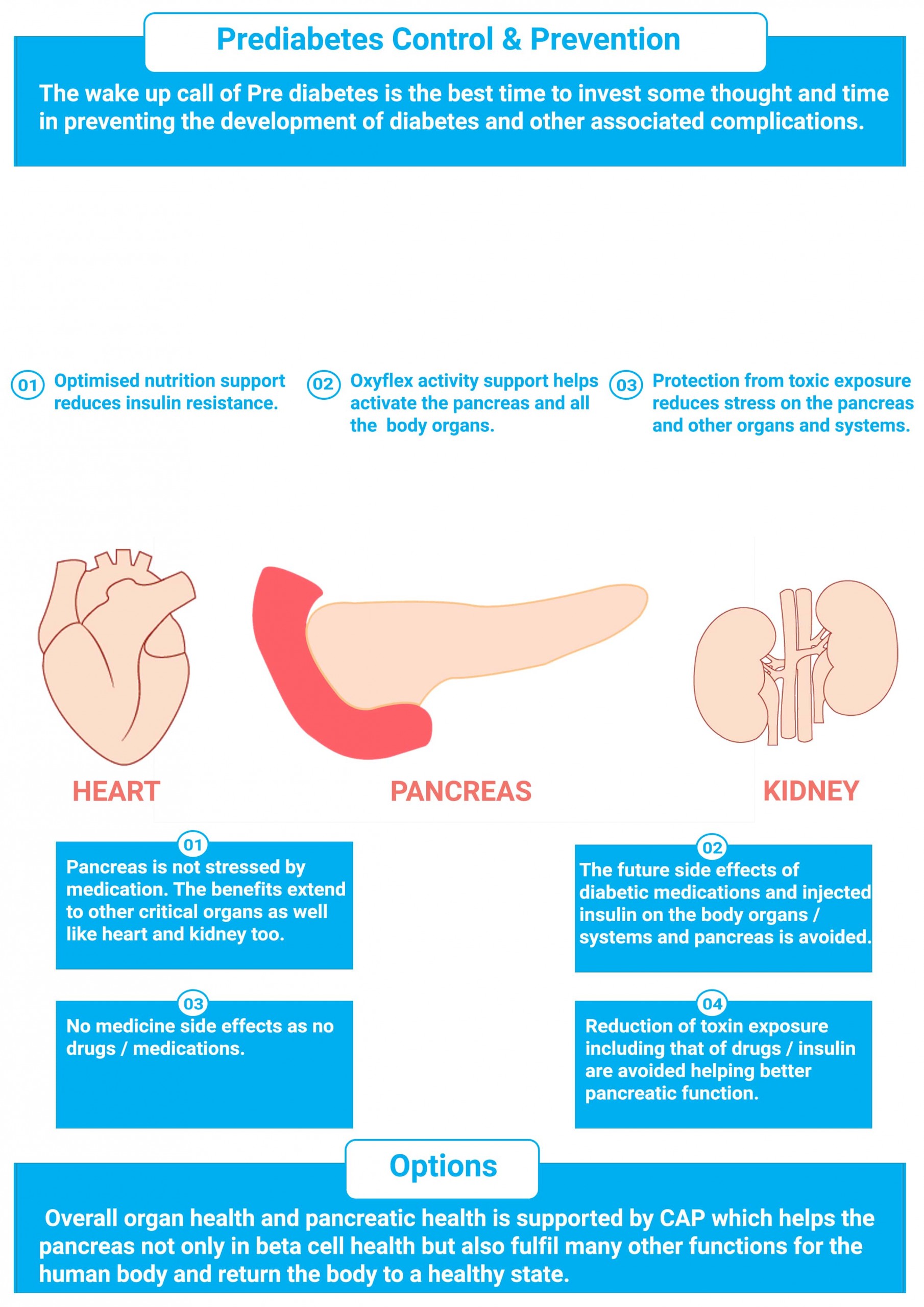
CSLC-CAP is a methodology and treatment for health optimization — a clinically supervised lifestyle-correction approach that works on root causes, delivered at Life Care Centre, Kochi, under modern-medicine doctors. Its purpose is to improve quality of life and to reduce the need for medication and surgical intervention.
Health care and medical care
Medical care treats disease once it has appeared. Health care works on the condition of the body itself, so that it is better able to resist illness and to repair. Both are necessary, and they are not the same work.
In a painful joint the difference is easy to see. A medicine can lower inflammation today, and when someone is in real pain that relief is needed and should be taken. But the medicine does not change the conditions that produced the inflammation, which is why it has to be taken again tomorrow, and why the dose tends to rise rather than fall over the years. Health care starts at the other end: it changes those conditions, so that the body has less reason to produce the inflammation in the first place.
The practical sequence follows from that. Relief first, from whatever is currently working. Correction alongside it. And then, as symptoms settle and repeat testing confirms it, the medicines come down. In that order, and not the other way round.
What “reversal” means here — and what it does not
The word appears in the title, so its object should be exact.
Reversal here means a measured, sustained reduction in inflammation and in the metabolic load the joints are carrying — inflammatory markers such as hs-CRP and ESR, autoimmune antibodies such as anti-CCP, serum urate, blood sugar and insulin, lipids, waist circumference, and the ratio of lean mass to fat. It also means measurable improvement in what a person can actually do: pain, morning stiffness, grip, stairs, walking distance, sleep.
It is not a claim that damage already done is undone. This is the honest limit of the whole approach, and it is structural rather than diagnostic:
- A joint that has become fixed or deformed does not straighten, and bone that has eroded is not rebuilt. On cartilage, the honest answer is that no claim is made either way — see below.
- A spine that has fused stays fused.
- Where a nerve has been compressed long enough to have been damaged, function may improve substantially but often not completely.
- In rheumatoid and psoriatic arthritis the underlying tendency remains. It is inherited, and it does not go away. What changes is whether it is currently active.
- In gout, keeping crystals dissolved is a state that has to be maintained, not a cure achieved once.
A word on cartilage, since it is the question patients ask most. Osteoarthritis is no longer understood as a disease of cartilage. It is a disease of the whole joint — the bone beneath the cartilage, the synovial lining and the capsule, the ligaments and the surrounding muscle are all involved. That distinction matters more than it sounds, because cartilage is the one structure in the joint with neither a blood supply nor a nerve supply. Having no blood supply is why it repairs so poorly. Having no nerve supply means that, by itself, it cannot be the thing that hurts.
The pain comes from the parts that do have nerves and blood: the bone underneath, the inflamed lining and capsule, the strained muscle. Those are living, well-supplied tissues, and they repair the way the rest of the body repairs — given the materials to rebuild with, the circulation to deliver them, and a lower inflammatory and toxic load to work against. That is the whole of what this approach does, and it is why relief can arrive without anything having been regrown. Nor is the cartilage left out: having no vessels, it feeds from the joint fluid, and the pump that drives that fluid through it is the joint being loaded and released. Movement is not merely safe for a worn joint — movement is how cartilage is fed, which is why immobility depletes it, and why the routine is gentle, graded and repeated rather than strenuous.
Whether any of that reaches the cartilage itself is a question this practice cannot answer, and it is worth being exact about why. An ordinary X-ray or MRI would not settle it: those show structure and thickness, not the quality of the tissue. The techniques that can measure cartilage quality — dGEMRIC and T2 mapping — are costly and not readily available here, so the measurement has never been made, and no claim is made in either direction. What is claimed, and what is measured, is symptomatic relief and the return of function. Whether the degree of recovery some patients reach implies anything about the cartilage itself is a genuine question, and it needs proper study rather than assertion from either side.
What does change, in this practice’s experience, is everything sitting on top of that structure: the inflammation, the pain, the stiffness, the function, and the quantity of medicine needed to hold the position. A patient whose fingers are already deformed will not get straight fingers. She may well get her grip back.
Arthritis is not one disease — but the correction is common to all of them
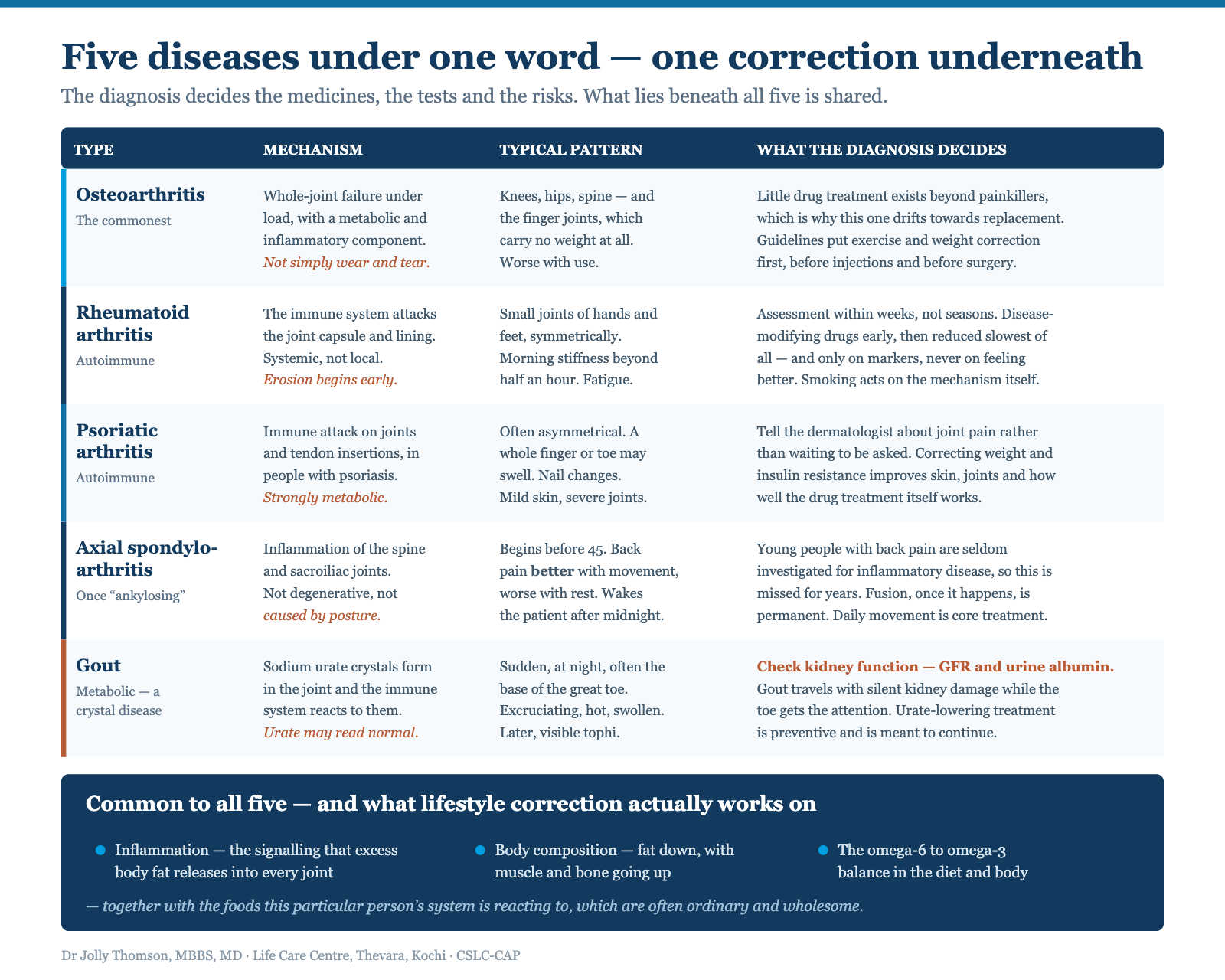
Getting the diagnosis right matters, and it matters early. It decides which medicines are needed, which organs must be watched, and how fast damage will accumulate if nothing is done. Nobody should skip that step.
But it is worth being clear about what the diagnosis does not decide. Underneath all of these conditions sits the same set of correctable problems, and that is why the correction itself looks broadly similar whichever label a patient arrives with.
The five, briefly
Osteoarthritis is usually explained as “wear and tear”, and that explanation does not survive contact with the clinic. If joints simply wore out with use, the people who walk and work most would have the worst knees — and they do not. Many patients with severe knee osteoarthritis lead largely sedentary lives in flats. More tellingly, the same osteoarthritis appears in the small joints of the fingers, which carry no weight at all. Load alone cannot explain a disease that turns up in the hand.
Rheumatoid arthritis is an autoimmune disease: the immune system attacks the joint capsule and lining, typically in the small joints of hands and feet, symmetrically, with morning stiffness well beyond half an hour. It is systemic, so fatigue and inflammation elsewhere belong to it. Damage begins early and is permanent, which is why persistent symmetrical joint swelling should be assessed within weeks rather than after a season of trying things.
Psoriatic arthritis occurs in people with psoriasis, often asymmetrically, sometimes swelling a whole finger or toe, frequently inflaming the points where tendons insert into bone, and often with nail changes. Mild skin disease is no guarantee of mild joint disease.
Spondylosis, spondylitis and spondylolisthesis are three different words that are constantly confused, including in reports handed to patients. Spondylosis is degenerative change — extremely common with age, and present on the scans of a great many people with no pain at all, so a report describing it is not by itself an explanation for symptoms. Spondylolisthesis is mechanical: one vertebra has slipped forward on the one below. Ankylosing spondylitis, now more precisely called axial spondyloarthritis, is inflammatory — not degenerative, not caused by posture. It usually begins before forty-five and produces the reverse of the mechanical pattern: worse after rest, better with movement, waking the patient in the second half of the night.
Gout is a crystal disease — sodium urate crystals in the joint, classically the base of the great toe, classically at night, classically excruciating. Two points are worth knowing. Urate can read normal while crystals are still forming, so a normal result does not exclude it. And anyone with gout or raised urate should have kidney function checked: gout travels with declining GFR, and the kidney damage is silent while the toe gets all the attention.
One presentation is urgent and belongs in any article on this subject: a single joint that becomes hot, swollen and severely painful over hours, particularly with fever, needs assessment the same day. Infection destroys a joint quickly and is treatable when caught early.
What is actually being treated: the body, not the joint
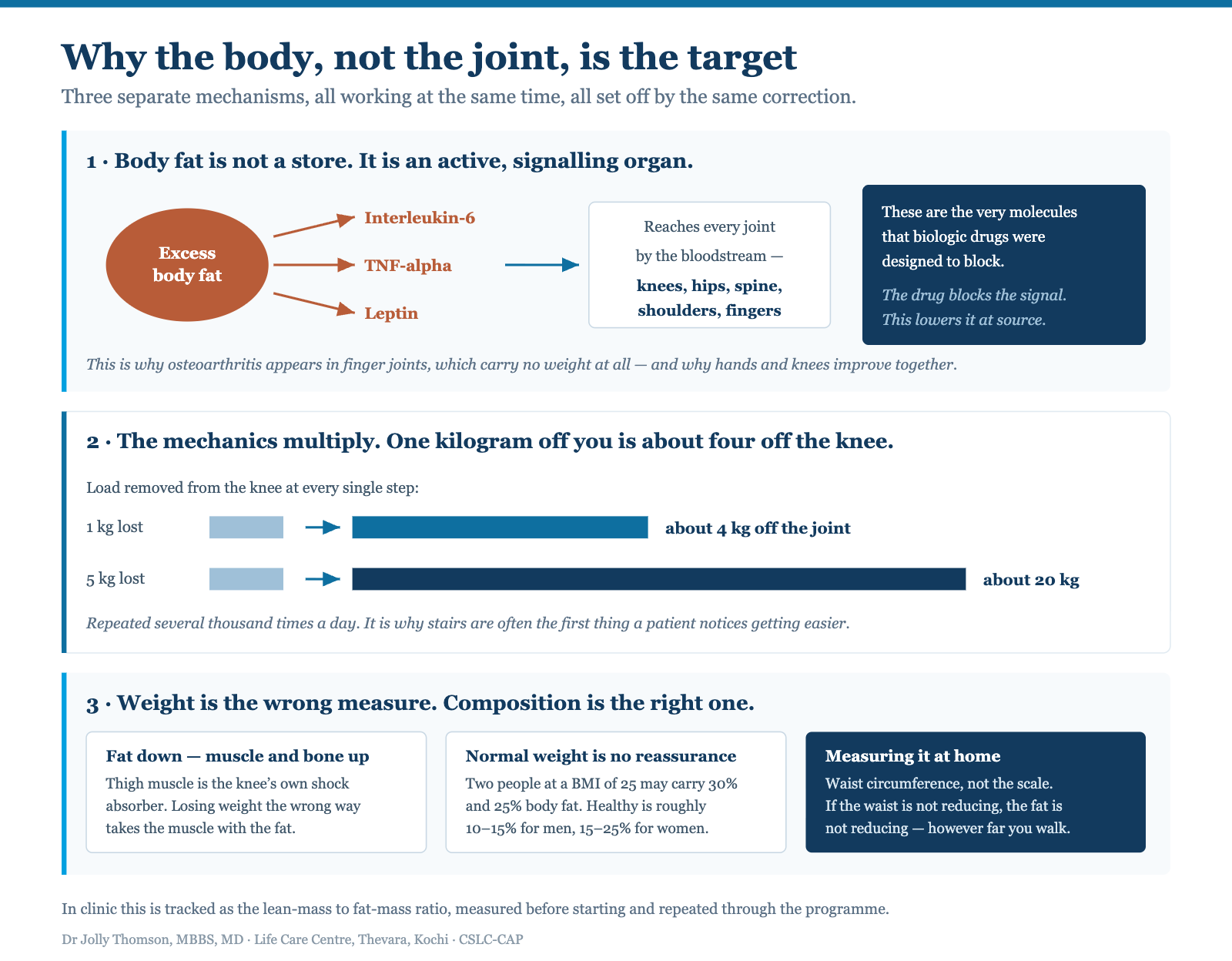
Body fat is not an inert store. It is active tissue that releases inflammatory signalling molecules — interleukin-6, TNF-alpha, leptin and others. Those names are worth noticing, because they are precisely the targets that modern biologic drugs were designed to block. A biologic blocks the signal pharmacologically; reducing the tissue that produces it lowers the same signal at source. That is the reason joints nowhere near the knee improve when body composition changes, and the reason hand osteoarthritis and knee osteoarthritis so often improve together.
Alongside that, there is straightforward mechanics. Research on knee loading has shown that each kilogram of weight lost removes roughly four kilograms of load from the knee at every step. Five kilograms lost is twenty kilograms off the joint, thousands of times a day. It is a multiplying effect, and it is why patients often notice stairs before they notice anything else.
Weight is the wrong measure
Muscle and bone are built by about the age of twenty-five and decline from there. Almost everything gained after that is fat. So the scale, and the body mass index calculated from it, can put two quite different people in the same box: at a body mass index of 25, one person may be carrying thirty per cent body fat and another twenty-five per cent. The healthy range is roughly ten to fifteen per cent for a man and fifteen to twenty-five for a woman. The weight is identical; the body composition is not, and it is the composition that decides whether a joint is protected.
This is why the target is not weight loss. It is fat reduction with muscle and bone increasing, judged on body composition, strength and function. The thigh muscles in particular act as the knee’s shock absorber, and strengthening them is given more importance than any number on a scale. Losing weight the wrong way — cutting out fish and meat, eating less of everything — loses muscle along with fat and leaves people weaker than when they started.
For anyone tracking this at home without equipment, waist circumference is more useful than weight. If the waist is not reducing, fat is not reducing. Plenty of people walk ten kilometres a day and keep the abdominal fat, because walking exercises the legs and little else.
The fatty acids
Cell membranes are built from fat, and two of the fats involved — omega-6 and omega-3 — behave like vitamins: the body cannot make them, so they must come from food. Broadly, omega-6 drives the inflammatory, defensive side of immune function and omega-3 the resolving, healing side. The human body appears designed for something near a one-to-one balance. Modern Indian diets are nowhere near it, and urban diets are considerably further from it than rural ones, largely through cooking oils, nuts and oil seeds.
This matters more than it first appears, because a great many of the anti-inflammatory drugs in use work by blocking the omega-6 pathway. Correcting the balance in the diet, and reducing the stored fat that carries it, acts on the same axis — which is why the two are not competitors, and why the medicine can often come down once the correction has taken hold. It also explains why fish-oil capsules alone tend to disappoint: the healing side of the system cannot rebuild cells without the full range of materials to rebuild them from.
What patients experience, and when
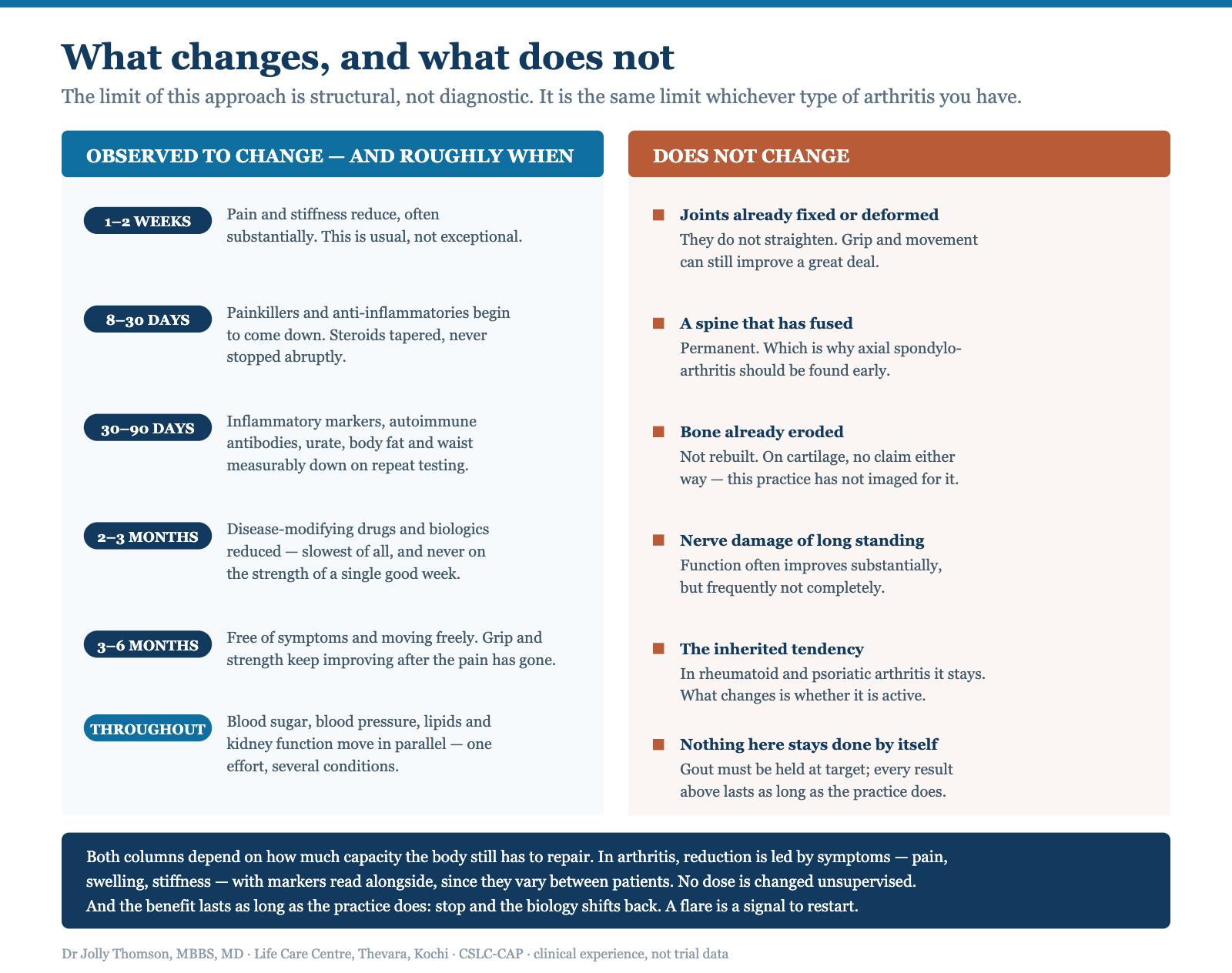
The pattern reported in this practice is consistent enough to describe, with the caveat that it depends on two things: how closely the patient follows the protocol, and how much capacity the body still has to repair.
Symptoms move first, and faster than people expect. Meaningful reduction in pain and stiffness in the first one to two weeks is usual rather than exceptional. In one documented case of rheumatoid arthritis of sixteen years’ standing, joint pain was about forty per cent better by day eight, half by day fifteen, two-thirds by day thirty, eighty per cent by day sixty, and gone by day ninety.
Reports follow. Inflammatory markers, autoimmune antibodies and metabolic numbers are re-tested through the programme rather than taken on trust. In the same case, anti-CCP fell from above 200 to 69, ESR came down, body fat went from thirty per cent to twenty-two, and waist circumference from 88 cm to 72 cm.
Function keeps improving after the symptoms have gone. A woman of thirty-nine who had taken rheumatoid arthritis medicines for ten years, whose liver would not tolerate them, and whose hands had weakened to the point where she could not lift a glass, was off her medicines by three months — and by four months was doing push-ups. That is not a typical endpoint, but it is the direction of travel, and it is the part that patients on long-term immunosuppression are rarely told is possible.
Where the starting point is worse, progress is slower and the ceiling is lower, but it is not nothing. One woman arrived by ambulance and stretcher because she could not get into a car, with her legs bent and joints fixed. Within a month she was arriving by car. At ninety days she was still using a walker. At a hundred and fifty days she was walking without support. Her joints were still deformed — that does not change — and the outcome depended heavily on family members who managed her food and kept her to the routine.
Medication — how reduction actually happens
This is the part that most patients want to ask about and are most afraid to, so it is worth setting out plainly.
What guides the reduction depends on whether the condition has symptoms at all. In arthritis it is led mainly by what the patient can report — pain, swelling and stiffness — because those are what the disease is doing to the person, and they are the most immediate evidence that it has quietened. Inflammatory and autoimmune markers are followed alongside, and they do come down, but they vary a great deal between patients and can fluctuate without symptoms returning, so they are read as part of the picture rather than as a single switch. In conditions that produce no symptoms at all — type 2 diabetes, high blood pressure, raised lipids — it is the other way round, and the reports are the main guide.
Either way, reduction is a considered, staged decision made against the whole picture: symptoms, repeat testing, body composition, and — in gout — urate at target. It is not done on a good week.
There is a further reason not to stay on anti-inflammatory medication longer than necessary, and it is not a side-effect argument. Inflammation and healing run in parallel in the same system, and a medicine that damps one damps the other. That is the trade a patient in real pain should make while they are in real pain. But as the pain settles, continuing to suppress that system also holds back the cellular repair the whole correction is working towards — which is why tapering, when the ground has been won to allow it, is part of the treatment rather than merely the reward for it.
The sequence differs by drug, and the order is deliberate:
- Painkillers and anti-inflammatories usually come down first. This is a real gain in itself: long-term use carries kidney, gastric and cardiovascular cost.
- Steroids are reduced gradually and never stopped suddenly. This is not negotiable at any stage.
- Disease-modifying drugs and biologics are reduced slowest of all. In rheumatoid arthritis this typically takes two to three months rather than weeks, and for someone on three or four immunosuppressants at once it is slower still.
- Urate-lowering treatment is preventive and is meant to continue until urate has been held at target and the picture is stable. Stopping it because the joints are quiet is the commonest reason gout returns.
- Medicines for diabetes, blood pressure and cholesterol often need adjusting early, because the correction itself changes those numbers quickly — sometimes within days.
What patients are learning, by the end, is not how to live without medicine by willpower. It is how to live within the limitations of their own body — knowing which foods their system reacts to, keeping body composition where it needs to be, and recognising a flare early enough to deal with it in a few days rather than a few months. That is a different relationship with medication than taking it daily for life, and it is the realistic goal.
No dose should be changed alone. Every reduction described here happened under the supervision of doctors, against test results. Whether to accept or decline any treatment is a decision for the patient and their family to make, with the fullest understanding they can get — but changing a dose without that supervision is a different matter, and it is not safe.
Before a joint replacement: the questions worth asking
Joint replacement is a real and sometimes necessary operation, and nothing here is an argument that nobody should have one. It is an argument for understanding it before the date is fixed.
In a knee replacement, the ends of both bones are cut away and an artificial joint of metal and plastic is fixed in place with screws and surgical cement. It is a substantial procedure, the artificial joint has a finite lifespan and will eventually loosen, and the body can react to it as a foreign material. Outcomes are good for many people and it relieves a great deal of suffering. But the results are not universal: a systematic review published in BMJ Open in 2025, pooling 68 studies and nearly 600,000 patients, found that around one in eight people still report an unfavourable pain outcome one to two years after knee replacement — and about one in five at three months.
There are also considerations specific to inflammatory arthritis that are worth raising with the surgeon. People with rheumatoid arthritis tend to react more strongly to injury, and immunosuppressant drugs affect wound healing. A replacement addresses one joint; it does nothing for the other joints, and nothing for the process driving them.
So the questions are these. What exactly is the surgery expected to achieve? What happens to the rest of the joints? What is the plan if the pain does not settle? And has anything been done about the load and the inflammation the joint is carrying — because if the pain can be brought down without an operation, the reason for the operation has changed.
Some situations are not open to this discussion at all. Where a disc is compressing a nerve badly enough to affect bladder or bowel control, where there is progressive weakness, or where breathing is affected, surgery is urgent and should not be delayed for anything. The same is true of a hot, acutely swollen single joint with fever. Knowing where that line is, is part of being an informed patient.
It is also worth knowing that lifestyle correction is not an alternative system of medicine here. Exercise and weight correction are the first-line management of degenerative arthritis in modern medicine’s own international guidelines — they are what is recommended before injections and before surgery. What is offered at Life Care Centre is that first line, done as structured clinical treatment rather than as advice given at the end of a consultation. (Glucosamine, widely used in Kerala, is not part of it; the UK guidelines find no meaningful benefit, and it is not used in this practice.)
When several conditions improve together
Most patients with arthritis do not have only arthritis. Diabetes, hypertension, raised cholesterol, fatty liver, thyroid disease and kidney impairment travel with it, and a person carrying four or five of them is usually attending four or five departments, each managing its own organ.
Because what is being corrected sits underneath all of them, they tend to move together. A man of fifty-something came for a knee that he had been told needed replacing, and while he was waiting to start he developed urinary obstruction; his PSA was 12 and a biopsy had been advised. Over the programme his PSA fell to 8.8 within a week, 6 by day thirty, and 3.7 — normal — by two months, with the prostate smaller on repeat scanning. His weight went from 98 kg to 75 kg, body fat from thirty-one per cent to twenty-two, visceral fat from 21.5 to 11. His limp did not disappear entirely, but he could walk without pain, and he no longer needed the wheelchair he had been using at airports.
A woman who had had diabetes for eighteen years, on insulin and several other medicines, came in concerned about nothing except her knees: she wanted to be able to walk. Her diabetes medicines were stopped at the start, because a low-calorie diet cannot be taken alongside them. By thirty days all her medicines were finished and her HbA1c had gone from 7.4 on treatment to 6.0 without it. Her kidney function — GFR 57 at the start — was 74 by day sixty. She had been advised knee replacement, and did not have it.
That is the point, and it is the strongest thing this approach has to offer: one effort, directed at the body rather than at any single joint or organ, tends to produce relief across several specialities at once. A patient with gout whose real problem turned out to be a GFR of around thirty has had no further gout episode in four years, has come off thyroid medication, and — importantly — still comes for yearly kidney checks even though the arthritis has not returned.
Afterwards — what it takes to keep it
Most patients are free of symptoms and moving freely somewhere between three and six months. The first ninety days are the active phase, not the finish line, and what happens after them is what decides whether the result holds.
It holds for as long as the correction does. This is the part that is easy to write and harder to hear: what has been changed is the body’s working conditions, and if those conditions go back, the biology goes back with them and symptoms can return. That is true of arthritis in exactly the way it is true of type 2 diabetes and blood pressure. None of this is a repair that stays done while it is ignored.
Stopping is rarely a decision. It is an illness in the family, three weeks of travel, a hard year, an infection, a stretch where the routine simply slipped. These are the ordinary things that interrupt people, and a patient who comes back having lost ground has not failed at anything — they have run into life. The useful question was never how it happened. It is how quickly it gets picked up again.
So part of the treatment is learning to recognise a flare at its beginning rather than its middle, and to act on it. In rheumatoid arthritis, psoriatic arthritis and gout that usually means taking an anti-inflammatory promptly for a short period, which settles it. Where the practice has been set aside for a long stretch and the symptoms are properly back, the answer is a restart: medication first for immediate relief, then the supervised correction again for three to six months, then the same tapering as before. People who have been through it once tend to move faster the second time.
In osteoarthritis the surgery question can genuinely reopen. Patients who arrive having been advised a knee replacement — much the commonest situation here — generally set the idea aside once they are walking without pain. If the practice stops and the pain returns, replacement becomes a live question again, and the choice is open in both directions: restart the correction and recover the ground, or have the operation. Few choose the operation, and that is not persuasion. It is that they already know what the alternative feels like.
Set out precisely, then, the observation from this practice is this: patients who completed the correction and reached their body-composition and fatty-acid targets have not gone on to joint replacement while they have kept it up. It is a clinical observation from a single centre rather than a trial result — and the second half of that sentence is doing as much work as the first.
Two boundaries on all of it. A major disc prolapse with severe pain or neurological signs — which usually follows a fall or an accident rather than a lapse — needs surgical assessment, not a restart. And the whole approach works for as long as the body still has the capacity to repair. That capacity is what is being drawn on; where it has gone, nothing described here substitutes for it.
The four optimization domains
| Domain | What it addresses |
|---|---|
| Optimal nutrition | Supplying the full range of nutrients the body needs in order to repair, including dietary fibre, in a nutrient-dense form with minimal additives — and identifying the foods an individual’s system is reacting to, which are often ordinary, wholesome, home-grown items nobody would suspect. |
| Optimal exercise | Gentle, segmental movement performed lying down and then sitting, working through the body part by part in a set order, graded to what the person can manage. No gym or equipment is involved, so it remains possible with painful joints, stiffness or limited stamina. |
| Rest and sleep | Recovery, without which repair and immune regulation do not function well however good the nutrition. Pain and poor sleep worsen one another, and breaking that cycle is part of the treatment. |
| Reduced toxin load | Lowering avoidable exposure — tobacco and alcohol first, then additives and unnecessary chemical load. In arthritis this is not general advice: tobacco acts on the disease mechanism itself in rheumatoid arthritis, and alcohol on urate. |
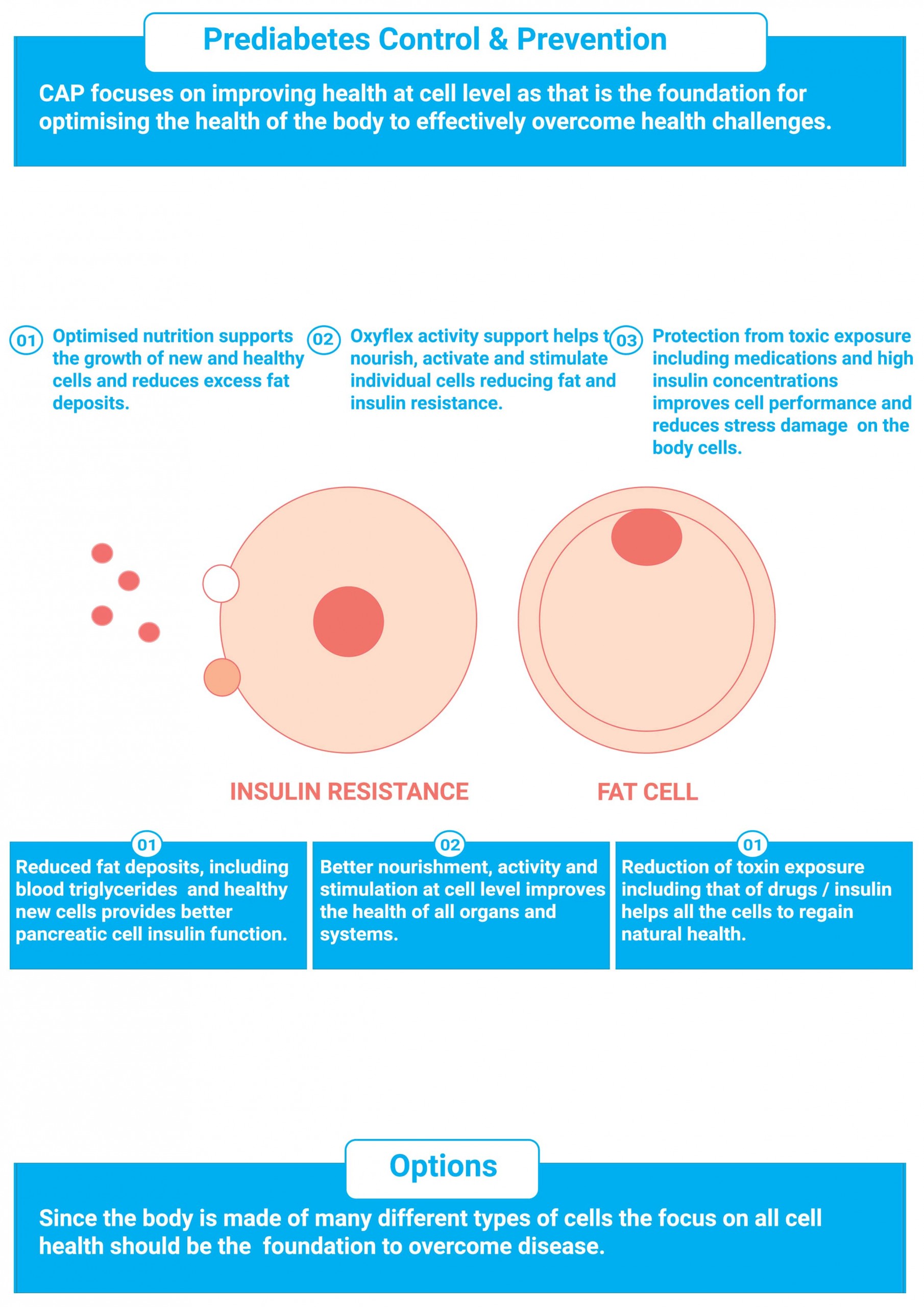
Delivered together and consistently, these same four domains are intended to create favourable conditions at cell level: better delivery of oxygen and nutrients into cells, and better clearance of waste out of them.
The exercise domain deserves a note for readers with painful joints, because the objection — “I cannot exercise, my knees hurt” — is exactly the situation it was designed for. The routine is done lying down and then sitting, worked through the body one part at a time, and graded to the day. Unsupervised exercise is where people with disc problems and inflamed joints get into trouble; the wrong movement can worsen a bulging disc. Movement that hurts a little during and settles afterwards is usually doing its work. Movement that leaves a joint hot and swollen the next day was too much, and the answer is to reduce it rather than abandon it.
ഈ വിഷയം മലയാളത്തിൽ — the same subject in Malayalam
Both sessions below are in Malayalam, from Dr Jolly Thomson’s Malayalam channel.
Why the first 90 days matter
Many cells renew quickly. Most white blood cells survive less than a week, and the linings of the gut and airways turn over in roughly one to two weeks. The working estimate is that a large majority of these fast-renewing cells may be replaced within about 90 days, which is why improvement in symptoms and inflammatory markers tends to arrive within that period rather than after years. It applies to immune cells and mucosal linings; blood vessel walls, bone and nerve change over considerably longer — and on cartilage, for the reason given earlier, no claim is made in either direction.
Muscle sits usefully in between. Strength begins to improve within weeks of graded loading, well before any visible change in size, which is why people with painful joints often notice stairs becoming easier before they notice anything else.
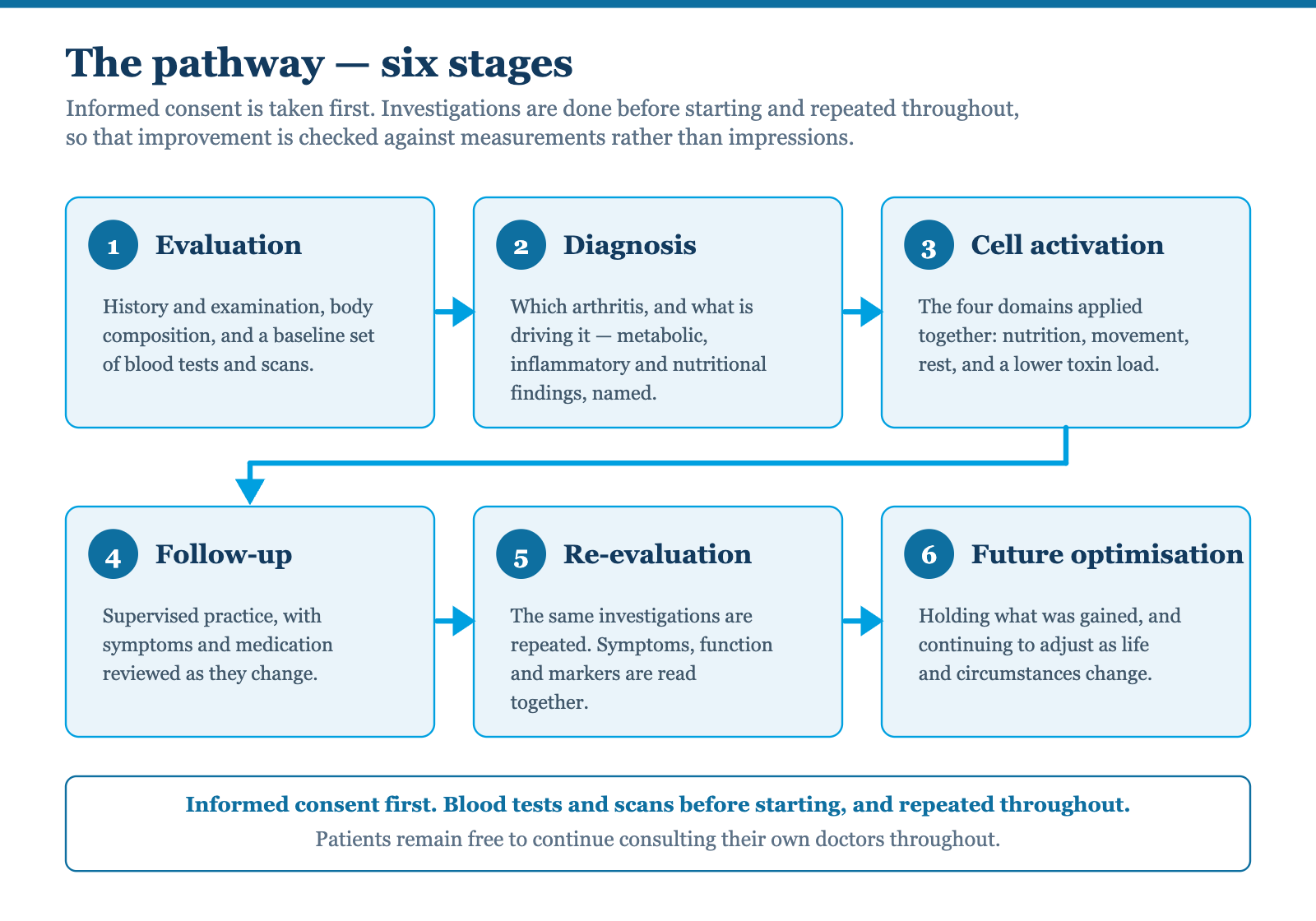
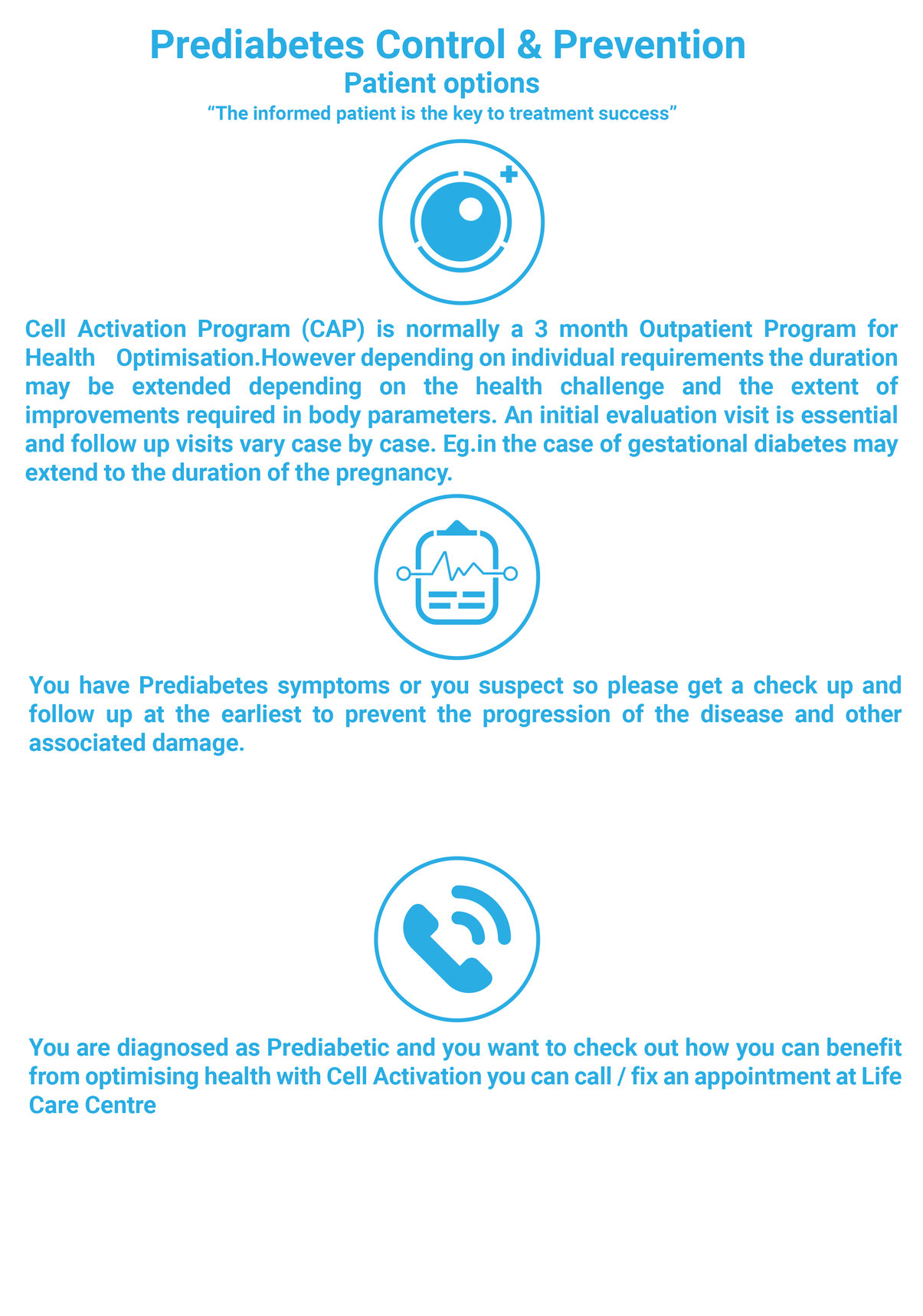
The pathway runs through six stages — evaluation, diagnosis, cell activation, follow-up, re-evaluation and future optimisation. Informed consent is taken first, and blood tests, body-composition analysis and scans are done before starting and repeated throughout. The first ninety days are the active phase; a further period consolidates the body-composition correction, and most patients are free of symptoms and moving freely somewhere between three and six months. After that they are managing themselves, with follow-up.
Suitability
To take part, a patient must be clinically stable, and fit mentally and physically — able to understand, learn and practise the routine, able to take at least a liquid diet along with the centre’s nutritional support, and able to do gentle exercise lying down and sitting. A patient should be able to walk in, with support if necessary. The first 90 days must be given real priority. Where physical or mental limitation prevents independent practice, a family member enrolls alongside — and in the more difficult cases, that family support is what decides the result.
It is not suitable where an organ has already failed — very poor cardiac function, severely reduced kidney function, or a degree of cognitive or psychological instability that makes learning the routine impossible. There has to be enough working body left to repair with. For those too unwell to travel, a telemedicine consultation with current records is the place to start.
Joint pain itself is not a barrier. The routine was designed for people who cannot use a gym, and severe stiffness or limited stamina is the situation it was built for, not an exclusion from it.
It is also worth saying what happens when it does not work. Where a patient is not improving — most often because circumstances have made the protocol impossible to follow rather than because the biology has refused — the honest course is to say so and for them to continue under orthopaedic or rheumatology care. That care is theirs throughout in any case: patients remain free to keep consulting their own doctors, and are encouraged to.
Frequently asked questions
I have been on methotrexate and steroids for years. Is it realistic to come off them?
In this practice it happens regularly, but not quickly and not by decision alone. The order matters: medicines stay unchanged while the correction begins, painkillers and anti-inflammatories come down first, and disease-modifying drugs are reduced last and slowest — typically over two to three months in rheumatoid arthritis, longer for someone on several immunosuppressants together. Reduction is triggered by settled symptoms plus falling markers plus corrected body composition, verified on repeat testing, and it is done by the doctors supervising the treatment. Steroids in particular are tapered and never stopped abruptly.
My fingers are already deformed and my knee is bone-on-bone. Is it too late?
The deformity will not straighten — nobody can offer that. On the cartilage, no promise is made in either direction, for the reason set out above. What has been observed to improve, even at that stage, is pain, stiffness, grip and how far someone can walk, along with the inflammatory markers driving further damage. The woman who arrived on a stretcher still had fixed joints at the end; she was also walking without support. Whether that is worth doing is a judgement only the patient and their family can make, and it is a fair question to ask before starting.
Does it matter which type of arthritis I have?
For the diagnosis, very much — it decides which medicines are needed, which organs to watch, and how urgently. Rheumatoid, psoriatic and axial spondyloarthritis need assessment early because damage begins early. Gout needs kidney function checked. For the correction itself, less than people expect: the same work on inflammation, body composition and fatty-acid balance applies across all of them, which is why it is equally useful in gout and osteoarthritis as in the autoimmune types.
I have been advised knee replacement. Should I cancel it?
That is not a decision anyone should take from an article, and it is not the surgeon’s alone either — it belongs to you and your family, made with the fullest information you can get. What is reasonable is to ask what the operation is expected to achieve, what happens to your other joints, and what the plan is if the pain does not settle; and to know that first-line management in the guidelines is exercise and weight correction, which many people have never actually been given in a structured form. If pain and function improve enough without an operation, the question answers itself. If they do not, the operation is still there.
What happens if the symptoms come back later?
They can, and it is better to say so plainly. What the correction changes is the body’s working conditions, so if those conditions go back — after an infection, a stretch of travel, a difficult year, or simply a spell when the routine slipped — the symptoms can follow. That is not a failure and it is not unusual. Patients are taught to catch a flare at its beginning and treat it promptly, which usually settles it within a few days. If more ground than that has been lost, the answer is to restart the supervised correction for three to six months and taper again, and people who have done it once generally move faster the second time. In osteoarthritis, the question of a joint replacement can reopen at that point — and the choice is open in both directions. What does not change is the underlying arrangement: the benefit lasts as long as the practice does, and as long as the body keeps its capacity to repair.
Is exercise safe when my joints already hurt?
Appropriate movement is part of the treatment rather than a risk to be avoided, and in osteoarthritis and axial spondyloarthritis it is among the most effective treatments available. Rest protects a joint for a day and weakens it for a month. The important qualification is supervision: people with disc problems and inflamed joints can make things worse exercising on their own with the wrong technique. The routine used here is gentle and segmental, done lying down and then sitting, and graded to the person.
Is this available for patients outside Kerala?
Yes. A telemedicine consultation with current medical records is the usual starting point, with evaluation and investigation in Kochi thereafter and follow-up by telemedicine.
Related reading
- Autoimmune Diseases: Reversing Autoimmune Inflammation — the immune mechanism underlying rheumatoid and psoriatic arthritis, and what “reversal” means in autoimmune disease.
- Age-Related Lifestyle Diseases: Reversing Insulin Resistance and Inflammation — insulin resistance and inflammaging, the metabolic pattern behind gout, osteoarthritis and psoriatic disease alike.
- Cancer: Health Optimization Alongside Oncology Care — the same division of labour between medical treatment and the condition of the person.
- Fatty Liver: Reversing Liver Fat and Fibrosis — the same correction in liver disease, where reports rather than symptoms lead the reduction of medicines.
- Psoriasis and lifestyle correction — the skin disease that accompanies psoriatic arthritis.
- CSLC-CAP — approach summary and information sheet — consent, investigations, the pathway and eligibility in one place.
Important note
⚠️ IMPORTANT: This article is educational and is not medical advice. Do not start, stop or change any medication without your treating doctor’s supervision.
The patients described here are from this practice, reported as clinical experience rather than as a trial. Individual results depend on how closely the protocol is followed and on how much capacity the body still has to repair. Use this article to ask better questions of your rheumatologist, your orthopaedic surgeon and your own doctors, and to decide together.