Fatty Liver: Reversing Liver Fat and Fibrosis — Early Detection Before Cirrhosis, with CSLC-CAP in Kochi
Fatty Liver: Reversing Liver Fat and Fibrosis — Early Detection Before Cirrhosis, with CSLC-CAP in Kochi
- Dr Jolly Thomson MBBS MD
- August 24, 2026
- 0 Comments
Three people are told something about their liver on the same afternoon. The first has had an ultrasound for an unrelated complaint and been handed a line at the bottom of the report — grade 2 fatty liver — with the reassurance that it is very common and nothing to worry about. The second has reached cirrhosis, has been told that the scarring is permanent, and has understood from that conversation that there is nothing left to do but wait and be monitored. The third has had diabetes for eighteen years, takes five medicines for it, and has never had her liver looked at.
All three have been told something true. None of the three has been told the part that decides how this ends.
This article is written for them. It is not a list of foods to avoid, and it is not the general advice about diet and exercise that appears in every article on fatty liver. It is an account of what changes when lifestyle correction is done as structured clinical treatment — measured, supervised, and checked against scans and blood reports — and of what does not change, because that is the part patients are rarely told.
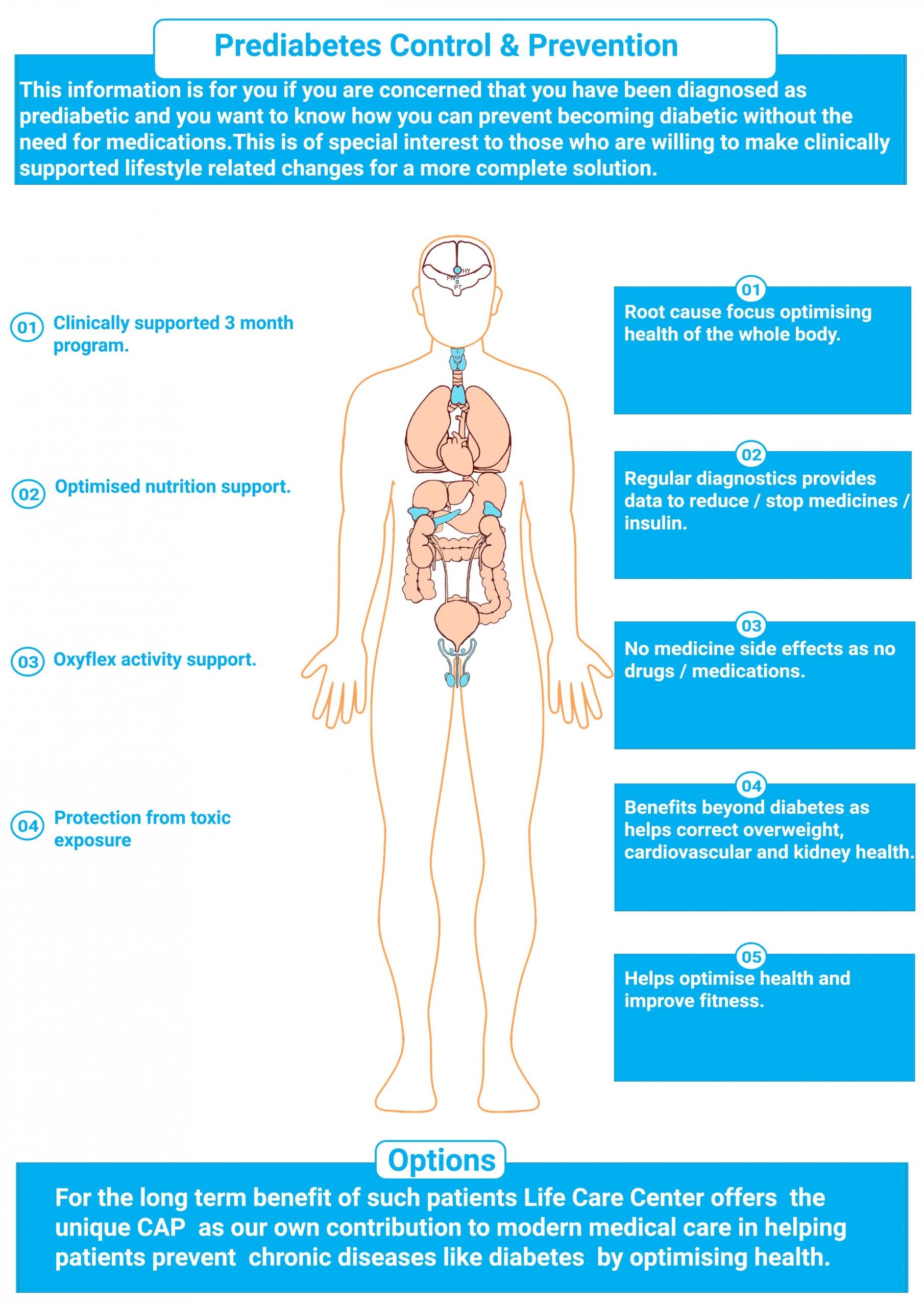
CSLC-CAP is a methodology and treatment for health optimization — a clinically supervised lifestyle-correction approach that works on root causes, delivered at Life Care Centre, Kochi, under modern-medicine doctors. Its purpose is to improve quality of life and to reduce the need for medication and surgical intervention.
Health care and medical care
Medical care treats disease once it has appeared. Health care works on the condition of the body itself, so that it is better able to resist illness and to repair. Both are necessary, and they are not the same work.
The liver shows the difference more plainly than most organs, because for a long time there is no disease to treat. There is no pain, no jaundice and no abnormal blood test — only fat accumulating inside liver cells, silently, for years. Medical care has very little to offer at that stage, and says so honestly: the advice given is to lose weight and exercise. That advice is correct. What is missing is the treatment that makes it happen.
The practical sequence follows from that. Relief first, from whatever is currently working. Correction alongside it. And then, as symptoms settle and repeat testing confirms it, the medicines come down. In that order, and not the other way round.
What “reversal” means here — and what it does not
The word appears in the title, so its object should be exact.
Reversal here means a measured, sustained reduction in two things that can be counted: the fat stored inside the liver, and the stiffness of the liver tissue itself — together with the metabolic load that put them there. In practice that is the CAP score and the kPa value on a FibroScan, liver enzymes, HbA1c and fasting insulin, triglycerides, waist circumference, and the ratio of lean mass to fat. It also means measurable improvement in what a person actually feels: fatigue, heaviness after meals, disturbed sleep, the sense of being unwell without a name for it.
It is not a claim that a liver which has already failed is restored. This is the honest limit, and as in every condition this practice treats, it is structural rather than diagnostic:
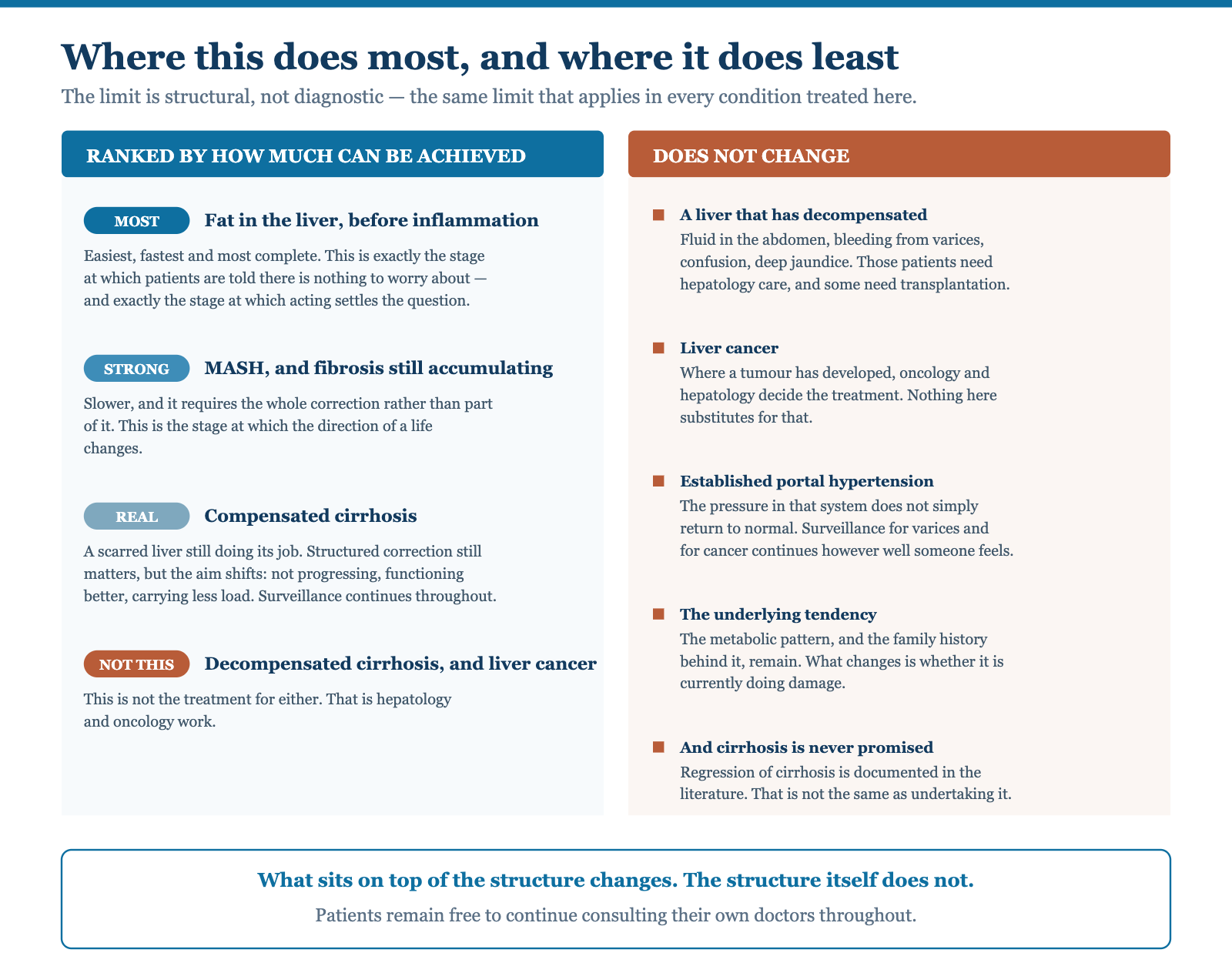
- A liver that has decompensated — fluid in the abdomen, bleeding from varices, confusion from encephalopathy, deep jaundice — is past the point where this work is the answer. Those patients need hepatology care, and some need transplantation.
- Liver cancer is not treated by lifestyle correction. Where a tumour has developed, oncology and hepatology decide the treatment. Nothing here substitutes for that.
- Where cirrhosis has established portal hypertension, the pressure in that system does not simply return to normal, and surveillance for varices and for cancer continues regardless of how well someone feels.
- The tendency — the metabolic pattern, and the family history behind it — remains. What changes is whether it is currently doing damage.
But the middle of this range is not fixed, and that is the part patients are not told. Fibrosis is not a scar in the sense of a mark left on skin. It is living tissue, laid down by cells that are still there and still responsive, and its regression is accepted in the medical literature rather than disputed. It has been documented on repeat biopsy in hepatitis B, in hepatitis C and in autoimmune liver disease. In metabolic liver disease specifically, a group of patients with established cirrhosis, followed for a median of more than six years after metabolic surgery, showed regression of the cirrhosis itself in about a third of cases.
The condition attached to that finding, stated in the literature’s own words, is that regression follows when the underlying cause is successfully treated. That sentence is the whole argument of this article. The question in metabolic liver disease has never been whether scarring can retreat. It is whether anyone removes the cause.
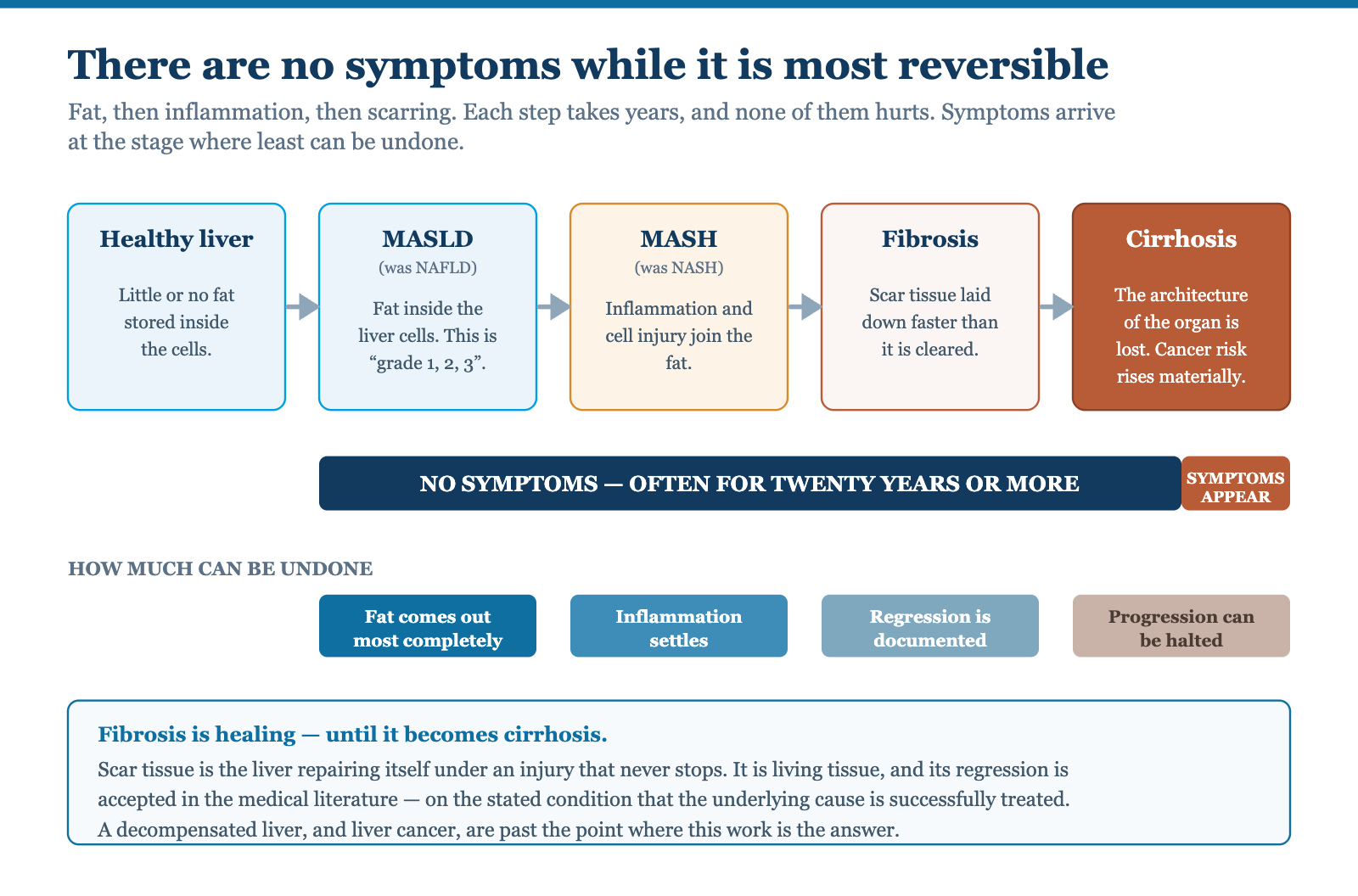
Which is why the way this is usually explained to patients — that fibrosis is damage, and damage is permanent — has the biology backwards. Fibrosis is healing. It is the liver repairing itself under continuing injury, laying down supporting tissue faster than it can be cleared because the injury has never stopped. It remains healing until so much has accumulated that the architecture of the organ is lost, and that end state is cirrhosis. Up to that point, the process is a response to something — and things that are responses can be responded to.
What is actually happening: fat inside the cell
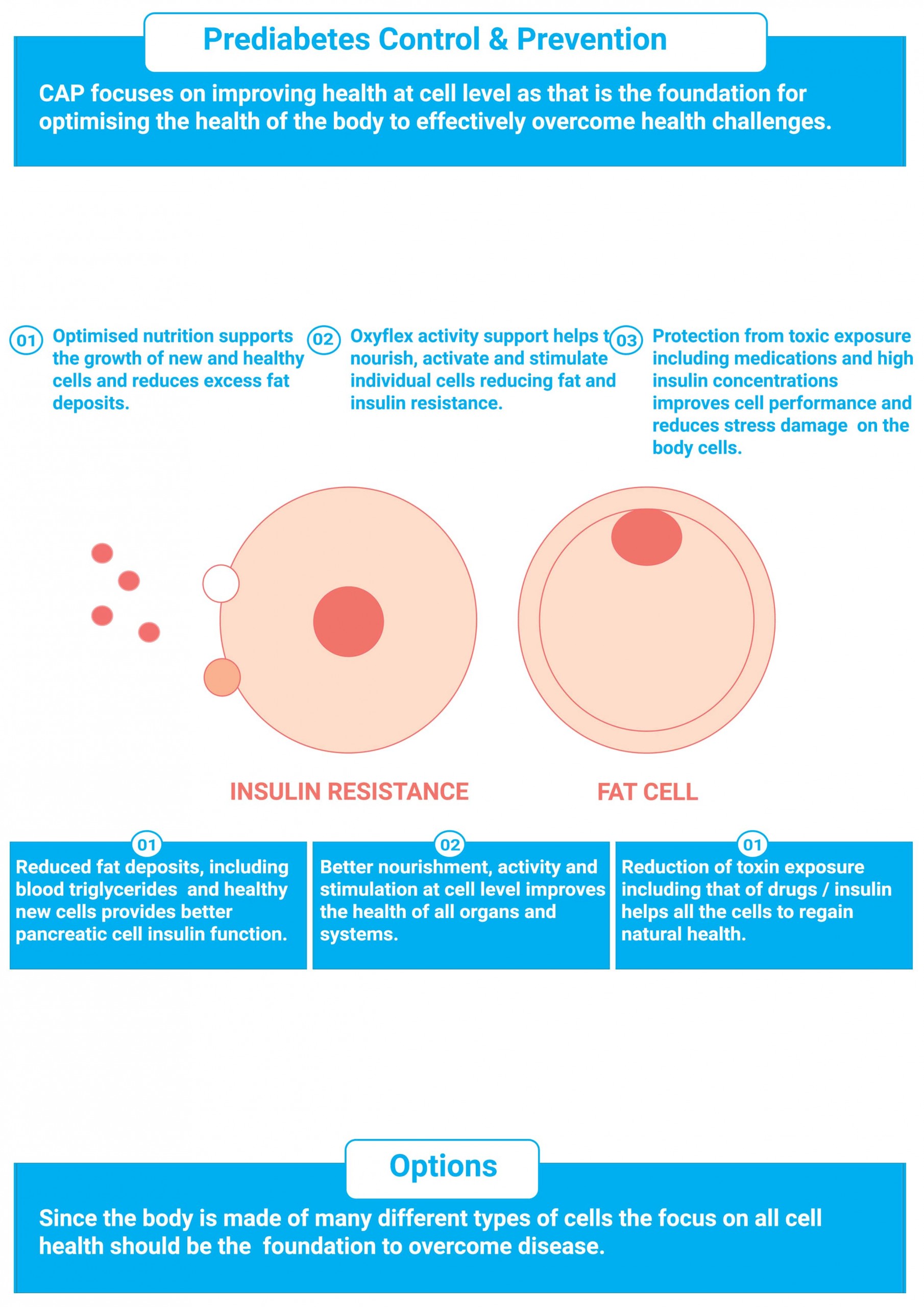
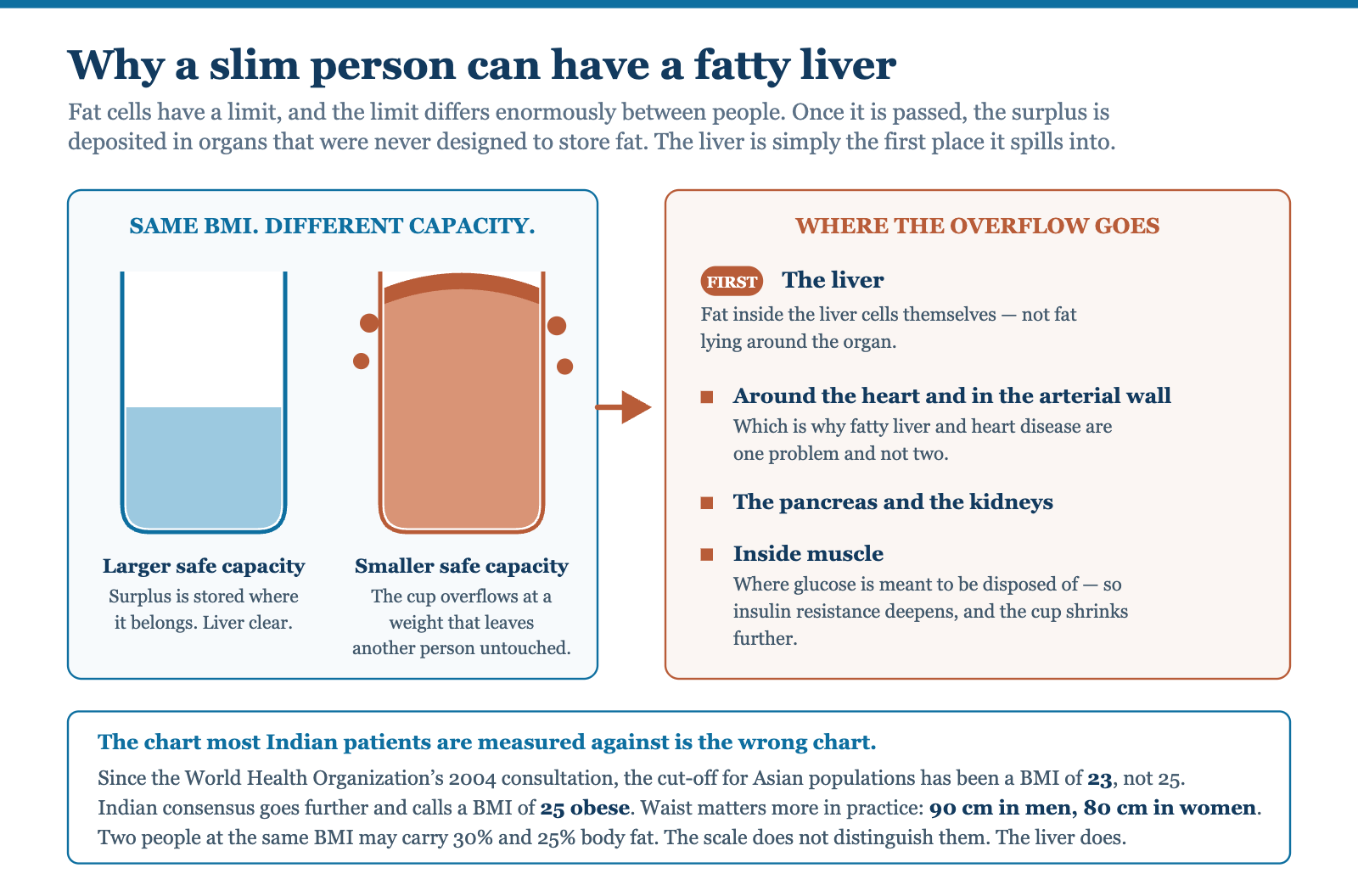
Fatty liver is not fat lying around the liver. It is fat inside the liver cells themselves, in an organ that was never designed to store it.
The body stores surplus energy in fat cells, and those cells have a limit. When the limit is reached — and it is reached at very different points in different people — the surplus has to go somewhere, and it begins to be deposited in organs that are not storage organs at all: the liver first, then around the heart, the pancreas, the kidneys, and inside muscle. This is ectopic fat, and the image worth holding is an overflowing cup. The liver is simply the first place the cup spills into.
That explains the finding which otherwise makes no sense — fatty liver in people who are not fat, and increasingly in children who look perfectly slim. Their cup is small. Someone with a modest capacity to store fat safely will begin depositing it in the liver at a weight that would leave another person untouched. The scale does not measure the size of the cup.
MASLD and MASH — and why your old report says something different
The names changed in June 2023, by international consensus across the American, European and Latin American liver societies, and patients are entitled to know that nothing about their disease changed with them.
- MASLD — metabolic dysfunction-associated steatotic liver disease — is what used to be called NAFLD, non-alcoholic fatty liver disease. Fat in the liver, in someone with a metabolic risk factor.
- MASH — metabolic dysfunction-associated steatohepatitis — is what used to be called NASH. The same fat, now with inflammation and cell injury alongside it. This is the stage at which scarring accelerates.
- MetALD is a new third category, for metabolic liver disease in someone who also drinks significantly. It exists because the old division into “alcoholic” and “non-alcoholic” forced a false choice on a large group of real patients.
The old names were retired partly because “fatty” and “non-alcoholic” were judged stigmatising, and partly because defining a disease by what it is not was never good medicine. So a scan report from three years ago saying NAFLD and a report from this year saying MASLD describe the same liver. It is worth saying plainly, because a change of name on a medical report frightens people.
The sequence that matters
Fat, then inflammation, then fibrosis, then cirrhosis, and then a materially raised risk of liver cancer. Each step takes years, and none of them hurts. That is the entire problem with this disease: it has no symptoms during precisely the period when it is most reversible, and it produces symptoms at the stage when it is least.
What a patient is told at the first step — that grade 1 or grade 2 fatty liver is very common and nothing to worry about — is true of most people who have it and wrong about the ones it is not true of. Most will never progress. Some will. The reassurance is given to everybody because at present there is no reliable way, in a busy clinic, of saying which is which.
“Status of scarring” — why one grade 1 progresses and another does not
The grade on an ultrasound report describes how much fat is visible. It says very little about the thing that actually determines the future, which is whether the liver is currently being injured and currently laying down scar.
Two people can both be told grade 1. In one, the fat is sitting there in a liver that is otherwise not inflamed, and in twenty years it may still be sitting there. In the other, the same quantity of fat is accompanied by active inflammation, a rising insulin level and a steadily stiffening organ, and that person is moving. The grade is a photograph; the status of the scarring is the direction of travel. A patient given a grade and no more information has been given the less useful half.
This is why the FibroScan matters, and why it is worth understanding what its two numbers mean.
| The two numbers on a FibroScan | What it measures | How it is read |
|---|---|---|
| CAP | Fat in the liver — steatosis. | This is the number that falls first, and falls fastest, once the correction starts. |
| kPa liver stiffness |
Scarring — how stiff the liver tissue has become. | In metabolic liver disease: below 8 rules advanced fibrosis out; 8 to 12 is a grey zone needing a second test; above 12 makes advanced fibrosis likely. |
Two qualifications belong with those numbers, first, those thresholds are not fibrosis stages — they are levels at which advanced scarring is ruled in or ruled out, which is a different and more modest claim than a grade, second, they differ by cause: in alcohol-related liver disease the same numbers mean something considerably less serious, and a single scale cannot be applied to everyone.
What changes, in practice
What is looked for is movement in both FibroScan numbers together, alongside the metabolic ones — and the order in which they move is fairly consistent.
Liver fat falls first and fastest. It is the most readily reversible part of the whole process, which is precisely why the earliest stage — the one patients are told not to worry about — is the best stage to act. Stiffness follows more slowly, over months rather than weeks. The metabolic numbers move within the same period: HbA1c, fasting insulin, triglycerides, liver enzymes. Symptoms that people had stopped attributing to anything — fatigue, heaviness after meals, poor sleep, a general sense of being below par — commonly improve early, often before the reports confirm anything.
In this practice, liver stiffness readings starting well above the level at which advanced scarring is considered likely have come down substantially inside ninety days, and where patients have continued the correction, the improvement has held at follow-up into a second year. This is clinical observation from a single centre rather than a trial result, and should be read as that.
Two honest qualifications belong with any such statement. Liver fat itself raises the stiffness reading, so a fall in kPa always reflects some fall in fat — which is why the CAP score is read alongside it here rather than the stiffness quoted alone. And liver stiffness measurement varies somewhat within the same person, so small movements should not be over-read in either direction. Large ones are not explained by measurement variation.
The individual patients, with their reports and their scans, are discussed in full in the sessions linked below, and are a subject for separate articles rather than this one. What matters here is the pattern, not any one person’s figures.
Where this does most, and where it does least
Ranked from the greatest effect to the least:
- Fat in the liver, before inflammation. This is where the work is easiest, fastest and most complete, and it is exactly the stage at which patients are told there is nothing to worry about.
- MASH, and fibrosis that is still accumulating. Slower, and it requires the whole correction rather than part of it — but this is the stage at which the direction of a life changes.
- Compensated cirrhosis — a scarred liver that is still doing its job. Improvement is real here, and structured correction still matters, but the aim shifts: it becomes about not progressing, about how well the person functions, and about the load the liver is being asked to carry. Surveillance continues throughout.
- Decompensated cirrhosis, and liver cancer. This is not the treatment for either. That is hepatology and oncology work.
The pattern is the same one that runs through every condition this practice treats: what sits on top of the structure changes, and the structure itself does not.
Weight is the wrong measure
The instruction given to nearly every patient with fatty liver is to lose weight. It is not wrong, but as a measurement it is close to useless, for three separate reasons.
The chart is the wrong chart. A BMI of 25 is the point at which the standard international chart calls a person overweight. That chart was not built on Indian bodies. Since the World Health Organization’s expert consultation in 2004, the recognised cut-off for Asian populations has been 23, not 25 — and the Indian consensus goes further, classifying a BMI of 25 as obese, at the number where the Western chart still says merely overweight. Waist circumference is the more useful measure in practice: 90 cm in men and 80 cm in women. A great many Indian patients told their weight is fine have been told so from the wrong table.
Two people at the same BMI are not in the same condition. One person with a body mass index of 25 may carry 30% body fat; another at the same BMI may carry 25%. The number does not distinguish them, and the liver does. What matters is the ratio of lean mass to fat mass, which is why body-composition analysis is done here at the start and repeated, rather than weight alone.
And weight loss the wrong way makes it worse. Dieting without adequate protein and without graded movement takes muscle first — and muscle is where glucose is disposed of. A patient who loses eight kilograms and much of it from lean tissue has become metabolically less capable while the scale congratulates her. This is the commonest way a well-motivated patient goes backwards.
The related point about exercise is that walking is not enough by itself. It is good, and it should continue. But the body has more than six hundred muscles, and walking asks a modest number of them to do anything. The complaint heard constantly in the clinic — I walk ten kilometres a day and my tummy has not changed — is not a mystery.
One organ affected? Check every organ
A fatty liver is not a liver problem that happens to have occurred. It is the visible end of a metabolic state that is affecting everything.
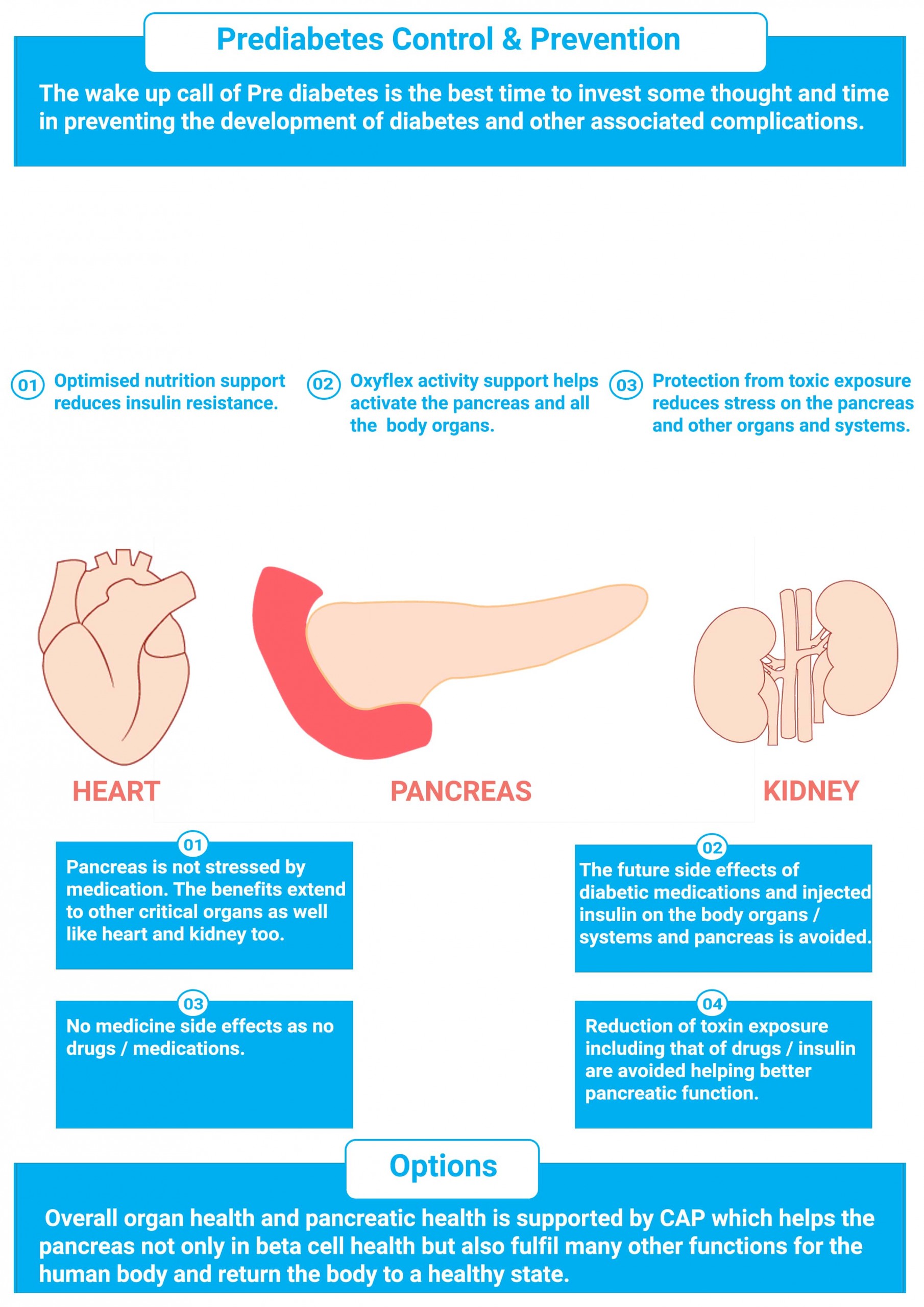
Fatty liver and heart disease are one problem, not two. The same insulin resistance, the same triglycerides and the same inflammatory state that fill the liver with fat are filling the arterial wall, and a patient found to have one should be assumed to have the other until it has been looked for. In this practice the finding of a fatty liver is a reason to examine the heart, the kidneys, the pancreas and the vascular system, not a reason to prescribe for the liver.
Diabetes is the single biggest driver of liver scarring. The relationship runs in both directions and each end worsens the other: a fatty liver drives insulin resistance, and insulin resistance fills the liver. It is why the metabolic numbers and the liver numbers tend to move together, and why a long-standing diabetic who has never had a liver scan is the most under-investigated patient in the room.
There is a genuine question here, which this article raises rather than answers: whether the high circulating insulin levels involved in treating type 2 diabetes are themselves contributing to the process in the liver.
The fatty acids
Two families of fat, both essential, and the balance between them is what governs the inflammatory setting of the body. Omega-6 fatty acids drive inflammation; omega-3 fatty acids resolve it. Both are necessary — this is a ratio, not a good fat and a bad fat.
The ordinary Indian kitchen has moved a long way in one direction over two generations, through refined seed oils, repeatedly heated oil, and hydrogenated fats. Correcting that balance is unglamorous and it is one of the more powerful things available, because it changes the setting rather than treating an episode.
The three-month trap: new numbers, old habits
The most dangerous moment in this treatment is the day the reports come back good.
Symptoms have gone, the scan is better, the blood tests have normalised, and the conclusion a person naturally draws is that the problem has been dealt with. The habits that produced the problem then return, gradually and reasonably, and eighteen months later the numbers are where they started. It is the commonest way a good result is lost, and it is measurable when it happens.
The correction is not a course of treatment that finishes. It is a change in how the body is run, and the ninety days exist to make it practicable and to prove it works — not to complete it.
Is there medicine for it now?
For a long time the answer was simply no. That has changed, and the change is worth understanding accurately, because it is often reported as though the problem has been solved.
In March 2024 the first drug for metabolic liver disease was approved — resmetirom, marketed as Rezdiffra. It remains the only approved treatment. Three things are true of it, and all three come from its own licence rather than from any opinion about it:
- It is approved “in conjunction with diet and exercise”. Those words are in the label. The drug was never licensed as an alternative to correcting the cause; it was licensed as an addition to doing so.
- It is approved for MASH with moderate to advanced fibrosis, and not for cirrhosis — the stage at which patients most want a medicine is outside the indication.
- It holds accelerated approval, meaning the benefit is expected to be confirmed by trials that are still running.
None of that is an argument against the drug, and no one should read it as a reason to decline something a hepatologist has recommended. It is an argument about what medicine can and cannot reach. The first drug ever approved for this disease is licensed alongside the correction of diet and activity — which is as clear a statement as the field has made that no medicine removes the cause.
Medication — how reduction actually happens
Most patients with fatty liver are not taking anything for the liver. They are taking medicines for the conditions that produced it: diabetes, blood pressure, cholesterol, and often several more.
Those are the medicines that come down, and the sequence is specific. As body composition corrects and insulin sensitivity returns, blood sugars begin to fall on the existing doses — which is a reason to reduce medication and, if nothing is done, a reason for hypoglycaemia. This is why the process cannot be done at home.
- Reports lead in liver and metabolic disease — HbA1c, fasting glucose and insulin, the lipid panel, the liver enzymes, and the repeat FibroScan. This differs from a condition like arthritis, where symptoms lead; here a patient often feels well long before the numbers have earned a reduction, and equally may feel nothing while the numbers move.
- Insulin and sulfonylureas are looked at first, because they are the agents that cause hypoglycaemia when the body’s own control improves underneath them.
- Monitoring is daily during the active phase — not weekly, and not at the next appointment. Sugars can move quickly.
- No dose should be changed alone. Reduction is planned with the doctors, in steps, and confirmed by repeat testing before the next step. It is not done on a good week.
- Nothing here is a reason to stop a medicine on the strength of an article. The relationship with the treating doctor continues throughout, and patients are encouraged to keep it.
When several conditions improve together
Patients arrive for one thing and are usually carrying five. The man with the fatty liver has diabetes, hypertension, a lipid abnormality, disturbed sleep and a knee that hurts, and he has a different specialist and a different prescription for each.
What is repeatedly observed here is that when the correction is done, those conditions improve in parallel — not because each has been treated, but because none of them was ever a separate disease. They were one metabolic state expressing itself in several organs, and the state is what was corrected.
This is the strongest thing the approach has, and it is the point rather than a side effect. A single effort, undertaken once, producing relief across several specialities at the same time. It is also why the fourth patient above was re-checked on his arteries rather than his liver: what improved was the body, not the organ.
To put it as it is put in this clinic: we are treating the body, not the liver.
Afterwards — what it takes to keep it
The benefit lasts as long as the practice does, and for as long as the body still has the capacity to repair. Patients who keep it up have shown readings lower in the second year than at six months; where the protocol has stopped, readings have risen again.
Maintenance is considerably lighter than the active phase — the corrected pattern of eating, a shorter daily routine, sleep protected, and periodic re-testing. Relapse is ordinary and it is not a verdict on anybody. People run into life. The response is to restart, and the response of the biology is, in this practice’s experience, much the same the second time.
The four optimization domains
| Domain | What it addresses |
|---|---|
| Optimal nutrition | Supplying the full range of nutrients the body needs in order to repair, including dietary fibre, in a nutrient-dense form with minimal additives — and correcting the balance of fats, which in liver disease is not general advice but acts on the mechanism itself. |
| Optimal exercise | Gentle, segmental movement performed lying down and then sitting, working through the body part by part in a set order, graded to what the person can manage. No gym or equipment is involved, so it remains possible with fatigue, obesity or poor stamina. |
| Rest and sleep | Recovery, without which repair and metabolic regulation do not function well however good the nutrition. Disturbed sleep and insulin resistance worsen one another, and obstructive sleep apnoea is common in exactly this group of patients and frequently undiagnosed. |
| Reduced toxin load | Lowering avoidable exposure — alcohol and tobacco first, then additives and unnecessary chemical load. In liver disease alcohol is not a lifestyle question but a direct second injury to the organ already under strain. |
Delivered together and consistently, these same four domains are intended to create favourable conditions at cell level: better delivery of oxygen and nutrients into cells, and better clearance of waste out of them.
Carbohydrate deserves its own note, because it is where most patients struggle and because the struggle is not a matter of willpower. Refined carbohydrates and sugar produce a cycle of craving that behaves like an addiction, and treating it as a moral failing is both unkind and ineffective. It is handled here as something to be worked through with support, over the first weeks, rather than as a decision the patient should simply have made.
Watch the full sessions
ഈ വിഷയം മലയാളത്തിൽ — the same subject in Malayalam
Both sessions below are in Malayalam, from Dr Jolly Thomson’s Malayalam channel.
Why the first 90 days matter
Many cells renew quickly. Most white blood cells survive less than a week, and the linings of the gut and airways turn over in roughly one to two weeks. The working estimate is that a large majority of these fast-renewing cells may be replaced within about 90 days, which is why improvement in symptoms, in blood tests and in liver fat tends to arrive within that period rather than after years. Liver cells themselves are unusually good at renewal, which is part of why this organ responds as it does. Blood vessel walls, bone and nerve change over considerably longer, and established scarring longer still.
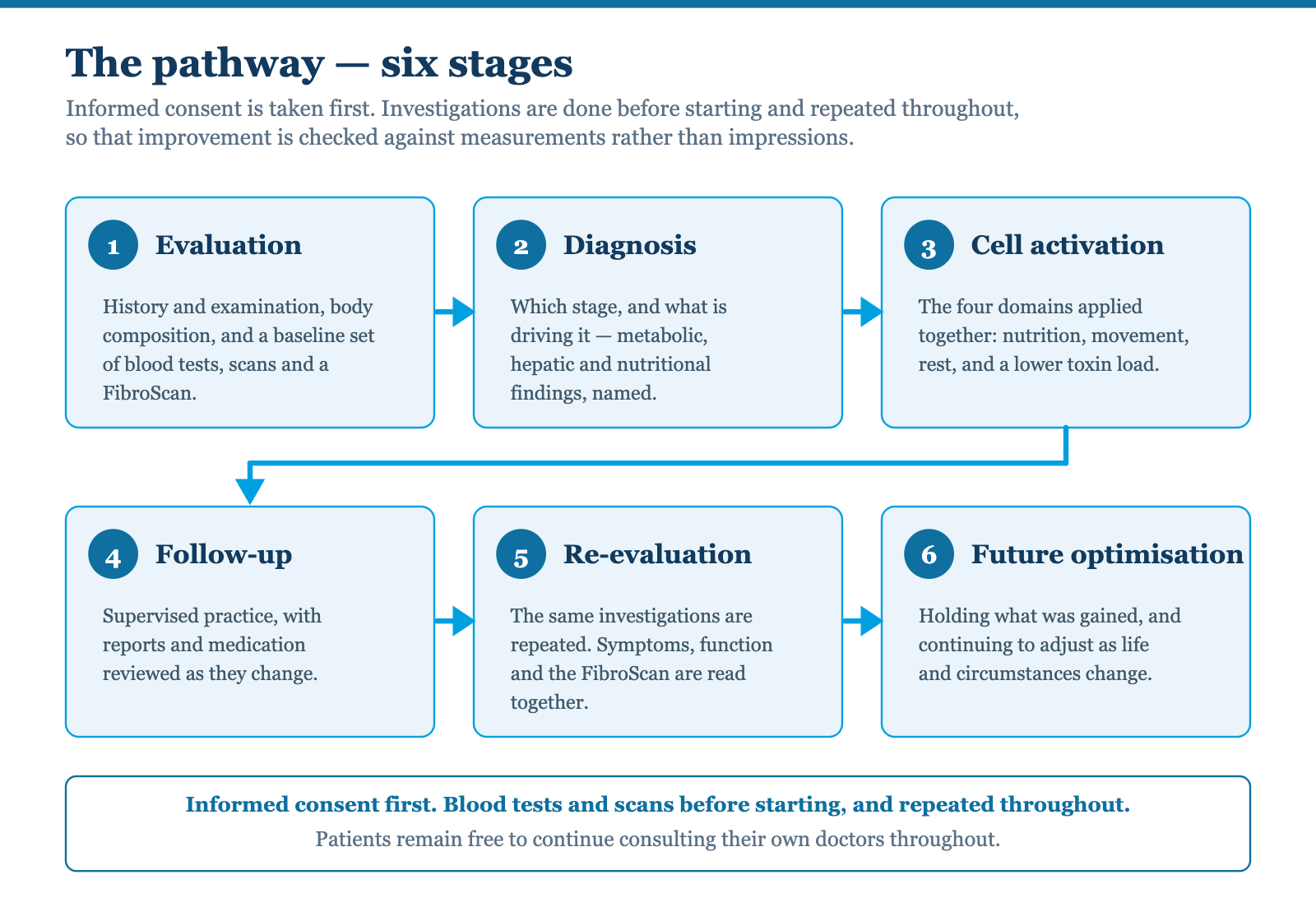
The pathway runs through six stages — evaluation, diagnosis, cell activation, follow-up, re-evaluation and future optimisation. Informed consent is taken first, and blood tests, body-composition analysis and scans are done before starting and repeated throughout. In liver disease the FibroScan is repeated as part of that, which is what makes the change measurable rather than a matter of impression. The first ninety days are the active phase; a further period consolidates the body-composition correction.
Suitability
To take part, a patient must be clinically stable, and fit mentally and physically — able to understand, learn and practise the routine, able to take at least a liquid diet along with the centre’s nutritional support, and able to do gentle exercise lying down and sitting. A patient should be able to walk in, with support if necessary. The first 90 days must be given real priority. Where physical or mental limitation prevents independent practice, a family member enrolls alongside — and in the more difficult cases, that family support is what decides the result.
It is not suitable where an organ has already failed — a decompensated liver, very poor cardiac function, severely reduced kidney function, or a degree of cognitive or psychological instability that makes learning the routine impossible. There has to be enough working body left to repair with. For those too unwell to travel, a telemedicine consultation with current records is the place to start.
It is also worth saying what happens when it does not work. Where a patient is not improving — most often because circumstances have made the protocol impossible to follow rather than because the biology has refused — the course is to continue under hepatology care. That care is theirs throughout in any case: patients remain free to keep consulting their own doctors, and are encouraged to.
Frequently asked questions
My scan says grade 1 fatty liver and I was told not to worry. Should I?
Most people with grade 1 will not progress, so the reassurance is statistically reasonable. But it is given to everyone, including the minority who will, and the grade alone does not distinguish them. What distinguishes them is whether the liver is currently inflamed and currently stiffening — which is what a FibroScan, liver enzymes, HbA1c and fasting insulin together indicate. Grade 1 is the best possible moment to act, because it is the stage at which the fat comes out most completely.
I have cirrhosis and I have been told the scarring is permanent. Is there any point?
There is, and the aim is different from what it would be earlier. Regression of cirrhosis has been documented in the medical literature — about a third of one group of patients with compensated metabolic cirrhosis, over several years — so it is not accurate to say the state is fixed. But it should not be promised either. What structured correction is for at this stage is halting progression, reducing the load the liver is carrying, and improving how well the person functions day to day. Surveillance for varices and for cancer continues throughout, and hepatology follow-up continues. Where the liver has decompensated, this is not the treatment.
If my kPa comes down, is that the scarring or just the fat?
Partly both, and it is a fair question. Fat in the liver raises the stiffness reading, so a fall in kPa always reflects some fall in fat. That is why the CAP score is measured alongside it here rather than the stiffness alone — where fat has come down and stiffness has come down further, more than the fat has changed. Small movements should not be over-interpreted in either direction; large ones are not explained by measurement variation.
I am not overweight. How do I have fatty liver?
Because the capacity to store fat safely differs enormously between people, and it is generally lower in Indian bodies than the standard charts assume. When that capacity is exceeded, fat is deposited in organs instead — the liver first. This is why fatty liver is now found in slim adults and in children who look perfectly well, and why waist measurement and body composition tell you more than the scale does.
I take insulin and other medicines for diabetes. What happens to them?
They are among the first to be looked at, because when insulin sensitivity improves the existing dose can become too much and cause hypoglycaemia. Sugars are monitored daily during the active phase, and reductions are planned and made by the doctors in steps, confirmed by repeat testing. No dose should be changed alone, and nothing in this article is a reason to alter a prescription.
What happens if the numbers go back up later?
They can. When the practice stops, the underlying tendency is still there and the readings drift back. It is ordinary, it is not a verdict on the patient, and the answer is to restart rather than to conclude that it did not work. In this practice’s experience the body responds again.
Is this available for patients outside Kerala?
Yes. Telemedicine consultation is available for patients outside Kerala and outside India, and the sensible starting point is a consultation with current records — recent scans, liver enzymes, HbA1c and the medication list.
Related reading
- Age-Related Lifestyle Diseases: Reversing Insulin Resistance and Inflammation — insulin resistance and inflammaging, the metabolic pattern underlying fatty liver itself.
- Arthritis: Reducing Medication and the Need for Surgery — the same division of labour in joint disease, and the clearest account of what “structural” means as a limit.
- Autoimmune Diseases: Reversing Autoimmune Inflammation — the immune mechanism, and what “reversal” means where a tendency is inherited.
- Cancer: Health Optimization Alongside Oncology Care — relevant to the raised cancer risk that untreated cirrhosis carries.
- CSLC-CAP — approach summary and information sheet — consent, investigations, the pathway and eligibility in one place.
Important note
⚠️ IMPORTANT: This article is educational and is not medical advice. Do not start, stop or change any medication without your treating doctor’s supervision.
The patients described here are from this practice, reported as clinical experience rather than as a trial. Individual results depend on how closely the protocol is followed and on how much capacity the body still has to repair. Whether to accept or decline any treatment is a decision for the patient and their family. Use this article to ask better questions of your own doctors, and to decide together.