Lung Disease: Asthma, Allergies, ILD, COPD, Fibrosis — Correcting the Inflammation Underneath And Reversing Disease Process
Lung Disease: Asthma, Allergies, ILD, COPD, Fibrosis — Correcting the Inflammation Underneath And Reversing Disease Process
- Dr Jolly Thomson MBBS MD
- September 29, 2026
- 0 Comments
How to reverse Lung & Respiratory Tract Disorders – Role Of CSLC-CAP (Clinically Supported Lifestyle Correction With Cell Activation Protocol) – Benefits & Limitations
Dr Jolly Thomson MBBS MD · Life Care Centre, Thevara, Kochi
Abstract
Background. Most people living with asthma or allergy are managing well enough. The inhaler works. The antihistamine works. What almost nobody is told is why the reaction keeps coming back, what it is doing to the rest of the body between attacks, or where it ends if nothing underneath is changed.
Two kinds of care. Medical care treats what has already appeared: a bronchodilator for the wheeze, an antihistamine for the reaction, a steroid for the inflammation. Health care works on the biology that keeps producing them. Both are necessary, and they are not the same work.
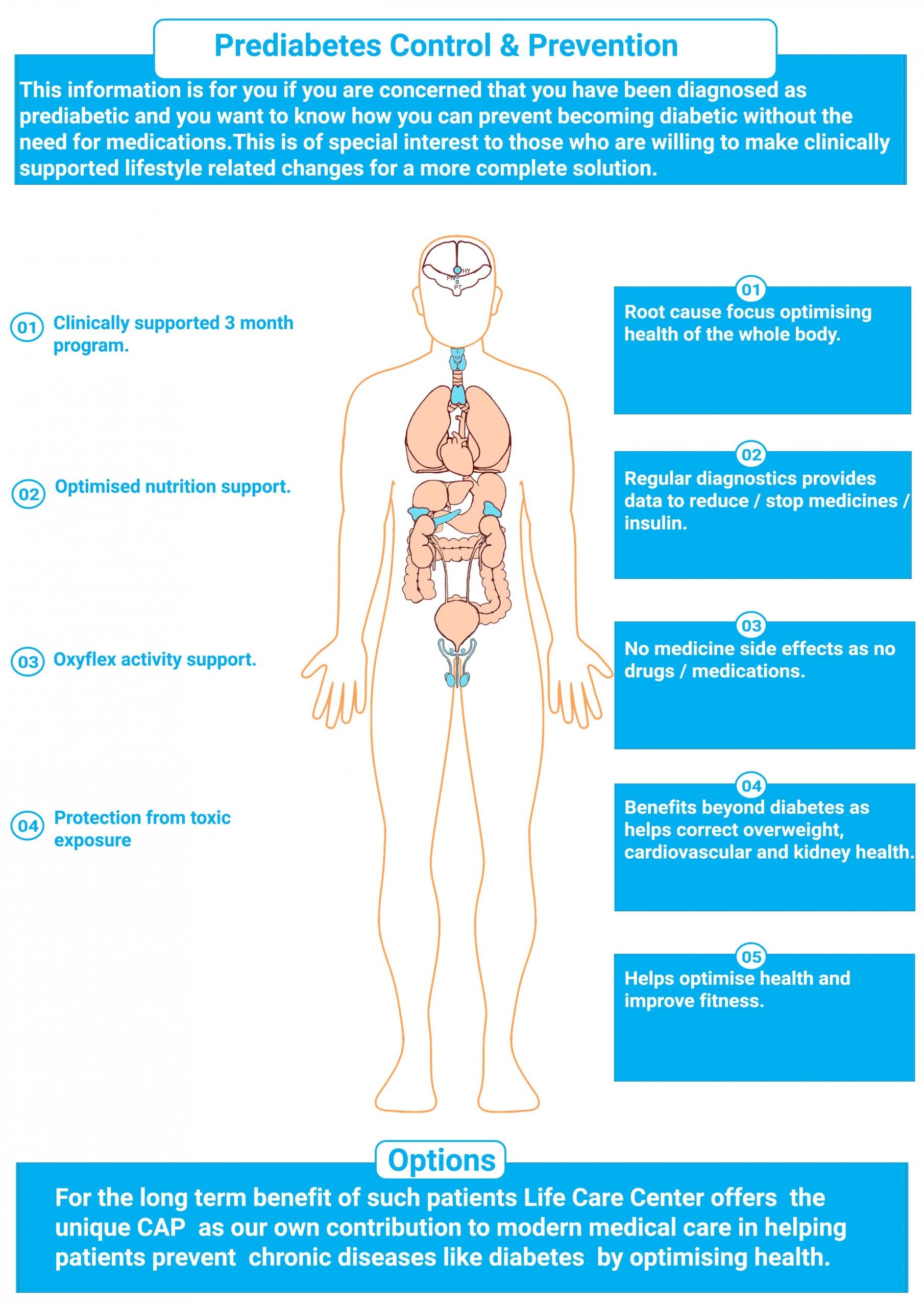
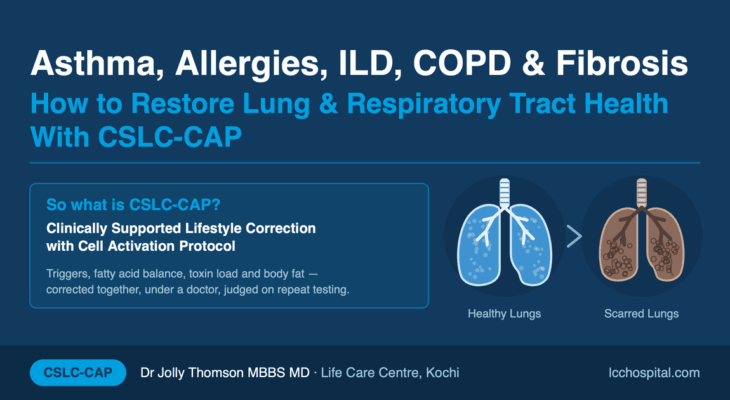
What CSLC-CAP is. Clinically Supported Lifestyle Correction, with the Cell Activation Protocol, is health care in that sense — nutrition, activity, rest and toxin load corrected in a structured way, supervised by MBBS and MD doctors, and judged on repeat testing and symptomatic relief. Its purpose is to bring patients out of regular medication as the reports allow, to reach the conditions that have not yet appeared, and to hold a person at the best health their biology allows.
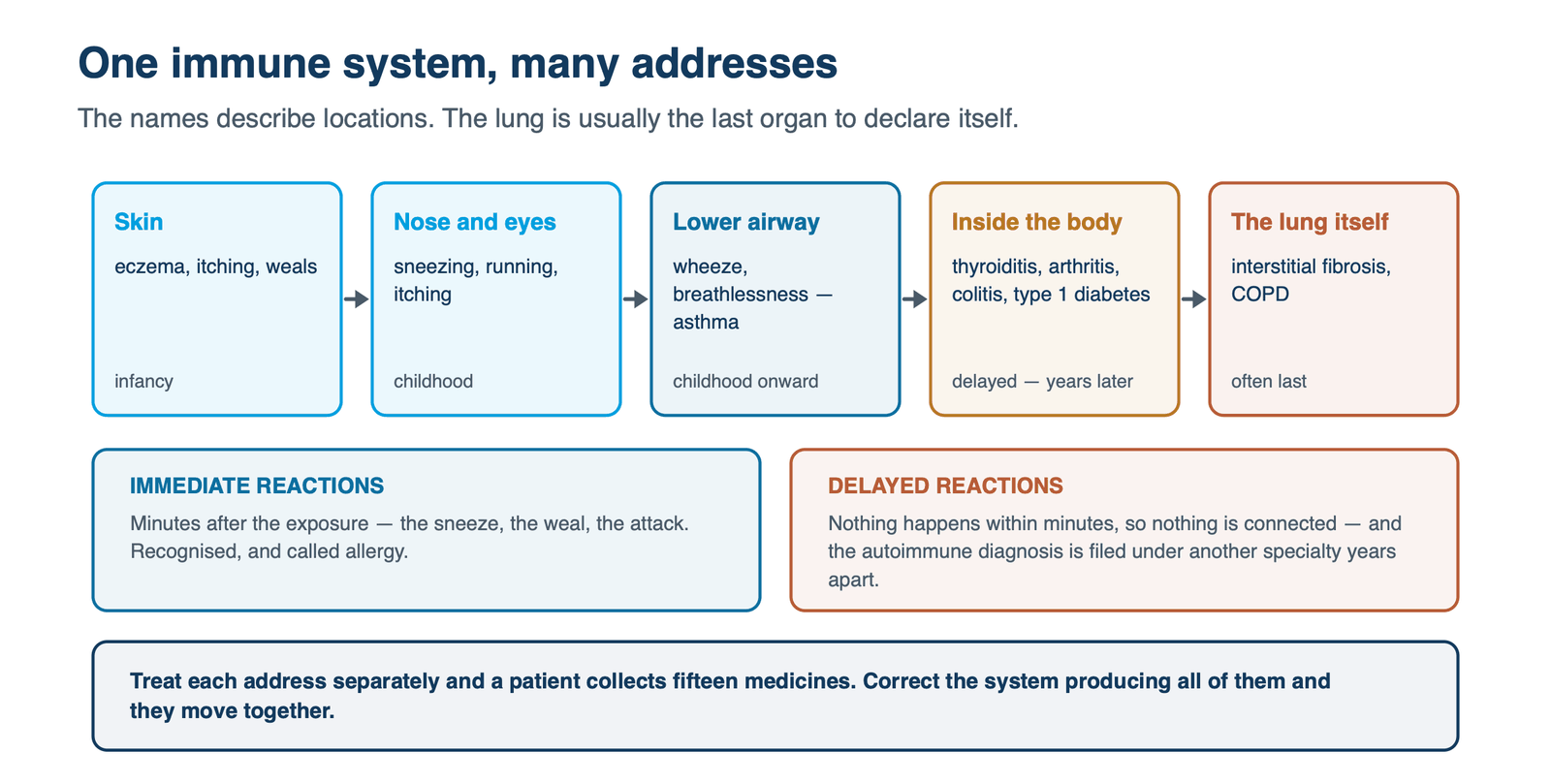
One system, many addresses. Asthma is not a disease of the airway, allergy is not a disease of the skin or the nose, and the autoimmune disease that arrives fifteen years later is not unrelated to either. They are one immune system behaving the same way in different places. The airway is where the reaction is visible. It is not where it starts.
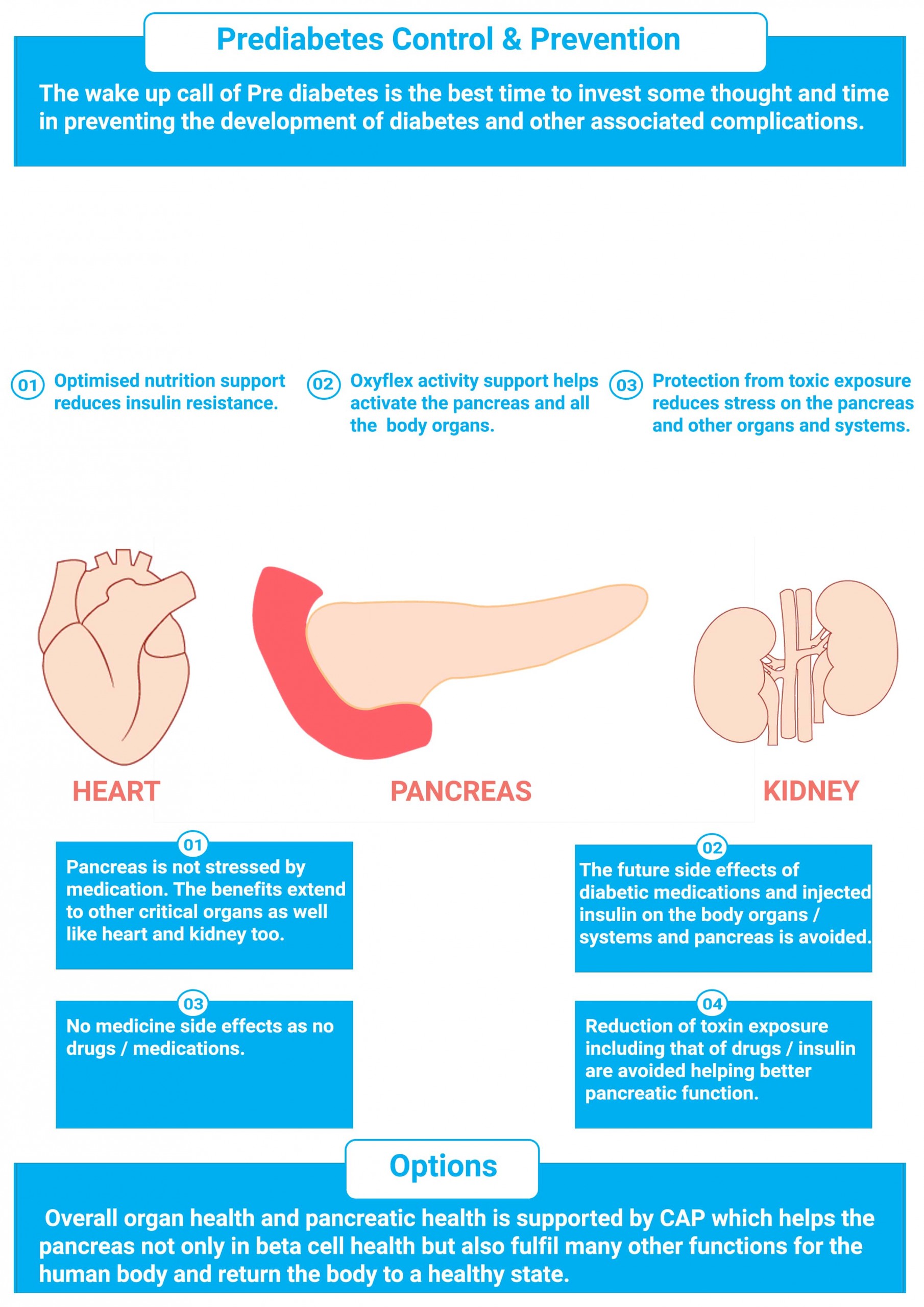
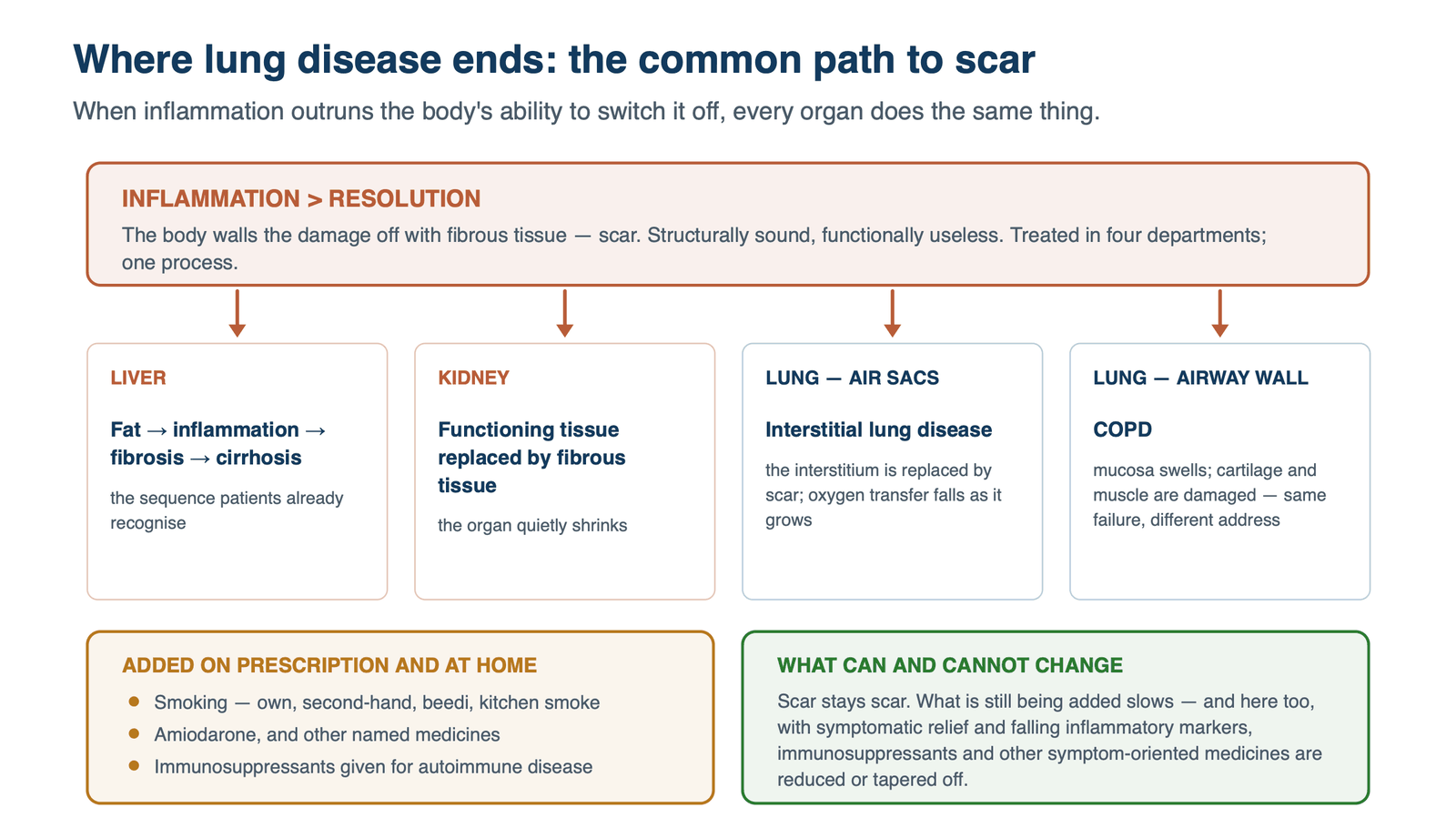
Where it ends. When inflammation in any organ outruns the body’s ability to switch it off, the body walls it off with scar. Fatty liver becomes fibrosis and then cirrhosis. The kidney is replaced by fibrous tissue and shrinks. The same process in the lung is interstitial lung disease: the cells between the air sacs are destroyed and replaced by scar, and oxygen transfer falls as the scar grows. COPD is the same failure in a different compartment — the airway wall itself, its cartilage and muscle, rather than the air sacs.
Why the lung matters here. The lung is usually the last organ to declare itself. By the time a scan reports fibrosis, that patient has often carried allergy, thyroid disease, arthritis, a bowel condition, diabetes or a stent for years. What is called idiopathic means the cause was not identified. It rarely means the history was empty.
What is assessed. The individual’s own triggers — food, contact and inhalant, which differ from person to person and cannot be read off a general list. Inflammatory markers. Nutritional status, including the fatty acid balance the immune system uses as raw material. Body composition. The other conditions that almost always travel alongside, and the full medicine list, because much of it is immunosuppressive.
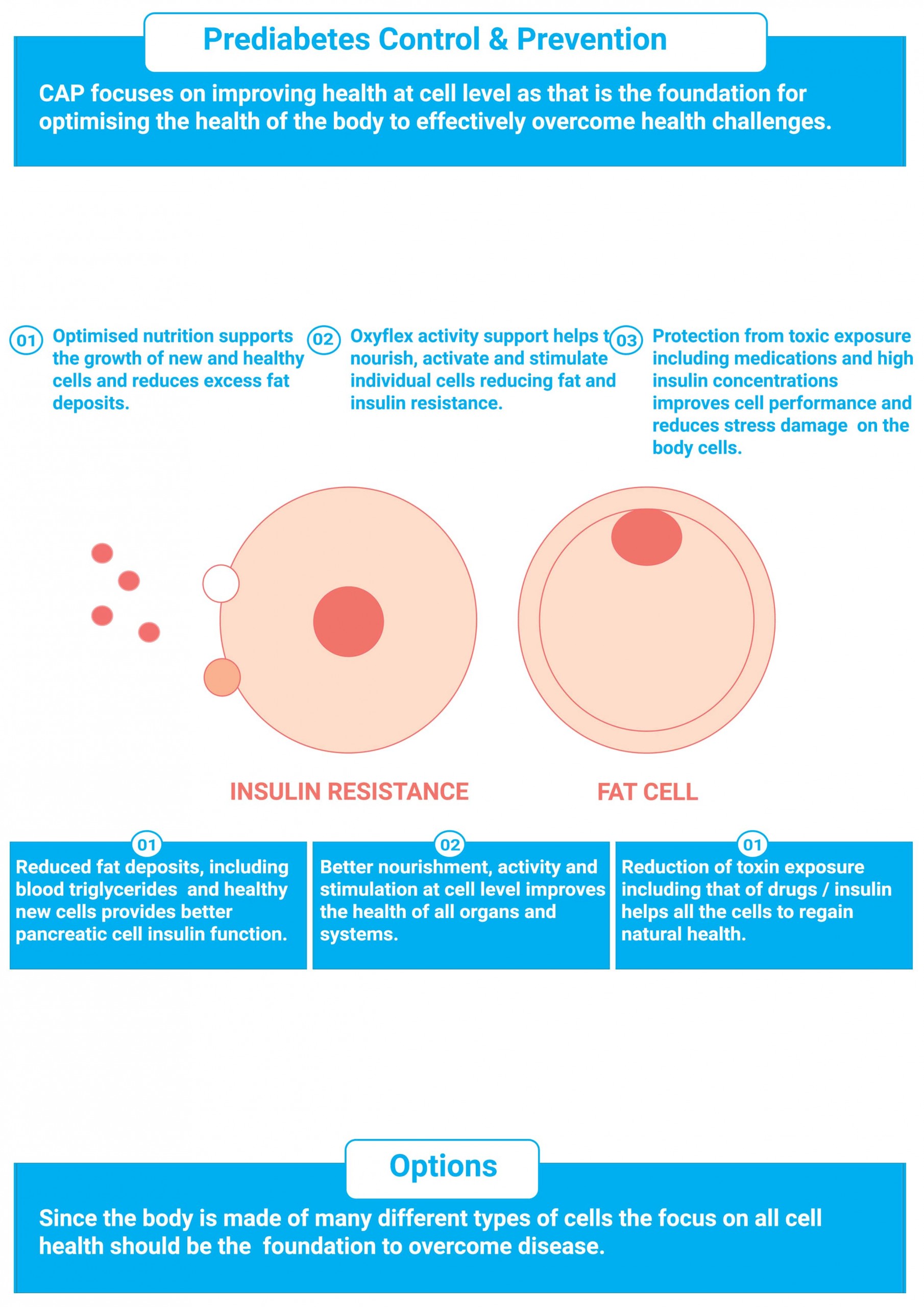
What is corrected. Exposure to that person’s own inflammatory substances is reduced. The omega-6 to omega-3 balance is corrected, because the body builds both its inflammatory and its anti-inflammatory signals out of those two fats. General toxin load is reduced. Excess fat is reduced, because fat tissue is itself an inflammatory organ. Every existing medicine continues while that is done.
What the measurements show. In this practice, when the biology is corrected and the person’s own triggers are excluded, patients with allergic and asthmatic illness commonly come out of symptoms and out of regular medication — and the conditions alongside move in parallel rather than waiting their turn.
What does not hold itself. The correction lasts as long as the practice does. Around travel, stress, family problems or an infection, the biology tends to drift back and the reactions with it. That is treated as expected, not as failure: the trigger is found, medication is used for a short while, and the correction is restarted.
Where it does not reach. Established structure. Lung replaced by scar stays scar, and fixed airway remodelling does not unwind. Neither does the inherited tendency. What sits on top of that structure is what moves — and in a fibrosing lung, slowing what is still being added, with symptoms and medicines coming down, is the realistic aim.
The practical point. Accidental exposure still happens, and when it does, medication is needed for a short while. The inhaler stays in the bag. What changes is how often it is needed, how large the reaction is, and — the part that matters most — whether the medicine still works when it is finally needed.
Conclusion. Asthma, allergy, COPD and lung fibrosis are managed as separate diseases of separate organs. They are better understood as one immune system reacting in different places, with scar as the end point when inflammation is not resolved. Medicines control the reaction, and they are needed on the day of an exposure. What changes the course is correcting what keeps producing the reaction — the person’s own triggers, the fatty acid balance, the toxin load and body fat — measured, supervised, and followed by reduction of medicines as the reports allow.
Medical care, health care, and where CSLC-CAP sits
There is a difference between the two, and it decides what a patient can expect.
Medical care treats what has appeared. Breathlessness gets a bronchodilator. A blocked nose gets a drop. A cough gets a syrup. Inflammation gets a steroid. Each of these is correct, often necessary, and sometimes life-saving. None of them is designed to change what the body will do next month.
Health care is the attempt to prepare the body for what comes next. It asks a different question: not what is happening now, but what in this person’s biology keeps producing it. Those two questions have different answers, and a patient who receives only the first will spend years managing a condition nobody is trying to change.
This article is about the second question. It does not replace the first.
CSLC-CAP is health care, done in a clinical setting. In airway and lung disease its purpose is fourfold: to bring patients out of regular medication as the reports allow; to stop the escalation from one inhaler to injections and biologicals, by correcting what keeps producing the reaction; to reach the conditions that have not yet appeared, because allergy left running tends to move inward; and to keep a person at their best by working with the biology rather than overriding it.
What improvement means here
Respiratory medicine has recently adopted a word for the outcome described here, and it is worth borrowing precisely.
Until 2023, asthma guidelines aimed at control — symptoms suppressed by a stepwise addition of drugs. Several national guidelines have since named remission as a treatment goal. Clinical remission is defined as twelve months or more with no exacerbations, no asthma symptoms and no oral steroid use, together with stable or improved lung function. Complete remission is that same state without any regular controller treatment at all.
The specialty is also clear about what remission is not. It is not a cure. The disease may reappear. A patient in complete remission off treatment has a quiet disease, not an absent one.
That is exactly the outcome described here, and exactly its boundary. In this practice, patients with asthma and allergic illness commonly reach a state where symptoms have settled and regular medication is no longer needed. They are not told they no longer have asthma. They are told to keep the inhaler with them, because an unexpected exposure can still produce a reaction, and when it does, medication is the right answer for a short while.
For COPD and for fibrosing lung disease the word is different, because scar that has already formed stays. But the inflammation still adding to it responds in the same way. In these cases too, with symptomatic relief and reduction in inflammatory markers, immunosuppressants and other symptom-oriented medicines are reduced or tapered off. What is still being added slows, the function being lost to inflammation rather than to scar can be recovered, and a medicine list that is itself part of the problem gets shorter.
One immune system, many addresses
The names describe locations, not diseases.
When the same over-reaction happens in the skin, it is itching and weals. In the nose, it is sneezing and running. In the eyes, it is itching. In the lower airway, it is wheeze and breathlessness, and we call that asthma. The mechanism underneath is one mechanism: an immune system responding to something harmless as though it were dangerous.
This is why the sequence so many patients describe is not a coincidence. Eczema in infancy, then allergic rhinitis, then asthma in childhood; or allergy that settles at puberty and returns in the fifties alongside something new. It is one system moving between sites.
It also explains the part patients are never told. Allergy that continues for long enough does not simply persist — it tends to move inward. A child with several months of allergic history who then develops type 1 diabetes; an adult whose allergy is ignored for a decade and who arrives with thyroiditis, with arthritis, with ulcerative colitis. The immune system that has been over-reacting to the outside begins to misread the inside.
The reason this is missed is a matter of timing. Immune reactions come in four types. The first is immediate and obvious — the sting, the sneeze, the weal, the attack that follows a specific exposure within minutes. We recognise those and call them allergy. The reactions that produce autoimmune disease are the delayed ones. Nothing happens within minutes, so nothing is connected, and the two diagnoses are filed under different specialties years apart.
Treating each of these as a separate specialty problem is how a patient ends up on fifteen medicines. Treating the system that produces all of them is a different proposition.
The lung is usually the last organ to declare itself
This is the observation that reorganises everything else in this article, and it comes from watching who actually arrives.
A patient does not generally present with lung fibrosis and nothing else. By the time the lung is reported as abnormal, the history behind it is long. In this practice, a man of forty-three arrived with fibrosis on one side and was already carrying ulcerative colitis, thyroid disease, diabetes, arthritis and a coronary stent — all before his lung was the thing being investigated. The lung was the last item on that list to be named, not the first thing that went wrong.
Idiopathic pulmonary fibrosis means the cause was not identified. It does not mean there was nothing to find. It means that at the point of diagnosis, nobody was looking at the twenty years that preceded it as a single process.
This matters practically, in two directions.
For a patient who already has lung disease, it means the lung is not the only thing to work on, and probably not the most correctable thing. The immune and metabolic state that produced it is still running, and that is the part that responds.
For a patient who has asthma or allergy and nothing else yet, it means something more useful. The inflammation being suppressed today is the same inflammation that fibroses an organ two decades from now. Which organ it chooses is not fully predictable. That it will choose one, if nothing underneath changes, is the pattern.
Where lung disease ends: the common path to scar
Every organ has the same defensive habit, and it is worth stating plainly because it links conditions that are treated in separate departments.
When inflammation in an organ exceeds what the body can resolve, the body protects itself by walling the damage off. The tissue that does the walling off is fibrous tissue — scar. It is structurally sound and functionally useless.
In the liver this is a sequence patients already recognise. Fat accumulates, inflammation follows, fibrosis follows that, and cirrhosis is the end of it. In the kidney the same thing happens more quietly: functioning tissue is replaced by fibrous tissue and the organ shrinks. The same process in the lung has its own name.
Interstitial lung disease
Between the air sacs of the lung sits a thin layer of tissue — the interstitium — across which oxygen passes into the blood and carbon dioxide passes out. In interstitial lung disease those cells are destroyed and replaced by fibrous tissue. As the scar grows, the distance oxygen has to cross grows with it, and gas exchange falls.
The causes are several and they are worth knowing, because two of them are things patients are doing on prescription. Smoking is one. Several medicines are another — amiodarone is the one most often named, and it is not alone. And the immunosuppressants given for autoimmune disease can themselves cause fibrosis, which means a patient can be taking, for one condition, a drug that produces another.
Underneath all of them is the same mechanism: the immune system destroying the body’s own tissue.
COPD, and how it differs
Chronic obstructive pulmonary disease affects a large share of the adult population — around one in ten by most estimates, rising from the thirties and forties onward — and it is frequently missed, because it often presents as a cough that never quite goes rather than as a classical attack.
The airway is built of cartilage held together with collagen, with muscle wrapped around it. That muscle contracting is a protective reflex: something the body does not like arrives, and the tube closes to keep it out. The cost of closing the tube is the oxygen that does not get in.
In COPD the damage is in that wall — the mucous membrane swells, the cartilage is damaged, the muscle is damaged — and the current understanding includes an autoimmune-like process attacking the cartilage. That is why COPD is seen disproportionately in people who also have collagen vascular disease: an arthritis, a connective tissue condition. So the distinction between the two big lung diseases is a distinction of address, not of mechanism. In COPD the destruction is in the airway. In interstitial disease it is in the air sacs.
Smoking is the single most important contributor, and not only the patient’s own. Cigarettes and beedis, second-hand smoke, a parent’s habit in a child’s house, and kitchen smoke all count.
COPD is substantially lifestyle-connected, and that has a consequence worth stating carefully. The damage already done does not undo. But the rate at which more is added is not fixed, and lifestyle correction restricts it.
Why these patients are so tired
Patients with advanced airway or lung disease describe an exhaustion that goes well beyond breathlessness, and they are often told it is deconditioning. There are three separate causes and they stack.
The first is the disease. Metabolism runs on oxygen; energy is made with it. When gas exchange is impaired, the process that makes energy is throttled at its first step.
The second is the medicines. Antihistamines and several of the drugs used alongside them cause drowsiness and fatigue directly.
The third is the most important and the least discussed. Medicines relieve symptoms largely by blocking a metabolic step. That is how they work, and it is why they work quickly. It is also why they cost something. A body that is having a metabolic process blocked for years is not a body with energy to spare.
What the medicines do — and what they leave in place
Two families of drug do most of the work in asthma, and both are worth understanding precisely, because the understanding is what makes reduction possible later.
The first relaxes muscle. In an attack the airway muscle contracts and the tube narrows. Salbutamol and related drugs relax it, and the relief is immediate and genuine. Nothing about the reason the muscle contracted has changed.
The second suppresses immunity. Inhaled and oral steroids reduce inflammation by damping the immune response that produced it. This also works, and in a severe attack it is not optional. But inflammation is the immune system’s defensive activity, and suppressing it suppresses more than the unwanted part. The predictable costs are weight gain, immunosuppression and — with inhalers in particular — oral thrush and other fungal infection.
Steroids are not the villain of this article. When an allergic reaction is under way they are the most necessary drug there is, and in status asthmaticus they are life-saving. The question this work asks is not whether they should be used. It is how little of them a corrected body turns out to need.
The escalation nobody plans for
There is a pattern every long-term patient recognises. One cough medicine becomes two. Two become four. The inhaler that was occasional becomes twice daily. When that stops holding, injections. When injections stop holding, biologicals.
The mechanism is tolerance. The body adjusts to a drug it is given continuously, and the dose has to rise to produce the same effect.
The safety argument for using less
This is the part most often misunderstood, and it is the opposite of what people assume.
A patient on continuous asthma medication is not automatically safer than a patient who rarely needs it. They may be less safe. What happens to some patients on long-term treatment is that the medicine gradually stops being effective — and then a severe attack arrives and the drugs that were holding the line no longer hold it. They had been controlled the entire time.
The reason to keep medication to the minimum the body actually needs is therefore not ideological. It is so that the medicine still works on the day it is genuinely needed. Triggers and allergens can always turn up. Keeping the inflammatory baseline low, and keeping the drug in reserve, is what makes the emergency response effective when the emergency comes.
Immunosuppressants suppress healing too
For patients whose disease has reached the autoimmune stage — and that is a large share of those with fibrosing lung disease — the medicine list usually includes an immunosuppressant, often with a daily steroid alongside.
These drugs do what their name says. They suppress the immune system, and with it the inflammation. But the immune system does not only inflame. It is also the system that clears damaged cells and builds replacements. Suppressing inflammation and suppressing healing are the same action.
For a condition whose whole problem is tissue being destroyed and inadequately replaced, that is a serious cost. It does not mean the drugs are wrong; for many patients they are holding something that must be held. It does mean that reducing them, where the biology allows it, removes a brake on repair — and that is one of the clearest reasons this work is done alongside the medications.
The leukotriene chain, and where it comes from
The third family is worth following in detail, because it shows the whole argument in one line.
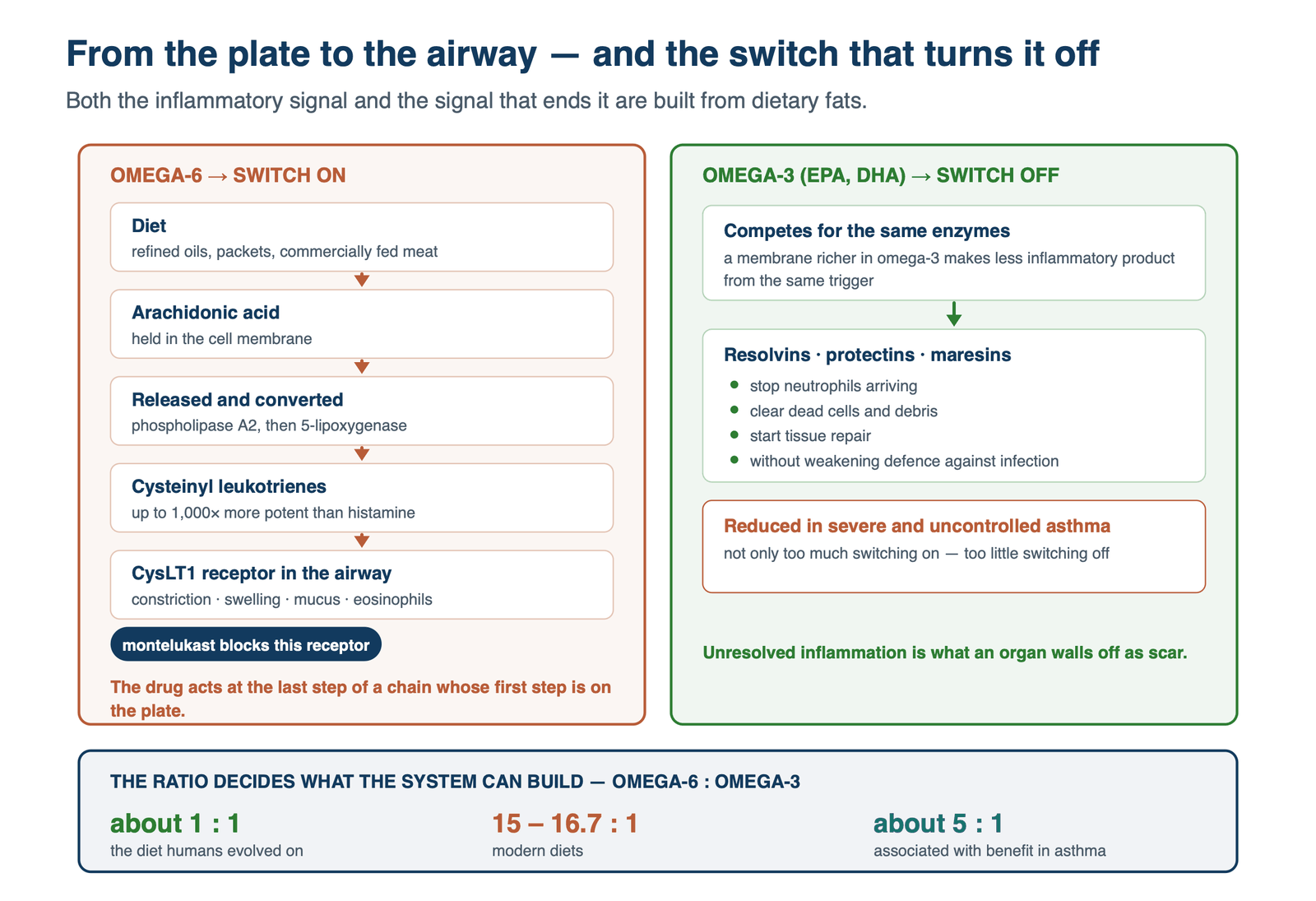
Inside the cell membrane sits arachidonic acid, an omega-6 fatty acid. When an allergic reaction begins, an enzyme called phospholipase A2 releases it, and 5-lipoxygenase converts it into the cysteinyl leukotrienes — LTC4, LTD4, LTE4. These bind to a receptor in the airway and produce bronchoconstriction, swelling of the airway wall, mucus, and the recruitment of eosinophils.
Cysteinyl leukotrienes are bronchoconstrictors up to a thousand times more potent than histamine.
Montelukast, which a great many asthma and allergy patients take daily, works by blocking that receptor.
So a patient on montelukast is blocking the receptor for a signalling molecule that their own body manufactures out of a fat that came from their own diet. The drug is well designed and it works. But it acts at the last step of a chain whose first step is on the plate.
The balance the immune system is supposed to strike
Omega-6 and omega-3 are the raw material for both sides
The immune system has to be able to do two opposite things: mount inflammation, and then switch it off. It builds the chemical signals for both out of the same class of raw material — the long-chain polyunsaturated fats — and which signals it can build depends on which fats are available.
Omega-6 fatty acids, through arachidonic acid, supply the pathway described above: the prostaglandins and leukotrienes that start and sustain inflammation. Omega-3 fatty acids, EPA and DHA, compete with arachidonic acid for the very same enzymes, so a cell membrane richer in omega-3 produces less of the inflammatory product from the same trigger.
This is not a matter of one fat being good and the other bad. Both are essential. It is the ratio that decides what the system is equipped to do.
Human beings evolved on a diet with an omega-6 to omega-3 ratio of roughly 1:1. Modern diets run at about 15:1 to 16.7:1, and by some estimates higher. Refined vegetable oils, processed food and commercially fed meat have moved that ratio a long way in one direction within a few generations. In reviews of the ratio’s health implications, a ratio of about 5:1 was associated with a beneficial effect in asthma patients.
In Kerala kitchens this is not an abstraction. Which oil is used, how often fish appears, and how much of the diet arrives from a packet will move that ratio more than any supplement will.
Resolution is an active process, and in asthma it fails
The second half of the balance is the more interesting one, and it is recent science.
Inflammation was long assumed to fade passively once the trigger was gone. It does not. It is switched off actively, by a family of molecules called specialized pro-resolving mediators — the resolvins, protectins and maresins — which the body synthesises from EPA and DHA. These do not suppress the immune system. They stop neutrophils arriving, clear away dead cells and debris, and start tissue repair, without impairing the body’s defence against infection.
That distinction matters enormously for a patient on long-term steroids, and even more for one on an immunosuppressant.
And here is the finding that reframes the disease: the production of these pro-resolving mediators is reduced in severe and uncontrolled asthma. The persistent inflammation of the asthmatic airway may therefore be, at least in part, a failure of resolution — not only too much switching on, but too little switching off.
Follow that one step further and it reaches the fibrosis described earlier. Scar is what an organ does when inflammation is not resolved. A body whose resolution machinery is under-supplied is a body that walls things off instead of clearing them.
If that is so, then supplying the raw material the switching-off mechanism is built from is not a supplement story. It is a repair of the mechanism itself.
The strongest single piece of evidence for that comes from pregnancy. In a randomised controlled trial of 736 pregnant women given 2.4 g of long-chain omega-3 daily from the 24th week, the risk of persistent wheeze or asthma in their children was 16.9% against 23.7% on placebo — a relative reduction of 30.7%. The effect was far larger in the women who had started with the lowest blood levels of EPA and DHA: 17.5% against 34.1%, roughly halving the risk. Lower respiratory tract infections also fell.
The lesson in that subgroup is the practical one. The benefit went to those who were deficient. Correcting a deficiency is a different intervention from adding something to someone who is already replete — which is why this work begins with measurement rather than with a prescription.
Finding the individual’s own triggers
This is the part of the work that cannot be generalised, and it is the reason a printed avoidance list helps so few people.
Why a general list does not work
Two patients with identical diagnoses react to different things. One cannot be in a kitchen when mustard seeds are put into hot oil. Another is fine with mustard and reacts to papaya, brinjal, coconut and potato — all foods considered healthy, all unremarkable, none on anybody’s list of usual suspects. A third is fine with food entirely and reacts to the pigeons nesting near the air conditioner outlet, whose droppings are drawn into the room through the duct — which is why a net over an outdoor unit is sometimes a respiratory intervention.
Anyone can be told to avoid dust. Almost nobody is told which of the things in their own house is the one doing it.
The evidence on this is unusually clear, and it takes the form of a contrast worth stating carefully, because the two halves are often quoted against each other.
A Cochrane review of 54 trials and more than 3,000 patients examined single measures aimed at reducing house dust mite exposure — mattress covers, acaricides, vacuuming, air filtration, ionisers, freezing, washing. It found no significant difference in symptom scores, in medication use, or in the number of patients who improved. Single measures, taken alone, could not be recommended.
A trial published in the New England Journal of Medicine took a different approach. It gave inner-city children with asthma a multi-component environmental intervention, tailored to each child’s own sensitisations, and taught the family to run it. Children in the intervention group had fewer symptom days than controls both during the intervention year (3.39 against 4.20 per fortnight) and through the whole of the following year (2.62 against 3.21), after the intervention had stopped. Dust mite and cockroach allergen levels fell, and the size of the reduction correlated with the size of the clinical improvement.
Same allergen. Same target. One mattress cover achieves nothing; an individualised programme the patient understands and runs themselves produces an effect that outlasts it by a year.
Dust mite, and how to recognise it without a test
House dust mite is the commonest positive finding in respiratory allergy testing, and it is often the highest value on the panel. What the person is reacting to is not the mite itself but its waste.
It also has a signature that does not need a laboratory. Sneezing and a running nose on waking, or waking in the night breathless, points to an exposure that is in the bed rather than in the day. Dog and cat dander behave similarly; so, as above, do pigeon droppings.
Food, contact and inhalant — three routes, one immune system
Triggers arrive by three routes and are usually discussed by only one. Food is the route most often dismissed in respiratory disease and most often relevant in it. Contact — cosmetics, detergents, fabrics, metals — is the route patients rarely connect to their chest. Inhalants are the route everyone thinks of first.
The immune system does not care which door the substance came through. It responds to the substance.
The sequence in children that parents can see
There is a pattern parents can learn to recognise, and recognising it is worth more than any test.
A child has an ice cream, a packaged juice, a chocolate, a packet snack. Two days later comes a sore throat, a fever, a blocked nose. After that comes the wheeze, and the wheeze is what gets treated.
The middle step is what hides the first one. By the time the child is breathless, the food is three days in the past and nobody connects them. Look carefully at almost any respiratory infection in an allergic child — or an allergic adult — and there is a history of a food or an exposure just before it.
Packaged food is where most of this sits, and the labelling does not help. A juice sold as natural will often carry, in smaller print, nature identical colour and a preservative. Sunset yellow is among the colours most frequently involved. Paint is another — including odourless paint, because what some people react to is not the smell.
What testing can and cannot settle
Testing narrows the field. It does not close it.
Specific blood IgE testing identifies sensitisation — the immune system has made antibodies to that substance. Sensitisation is not the same as clinical allergy; a person can test positive to something they eat without trouble.
The toxin load nobody counts
Beyond the specific allergens sits a general burden, and it is one of the few things in this article that a patient can reduce this week without any testing at all.
Perfume, spray and cleaning product
Every perfume, deodorant, room freshener, fabric freshener, detergent and handwash carries a solvent, a fragrance chemical and a preservative. A household using all of them is running a continuous low-grade chemical exposure, and the user is the last person to notice, because the sense of smell adapts. The dose then quietly increases.
The evidence here is not speculative. Exposure to cleaning products and disinfectants is an established cause of work-related asthma; a meta-analysis of hospital workers found a 35% increased risk of asthma and asthma-like symptoms among those exposed. In a large cohort study, women who cleaned at home or professionally lost lung function faster than women who did not — about 22 mL per year against 18.5 mL. Sprays are repeatedly identified as the worst form of delivery, because they put the product into the air as a respirable aerosol.
For a household with one asthmatic member, the practical point is that this is a household decision, not an individual one. A perfume worn by someone else in the room is an exposure for the patient.
Air, and what it does over years
Long-term exposure to traffic-related air pollution — nitrogen dioxide and fine particles — is associated, with high or moderate-to-high confidence, with the onset of asthma in adults as well as in children. This is the one exposure a patient cannot simply remove, and it is the reason the indoor load — which is under their control — is worth taking seriously.
Fat is not ballast — it is an inflammatory organ
Most adults who have had asthma for years are carrying more fat than they should, and many have been told this in a general way, as a matter of fitness. It is not a fitness matter. It is a direct mechanical and chemical contribution to the disease.
Adipose tissue is an active endocrine and immune organ. It secretes leptin, which is pro-inflammatory, and adiponectin, which is anti-inflammatory. In obesity leptin rises and adiponectin falls. Leptin signalling drives macrophages into an inflammatory state and recruits neutrophils into the airway, which is why obesity-related asthma often looks different on testing from classical allergic asthma — more neutrophils, fewer eosinophils, and less responsive to the inhaled steroid that is prescribed for it.
A study that examined visceral fat tissue directly in people with asthma found increased macrophage infiltration, raised leptin and reduced adiponectin compared with people of the same BMI without asthma — and found that airway reactivity was significantly related to leptin expression in visceral fat. The authors titled the paper Obesity and Asthma: An Inflammatory Disease of Adipose Tissue Not the Airway.
It reverses. A systematic review and meta-analysis of six trials with 522 participants found that weight reduction over twelve to twenty-four weeks significantly improved asthma control scores and quality of life, with FEV1 rising by a mean of 4.65%. In one randomised trial of a total diet replacement programme in difficult-to-treat asthma with obesity, 53% of the intervention group reached a clinically important improvement in asthma control against 19% on usual care.
This is why the work here is directed at body composition rather than at weight. The aim is to remove fat while protecting muscle and bone — a distinction the weighing scale cannot make, and one that matters more with every year of age. Weight lost as muscle buys a better number and a worse body.
The spiral that builds the fat in the first place
It is worth saying where the weight came from, because patients are routinely blamed for it.
A child with asthma is treated with steroids and gains weight. Being breathless, and being afraid of becoming breathless, they play less. Exercise-induced symptoms confirm the fear. Activity falls further; fatigue rises; more food follows the fatigue; more fat follows the food. The fat then produces more inflammation, and worsens the asthma that started it.
By adulthood this has become a settled sedentary life with a respiratory diagnosis on top, and the original prescription is part of the chain. Telling that patient to exercise more is not useful. Finding what they can actually do, in the body they currently have, is.
Sleep apnoea, which is where the fat goes next
Obstructive sleep apnoea is the commonest consequence, and it is the one that multiplies everything else.
During sleep the brain’s respiratory centre keeps the airway actively open. Fat deposited around the throat and airway, together with the loss of muscle tone that comes with it, can overwhelm that. The airway closes, breathing stops, oxygen falls, and a reflex arousal is required before it can start again — many times a night. There is also a central form, in which the respiratory centre itself fatigues.
Add asthma to this and the two compound: an airway already narrowed by swelling closes more easily, and the oxygen deficit deepens. And reflux, which rises with abdominal fat, aggravates night-time asthma directly.
The encouraging part is how early it shifts. In this practice, clinically supported lifestyle correction typically achieves around a 20% reduction in body weight over three months, and at least 15% in a patient who follows it reasonably — a hundred-kilogram patient reaching about eighty-five. Sleep apnoea has usually settled by the time ten to fifteen kilograms have gone, well before the target is reached. The asthma, the allergy and the arthritis that overweight patients so often carry move down together.
One effort, several specialities
A patient who has had asthma for twenty years rarely has only asthma. The list that arrives at a first consultation typically includes some combination of hypertension, raised cholesterol, fatty liver, hypothyroidism, an arthritis, gallstones, varicose veins, piles, gas and acidity, prediabetes or diabetes — often with a separate specialist and a separate prescription for each.
The body is built out of food. When food that does not suit a person is eaten daily, the cells built from it are built wrong, the immune system marks them, and the process that follows is the one described throughout this article. That is the common root under a list that looks unrelated.
This is not a side benefit. It is the strongest thing this approach offers: one effort, several specialities. A patient who corrects body composition, fatty acid balance, toxin load and trigger exposure does not improve their asthma and keep their reflux. The parallel movement is the expected result.
Two patients
Many cases are discussed in the two sessions linked below. Two are given here, because between them they carry the whole argument.
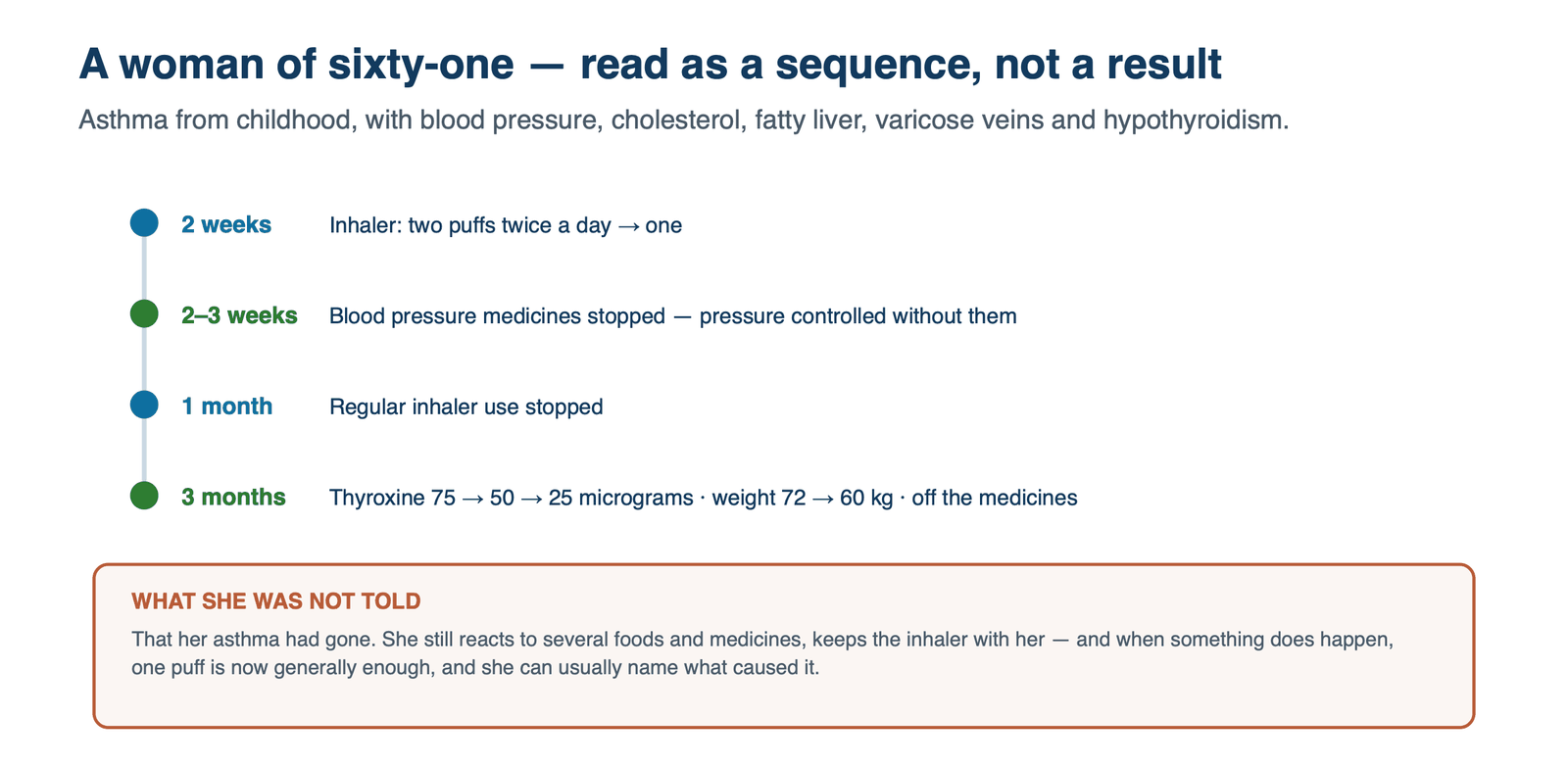
A woman of sixty-one — the comorbidity cluster
She had asthma from childhood, with skin eruptions in between that settled at puberty and returned later as something else. By the time she arrived she was 160 cm and 72 kg, with high blood pressure, raised cholesterol, fatty liver, varicose veins, and hypothyroidism — and repeated cough and respiratory infection on top of the asthma.
Her treatment was correspondingly long: an inhaler, two puffs twice a day; antihistamines; an oral combination tablet for the airway; a blood pressure medicine; and thyroxine at 75 micrograms.
What happened is best read as a sequence rather than a result.
At two weeks, the inhaler came down from two puffs twice daily to one. Within a month, regular inhaler use had stopped. The blood pressure medicines were gone within two to three weeks, with the blood pressure controlled without them, and the cholesterol falling. The thyroxine came down from 75 to 50, and to 25 micrograms by three months. Her weight went from 72 kg to 60 kg at three months, and by then she was off the medicines.
What she was not told is as important as what happened. She was not told that her asthma had gone. She reacts to several foods and to several groups of medicines, and if one of those turns up, so can the asthma. She keeps the inhaler and the emergency medicines with her. The difference is that she no longer takes anything regularly — and that when something does happen, one puff is now generally enough, and she can usually name what caused it.
A man of forty-three — the lung declaring last
He came with lung fibrosis on one side, on an inhaler and two oral airway medicines.
The rest of his list had arrived first. Ulcerative colitis. Thyroid disease, on 125 micrograms. Diabetes. A coronary stent already in place, with cardiac medicines, two blood thinners, and a cholesterol medicine. Arthritis. On top of that: a strong immunosuppressant, an aminosalicylate for the colitis, daily prednisolone, an antacid, a montelukast-plus-antihistamine combination daily, four or five supplements, and a parallel course of homeopathic treatment.
Forty-three years old, and that list.
At three months his thyroid tablet was down to 25 micrograms. By six months he had come off all of it — and without the medicines, the blood pressure, the blood sugar and the breathlessness were all lower than they had been on them.
His fibrosis did not disappear; scar does not. What changed was everything that was still being added to it, and the medicine burden that was suppressing his ability to repair.
There is a detail in his case worth keeping. There is no specific antibody for lung fibrosis to follow. But there are antibodies for the thyroid — anti-TPO and anti-thyroglobulin — and when those fall, it is reasonable evidence that the immune misdirection driving the rest is also settling. When the lung itself cannot be measured easily, the other autoimmune markers can be.
Where this does most and where it does least
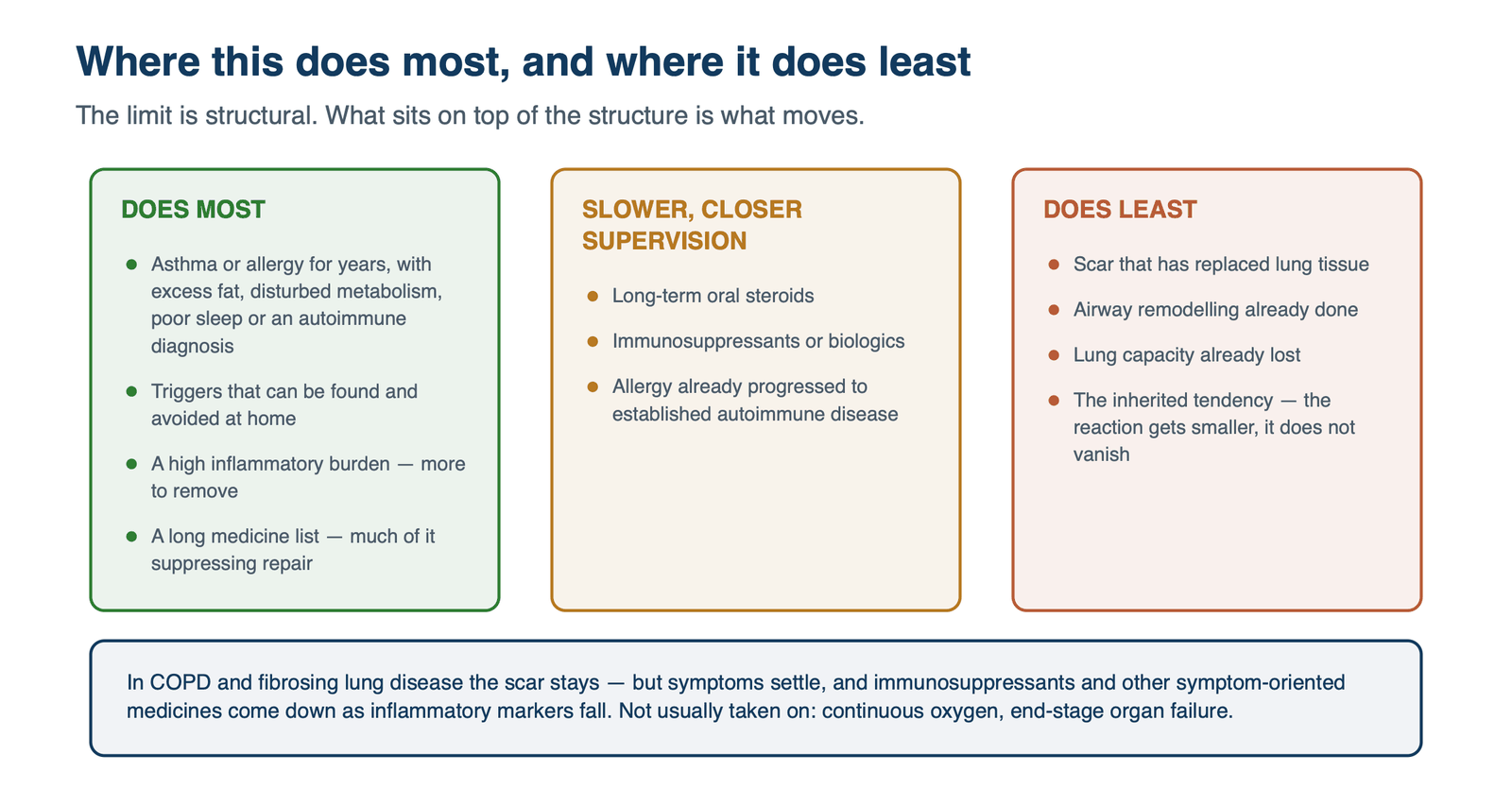
It does most in adults who have carried asthma or allergy for years alongside excess fat, disturbed metabolism, poor sleep, or an autoimmune diagnosis — which is most adults who have had it for years. It does most where the triggers are findable and avoidable, and where the patient is in a position to run the changes at home. It does most where the inflammatory burden is high, because there is more to remove. And it does most where the medicine list is long, because much of that list is suppressing repair.
It does least against established structure. Scar that has replaced lung tissue does not become lung tissue again. Airway remodelling that has already occurred does not unwind. Lung capacity that has been lost is lost. Neither does the inherited tendency change: a person who has reacted to something all their life will in all likelihood still react to it on exposure. What changes is the size of that reaction, and how much of the ordinary day provokes one.
It is slower, and needs closer supervision, in patients on long-term oral steroids, on immunosuppressants, or on biologics — and in anyone whose allergic disease has already progressed to established autoimmune disease.
It reaches least of all into end-stage organ failure, and into lung disease advanced enough to require continuous oxygen.
Medication — how reduction actually happens
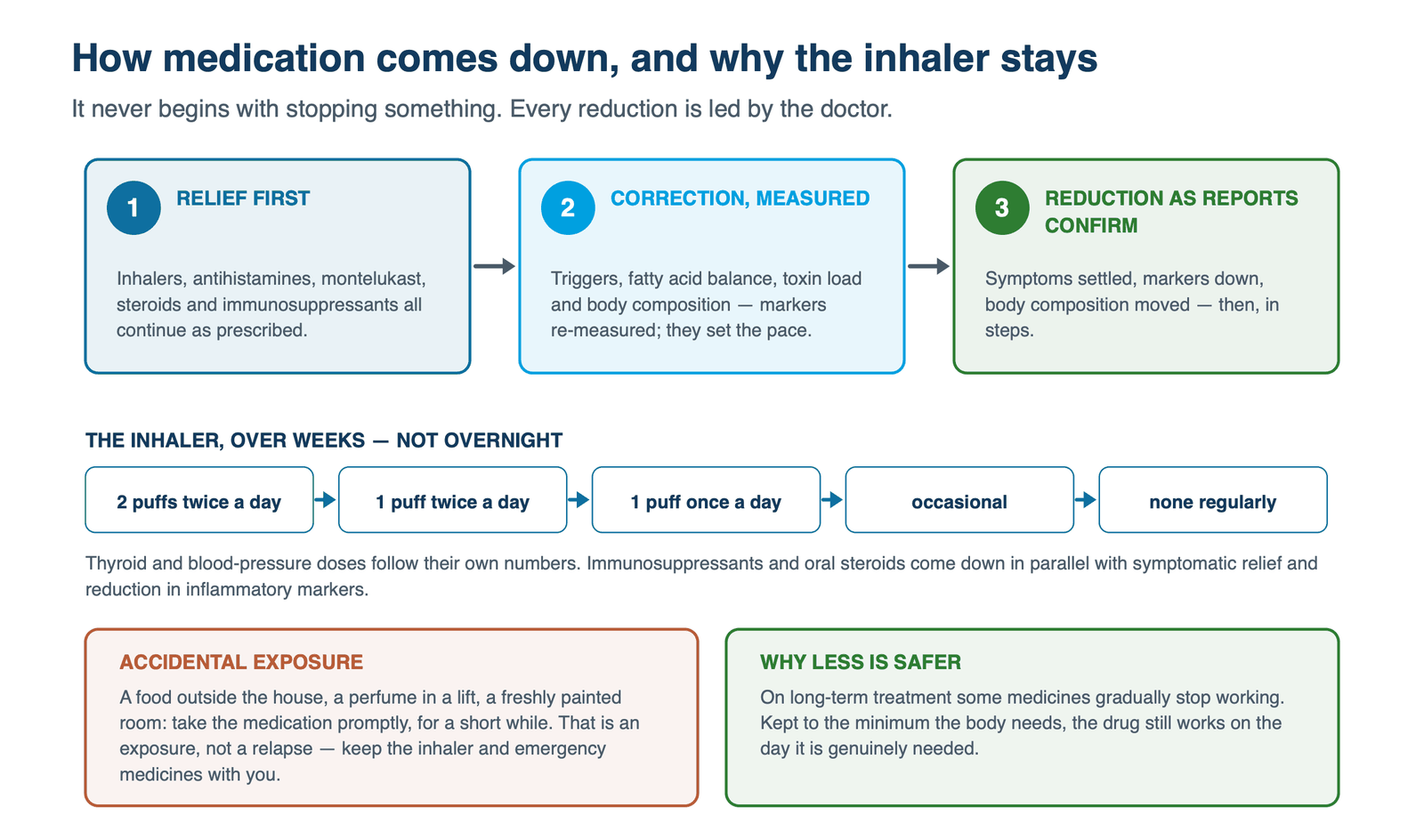
The sequence is fixed, and it never begins with stopping something.
Relief first. Whatever is currently working keeps working. Inhalers, antihistamines, leukotriene antagonists, steroids and immunosuppressants all continue exactly as prescribed while the correction begins. Nothing is withdrawn to see what happens.
Correction alongside, with frequent measurement. Triggers are identified and removed. The fatty acid balance is corrected. Toxin exposure is reduced. Body composition is corrected. Markers are measured again — inflammatory markers, the relevant blood parameters, the autoimmune markers where they exist, and body composition — and the measurements, not the calendar, decide the pace.
Reduction as the reports confirm it. When symptoms have settled and markers have fallen and body composition has moved, dose reduction is considered. It is led by the doctor, taken in steps, and reversed without argument if symptoms return. A patient taking two puffs twice a day typically goes to one, then once, then to occasional use, then to none — over weeks, not overnight. Thyroid and blood pressure doses follow their own numbers. Immunosuppressants and oral steroids come down in parallel with symptomatic relief and reduction in inflammatory markers.
Accidental exposure, and why the inhaler stays in the bag
A patient whose asthma has settled and who has been off regular medication for months is not immune. An unexpected exposure — a food eaten outside the house, a perfume in a lift, a freshly painted room, a relative’s cat — can produce a reaction, and when it does, the correct response is medication, promptly, for a short while. That is not a failure of the programme and it is not a relapse. It is an exposure.
So the instruction given to every such patient is the same: keep the inhaler and the emergency medicines with you, even after months without needing them. You do not know when you will be in air that contains something of yours.
The correction does not hold itself
Accidental exposure is one thing. A return to the old routine is another, and it has to be said plainly: nothing corrected here is permanent.
The benefit lasts only as long as the practice does. When a patient stops, the biology tends to drift back, commonly around ordinary life events — travel, stress, family problems, or an infection. The allergic tendency is still there underneath, and as the old food, the old exposures and the old body composition come back, the reactions come back with them.
The pathway therefore treats relapse as expected rather than as failure. Patients are taught to recognise early deterioration, a short course of medication is used where it is needed, and where the practice has lapsed for a long time, a supervised correction is restarted for three to six months before maintenance resumes.
Is this modern medicine?
Yes, and the question deserves a direct answer because the field is crowded. CSLC-CAP is based on modern medicine. Lifestyle correction is the first step of disease management in modern medical practice; what is added here is that it is structured, supervised and measured rather than offered as advice. The tests are modern medical tests. The supervising doctors hold MBBS and MD qualifications. No ayurvedic, homeopathic or unani preparation is used. The aim — reducing the need for medication and surgical intervention — is a modern medical aim.
What clinically supported lifestyle correction is
Clinically supported means it runs under a doctor and on measurements. Blood parameters and body composition are measured at the start, repeated through the programme, and each next step is decided on what they show. It is not advice given at the end of a consultation and never checked.
Lifestyle correction means the correction is made through nutrition, physical and mental activity, rest and sleep, and toxin load — not through a drug. Where medicines are needed they continue initially.
CAP — the Cell Activation Protocol — is the part that addresses delivery. The body is built of roughly fifty trillion cells, and every correction made at the level of the whole body has to actually reach them. That depends on circulation bringing nutrition in and carrying waste out. The structured activity used here is built to drive that circulation segmentally, through the skeletal muscles, which are the only tissue the patient can command voluntarily — and through them, the organs they supply. It is designed to be doable by patients who are breathless, deconditioned or unwell, including from a bed or a chair — which matters more in lung disease than in almost any other condition, because these are the patients most often told that exercise is not for them.
In one line: the diagnosis decides the medicines, the tests and the risks; the correction is common, and it is the body that is corrected, not the airway.
The four domains
Together these empower the immune system, which remains the body’s own doctor.
Watch the sessions
Why the first 90 days matter
Ninety days is roughly how long the body takes to rebuild the cells being corrected. Red cells turn over in about that time, which is exactly why HbA1c is a three-month average rather than a snapshot. A blood test at three weeks measures last week; a test at three months measures whether the body has actually been rebuilt differently.
In airway disease there is a second reason. The airway lining and the immune cells that patrol it also turn over, and the fatty acid composition of cell membranes shifts over weeks to months rather than days. A fortnight of dietary change does not change what the membranes are made of. Ninety days does.
That is why the active phase runs for the initial ninety days, or until body composition is corrected — whichever applies.
Suitability
This suits a person who:
- is willing to make the correction, and to be measured
- is ambulant and clinically stable
- has the physical capacity to perform the structured activity, at least lying down or seated
- has the mental capacity to learn and follow it
Where there is early dementia or memory impairment, this remains possible provided a close family member joins the programme, learns it, and supports the patient. Couples frequently do this together.
Children under ten are not usually taken. Between ten and eighteen, one parent must join — a child cannot run a food and exposure correction without the household behind it.
Patients requiring continuous supplemental oxygen, and those in end-stage organ failure, are not usually taken on.
Frequently asked questions
Can lifestyle correction replace my inhaler?
The inhaler treats the attack; this work is directed at what produces the attacks. What patients commonly find is that the inhaler stops being needed regularly — and the instruction is still to keep it with them.
I have COPD, not asthma. Does any of this apply?
Yes, with a different aim. The damage already done to the airway wall does not undo. What is modifiable is the rate at which more is added, and the inflammatory and metabolic state driving it — and for most patients with COPD, so is a long list of other conditions being treated separately.
I have been told I have pulmonary fibrosis. Is there any point?
There is a point, and it is not reversal. Scar does not become lung tissue again. What can change is what is still being added to it, the oxygen cost of everything else the body is carrying, and a medicine list that in many of these patients is itself suppressing repair. Most patients who reach a fibrosis diagnosis are also carrying several other conditions, and those do respond.
I am on an immunosuppressant for an autoimmune disease. Is that a problem?
It is a necessary treatment for many people, and it is not stopped here. It is worth understanding that suppressing inflammation and suppressing healing are the same action, so the repair the body needs to do is running against a brake. Where the biology allows the doctor to reduce it, that brake comes off.
Does this work if I also have thyroid disease, arthritis or ulcerative colitis?
That combination is the ordinary case rather than the complicated one, and the conditions tend to move together rather than one at a time. Both patients described above came with exactly that kind of list.
What about children — can this prevent asthma in the next generation?
There is real evidence that correcting maternal omega-3 status in pregnancy reduces childhood wheeze and asthma, with the largest effect in the women who were most deficient. That is one reason preconception correction is treated here as part of the same work.
Related reading
- Autoimmune Diseases: Reversing Autoimmune Inflammation — the immune misdirection this article follows into the lung, set out at its origin.
- Age-Related Diseases: Reversing Insulin Resistance — the metabolic layer underneath the comorbidity cluster described here.
- Fatty Liver: Reversing Liver Fat and Fibrosis — the same inflammation-to-fibrosis path, in the organ where it is easiest to measure.
- Kidney Disease: Protecting Renal Function — the same path again, and the organ that decides how much room there is to work with.
- Arthritis: Reversing Inflammation and Metabolic Load — the tapering sequence worked through in detail.
- Psoriasis and Psoriatic Arthritis — the same immune imbalance where it shows on the skin.
- Delay Ageing, Reverse Ageing: The Current Possibilities — inflammaging, and what measured biological age does under correction.
- Mental Disorders: The Root Cause Beneath the Chemistry — the same inflammation and insulin story, read in the brain.
- Weight-Loss Injections and Diabetes — why the injection does not remove the need for the correction.
- Cancer: Health Optimization Alongside Oncology — where raised markers and inflammation are addressed alongside oncological care.
- Planning a Pregnancy: What Both Parents Can Correct in the 90 Days Before — where the method came from.
References
Short citations; each link opens the original article.
- Asthma remission as a treatment goal — Menzies-Gow A, et al. J Allergy Clin Immunol 2020. https://doi.org/10.1016/j.jaci.2019.12.006
- Leukotrienes as bronchoconstrictors — Dahlén SE, et al. Nature 1980. https://doi.org/10.1038/288484a0 · Peters-Golden M, Henderson WR. N Engl J Med 2007. https://doi.org/10.1056/NEJMra071371
- The omega-6 to omega-3 ratio, including 5:1 in asthma — Simopoulos AP. Biomed Pharmacother 2002. https://doi.org/10.1016/s0753-3322(02)00253-6
- Pro-resolving mediators — Serhan CN, Levy BD. J Clin Invest 2018. https://doi.org/10.1172/JCI97943
- Pro-resolving mediators reduced in severe asthma — Levy BD, et al. Am J Respir Crit Care Med 2005. https://doi.org/10.1164/rccm.200410-1413OC · Miyata J, et al. J Allergy Clin Immunol 2013. https://doi.org/10.1016/j.jaci.2012.07.048
- Fish oil in pregnancy and childhood wheeze and asthma — Bisgaard H, et al. N Engl J Med 2016. https://doi.org/10.1056/NEJMoa1503734
- Single house dust mite measures, 54 trials — Gøtzsche PC, Johansen HK. Cochrane Database Syst Rev 2008. https://doi.org/10.1002/14651858.CD001187.pub3
- Individualised home-based intervention — Morgan WJ, et al. N Engl J Med 2004. https://doi.org/10.1056/NEJMoa032097
- Cleaning products and asthma in hospital workers — Dang KTL, et al. Health Sci Rep 2022. https://doi.org/10.1002/hsr2.623
- Cleaning and lung-function decline — Svanes Ø, et al. Am J Respir Crit Care Med 2018. https://doi.org/10.1164/rccm.201706-1311OC
- Traffic-related air pollution and asthma onset — Boogaard H, et al. (HEI Panel). Environ Int 2022. https://doi.org/10.1016/j.envint.2022.107262
- Visceral fat and airway reactivity — Sideleva O, et al. Am J Respir Crit Care Med 2012. https://doi.org/10.1164/rccm.201203-0573OC
- Weight loss in asthma, 6 trials, 522 patients — Rybka-Fraczek A, et al. J Allergy Clin Immunol Pract 2026. https://doi.org/10.1016/j.jaip.2025.10.014
- Total diet replacement in difficult-to-treat asthma — Sharma V, et al. Chest 2023. https://doi.org/10.1016/j.chest.2023.01.015
- Amiodarone pulmonary toxicity — Wolkove N, Baltzan M. Can Respir J 2009. https://doi.org/10.1155/2009/282540
From this centre’s clinical experience — not published
Observations from this practice, not trial results: the sequence and pace of medication reduction; the parallel movement of asthma, thyroid, blood pressure and metabolic parameters; weight reduction of about 20% in three months, and at least 15% with reasonable adherence; sleep apnoea settling after 10–15 kg; and the two patient histories, whose details were given on air.
About the author and the centre
Dr Jolly Thomson MBBS MD trained and practised in obstetrics, gynaecology and infertility treatment — MBBS (Government Medical College, Kottayam, 1981 batch), DGO and MD in Obstetrics and Gynaecology (Government Medical College, Thiruvananthapuram, 1989–1992). She practises today in a different field: clinically supported lifestyle correction — reversing lifestyle-related disease and optimising health. Where this article says in this practice or in this centre’s experience, that is what it refers to: patients she has assessed, corrected and followed herself.
Where the method came from. Not from a laboratory. It came out of that reproductive practice — preconception care for the couple, mother and baby through pregnancy, childbirth, and mother and newborn afterwards. Where lifestyle was corrected in a structured way she saw better pregnancy rates, fewer miscarriages, and fewer complications. What worked before a pregnancy turned out to work in the lifestyle diseases themselves, and that is how the method reached the rest of the practice.
Life Care Centre, Thevara, Kochi is where the method is practised.
Important note
This article is general health education. No medicine should be started, stopped, reduced or changed except under the supervision of the doctor who prescribed it.
CSLC-CAP is a methodology and treatment for health optimization — to improve quality of life, and to reduce the need for medication and surgical interventions. It is delivered as an out-patient treatment with frequent telemedicine follow-up, under doctor supervision.