Prostate Disorders: BPH, Prostatitis and Prostate Cancer — Correcting the Metabolism Underneath
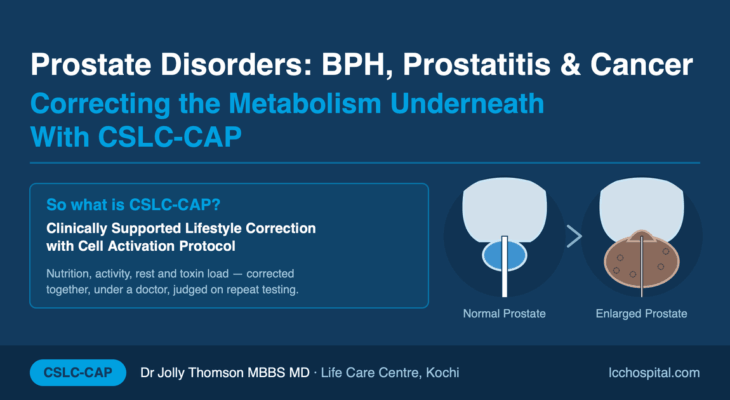
Prostate Disorders: BPH, Prostatitis and Prostate Cancer — Correcting the Metabolism Underneath
- Dr Jolly Thomson MBBS MD
- October 04, 2026
- 0 Comments
How metabolism shapes prostate disease, what treatment offers, and what structured lifestyle correction adds – Role Of CSLC-CAP (Clinically Supported Lifestyle Correction With Cell Activation Protocol) – Benefits & Limitations
Dr Jolly Thomson MBBS MD · Life Care Centre, Thevara, Kochi
Abstract
Life depends on metabolism — the chemical reactions running inside and around every cell. Prostate problems are what those reactions look like when they go wrong in one gland: infection and inflammation (prostatitis), growth driven by hormones and insulin (benign enlargement, BPH), and DNA damage accumulated over years (cancer). Medicines and procedures relieve the obstruction, clear the infection and treat the cancer. They do not correct the metabolic environment that keeps producing disease, and each carries its own side effects. Clinically Supported Lifestyle Correction with Cell Activation Protocol (CSLC-CAP) works on that environment — nutrition, activity, rest and toxin load, corrected under doctors’ (MBBS and MD) supervision and judged on repeat tests. In this practice, in men with an enlarged prostate, the stream and night-time urination commonly improve within weeks, flow tablets come down, gland volume and PSA fall, and the conditions alongside — diabetes, blood pressure, fatty liver — improve together. Section 8 follows one man in his 70s through the year. How far the body can repair depends on the damage already done, on how well it takes in and uses nutrition, and on its repair reserve. That is why the correction runs alongside treatment, not instead of it.
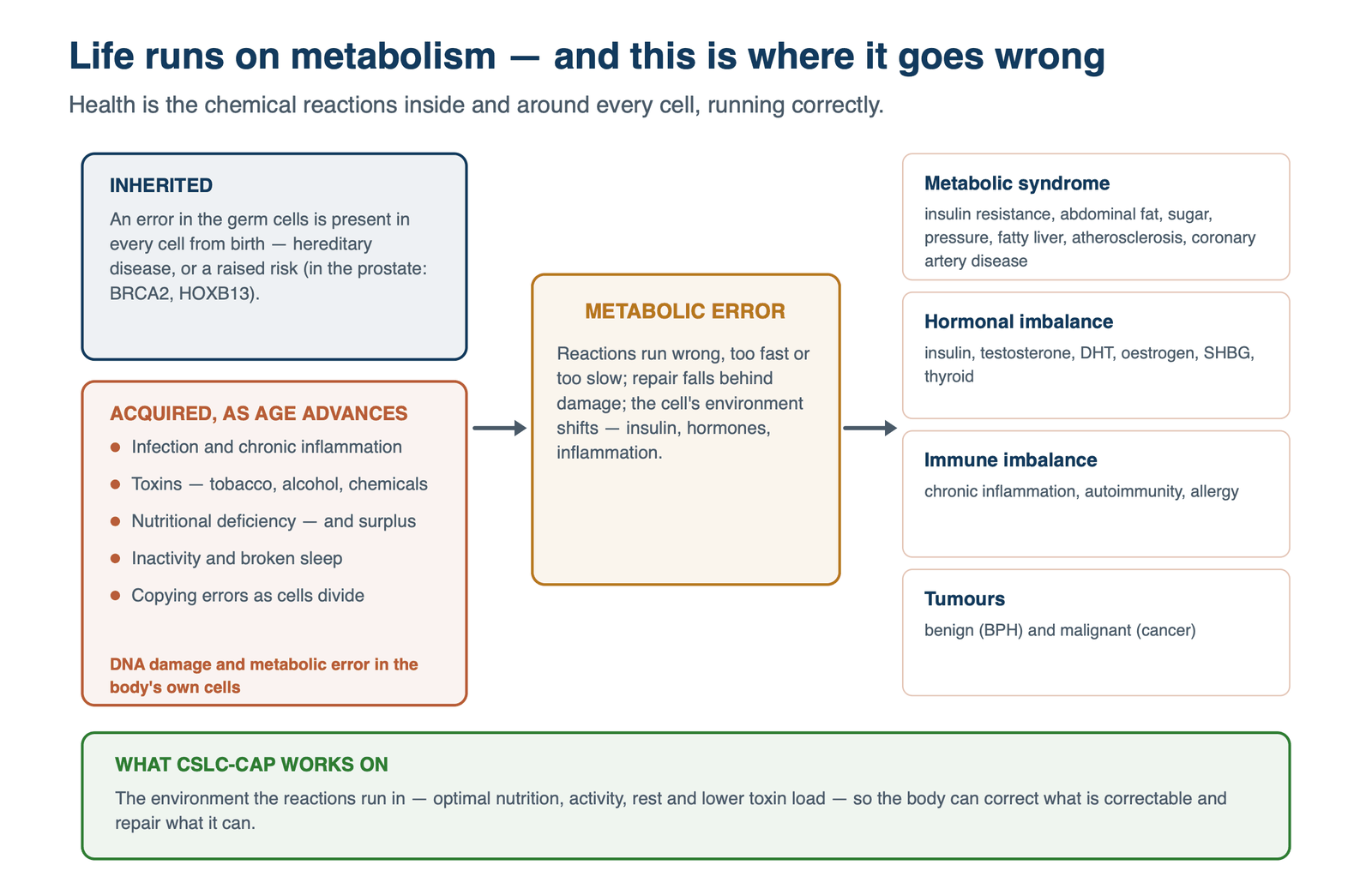
1. Life runs on metabolism
Every function of the body — passing urine, making semen, fighting an infection, repairing a cell — is a chain of chemical reactions, together called metabolism. They run inside every cell and in the fluid around it, and depend on three things: the right raw materials arriving, the waste being cleared, and the instructions in the cell’s DNA being read correctly. The raw material for all of it is food: the whole body is built from what we eat. Health is these reactions running correctly. Disease is what appears when they do not.
Errors in metabolism come from two places.
Inherited errors. A fault in the germ cells — the egg or the sperm — is present in every cell of the child from birth. Some cause hereditary disease outright. Others only raise the risk. In the prostate, inherited faults in genes such as BRCA2 and HOXB13 raise the risk of cancer, which is why a father’s or brother’s prostate cancer matters.
Acquired errors. Over a lifetime, the body’s own cells collect damage that was never inherited. Every time a cell divides, its DNA is copied, and copying errors accumulate with age. Infection and chronic inflammation release reactive molecules that break DNA. Toxins — tobacco, alcohol, chemicals in food, water and air — add more. And nutrition matters in both directions: a deficiency of the vitamins and minerals the body uses to copy and repair DNA leaves damage unrepaired, while a chronic surplus of energy, refined carbohydrate and saturated fat drives insulin, abdominal fat and inflammation.
Acquired errors can be confined to one tissue, such as the prostate, or spread through the body. As they accumulate, the same few patterns appear: metabolic syndrome (insulin resistance, abdominal fat, raised sugar and pressure, fatty liver, atherosclerosis and coronary artery disease), hormonal imbalance, immune imbalance (chronic inflammation and autoimmunity), and tumours, both benign and malignant. The prostate shows all four.
2. A small gland in a crowded place
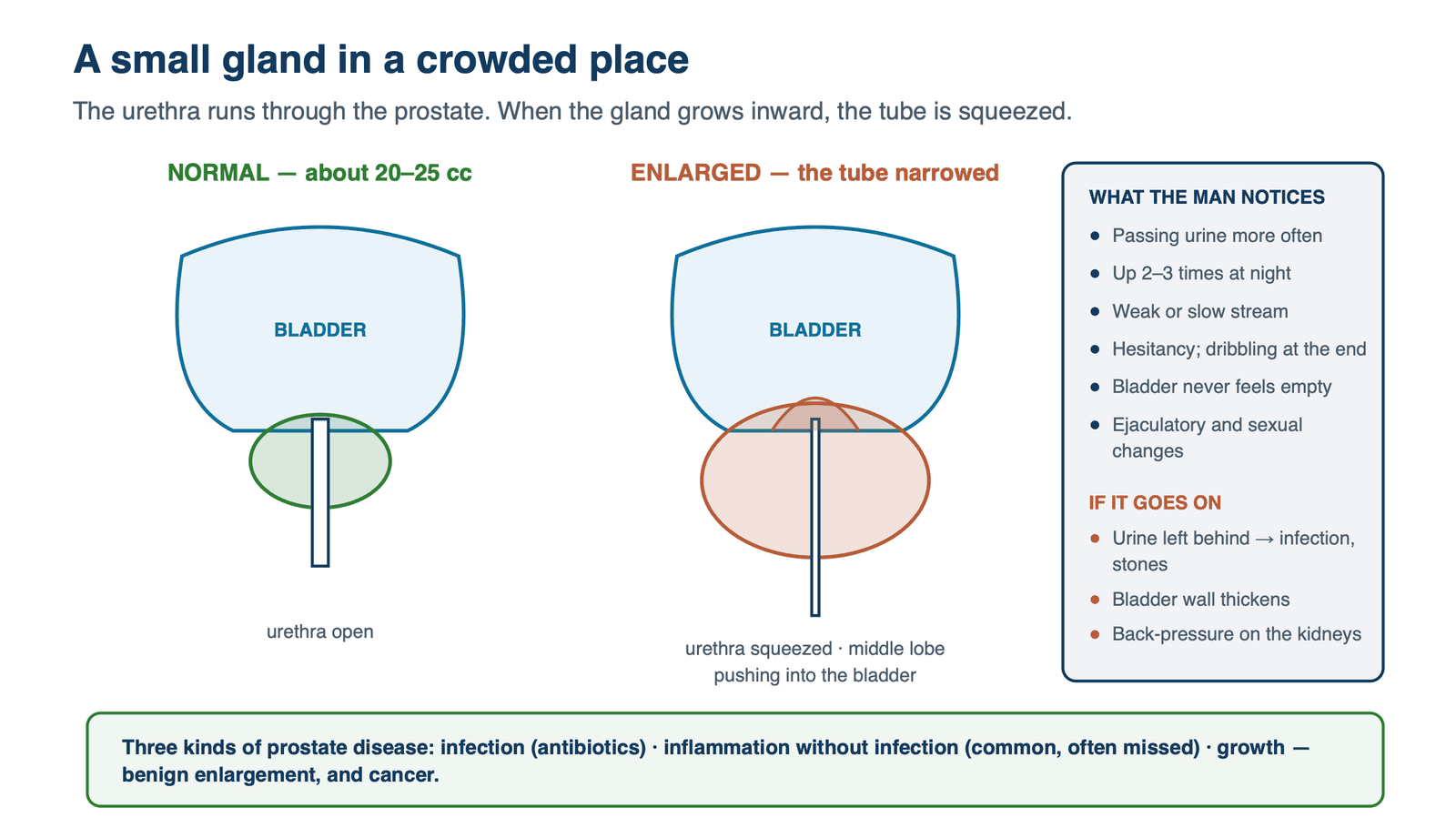
The prostate is a gland about the size of a walnut, sitting directly under the bladder. The first part of the urethra — the tube that carries urine out — runs straight through it, and the ducts that carry semen open into it. It is, in effect, the switch between two functions of the same tube: urination and ejaculation.
That position is why a small gland causes large problems. Growth outward can be large and silent; growth inward — especially a middle lobe pushing up into the bladder — squeezes the tube even when the gland is not very large. The result is familiar to most men past fifty: passing urine more often, getting up two or three times at night, a weak or slow stream, dribbling, and the sense that the bladder is never quite empty. Long obstruction has consequences of its own — urine left behind becomes infected, stones form, the bladder wall thickens, and the back-pressure eventually reaches the kidneys.
3. Three prostate problems, and the metabolism behind them
Prostatitis — infection and inflammation
Prostatitis is the most common prostate problem in men under fifty, and is found in men of every age. Across surveys of more than 10,000 men, about 8% had prostatitis symptoms. It is classified into four types: acute bacterial infection, chronic bacterial infection, chronic pelvic pain syndrome, and inflammation without symptoms.
Only a minority is bacterial. The largest group — chronic pelvic pain syndrome — brings pain in the pelvis, perineum or with ejaculation, and urinary symptoms, with no infection that antibiotics can clear. In some men the problem is inflammation: an immune system that keeps reacting, sometimes against the body’s own tissue. In others, tests show no more inflammation than in men without symptoms. Inflammation without symptoms is more common still — it is found in almost every enlarged prostate removed at surgery.
This is why the three problems are told apart before anything is decided. A man with pain and urinary symptoms whose gland size and PSA are normal has prostatitis, not enlargement — and an operation does not help him. A urine test, an ultrasound with residual urine, blood inflammatory markers, the PSA and, where needed, a semen test separate the three.
Inflammation is not harmless background. In laboratory studies, the oxidative stress of chronic inflammation broke DNA in prostate cells and produced the gene change found in a quarter to a half of all prostate cancers.
BPH — growth driven by hormones and insulin
Benign enlargement begins quietly and early. Under the microscope it is present in about half of men in their fifties and nearly nine in ten in their eighties. A normal prostate reaches about 20 grams in early adult life and stays that size — unless the growth signals change.
DHT. Testosterone is converted in the prostate, by the enzyme 5-alpha-reductase, into dihydrotestosterone (DHT), several times more potent. DHT drives growth of the gland. The same conversion happens in the scalp, which is why male-pattern balding and prostate enlargement can travel together.
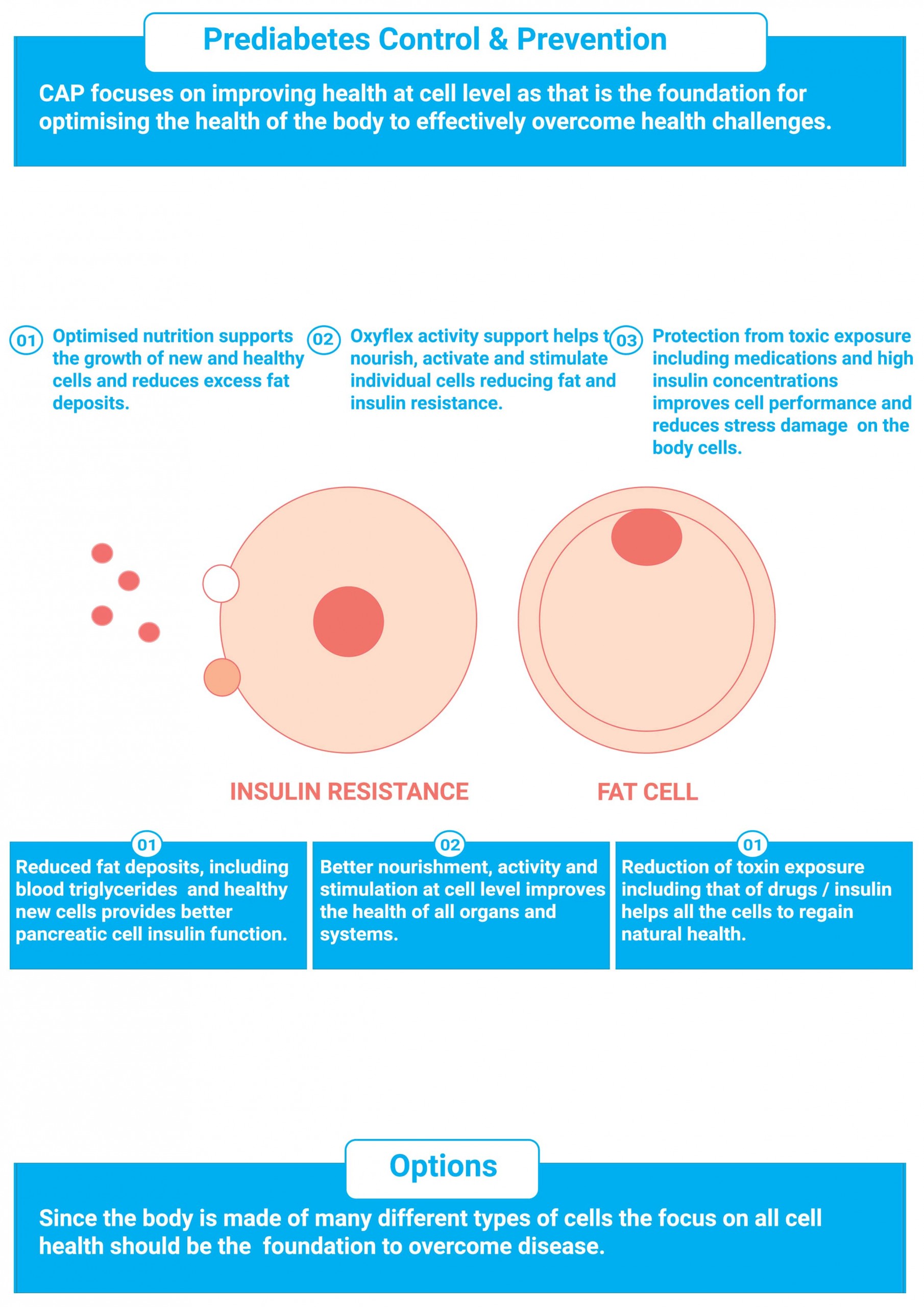
Insulin. Insulin is not only a sugar hormone; it is also a growth-promoting hormone. In men with urinary symptoms, the gland grew faster in those with type 2 diabetes, treated hypertension, obesity, abnormal lipids or high fasting insulin. Across eight studies and more than 5,000 men, metabolic syndrome went with larger prostates, most of all in older, heavier men with low HDL cholesterol.
Fat and oestrogen. Abdominal fat is active tissue. It converts testosterone to oestrogen, lowers the binding protein (SHBG) that keeps sex hormones in balance, and produces inflammatory signals — all of which reach the prostate.
Activity. Moderately or vigorously active men had about a quarter lower odds of enlargement or urinary symptoms than sedentary men. So BPH is not simply age: age is the time the growth has had; the metabolic signals help drive it.
Prostate cancer — accumulated damage, mostly slow
Prostate cancer shows both kinds of error: it runs in families more than most cancers, and the changes inside the cancer cell itself are acquired. In about half of prostate cancers in European men, and about a quarter in Indian and other Asian men, two genes have broken and rejoined in the wrong place, so that a growth gene comes under the control of the male hormone. Other changes accumulate on top of that. Inherited faults raise the risk; acquired damage — from inflammation, toxins, nutrition and the passage of time — supplies most of the rest.
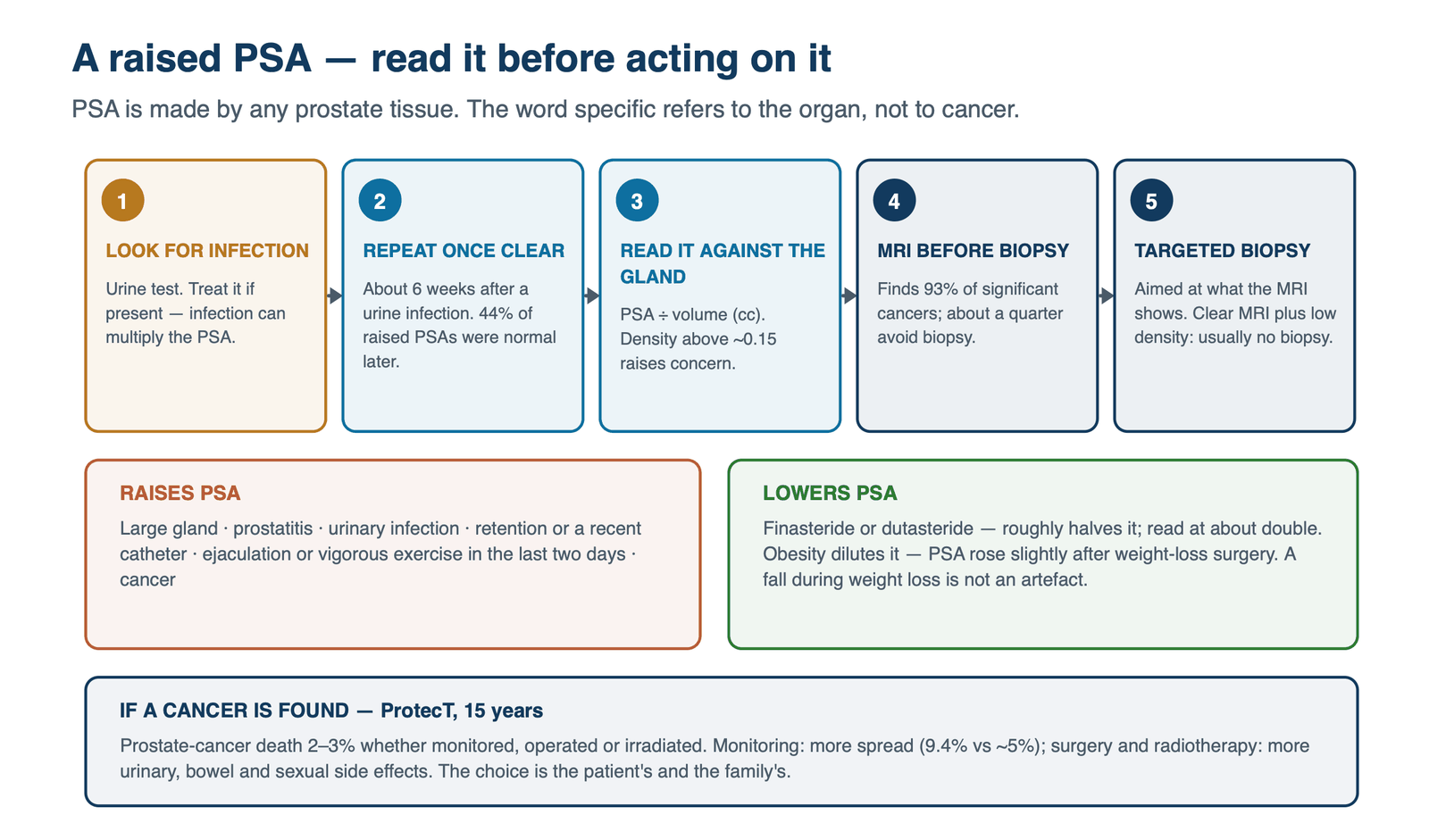
Most prostate cancers found by PSA grow slowly. In a fifteen-year trial of men with localised cancer, death from prostate cancer was about 2 to 3 in 100 whether the cancer was monitored, operated on or irradiated. Metabolism is linked to how aggressive a cancer becomes: men with the highest insulin output before diagnosis were more than twice as likely to die of prostate cancer.
Reading a PSA. PSA is made by any prostate tissue — normal, enlarged, inflamed or cancerous. A raised value is a question, not a diagnosis: it rises with a large gland, infection, inflammation, retention, a catheter, ejaculation or vigorous exercise in the previous two days, and finasteride and dutasteride roughly halve it. Of men with a PSA above 4, 44% had a normal value at a later test. So infection is treated first, the test is repeated and read against the gland’s size, and an MRI, read with the PSA density, decides whether a biopsy is needed — an MRI-first pathway finds more of the cancers that matter and spares more than a quarter of men a biopsy. A PSMA PET scan shows whether a cancer has spread; only a biopsy confirms it and gives its grade.
Early detection. In this practice the advice is an annual PSA and prostate ultrasound from forty — from thirty-five given current trends, and earlier where a father or brother has had prostate cancer. Blood in the urine or semen is a reason to see a doctor at once, at any age.
4. What current treatment offers — and what it costs
Modern treatment does what it is designed to do. Medicines relieve the flow, shrink the gland and clear infection; procedures remove obstruction; cancer treatment removes or controls the tumour. Together, a flow tablet and a gland-shrinking tablet cut the risk of progression by two-thirds. These are real benefits, and in an emergency, treatment is the only thing that matters. What treatment does not change is why the gland grew, why the inflammation persists, or why the damage accumulated; and each treatment carries its own costs.
Table 1. Current treatments for prostate problems — what they do, where they stop, and their side effects
Three patterns run through the table. Relief, then fatigue: a flow tablet gives relief, but in many men the symptoms return despite it, or as soon as it is stopped — and the next step offered is an operation. The plumbing is cleared, the cause is not: a procedure opens the channel, but the growth signals that enlarged the gland are still there afterwards, which is why some men need a second procedure. Side effects belong to the procedure, not the surgeon: an operation asks no effort of the patient, but its side effects are not even in the doctor’s control. Scarring is part of healing, so strictures and dribbling can follow the most skilful surgery. Each newer procedure reduces the side effects; none removes them — and a robotic operation is still an operation.
5. Medical care and health care — where CSLC-CAP sits
Medical care treats what has appeared: a weak stream gets an alpha-blocker, a large gland a tablet to shrink it, an infection an antibiotic, a cancer surgery, radiation or hormone therapy. Each is correct, often necessary, and sometimes urgent. Health care asks a different question: not what is happening now, but what in this man’s metabolism keeps producing it. Those two questions have different answers, and a man who receives only the first for an enlarging gland will spend years managing a condition nobody is trying to change. With medicines, each problem gets its own drug from its own specialist; correcting the metabolism works on all of them at once.
CSLC-CAP is health care, done in a clinical setting.
Table 2. Medical care and health care: complementary, not competing
6. What CSLC-CAP corrects
Clinically supported means it runs under a doctor and on measurements. Blood parameters and body composition are measured at the start, repeated through the programme, and each next step is decided on what they show. It is not advice given at the end of a consultation and never checked.
Lifestyle correction means the correction is made through nutrition, physical and mental activity, rest and sleep, and toxin load — not through a drug.
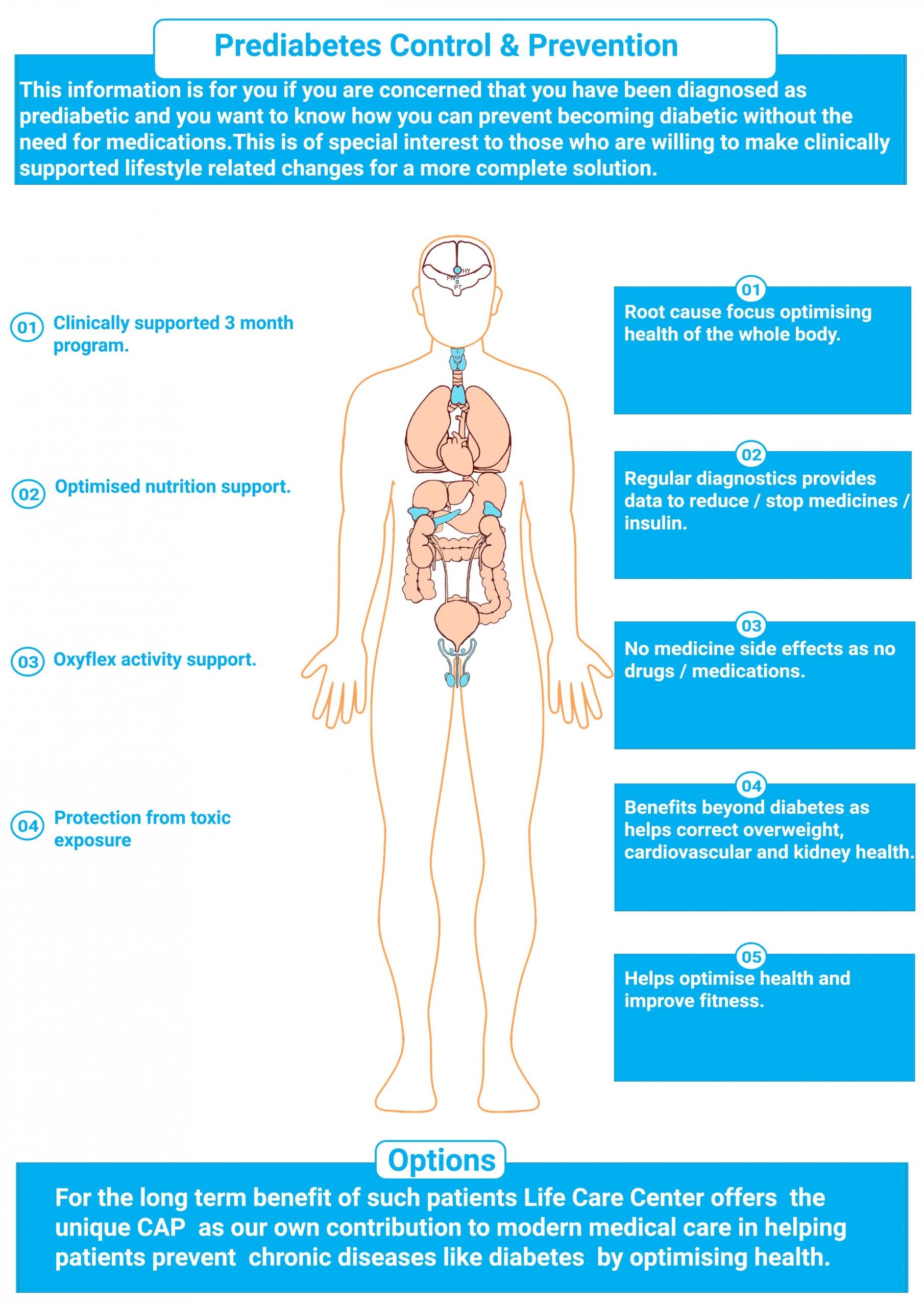
CAP — the Cell Activation Protocol — addresses delivery. Every correction made at the level of the whole body has to reach the cells, and that depends on circulation bringing nutrition in and carrying waste out. The structured activity used here drives that circulation segmentally, through the skeletal muscles, which are the only tissue the patient can command voluntarily — and through them, the organs they supply. It is designed to be doable by patients who are deconditioned or unwell, including from a bed or a chair.
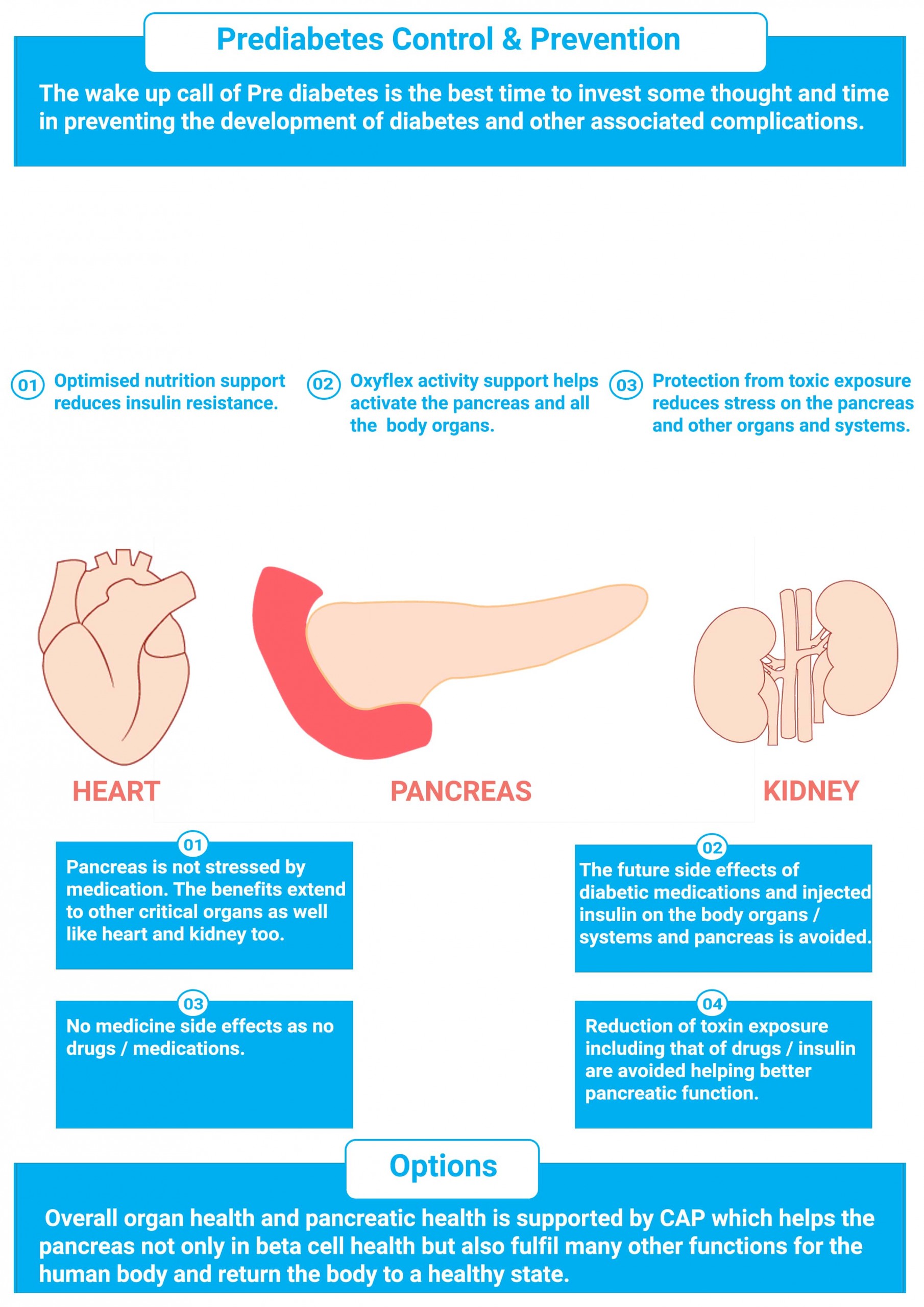
The correction does not focus on the prostate; it focuses on the body that carries it. The aim is to give the immune system an optimal environment for its repair work, and to correct and support metabolism — so that the reactions that keep a cell alive, and the reactions that repair it, have what they need and are not overwhelmed by what they do not. In prostate disease that means four things changing together: insulin falls, so the growth signal it carries falls with it; abdominal fat falls, restoring the hormone balance between testosterone, DHT and oestrogen; inflammation settles; and the immune system stops reacting to what it should tolerate. None of this starves anything. The body keeps its blood glucose steady; what changes is the signal.
Optimal, not surplus. Nutrition is set to what the body needs — enough of every nutrient, too much of none. This is not caution for its own sake. Isolated nutrients given in excess have harmed men’s prostates in trials: vitamin E supplements increased prostate cancer, and selenium supplements increased high-grade disease in men whose selenium levels were already high.
Table 3. The four domains
Together these empower the immune system, which remains the body’s own doctor.
7. The benefits — what changes, and how it is measured
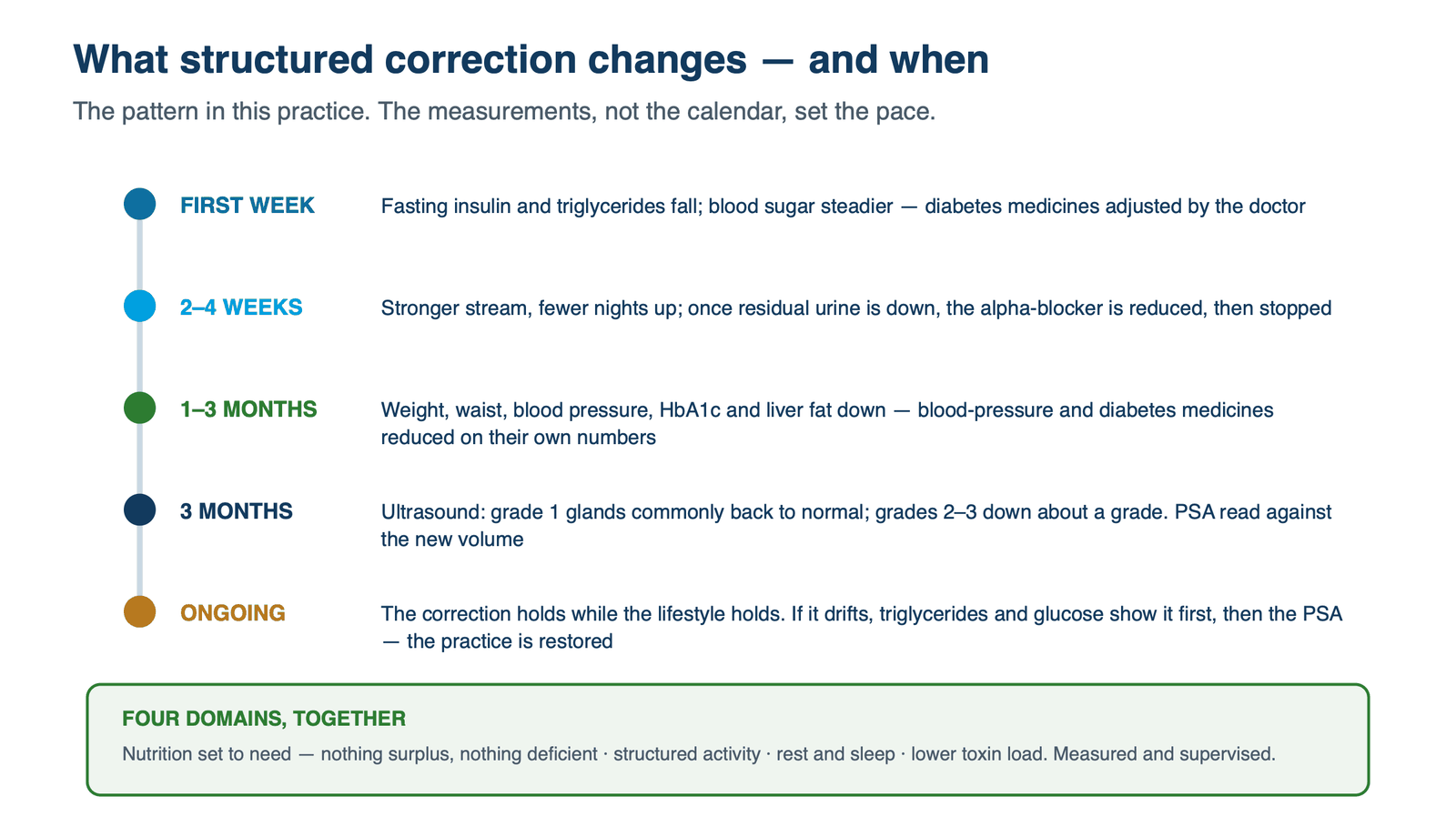
An easier stream, and fewer nights up. As insulin and abdominal fat come down, the stream strengthens and the bladder empties more completely. In this practice urinary symptoms commonly settle within two to four weeks, long before the gland has changed size. In an independent study of patients who lost weight after bariatric surgery, urinary symptoms had improved by the first check, six to eight weeks after surgery,, and the improvement tracked the fall in insulin rather than the weight lost. Night-time urination is not always the prostate. Water tablets for blood pressure taken at night; tea, coffee, cola or alcohol in the evening; high sugar, and diabetes medicines that pass sugar into the urine (dapagliflozin, empagliflozin); fluid held in swollen legs by day; heart and kidney disease; and sleep apnoea all drive urine at night. A useful clue: when the prostate is the cause, only a little urine comes each time and the bladder still feels full; a good volume each time points elsewhere. The correction reaches most of these causes — treating sleep apnoea alone reduces night-time urination substantially.
Fewer medicines. In this practice, blood sugar steadies within days and fasting insulin falls within the first week. The flow tablet usually comes down next: in this practice most men are off it within about a month, keeping it at hand in case it is needed. The gland-shrinking tablet, with its effect on sexual function and on the PSA, is often not needed. And because men with an enlarged prostate are rarely on prostate tablets alone, diabetes and blood-pressure medicines come down on their own numbers — one correction reducing several prescriptions.
A gland that stops growing, and often shrinks. The volume rarely changes in the first month, but by three months the men who follow the correction closely show a substantial reduction, and the residual urine falls with it. In this practice a grade 1 gland commonly returns to normal size, and grades 2 and 3 come down gradually — roughly a grade every three months — confirmed on ultrasound volume, not assumed from symptoms. The inflammatory markers, the PSA and the volume tend to fall together. Men who keep to the practice on their own hold the gains into the second year.
A PSA that can be read. Infection and inflammation push PSA up; excess fat dilutes it. Correct those and the PSA reflects the gland itself — the value an MRI decision should rest on. And since PSA rises slightly after weight loss as the dilution disappears, a PSA that falls while a man loses weight is not an artefact of the weight loss.
An operation avoided, deferred — or safer. In this practice, men who had been advised surgery for enlargement have avoided it once the stream, the residual urine and the gland responded. Where surgery is still needed, a man with controlled sugar, lower blood pressure and less abdominal fat is a safer surgical patient.
Prostatitis. Chronic pelvic pain syndrome has few effective treatments. In a randomised trial of men who had not responded to conventional treatment, eighteen weeks of aerobic exercise improved symptoms, pain and quality of life more than stretching did. Settling inflammation through nutrition, rest and lower toxin load works on the same process.
Erectile function. The same blood vessels and hormones serve the prostate and erectile function. Because nothing is cut, sexual function has a chance to recover — where an operation can make it worse. In a randomised trial of obese men with erectile dysfunction, two years of structured lifestyle change restored normal erectile function in about one in three, against one in twenty without it.
One effort, several specialities. A man with an enlarged prostate rarely has only that. Diabetes, blood pressure, raised cholesterol, fatty liver, heart disease, kidney stones and arthritis are the same insulin, fat and inflammation reported by different organs, and they move together when the metabolism is corrected. That matters for how long men live: among men whose prostate cancer is found early, through PSA testing, heart disease and other causes account for most deaths.
Early prostate cancer — what the published research shows. For men on active surveillance, structured lifestyle change is the part of care they can carry out themselves. In a randomised trial of 93 such men, an intensive programme of diet, exercise, stress management and group support, with daily supplements, saw PSA fall by 4% over a year while it rose 6% in the control group; by two years, 5% had gone on to conventional treatment against 27%. In another trial of 52 men, twelve weeks of supervised high-intensity exercise raised fitness — its main aim — and also lowered PSA; and in a large cohort of men followed for over twenty years, those who kept five or six healthy habits had about two-thirds lower risk of developing lethal prostate cancer than men who kept none or one (in a second cohort the reduction was smaller and uncertain). A single change on its own — eating more vegetables — did not slow progression; the changes that worked were made together.
8. One patient’s year
A man in his 70s came with an enlarged prostate and the full metabolic picture behind it. He had had bypass surgery and stents for heart disease, and was on insulin twice daily with three diabetes drugs. Even on tamsulosin he was passing urine often, worst at night.
The correction began on day 1. Insulin and the diabetes tablets were stopped that day, and his other medicines continued. By day 8 his fasting insulin had fallen from 49.5 to 4.2. Tamsulosin continued until the night-time frequency settled, then went to alternate days. When a week passed with no symptoms on the days without it, it became an as-needed tablet, by day 40. He has not needed it for more than six months. By day 90 the gland had come down from 38 cc to 29 cc, and it held at 30 cc at day 180. His PSA was normal at the start, so it is repeated at the yearly review rather than in between.
The same correction moved everything else with it. His kidney function rose, his lipids held while the statin came down to a quarter of the dose, and the carotid artery wall kept thinning to day 330. By day 180 he had lost 11.5 kg, 10.5 kg of it fat; his lean mass was within 1 kg of where it began, which matters at his age. By day 270 his body fat and HbA1c had crept up again. That is the drift described in the next section, and it is what the follow-up visits are for.
Table 4. One patient’s course — a man in his 70s with an enlarged prostate, diabetes and heart disease
¹ One diabetes tablet, dapagliflozin, was kept for use only if needed. ² Vascular age is calculated from carotid wall thickness. A figure beyond a human lifespan means the wall was thicker than the expected range for any age.
9. The correction occurs — but can drift back if lifestyle drifts back
The benefit lasts as long as the practice does. When the old routine returns — commonly around travel, stress, family problems, an infection, and in Kerala the season of weddings and festivals — the metabolism drifts back with it. The metabolic markers show it first: triglycerides and glucose rise within days of carbohydrate creeping back, and the PSA follows. When the practice is restored, they come down again.
Drift is therefore expected. Patients learn to recognise it early from their own reports, the practice is tightened, a short course of medication is used where it is needed, and where the practice has lapsed for a long time, a supervised correction is restarted for three to six months. If a marker does not settle once the practice is restored, the doctor looks for another cause.
10. What decides how far the body can repair
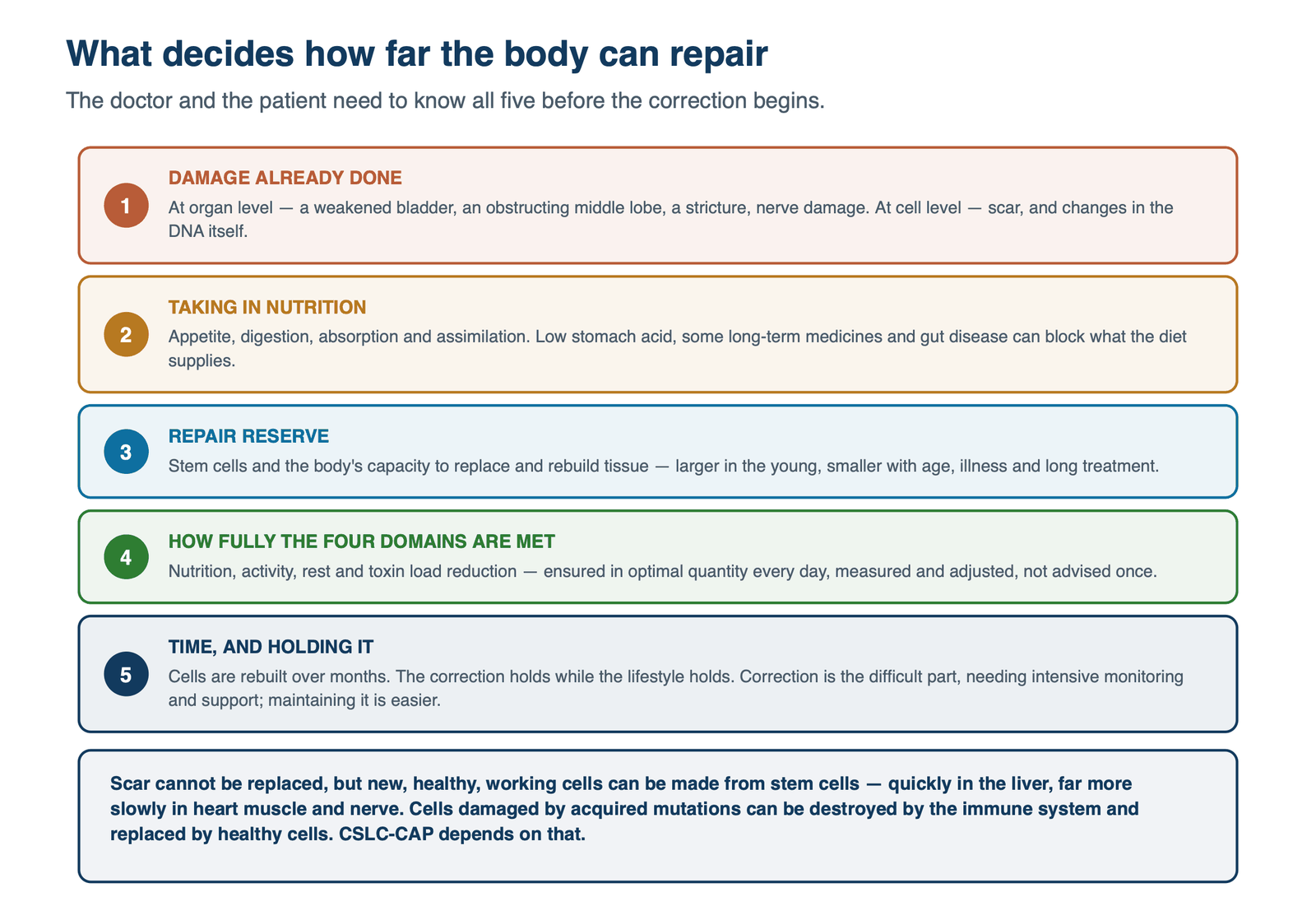
Lifestyle correction can only work through the body. Its limit is how effectively nutrition, activity, rest and freedom from toxins can be provided — and how much of the body is still able to respond. That is why the doctor and the patient need to understand, before the correction begins, what has already happened.
The damage already done. At organ level: a bladder whose wall has thickened and weakened under years of obstruction may not recover its full emptying; a middle lobe sitting across the bladder outlet obstructs by position; a stricture from earlier surgery is scar; bladder nerves damaged by long diabetes may not recover fully. At cell level: tissue replaced by scar stays scar, and changes written into the DNA of a cancer cell are not reversed by nutrition, but the immune system, if strengthened, can help remove the cancer cells – the cells with damaged DNA. What is still healthy and functioning can be corrected and supported. What has been replaced or rewritten is worked around — alongside the treatment it needs.
Taking in nutrition. Optimal nutrition only counts if it reaches the cells. That depends on appetite, digestion, absorption and assimilation — a gut, liver and pancreas able to turn food into the building blocks the body and its immune system use. Low stomach acid with age, gut disease, and some long-term medicines block what the diet supplies: metformin lowers vitamin B12 over the years, and so does long use of acid-suppressing tablets. Part of the assessment is finding these, and correcting them first.
The repair reserve. Damaged cells are replaced from the body’s stem cells and repaired by its own machinery. That reserve is larger in the young and shrinks with age, long illness and long treatment — especially after radiation and chemotherapy — and stem-cell exhaustion is one of the recognised hallmarks of ageing. A body with more reserve repairs faster and further. Scar cannot be replaced, but new, healthy, working cells can be made from stem cells, and the capacity differs from organ to organ: the liver regenerates readily, while heart muscle renews only about 1% of its cells a year at 25, and under half that at 75. Cells carrying acquired mutations are found and removed by the immune system and replaced by healthy cells from this reserve — the process CSLC-CAP depends on.
How fully the four domains are met. Nutrition, activity, rest and toxin load reduction must be applied every day, measured and adjusted — not advised once. Organ failure limits this directly: in advanced kidney disease, potassium and protein — and, before dialysis, water — have to be restricted, so complete nutrition cannot be given. And the result follows the effort the patient puts in.
Time. Cells are rebuilt over months — a test at three weeks measures last week; a test at three months measures whether the body has been rebuilt differently. That is why the active phase runs for the initial ninety days, or until body composition is corrected. Correction is the difficult part, needing intensive monitoring and support; maintaining it is easier.
Where the cancer has taken over the body’s metabolism — when it has begun consuming the body’s own muscle and fat — the aim changes from correction to support: ensure optimal nutrition, activity as tolerated, and comfort.
11. Medicines and procedures, alongside
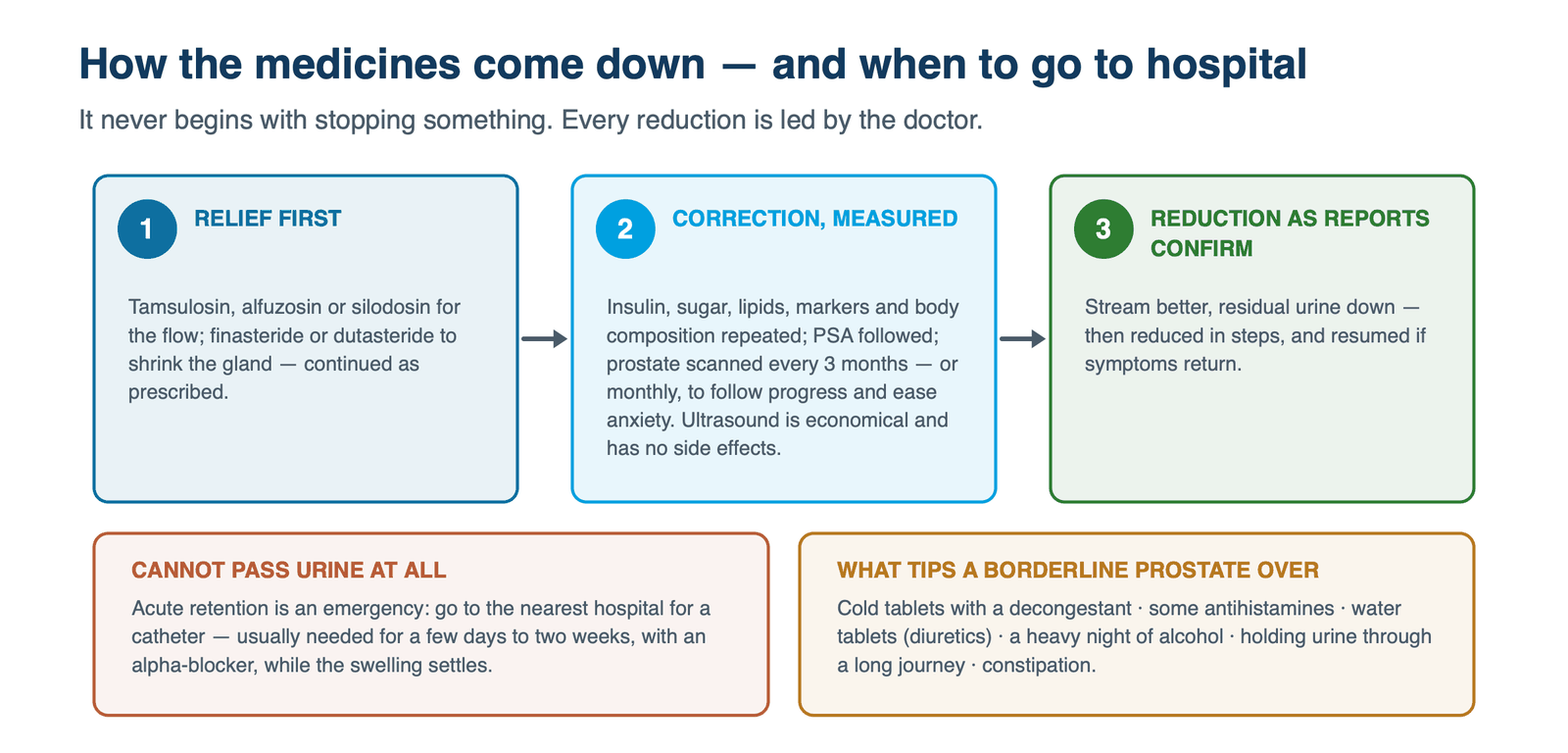
The sequence is fixed, and it never begins with stopping something.
Where it is not an emergency, the correction begins at once. For an enlarged gland, it may make a planned procedure unnecessary, or bring a man to it metabolically fitter; after a procedure, it works on the growth signals that remain. Where cancer treatment is planned, the correction runs in the weeks before it and alongside it, so that a man comes to it metabolically fitter.
Relief first. Alpha-blockers — tamsulosin, alfuzosin or silodosin — for the flow, and 5-alpha-reductase inhibitors — finasteride or dutasteride — to shrink the gland, continue as prescribed while the correction begins, as do antibiotics where there is infection. Diabetes medicines are adjusted by the doctor from the first days, and blood-pressure medicines are watched as the pressure falls. Because flow tablets lower the pressure on standing, a man who gets up at night should sit for a moment before he stands.
Correction alongside, with frequent measurement. The measurements, not the calendar, set the pace. The prostate is scanned every three months — or monthly, where a man wants to follow his progress and be spared the worry of waiting; ultrasound is economical and has no side effects.
Reduction as the reports confirm it. When the stream has improved and residual urine has fallen, the alpha-blocker comes down in steps, then stops. Diabetes and blood-pressure medicines follow their own numbers. Every step is led by the doctor, and resumed if symptoms return.
When the bladder will not empty. Never strain to force urine out; relax, and let it come. Being unable to pass urine at all, with a painful, full bladder, is an emergency: go to the nearest hospital for a catheter — a simple procedure under local anaesthetic, and a great relief. It is commonly needed for a few days to two weeks, with an alpha-blocker, while the swelling settles, and it does not mean an operation is inevitable. Retention can also come quietly — constant dribbling, or wetting at night, can mean the bladder has stopped emptying, without pain. A residual-urine scan settles it.
What tips a borderline prostate into retention is worth knowing: a cold tablet containing a decongestant, some antihistamines and other medicines with an anticholinergic effect, some blood pressure medicines — water tablets (diuretics) especially — a heavy night of alcohol, holding urine through a long journey, and constipation. A man who knows his flow is poor can avoid most of them, and a man whose flow suddenly worsens should tell his doctor what was started recently.
Where cancer treatment is advised, discuss the possible short term and long term side effects including sexual dysfunction with your urologist and oncologist. Accepting or declining any test or treatment is the patient’s and the family’s decision, made with full information from the urologist, the oncologist and the lifestyle-correction doctor. Most cancers found by PSA leave time to decide well, without panic; the biopsy grade and the scans show whether this one does. The correction runs alongside whatever is chosen.
12. Is this modern medicine?
Yes, and the question deserves a direct answer because the field is crowded. CSLC-CAP is based on modern medicine. Lifestyle correction is the first step of disease management in modern medical practice; what is added here is that it is structured, supervised and measured rather than offered as advice. The tests are modern medical tests. The supervising doctors hold MBBS and MD qualifications. No ayurvedic, homeopathic or unani preparation is used. The aim — reducing the need for medication and surgical intervention — is a modern medical aim.
13. Watch the sessions
14. Suitability
This suits a person who:
- is willing to make the correction, and to be measured
- is ambulant and clinically stable
- has the physical capacity to perform the structured activity, at least lying down or seated
- has the mental capacity to learn and follow it
Where there is early dementia or memory impairment, this remains possible provided a close family member joins the programme, learns it, and supports the patient.
15. Frequently asked questions
Can surgery for an enlarged prostate be avoided?
Often it can be deferred or avoided once the stream, the residual urine and the gland respond. Retention that keeps recurring, repeated infection, bladder stones, repeated bleeding and back-pressure on the kidneys are reasons not to wait for surgery. The decision is the patient’s and the family’s, made with full information.
I have chronic prostatitis and antibiotics have not helped. Is there any point?
Most chronic prostatitis is not an infection, which is why antibiotics often fail. Where it is inflammation, that is exactly what the correction works on — and in a randomised trial, aerobic exercise helped men whom conventional treatment had not.
Related reading
- Cancer: Health Optimization Alongside Oncology — alongside cancer treatment, not instead of it.
- Age-Related Diseases: Reversing Insulin Resistance — the insulin story in full.
- Delay Ageing, Reverse Ageing: The Current Possibilities — why “it is just age” is incomplete.
- Autoimmune Diseases: Reversing Autoimmune Inflammation — the immune imbalance behind inflammation.
- Lung Disease: Asthma, Allergies, ILD, COPD, Fibrosis — inflammation, and where it ends in scar.
- Fatty Liver: Reversing Liver Fat and Fibrosis — the organ that moves alongside the prostate.
- Kidney Disease: Protecting Renal Function — where long obstruction ends.
- Weight-Loss Injections and Diabetes — why the injection does not replace the correction.
- Arthritis: Reversing Inflammation and Metabolic Load — the tapering sequence in detail.
- Psoriasis and Psoriatic Arthritis — the same imbalance on the skin.
- Mental Disorders: The Root Cause Beneath the Chemistry — the same story, read in the brain.
- Planning a Pregnancy: What Both Parents Can Correct in the 90 Days Before — where the method came from.
References
Short citations; each link opens the original article.
Metabolism, DNA damage and repair
- Micronutrient deficiency and DNA damage — Ames BN. Mutat Res 2001. https://doi.org/10.1016/s0027-5107(01)00070-7
- Folate deficiency, uracil in DNA and chromosome breaks — Blount BC, et al. Proc Natl Acad Sci USA 1997. https://doi.org/10.1073/pnas.94.7.3290
- Copying errors and cancer — Tomasetti C, et al. Science 2017. https://doi.org/10.1126/science.aaf9011
- Hallmarks of ageing, including stem-cell exhaustion — López-Otín C, et al. Cell 2023. https://doi.org/10.1016/j.cell.2022.11.001
- Liver regeneration — Michalopoulos GK, Bhushan B. Nat Rev Gastroenterol Hepatol 2021. https://doi.org/10.1038/s41575-020-0342-4
- Heart-muscle cell renewal in humans, about 1% a year at 25 — Bergmann O, et al. Science 2009. https://doi.org/10.1126/science.1164680
- Immune surveillance — the immune system finding and removing abnormal cells — Swann JB, Smyth MJ. J Clin Invest 2007. https://doi.org/10.1172/JCI31405
- Metformin and vitamin B12 — de Jager J, et al. BMJ 2010. https://doi.org/10.1136/bmj.c2181
- Acid-suppressing tablets and vitamin B12 — Lam JR, et al. JAMA 2013. https://doi.org/10.1001/jama.2013.280490
Prostatitis
- Classification of prostatitis — Krieger JN, et al. JAMA 1999. https://doi.org/10.1001/jama.282.3.236
- How common prostatitis is — Krieger JN, et al. Int J Antimicrob Agents 2008. https://doi.org/10.1016/j.ijantimicag.2007.08.028
- Inflammation in enlarged prostates — Nickel JC, et al. BJU Int 1999. https://doi.org/10.1046/j.1464-410x.1999.00352.x
- White cells and bacteria in chronic pelvic pain syndrome vs men without symptoms — Nickel JC, et al. J Urol 2003. https://doi.org/10.1097/01.ju.0000082252.49374.e9
- Aerobic exercise in chronic pelvic pain syndrome, randomised — Giubilei G, et al. J Urol 2007. https://doi.org/10.1016/j.juro.2006.08.107
BPH
- Prostate growth and BPH with age — Berry SJ, et al. J Urol 1984. https://doi.org/10.1016/s0022-5347(17)49698-4
- High insulin and faster prostate growth — Hammarsten J, Högstedt B. Eur Urol 2001. https://doi.org/10.1159/000052430
- Metabolic syndrome and prostate volume — Gacci M, et al. BJU Int 2015. https://doi.org/10.1111/bju.12728
- Physical activity, BPH and urinary symptoms — Parsons JK, Kashefi C. Eur Urol 2008. https://doi.org/10.1016/j.eururo.2008.02.019
Prostate cancer and PSA
- Heritability of cancer in twins — Mucci LA, et al. JAMA 2016. https://doi.org/10.1001/jama.2015.17703
- Inherited HOXB13 faults — Ewing CM, et al. N Engl J Med 2012. https://doi.org/10.1056/NEJMoa1110000
- The TMPRSS2–ERG gene fusion — Tomlins SA, et al. Science 2005. https://doi.org/10.1126/science.1117679
- Gene-fusion frequency by ancestry — Zhou CK, et al. Am J Epidemiol 2017. https://doi.org/10.1093/aje/kwx235
- Inflammation-induced oxidative stress and gene fusion (laboratory study) — Mani RS, et al. Cell Rep 2016. https://doi.org/10.1016/j.celrep.2016.11.019
- Insulin output and prostate-cancer death — Ma J, et al. Lancet Oncol 2008. https://doi.org/10.1016/S1470-2045(08)70235-3
- Year-to-year PSA variation — Eastham JA, et al. JAMA 2003. https://doi.org/10.1001/jama.289.20.2695
- MRI before biopsy (PRECISION) — Kasivisvanathan V, et al. N Engl J Med 2018. https://doi.org/10.1056/NEJMoa1801993
- Fifteen-year outcomes (ProtecT) — Hamdy FC, et al. N Engl J Med 2023. https://doi.org/10.1056/NEJMoa2214122
Treatments and their side effects
- Medicines and BPH progression (MTOPS) — McConnell JD, et al. N Engl J Med 2003. https://doi.org/10.1056/NEJMoa030656
- Sexual side effects of finasteride and dutasteride — Corona G, et al. Andrology 2017. https://doi.org/10.1111/andr.12353
- Tamsulosin and floppy iris at cataract surgery — Chang DF, Campbell JR. J Cataract Refract Surg 2005. https://doi.org/10.1016/j.jcrs.2005.02.027
- Complications of TURP — Rassweiler J, et al. Eur Urol 2006. https://doi.org/10.1016/j.eururo.2005.12.042
- Steam therapy, five years — McVary KT, et al. J Urol 2021. https://doi.org/10.1097/JU.0000000000001778
- Prostatic implants, five years — Roehrborn CG, et al. Can J Urol 2017. https://pubmed.ncbi.nlm.nih.gov/28646935/
- Artery embolisation versus TURP, randomised — Abt D, et al. Eur Urol 2021. https://doi.org/10.1016/j.eururo.2021.02.008
- Patient-reported outcomes after surgery, radiotherapy or monitoring, 12 years (ProtecT) — Donovan JL, et al. NEJM Evid 2023. https://doi.org/10.1056/EVIDoa2300018
- Diabetes and heart disease during hormone therapy — Keating NL, et al. J Clin Oncol 2006. https://doi.org/10.1200/JCO.2006.06.2497
Structured lifestyle correction
- Urinary symptoms after weight loss track insulin — Luke S, et al. BJU Int 2015. https://doi.org/10.1111/bju.12943
- Sleep apnoea treatment and night-time urination — Wang T, et al. Int Neurourol J 2015. https://doi.org/10.5213/inj.2015.19.3.178
- Lifestyle change and erectile function, randomised — Esposito K, et al. JAMA 2004. https://doi.org/10.1001/jama.291.24.2978
- PSA after weight-loss surgery — Woodard G, et al. Br J Surg 2012. https://doi.org/10.1002/bjs.8693
- Intensive lifestyle change in early prostate cancer — Ornish D, et al. J Urol 2005. https://doi.org/10.1097/01.ju.0000169487.49018.73 · two-year follow-up, Frattaroli J, et al. Urology 2008. https://doi.org/10.1016/j.urology.2008.04.050
- Structured exercise on active surveillance (ERASE) — Kang DW, et al. JAMA Oncol 2021. https://doi.org/10.1001/jamaoncol.2021.3067
- Healthy habits and lethal prostate cancer — Kenfield SA, et al. J Natl Cancer Inst 2016. https://doi.org/10.1093/jnci/djv329
- A single dietary change on active surveillance (MEAL) — Parsons JK, et al. JAMA 2020. https://doi.org/10.1001/jama.2019.20207
- Vitamin E supplements and prostate cancer (SELECT) — Klein EA, et al. JAMA 2011. https://doi.org/10.1001/jama.2011.1437 · selenium by baseline status, Kristal AR, et al. J Natl Cancer Inst 2014. https://doi.org/10.1093/jnci/djt456
- Causes of death among men with prostate cancer — Epstein MM, et al. J Natl Cancer Inst 2012. https://doi.org/10.1093/jnci/djs299
- Nutrition in advanced cancer (ESPEN) — Muscaritoli M, et al. Clin Nutr 2021. https://doi.org/10.1016/j.clnu.2021.02.005
From this centre’s clinical experience — not published. Blood sugar steadying within days and fasting insulin falling within the first week; the settling of urinary symptoms within two to four weeks; most men off the flow tablet within about a month; the grade-by-grade reduction in gland volume; surgery for enlargement avoided in men who had been advised it; the advice on the age to start checking; the parallel movement of PSA with insulin, HbA1c and body composition; gains held into the second year with self-maintenance; and triglycerides and glucose as the first markers of drift.
About the author and the centre
Dr Jolly Thomson MBBS MD trained and practised in obstetrics, gynaecology and infertility treatment — MBBS (Government Medical College, Kottayam, 1981 batch), DGO and MD in Obstetrics and Gynaecology (Government Medical College, Thiruvananthapuram, 1989–1992). She practises today in a different field: clinically supported lifestyle correction — reversing lifestyle-related disease and optimising health. Where this article says in this practice or in this centre’s experience, that is what it refers to: patients she has assessed, corrected and followed herself.
Where the method came from. Not from a laboratory. It came out of that reproductive practice — preconception care for the couple, mother and baby through pregnancy, childbirth, and mother and newborn afterwards. Where lifestyle was corrected in a structured way she saw better pregnancy rates, fewer miscarriages, and fewer complications. What worked before a pregnancy turned out to work in the lifestyle diseases themselves, and that is how the method reached the rest of the practice.
Life Care Centre, Thevara, Kochi is where the method is practised.
Important note
This article is general health education. No medicine should be started, stopped, reduced or changed except under the supervision of the doctor who prescribed it.
CSLC-CAP is a methodology and treatment for health optimization — to improve quality of life, and to reduce the need for medication and surgical interventions. It is delivered as an out-patient treatment with frequent telemedicine follow-up, under doctor supervision.