Delay Ageing, Reverse Ageing: The Current Possibilities
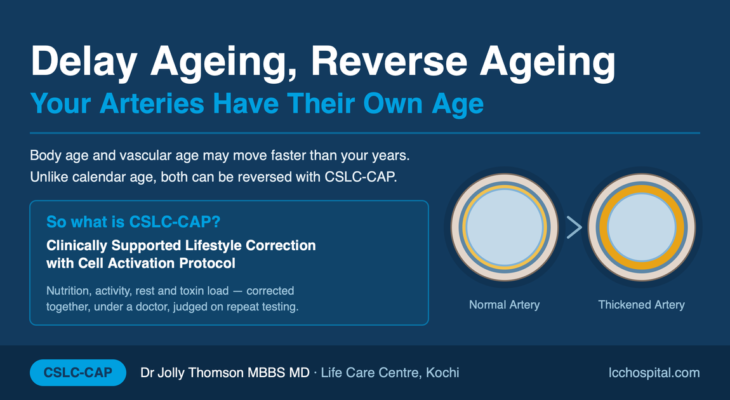
Delay Ageing, Reverse Ageing: The Current Possibilities
- Dr Jolly Thomson MBBS MD
- September 24, 2026
- 0 Comments
How to reverse lifestyle diseases and keep your body age and vascular age younger than your calendar age – What CSLC-CAP corrects, what it measures, and where it stops
Dr Jolly Thomson MBBS MD · Life Care Centre, Thevara, Kochi
Abstract
Background. After sixty, diabetes, blood pressure, heart disease and arthritis are treated as things that simply happen. They are not. They are what accelerated ageing looks like once it becomes symptomatic, and the process underneath can be measured years before any of them appears.
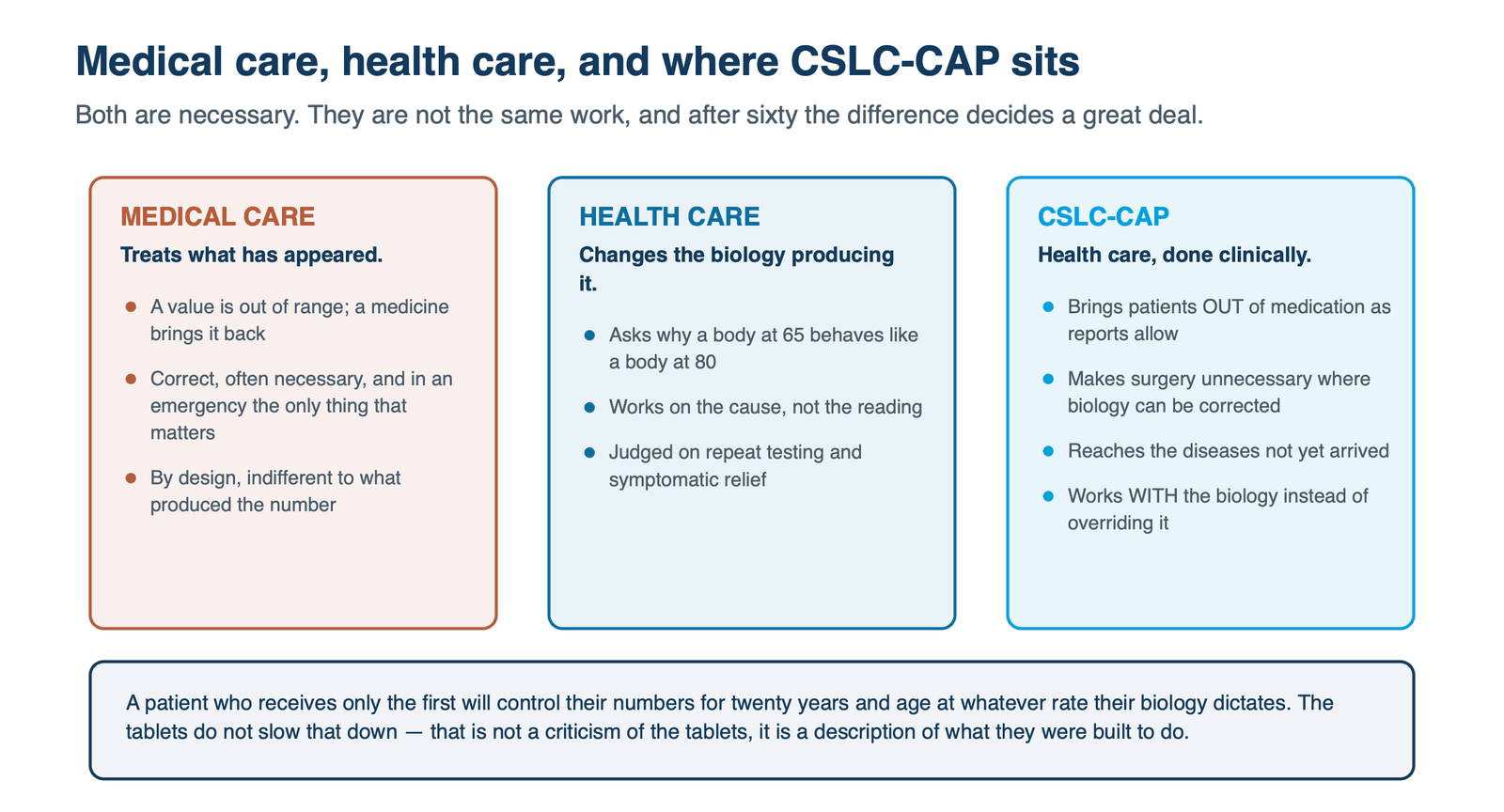
Two kinds of care. Medical care treats what has already appeared: a value is out of range and a medicine brings it back. Health care works on the biology that keeps producing that value. Both are necessary, and they are not the same work.
What CSLC-CAP is. Clinically Supported Lifestyle Correction, with the Cell Activation Protocol, is health care in that sense — nutrition, activity, rest and toxin load corrected in a structured way, supervised by MBBS and MD doctors, and judged on repeat testing and symptomatic relief. Its purpose is to bring patients out of medication as the reports allow, to make surgical intervention unnecessary where the biology can be corrected instead, to reach the diseases that have not yet appeared, and to hold a person at the best health their biology allows by understanding that biology rather than overriding it.
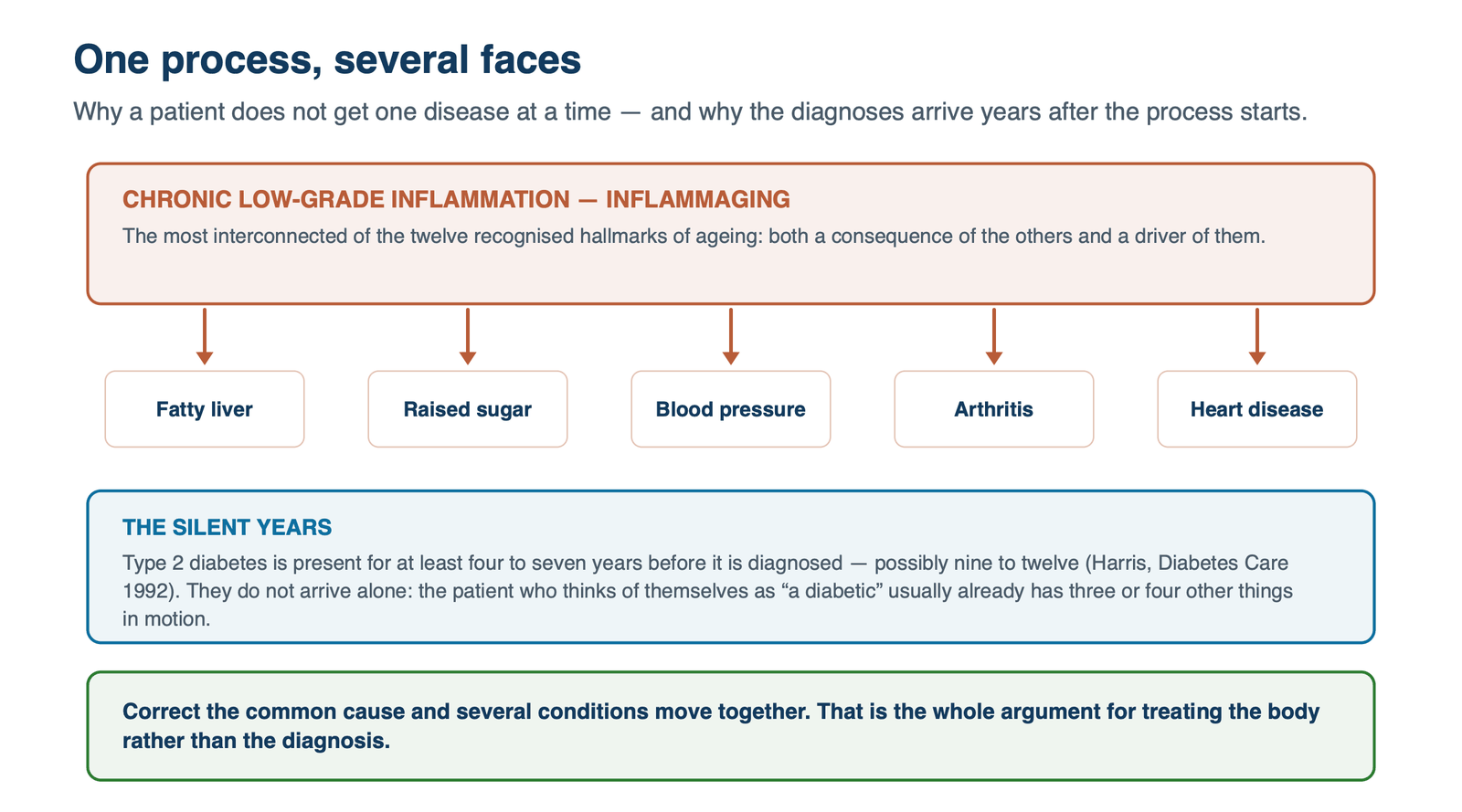
Why one process produces many diseases. Chronic low-grade inflammation — inflammaging — is the most interconnected of the twelve recognised hallmarks of ageing. It is why a patient does not get one disease at a time, and why correcting the common cause moves several conditions together.
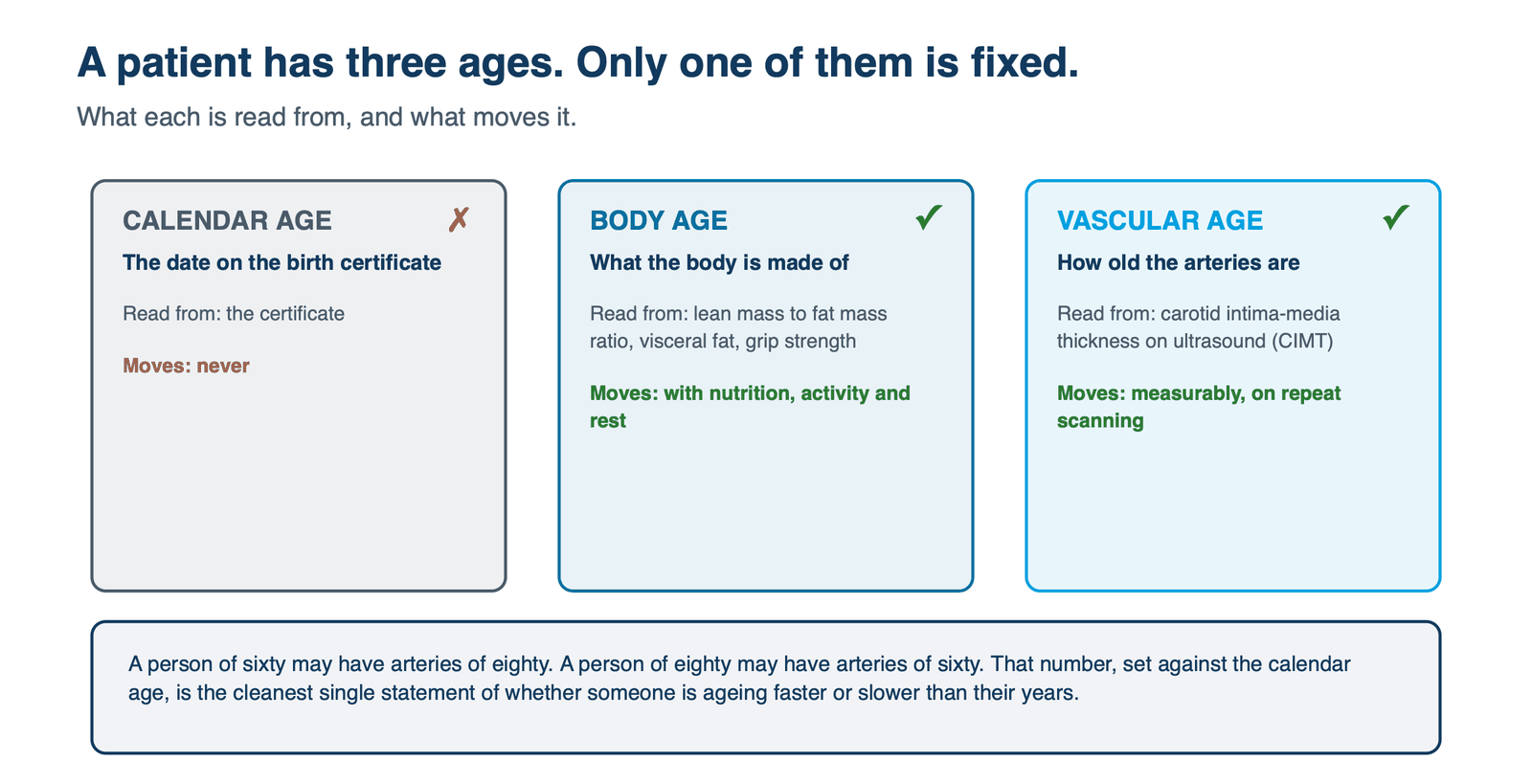
What is assessed. Three ages, not one. Calendar age, which cannot be changed. Body age, read from the lean mass to fat mass ratio. Vascular age, measured by ultrasound of the carotid artery — CIMT — which reports how old the arteries are, independent of the date on the birth certificate. The two do not track each other: a patient can carry a normal body age and arteries measuring more than twice their years.
What is corrected. The omega-6 to omega-3 balance, because the immune system builds both its inflammatory and its healing signals out of those two fats. Ectopic fat — the fat sitting where it should not be, in the liver, around the organs, inside the artery wall. General toxin load. Muscle and bone mass, upward.
What the measurements show. In this approach, body age and vascular age both move, and they move independently of each other. Vascular age from 332 to 284 in three months in one patient, from 159 to 72 in another, and from 207 to 130 at three months and 111 at six in a third. Body age from 56 to 45, from 61 to 51, and — in a seventy-four-year-old — from 61 to 44. HbA1c from 13.3 to 5.8 in 90 days without diabetes medication, body fat from 29% to 19%, visceral fat to 3.5%, plaque thickness reducing on repeat scans.
What does not hold itself. None of it is permanent, and the two ages do not decay together. In a fifty-six-year-old whose vascular age halved from 226 to 111 in ninety days, weight and body age then held steady without support while the vascular age climbed back to 139 and then 159 — which is why the arteries are measured repeatedly, and not once.
Where it does not reach. Calendar age. Established structural damage — a scarred kidney, a fused joint, lung tissue already lost. And the last stage of organ failure, where the body no longer has the capacity to rebuild.
Conclusion. The anti-ageing products being sold today — peptides, NAD+ precursors, senolytics, repurposed drugs — are mostly interesting early science with little controlled human evidence. The interventions that have actually been shown to reverse a measured biological age in randomised trials are diet, activity, sleep and stress. That is the unglamorous finding, and it is the one with the data behind it.
Medical care, health care, and where CSLC-CAP sits
There is a difference between the first two, and after sixty it decides almost everything.
Medical care treats what has appeared. A number is out of range and a medicine brings it back. This is correct, often necessary, and in an emergency it is the only thing that matters. It is also, by design, indifferent to what produced the number.
Health care is the attempt to change the biology that keeps producing it. It asks why a body at sixty-five is behaving like a body at eighty, and whether that gap can be closed.
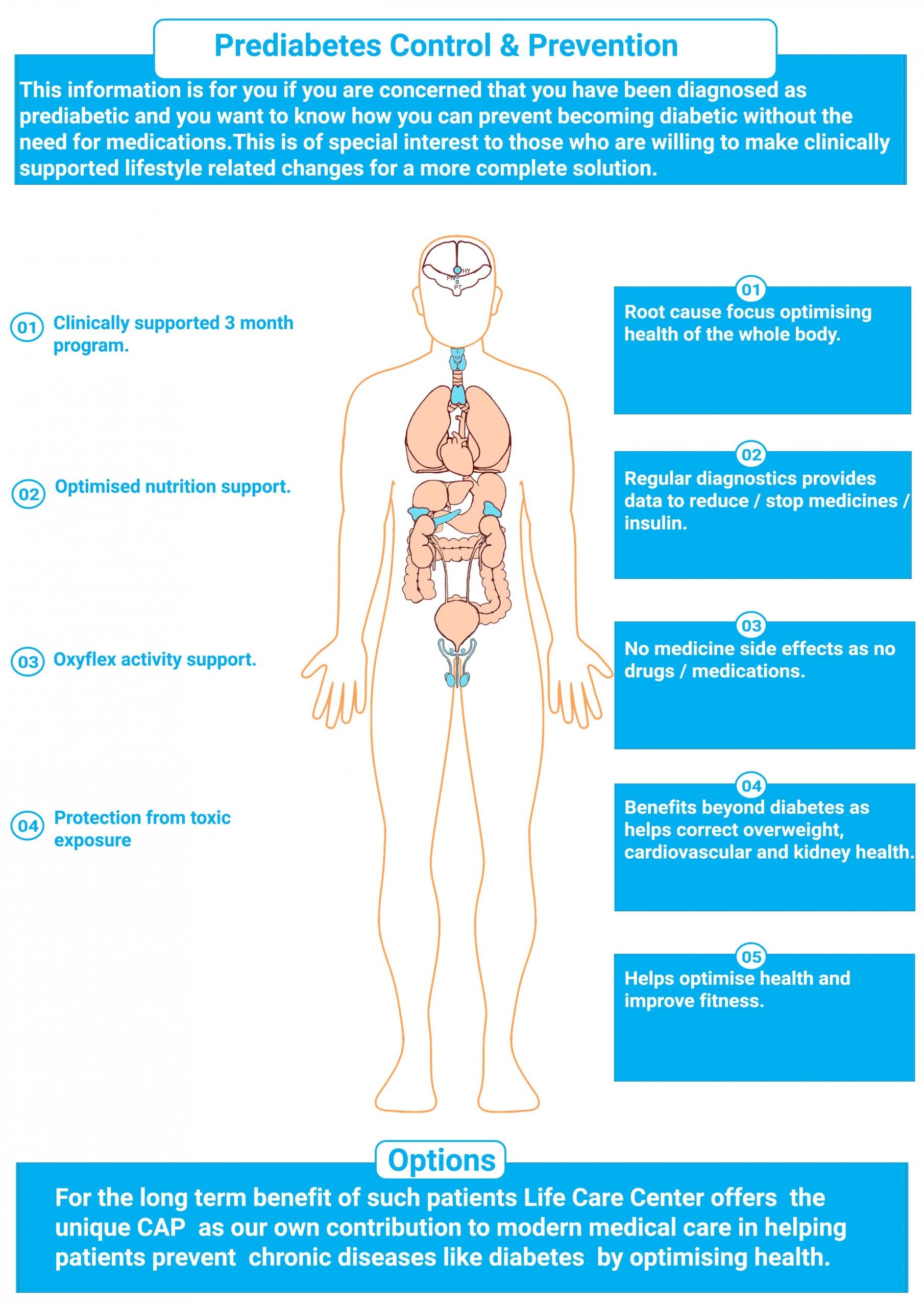
CSLC-CAP is health care, done in a clinical setting. What that means in practice is four things.
It brings patients out of medication. Not by stopping anything, but by correcting the biology until the reports show the dose is no longer needed — then reducing it, one medicine at a time, under the doctor who prescribed it. Patients here have come off insulin, off diabetes medication, and down from statin doses of 40 or 80 mg to 5 mg or to nothing.
It makes surgery unnecessary where the biology can be corrected instead. A blocked artery, a swollen joint and a fatty liver are end results. Where the process that produced them is still active, correcting it changes what the surgeon is looking at — and in this practice patients have walked without the knee replacement and without the bypass they were advised to have.
It is preventive, in the only sense that means anything. The diseases of the next fifteen years are already in motion and already measurable. Vascular age, body composition and the inflammatory markers show them while a person still feels well, which is the only point at which prevention is available.
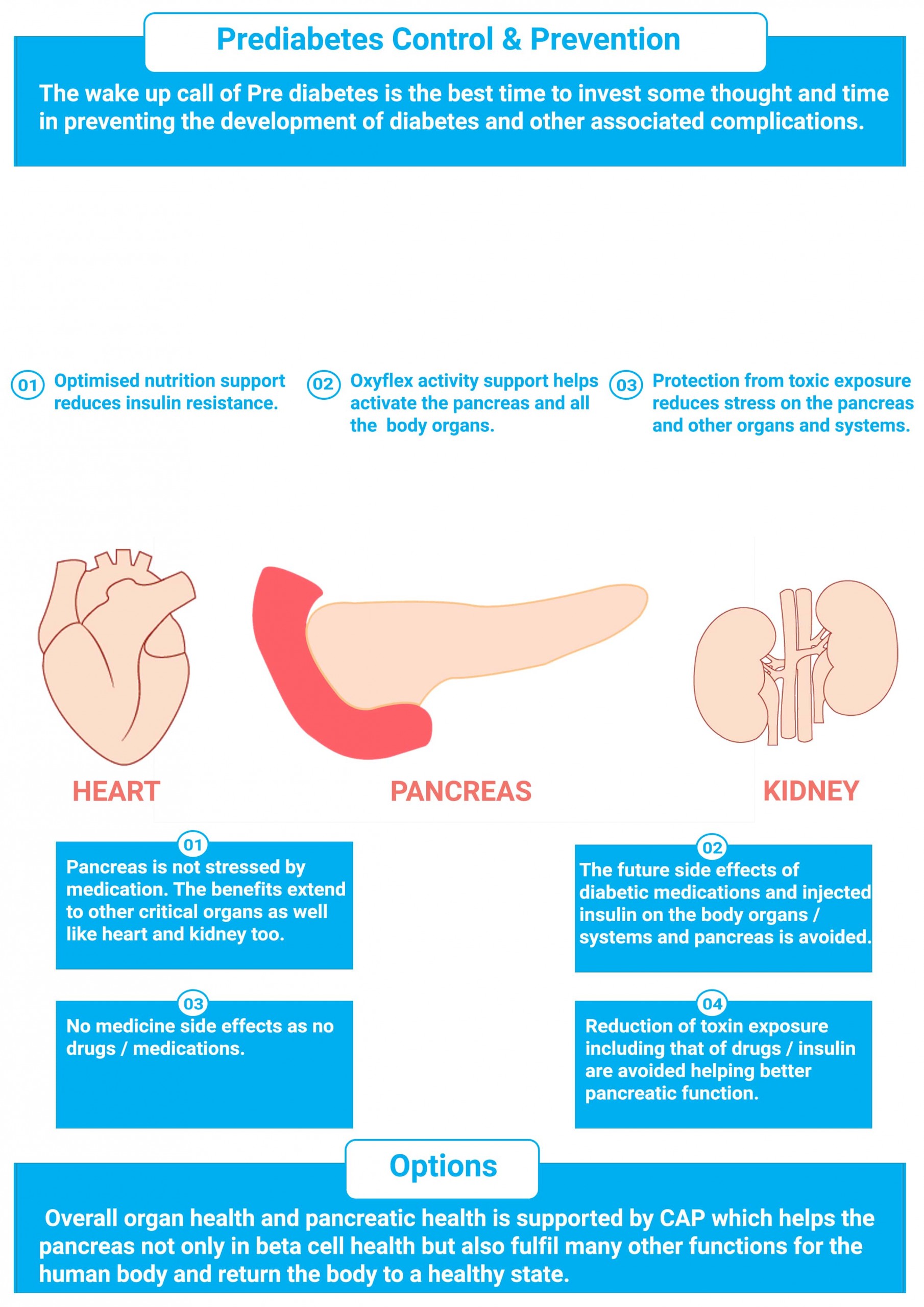
It keeps a person at their best by understanding the biology rather than overriding it. A medicine works against a mechanism. This works with one — supplying what the body needs to repair itself, and removing what is stopping it.
A patient who receives only the first will control their numbers for twenty years and age at whatever rate their biology dictates. The tablets do not slow that down. That is not a criticism of the tablets; it is a description of what they were built to do.
Lifespan and healthspan — the gap that matters
Two words, and the distance between them is the whole subject.
Lifespan is the number of years lived. Healthspan is the number of those years lived in health — independent, capable, not dependent on another person for the ordinary business of the day.
Lifespan has been extended dramatically, including for people who are already unwell. It is now possible to keep someone alive for many years in a state where they cannot look after themselves. What has not extended at the same rate is healthspan, and the result is a gap: ten or fifteen years at the end, dependent and suffering.
The aim of CSLC-CAP is not to extend life. It is to close that gap. An extended life that is not healthy is a burden carried by the patient and by the family, and treating lifespan as the goal without asking about healthspan is how that burden gets built.
Accelerated ageing is not an old person’s problem any more
The clearest evidence that ageing and calendar age are different things is that the gap between them now shows up in children.
A thirteen-year-old boy came to this practice for obesity and allergy. He is tall — 175 cm — and well built, and he weighed 91 kg, with a BMI of almost 30. He had the skin signs of hyperinsulinaemia, which is to say of pre-diabetes: the darkening at the neck and in the armpits. He also had patches of vitiligo, which is autoimmune, so one part of his skin was darkening while another lost its colour entirely. Allergy, autoimmunity and a metabolic problem, in one child.
His body age was 43.
A sixteen-year-old girl came with multiple nutritional deficiencies, raised hs-CRP, CRP and ESR, polycystic ovarian disease, an irregular cycle, and an HbA1c of 6.5 — she was already diabetic. She was also seriously depressed, which in a list like that is usually recorded as a separate problem and treated by a separate doctor.
Her body age was 40.
Neither of these children has an old person’s disease. They have an old person’s biology, and the conditions that follow from it have simply arrived four decades early. That is what the rest of this article is about: not how many years someone has lived, but how fast their body is being aged, and whether anybody is measuring it.
Inflammaging — why one process produces many diseases
In 2023 the hallmarks of ageing were revised to twelve: genomic instability, telomere attrition, epigenetic alterations, loss of proteostasis, disabled macroautophagy, deregulated nutrient-sensing, mitochondrial dysfunction, cellular senescence, stem cell exhaustion, altered intercellular communication, chronic inflammation, and dysbiosis.
Of those twelve, chronic low-grade inflammation is described as the most interconnected. It is both a consequence of the other hallmarks and a driver of them, and it is the one that produces the clinical picture a doctor actually sees: frailty, disability, cardiovascular events, cancer, and higher mortality.
This is what explains a pattern every clinician recognises but few explain to patients. A person is diagnosed with one condition — fatty liver, say, or a raised sugar — and treats it as a single problem. But type 2 diabetes is present for at least four to seven years before it is diagnosed — and on the same paper’s estimate, possibly nine to twelve. These conditions also do not arrive alone. The patient who thinks of themselves as “a diabetic” usually already has three or four other things in motion. Over the following years those surface one at a time, each acquiring its own specialist and its own prescription, and nobody tells the patient that they are looking at one process with several faces.
Where the inflammation comes from
The immune system is the body’s own doctor. Whatever a surgeon or a hospital does, the healing is performed by the immune system, and a person’s capacity to recover is their immune system’s capacity.
It works in two directions. Inflammation is defence, and its signalling molecules are built largely from omega-6 fatty acids. Resolution and healing are built from omega-3. Both are essential. What matters is the balance between them at the level of the cell membrane, because that balance decides what the system is equipped to do — and in a modern diet it has moved a long way toward defence and away from healing.
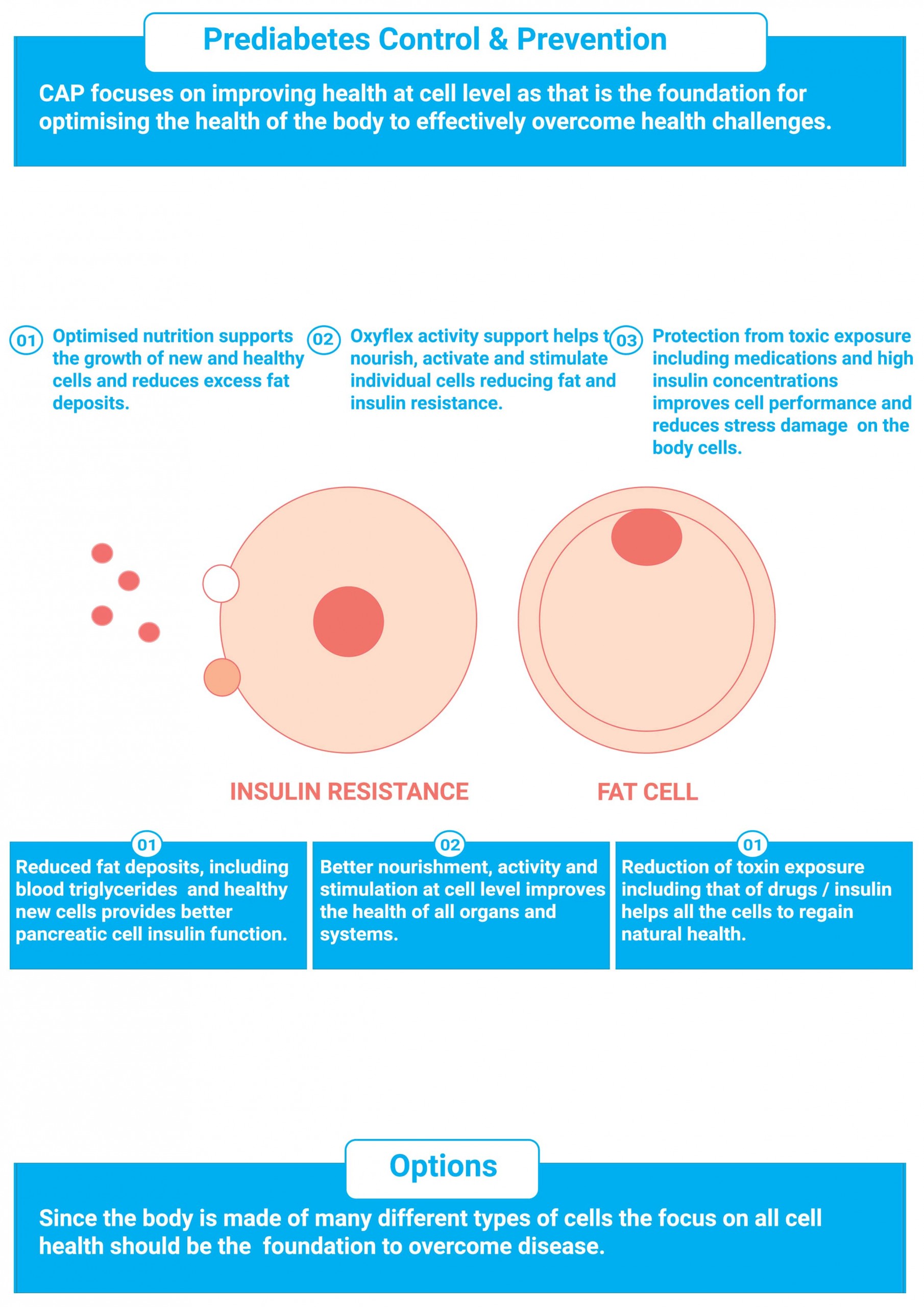
What tips it further is accumulation. Toxins accumulate, and the commonest form is not an industrial chemical. It is fat sitting where it should not be — in the liver, around the abdominal organs, within the artery wall. Even a nutrient becomes a toxin in excess: glucose and triglyceride are ordinary nutrients, and in excess they behave as a chemical burden.
Ectopic fat is therefore not a cosmetic matter. It is the substrate of vascular ageing.
The three ages, and how each is measured
A patient has more than one age, and only the first is fixed.
Calendar age
The date on the birth certificate. It cannot be changed, and nothing in this article claims otherwise.
Body age — the lean mass to fat mass ratio
How old a body is, functionally, depends less on years than on what it is made of. Muscle and bone mass fall with age; fat mass rises. That shift is what produces the frailty, the falls, the fractures and the loss of independence that define old age in practice.
It is also measurable, and it is the reason a weighing scale is not dependable fully. Two people of the same weight can have entirely different body ages. Weight that falls because muscle was lost is a worse outcome than no weight loss at all — and it is the outcome most weight-loss efforts actually produce.
The evidence that this is an ageing measure rather than a fitness measure is substantial. Grip strength predicts all-cause mortality with an effect size comparable to systolic blood pressure; each 5 kg reduction is associated with roughly a 16% higher all-cause and 17% higher cardiovascular mortality risk. And in the same body of work, it is muscle STRENGTH that carries the prediction: grip strength and gait speed each predict all-cause mortality, while muscle mass on its own does not. That is worth stating plainly, because it means the target is functional muscle, not bulk.
So fat and muscle are not two separate projects. Excess fat is actively dismantling the muscle, and the muscle it dismantles was the thing keeping the person independent.
Vascular age — what the carotid scan shows
The arteries age at their own rate, and that rate can be measured directly.
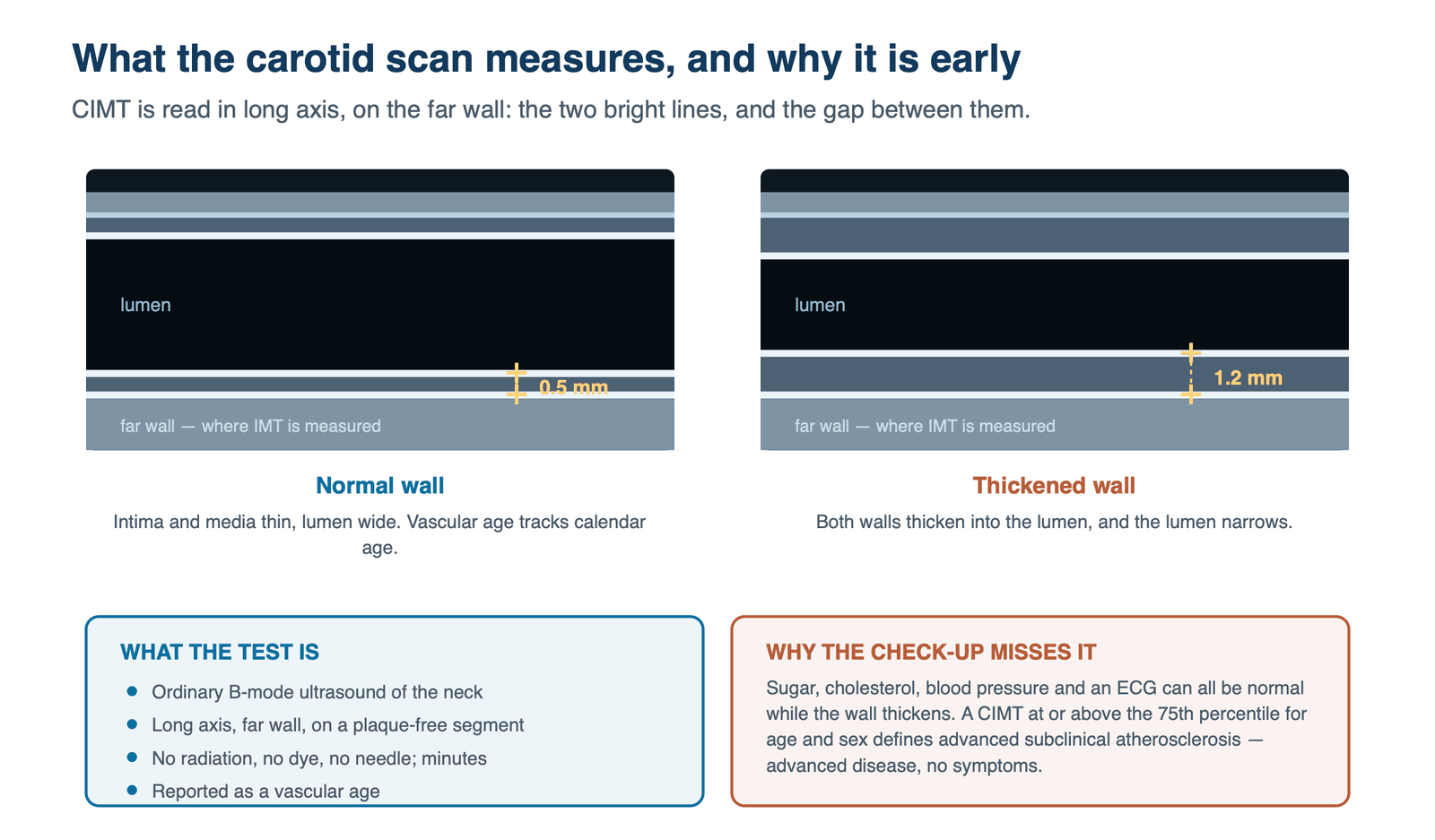
Carotid intima-media thickness (CIMT) is a measurement taken by ordinary B-mode ultrasound of the carotid artery in the neck — the major vessel supplying the brain, and one that lies close enough to the surface to be imaged clearly. The scan measures the thickness of the innermost two layers of the artery wall, where fat accumulates beneath the endothelial lining before any blockage exists.
It is non-invasive, highly reproducible, involves no radiation and no dye, and it quantifies atherosclerotic burden directly rather than inferring it.
Its measurements are then converted into a vascular age — the age at which that arterial thickness would be average. A person of sixty may have arteries of eighty. A person of eighty may have arteries of sixty. That number, compared against the calendar age, is the cleanest single statement of whether someone is ageing faster or slower than their years.
This is not a fringe measurement. CIMT values are used to modify Framingham cardiovascular risk estimates, and a CIMT at or above the 75th percentile for age, sex and race defines advanced subclinical atherosclerosis — advanced disease in a person with no symptoms at all.
The two ages do not move together, and that is the reason for measuring both. A sixty-one-year-old man came to this practice after a treadmill test turned positive and an angiogram was advised. He already had two stents, placed in 2016. He had diabetes, hypertension, a kidney problem, arthritis with knee pain, neck pain, allergy — and a darkening of both feet, which is what peripheral arterial disease looks like before anybody calls it that. He was taking a long list of medicines for the heart, for diabetes and for blood pressure, and his HbA1c was still 8.6 on all of them.
His body age came back at roughly his calendar age. He was not overweight — 154 cm, 63 kg — and nothing in his body composition suggested a problem.
His vascular age came back at 159.
Body composition did not predict that number, and no check-up he had ever had would have found it. Only the scan did.
Why this matters more than a routine check-up
Because the routine check-up does not look here.
A standard health check measures sugar, cholesterol, blood pressure and perhaps an ECG. A person can pass all of it while carrying advanced arterial disease, because the artery narrows for years before it produces a symptom or an abnormal ECG. The first sign is often the event.
In this practice a seventy-year-old man came for nothing more than a check-up. He had come with his wife, who was being treated for arthritis, and agreed to be looked at while he was there. His complaints were small ones — itching, a few rashes, some tiredness. He was not overweight: 163 cm, 60.5 kg. Scanning showed a grade one fatty liver and an enlarged prostate.
His blood tests showed a raised troponin — the marker a cardiologist looks for when a patient arrives with chest pain. He had never had chest pain. That one reading is the only reason his arteries were looked at at all.
His vascular age came back at 226 years on one side of the neck and 438 on the other: an average of 332, against a calendar age of seventy. The same blood tests found a diabetes he did not know he had, with an HbA1c of 6.8.
None of that is invisible. It simply was not being looked for.
The measurable markers of inflammaging
Inflammation is not an abstraction. It has markers, and they are ordinary tests.
The point of measuring all of them at once is that they move together. In a patient followed on this protocol, a falling hs-CRP, a falling visceral fat percentage and a reducing carotid thickness are three readings of the same underlying change.
What the ageing research actually says
The science of ageing has moved a long way in fifteen years, and two findings matter directly to a patient.
Telomeres — the cellular clock, and what moves it
Telomeres are the protective caps at the ends of chromosomes. They shorten each time a cell divides, and telomere attrition is one of the twelve hallmarks. Short telomeres are associated with earlier onset of age-related disease.
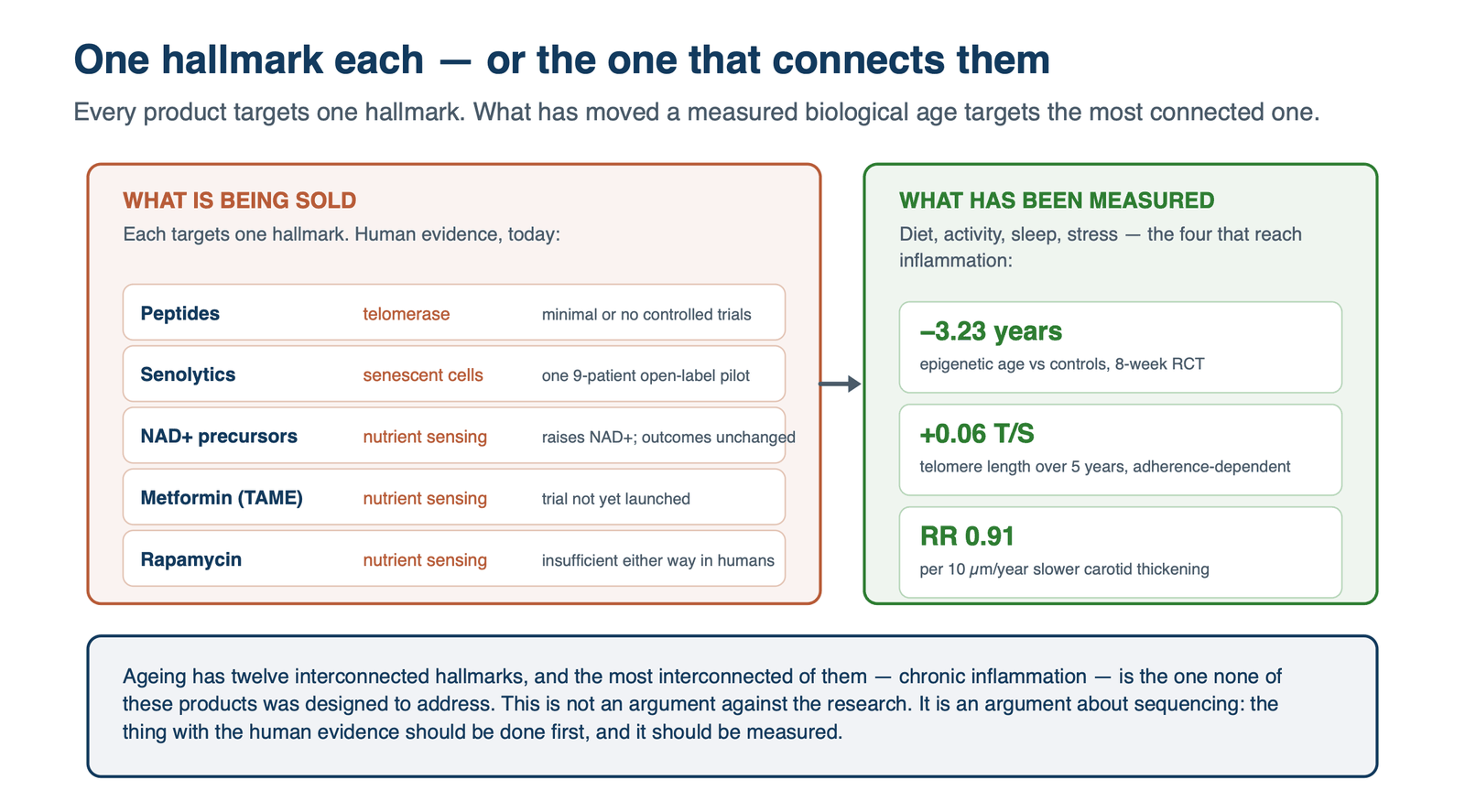
The question that matters is whether anything moves them. In a five-year follow-up of men with low-risk prostate cancer under active surveillance, published in The Lancet Oncology, those who undertook comprehensive lifestyle change — diet, activity, stress management and social support — showed relative telomere length increasing by a median of 0.06 T/S units, while the control group’s decreased by 0.03 (p=0.03).
The detail worth noticing is the next one. When both groups were analysed together, the degree of adherence to the lifestyle changes predicted telomere length — each percentage point of adherence associated with a further increase (p=0.005). That is a dose-response relationship, and dose-response is what separates a real effect from a coincidence.
The epigenetic clock — biological age, measured and reversed
Epigenetic alteration is another of the twelve hallmarks, and it is measurable. Patterns of DNA methylation change with age in a regular enough way that they can be read as a clock, giving a biological age that may be higher or lower than the calendar age.
In a pilot randomised controlled trial, 43 healthy men aged 50 to 72 followed an eight-week programme of diet, sleep, exercise and relaxation guidance. Their DNA methylation age fell by 3.23 years relative to controls (p=0.018). A subsequent case series in women following a comparable programme reported an average reversal of 4.60 years.
Eight weeks. Diet, sleep, exercise and stress. Measured on a genomic clock, not a questionnaire.
These are small studies and should be described as such. But they are the first direct demonstrations that a measured biological age moves downward under lifestyle correction — and they sit alongside the CIMT evidence, where a meta-analysis of 119 randomised trials and 100,667 patients found that each 10 µm per year reduction in the rate of carotid thickening corresponded to a relative cardiovascular risk of 0.91.
The anti-ageing treatments being sold — what the evidence shows
This is now a large industry, and a patient is entitled to know where each of its offerings actually stands. What follows is not a dismissal. Several of these are serious science. It is a statement of how much human evidence exists today.
Peptides
Short chains of amino acids, sold widely for longevity.
Epitalon is the one most associated with longevity claims, studied for effects on telomerase, the pineal gland and circadian regulation. Most of that work comes from a single research lineage with limited independent replication, and the claims that it lengthens telomeres or extends life in humans are not supported by robust controlled-trial data. It is not approved for any indication.
GHK-Cu, a copper-binding peptide, has the most direct evidence of the group — for collagen synthesis, skin remodelling and wound healing. That evidence is strongest for visible skin effects, which is a narrower claim than longevity.
TB-500 (thymosin beta-4) has no completed human trial supporting its common uses and is prohibited in sport. Thymosin alpha-1 is a genuine exception with a real evidence base and approval in more than thirty countries for immune indications — but for immune use, not for ageing.
The general position is that most longevity peptides occupy the end of the spectrum where the early-stage science is intriguing and the controlled human trials are minimal or absent.
Senolytics
Cellular senescence is a real hallmark: cells that stop dividing but do not die, and secrete inflammatory signals. Clearing them is a rational target.
The combination of dasatinib and quercetin is the only senolytic regimen shown to clear senescent cells in humans, given intermittently over a few days at a time, which appears to avoid the side-effect burden of continuous dosing. Human trials so far are small — pilot studies in diabetic kidney disease, in osteoporosis, and in older adults at risk of Alzheimer’s disease. The science is promising and the clinical evidence is early.
NAD+ precursors
NMN and nicotinamide riboside reliably raise blood NAD+ levels — that much is well established in randomised trials. The difficulty is what follows. Meta-analyses find that most clinically relevant outcomes did not differ from control. In a twelve-week trial in older adults with mild cognitive impairment, NAD+ rose significantly and cognition did not improve. A three-week study in men aged 70 to 80 raised the muscle NAD+ metabolome without affecting mitochondrial function.
Raising a biochemical marker is not the same as producing a clinical benefit, and this is the clearest example of the difference.
Repurposed drugs — metformin and rapamycin
Metformin is the subject of TAME (Targeting Ageing with Metformin), designed as the first trial explicitly testing a drug against ageing itself rather than a disease. It has not yet launched; funding is still being raised. No completed trial shows metformin extends lifespan or healthspan in metabolically healthy adults.
Rapamycin has the strongest animal data of any candidate — a 2025 analysis across eight vertebrate species found it mirrors the lifespan extension produced by dietary restriction. In humans, a Lancet Healthy Longevity systematic review found improvements in some immune, cardiovascular and skin parameters, but concluded the evidence is insufficient either to establish or to rule out an effect on ageing in healthy adults.
Both are used off-label for longevity. That use is running ahead of its evidence.
What they have in common — and what they are missing
Set these side by side and a pattern appears.
Every intervention above targets one hallmark: a peptide at telomerase, a senolytic at senescent cells, NAD+ at nutrient sensing and mitochondria, rapamycin at nutrient sensing. Ageing has twelve interconnected hallmarks, and the most interconnected of them — chronic inflammation — is the one none of these was designed to address directly.
And the interventions that have actually produced a measured reduction in biological age in controlled human studies are diet, activity, sleep and stress management. That is the awkward finding for an industry built on products, and it is the reason this work is structured the way it is.
None of this argues against the research. Senolytics and rapamycin may well prove important. The argument is about sequencing: the thing with the human evidence should be done first, and it should be measured.
Where this does most, and where it does least
It does most where the accelerated part of ageing is large — which is to say, in the patient carrying excess visceral fat, raised inflammatory markers, several medications and a body age or vascular age, or both well above their calendar age. The more that is accelerated, the more there is to reverse.
It does most in exactly the group usually told nothing can be done: people in their sixties, seventies and eighties who have accumulated diagnoses.
It does least against calendar age, which does not move, and against established structural damage. A kidney already scarred, a joint already fused, lung tissue already lost — the limit is your body’s ability to assimilate nutrients and repair capabilities at cellular level.
It reaches least of all into the end stage of organ failure. In this practice, patients in stage five renal failure, or with creatinine above 5, are not taken on — not because the biology is different, but because a body that cannot handle nutrition in the correct proportion cannot perform the repair this depends on. Stages three and four are a different matter.
A seventy-four-year-old man shows what that distinction means in practice. He came having been told he needed a bypass: his heart’s pumping had fallen. His surgeons had been honest with him about the risk, and the risk was not his heart. His kidneys were already damaged — an eGFR of 42, stage three renal failure — and the surgery could put him on dialysis. He had been diabetic for twenty-five years, was taking insulin, and had allergy and asthma alongside.
His body age was not far above his years. His vascular age was 207.
At three months it was 130. At six months, 111. The insulin and every one of the diabetes medicines were stopped, and his HbA1c stayed controlled without them — after twenty-five years on treatment.
Fat, muscle and bone — why the scale is not sufficient
In every case in this practice the target is body composition, not weight alone.
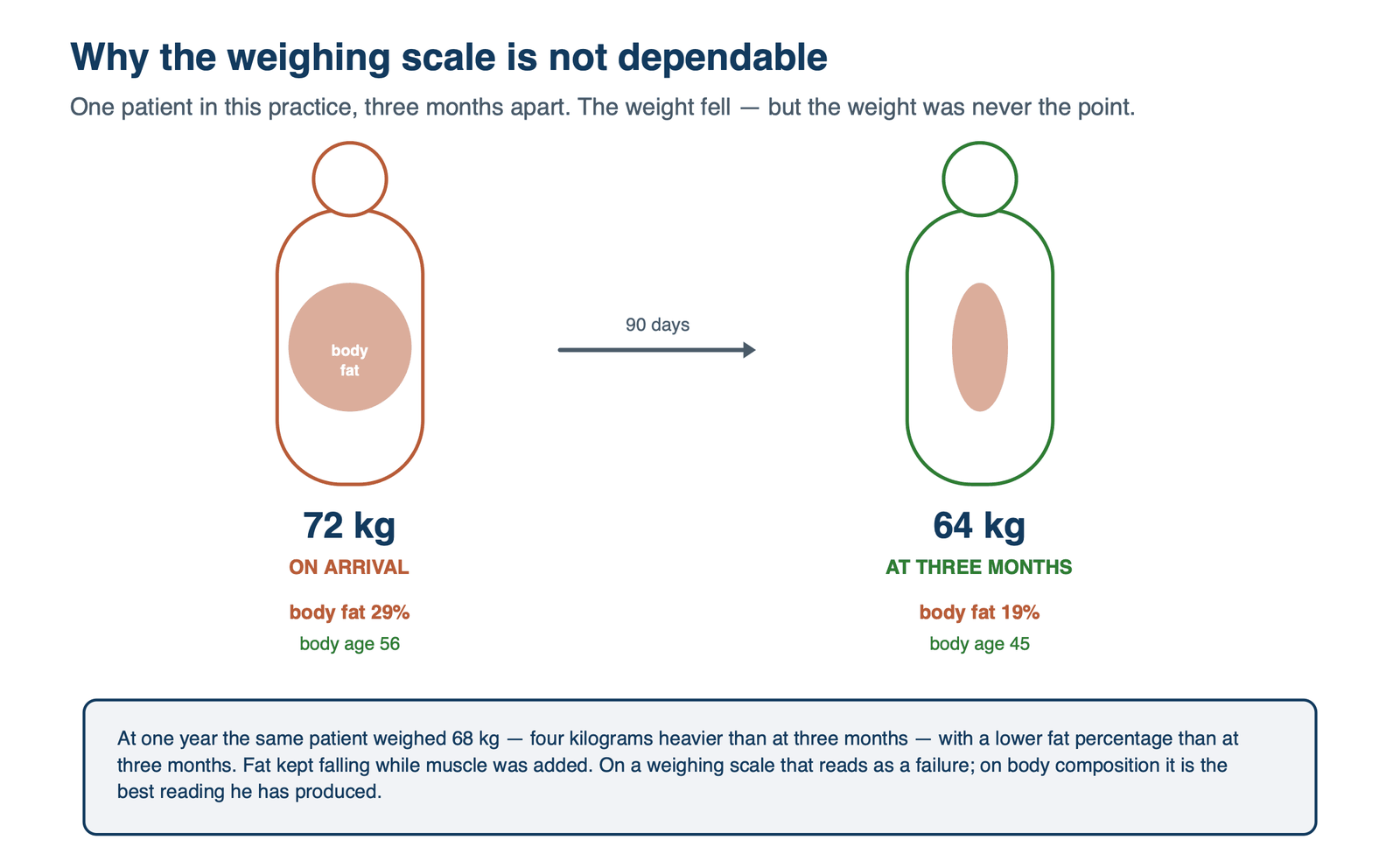
A fifty-three-year-old man came to this practice on no medication at all. He had diabetes, arthritis and piles, and an HbA1c of 13.3. He had a grade two fatty liver with raised liver enzymes, and raised ESR, hs-CRP, homocysteine, cholesterol and TSH. He was not obese by any ordinary reading — 167 cm, 72 kg, a BMI of 25.9, marginally overweight at most. His body age was 56.
At three months he weighed 64 kg, his body fat had fallen from 29% to 19%, and his body age was 45 — eleven years below where it started, and eight below his calendar age.
Then the part a weighing scale can never show. At his one-year review he weighed 68 kg — four kilograms heavier than at three months — with a lower fat percentage than he had at three months. Fat had continued to fall while muscle was added. On a scale that is a failure. On body composition it is the best reading he has produced.
His HbA1c went from 13.3 to 5.8 in ninety days, and at one year it was still 5.8.
The seventy-four-year-old with the vascular age of 207 makes the same point from the other end of life. He had been a bodybuilder when he was young, and had competed. What he minded most was not the heart or the kidneys: at each visit he would hold up an arm and say the muscle was gone. When he came in his body fat was 24.4%, with visceral fat around 11%. At the last review his body fat was 10% and his visceral fat 3.5%, and his body age had gone from 61 to 44. The biceps were back, and that was what made him happy.
He gained that muscle at seventy-four — an age at which patients are routinely told muscle gain is no longer possible. He was willing to do resistance training, and that is why it happened.
Plaque thickness reduces on repeat scans in patients who follow the protocol. In this practice, plaque has in some cases resolved entirely. That depends on the patient’s commitment, and it is measured rather than assumed.
One effort, several specialities
Return to the seventy-year-old who came in with his wife, with a vascular age of 332 and no complaint worth naming.
Within two to three weeks his troponin was normal. By three months his HbA1c was 5.5 — from 6.8, with no diabetes medicine used at any point, because what was given was not a drug. His vascular age had fallen from 332 to 284. The grade one fatty liver was gone. And his prostate, which had measured 109 in volume, measured 74.
Nobody treated his prostate. Nobody treated his liver. Nobody treated his blood sugar.
An enlarged prostate is not a fatty deposit and does not clear the way arterial fat clears — but the overgrowth in that gland reduced along with everything else, which tells you what was actually being corrected.
The sixty-one-year-old with the vascular age of 159 gives the same reading. At three months his vascular age was 72, his body age had gone from 61 to 51, and his HbA1c from 8.6 to 6.1 — with the diabetes medicines stopped inside the first month, not at the end.
That is the pattern, and it is the strongest argument this approach has: the comorbidities move together. A patient correcting body composition, fatty acid balance and toxin load does not improve their blood sugar and keep their fatty liver. Parallel improvement is the expected result, not a bonus.
The correction does not hold itself
This must be said plainly, because it is the honest part.
Nothing corrected here is permanent, and one patient shows exactly how it comes apart — and, more usefully, which part comes apart first.
A fifty-six-year-old man came after a stroke. The weakness down his left side had recovered reasonably within a month and he was walking without difficulty. He already had a stent. His heart was pumping at 38%. He had hypertension, raised cholesterol, the beginning of diabetes, and eczema-like lesions on the skin.
He followed the correction closely, and at three months the readings were as good as this work produces. His weight was 62 kg. His body age had gone from 53 to 44. His vascular age had gone from 226 to 111 — halved in ninety days.
Then the supported part ended. He travelled abroad for several weeks, and after that he managed on his own: some exercise, no support nutrition, none of it measured.
Here is what happened next, and it is the most useful thing in this article. His weight did not go up. His body age stayed at 44. By every measure he could see at home, he was holding his gains — and he would have said so. But his fat percentage had begun to creep up, and his vascular age went from 111 to 139, and at the following review to 159.
The two ages came apart. Body composition, once built, is comparatively forgiving; weight and body age will sit still for a long time on an ordinary routine. The artery wall is not forgiving in the same way. It answers week by week to what is eaten, to the omega balance, to the inflammatory load — and it starts moving back as soon as that slips, while the weighing scale and the mirror both still say everything is fine.
A patient watching only their weight cannot see this happening. For someone who has already had a stroke or a coronary event, that blind spot is the whole risk. It is the argument for measuring the arteries directly, and for measuring them again later — not once at the start to produce a frightening number, but repeatedly, because the arteries are what go backwards first.
The fifty-three-year-old is the other side of the same coin. At one year his HbA1c was still 5.8 and his fat percentage was lower than at three months — not because the first ninety days were unusually powerful, but because he kept measuring and kept correcting. Correction brings these numbers down; drift brings them back up; and the only way anybody knows which of the two is happening is a repeat test. It is not a course of treatment that finishes. It is a way of living that is measured, and the measurement is what tells the patient whether they are still on it.
Medication — how reduction actually happens
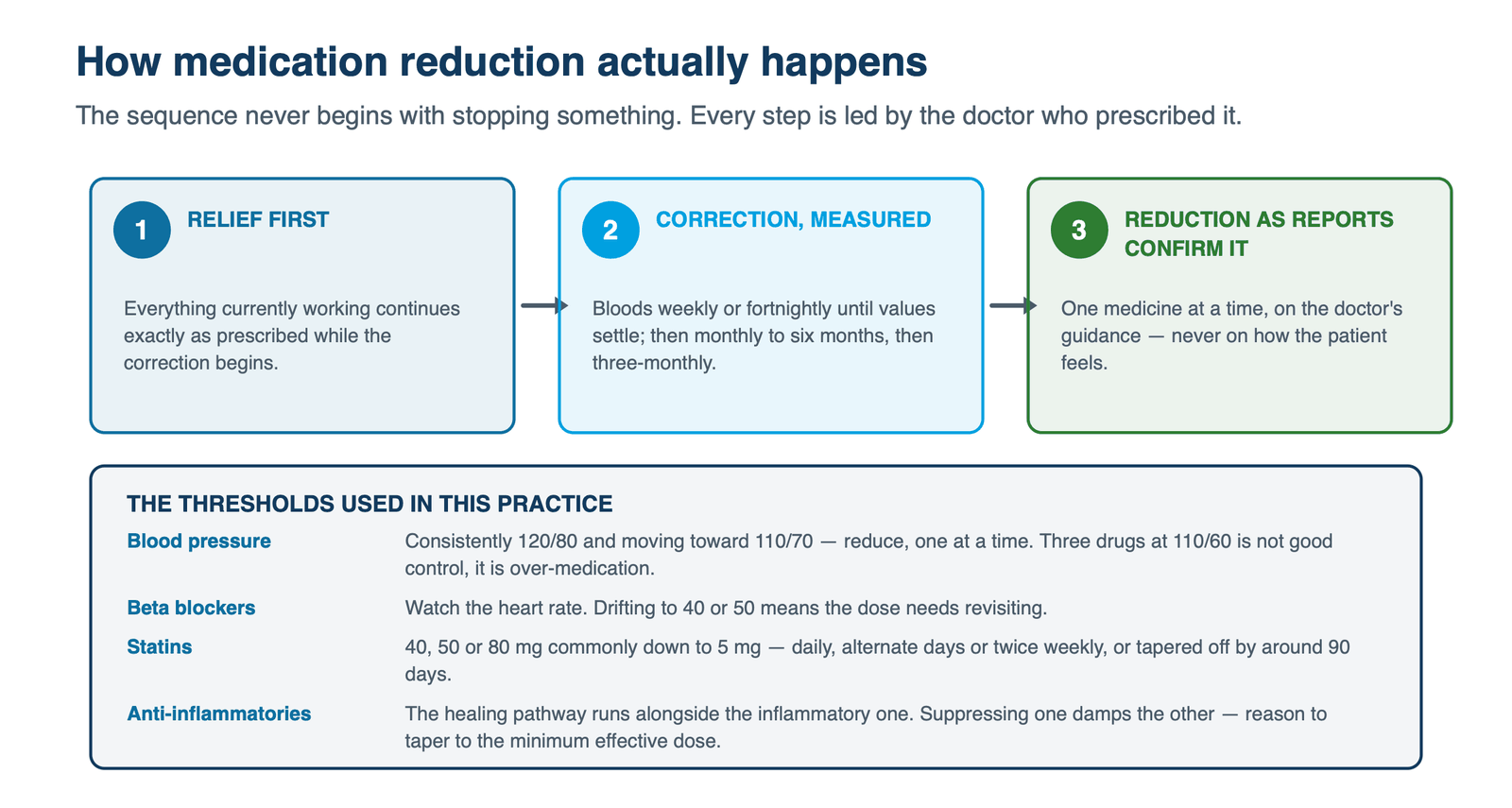
The sequence never begins with stopping something.
Relief first. Everything currently working continues exactly as prescribed while the correction begins.
Correction alongside, with frequent measurement. In the active phase, blood work is repeated weekly or fortnightly until the values settle — then monthly for the first six months, then three-monthly. Where tumour markers are raised, they are checked weekly until they are falling in a consistent pattern.
Reduction as the reports confirm it, led by the doctor’s guidance. Some specifics from this practice:
Blood pressure. When the reading sits consistently at 120/80 and begins moving toward 110/70, reduction starts — one medicine at a time. A patient on three antihypertensives whose pressure has fallen to 110/60 is not well controlled; they are over-medicated, and that is dangerous. As fat falls, the inflammatory signalling from that fat falls, and blood pressure comes down on its own.
Beta blockers. Watch the heart rate. When it drifts to 50 or 60, the dose needs revisiting.
Statins. In this practice doses of 40, 50 or 80 mg commonly come down to 5 mg, daily or on alternate days or twice weekly, or tapered off by around 90 days. The reasoning is worth stating: a statin blocks cholesterol synthesis, and cholesterol is required to build new cell membranes. A body being asked to rebuild needs an adequate supply.
Diabetes. Patients are asked to take one heavy meal a week of whatever they like. An SGLT2 agent may be used on that occasion, because it passes the excess glucose out in the urine rather than allowing it to be stored.
There is a general principle underneath all of it. Anti-inflammatory medication — including immunosuppressants and aspirin — suppresses the inflammatory pathway, and the healing pathway runs alongside it. Suppressing one damps the other. That is a reason to taper off or reduce to the minimum effective dose under supervision.
Is this modern medicine?
Yes, and the question deserves a direct answer because the field is crowded.
CSLC-CAP is based on modern medicine. Lifestyle correction is the first step of disease management in modern medical practice; what is added here is that it is structured, supervised and measured rather than offered as advice. The tests are modern medical tests. The supervising doctors hold MBBS and MD qualifications. No ayurvedic, homeopathic or unani preparation is used.
The aim — reducing the need for medication and surgical intervention — is a modern medical aim.
What clinically supported lifestyle correction is
Clinically supported means under a doctor, on measurements, with each next step decided by what the tests show.
Lifestyle correction means the correction is made through nutrition, activity, rest and toxin load, not through a drug.
CAP — the Cell Activation Protocol — addresses delivery. The body is roughly fifty trillion cells, and any correction has to reach them. That depends on circulation carrying nutrition in and waste out. The structured activity used here drives that circulation segmentally through the skeletal muscles — the only tissue a patient can command voluntarily — and is built to be performed lying down or seated, so that patients with angina, arthritis or severe deconditioning can do it.
In one line: the diagnosis decides the medicines, the tests and the risks; the correction is common, and what is corrected is the body.
The four domains
Together these empower the immune system, which remains the body’s own doctor.
Watch the sessions
Why the first 90 days matter
Ninety days is roughly how long the body takes to rebuild the cells being corrected. Red cells turn over in about that time, which is exactly why HbA1c is a three-month average rather than a snapshot. A blood test at three weeks measures last week; a test at ninety days measures a body rebuilt from different material.
That is why the active phase is defined by the correction achieved rather than by the calendar: it runs for the initial ninety days, or until body composition is corrected.
Suitability
This suits a person who:
- is willing to make the correction, and to be measured
- is ambulant and clinically stable
- has the physical capacity to perform the structured activity, at least lying down or seated
- has the mental capacity to learn and follow it
Where there is early dementia or memory impairment, this remains possible provided a close family member joins the programme, learns it, and supports the patient. Couples frequently do this together.
Children under ten are not usually taken. Between ten and eighteen, one parent must join, because a child cannot run a lifestyle correction without the household behind it.
Patients in late stage five renal failure, with creatinine above 5, are not usually taken on.
Frequently asked questions
I am 72 and on six medicines. Is it too late to start?
No, and patients in that position often see the largest change, because they carry the most that can be removed. Age determines the pace, not the possibility. What matters more than age is whether you are ambulant, clinically stable and able to follow the correction.
What is CIMT, and do I need it?
It is an ultrasound scan of the carotid artery in the neck that measures the thickness of the artery wall and reports it as a vascular age. It takes minutes, involves no radiation, no dye and no needle. It is worth doing because it detects arterial disease years before a symptom, an ECG or a routine check-up would — and because, repeated, it shows whether the correction is working.
My check-ups have always been normal. Does that mean my arteries are fine?
Not necessarily. A standard check-up measures sugar, cholesterol, blood pressure and perhaps an ECG. An artery can narrow substantially without disturbing any of those. In this practice a man with entirely normal check-ups was found to have around 60% flow reduction in a carotid artery and no symptoms at all.
Should I take NMN, peptides or one of the longevity supplements?
That is your decision, and you should make it knowing where the evidence stands. NAD+ precursors reliably raise NAD+ levels and have not yet been shown to improve clinically meaningful outcomes. Most longevity peptides have minimal or no controlled human trials. The interventions with measured reversal of biological age in randomised human studies are diet, activity, sleep and stress. Those come first, and they can be measured.
Can biological ageing really be reversed, or only slowed?
Both have been measured, in small studies. Epigenetic age fell by just over three years relative to controls in an eight-week randomised trial. Telomere length increased over five years in a lifestyle intervention group while falling in controls, in proportion to how closely people adhered. In this practice, vascular age and body age are both watched and both move. Calendar age does not.
If I improve and then go back to how I lived, what happens?
They rise again — but not all at the same rate, and that is the part worth knowing. One patient here, fifty-six, halved his vascular age from 226 to 111 in ninety days. He then managed alone. His weight held and his body age held at 44; his vascular age went back to 139, and then to 159. Body composition is comparatively forgiving once built; the artery wall is not, because it answers week by week to what is eaten and to the inflammatory load. So a patient judging themselves by the weighing scale can be drifting for months without knowing it. The correction does not hold itself, and the arteries are where that shows first.
I have been advised an angiogram, an angioplasty or a bypass. What do patients in that position do here?
Many of the patients here arrived at exactly that point — an angiogram advised after a positive TMT, or an angioplasty or bypass advised after the angiogram — and decided to take up structured correction instead. What follows, when the correction is actually done, is not confined to the heart. Patients avoid the procedure and then come off cardiac medicines, and commonly off diabetes, blood pressure and arthritis medicines as well, because those conditions were being driven by the same process.
My relative has memory problems. Can they do this?
Yes, provided a close family member joins the programme and takes on the learning and monitoring. Where the patient’s own mental capacity to follow the protocol is not intact, someone else’s has to be.
Related reading
- Age-Related Diseases: Reversing Insulin Resistance — the metabolic layer underneath the ageing described here.
- Fatty Liver: Reversing Liver Fat and Fibrosis — ectopic fat followed in the organ where it is easiest to measure.
- Cancer: Health Optimization Alongside Oncology — where raised tumour markers and inflammation are addressed alongside oncological care.
- Arthritis: Reversing Inflammation and Metabolic Load — the tapering sequence worked through in detail.
- Kidney Disease: Protecting Renal Function — the organ that decides how much room there is to work with.
- Mental Disorders: The Root Cause Beneath the Chemistry — the same inflammation and insulin story, read in the brain.
- Weight-Loss Injections and Diabetes — why the injection does not remove the need for the correction.
- Autoimmune Diseases: Reversing Autoimmune Inflammation — the immune misdirection referred to in the marker table.
- Psoriasis and Psoriatic Arthritis — an immune imbalance that shows on the skin.
- Planning a Pregnancy: What Both Parents Can Correct in the 90 Days Before — where the method came from.
References
The biology of ageing
Twelve hallmarks of ageing; chronic inflammation described as the most interconnected. López-Otín C et al. Cell 2023;186(2):243–278. https://pubmed.ncbi.nlm.nih.gov/36599349/
Inflammaging and its association with frailty, cardiovascular events, cancer and mortality. Molecular Metabolism 2023. https://www.sciencedirect.com/science/article/pii/S2212877823000893
Vascular age and CIMT
CIMT converted to a vascular age, used to modify Framingham risk. Gepner AD et al. J Am Soc Echocardiogr 2006;19(9):1170–4. https://pubmed.ncbi.nlm.nih.gov/16950473/
You are only as old as your arteries look. J Am Soc Echocardiogr 2004. https://onlinejase.com/article/S0894-7317(04)00253-6/abstract
Each 10 µm/year reduction in CIMT progression corresponded to a relative cardiovascular risk of 0.91 — 119 trials, 100,667 patients. Willeit P, Tschiderer L et al. Circulation 2020;142(7):621–642. https://pubmed.ncbi.nlm.nih.gov/32546049/
Measured reversal of biological age
Methylation age 3.23 years lower than controls after an eight-week programme; 43 men aged 50–72, p=0.018. Fitzgerald KN et al. Aging 2021;13(7):9419–9432. https://pubmed.ncbi.nlm.nih.gov/33844651/ — 2024 correction adjusted the within-group figures; the between-group result stands. https://pmc.ncbi.nlm.nih.gov/articles/PMC10968716/
Telomere length rose by a median 0.06 T/S units at five years and fell 0.03 in controls, p=0.03. Ornish D et al. Lancet Oncology 2013;14(11):1112–1120. https://pubmed.ncbi.nlm.nih.gov/24051140/
Body age — muscle, fat and mortality
Each 5 kg less grip strength: 16% higher all-cause and 17% higher cardiovascular mortality; 139,691 adults, 17 countries. Leong DP et al. The Lancet 2015;386(9990):266–273. https://pubmed.ncbi.nlm.nih.gov/25982160/
Grip strength and gait speed predicted mortality; lean mass index did not. Aging Clin Exp Res 2024. https://link.springer.com/article/10.1007/s40520-024-02783-x
Diabetes before diagnosis
Retinopathy onset calculated at 4–7 years before diagnosis; the authors estimate diabetes itself may precede diagnosis by 9–12 years. Harris MI et al. Diabetes Care 1992;15(7):815–819. https://pubmed.ncbi.nlm.nih.gov/1516497/
The anti-ageing interventions
Epitalon: not approved, one research lineage, little independent replication. GHK-Cu: strongest for skin and wound healing. Thymosin alpha-1: approved in 30+ countries for immune indications. Frontiers in Aging 2026. https://www.frontiersin.org/journals/aging/articles/10.3389/fragi.2026.1790247/full
Dasatinib plus quercetin — the only senolytic shown to clear senescent cells in humans; an open-label pilot in nine patients. Hickson LJ et al. EBioMedicine 2019;47:446–456. https://pubmed.ncbi.nlm.nih.gov/31542391/ — 2020 corrigendum changed some conclusions; the fall in senescent cell burden stands. https://pubmed.ncbi.nlm.nih.gov/31982828/
NMN raises blood NAD+, but most clinical outcomes did not differ from control; 12 trials, 513 participants. Crit Rev Food Sci Nutr 2024. https://pubmed.ncbi.nlm.nih.gov/39116016/
Rapamycin improved some parameters, but evidence is insufficient to show it extends life or slows ageing in healthy adults. Lancet Healthy Longevity 2024. https://www.thelancet.com/journals/lanhl/article/PIIS2666-7568(23)00258-1/fulltext
Rapamycin, not metformin, mirrors dietary restriction-driven lifespan extension; 911 effect sizes from 167 papers across eight vertebrate species. Ivimey-Cook ER, Sultanova Z, Maklakov AA. Aging Cell 2025;24:e70131. https://pubmed.ncbi.nlm.nih.gov/40532901/
TAME (Targeting Ageing with Metformin): study design complete, trial not yet launched; AFAR is still seeking the donors needed to start it. American Federation for Aging Research. https://www.afar.org/tame-trial
About the author and the centre
Dr Jolly Thomson MBBS MD trained and practised in obstetrics, gynaecology and infertility treatment — MBBS (Government Medical College, Kottayam, 1981 batch), DGO and MD in Obstetrics and Gynaecology (Government Medical College, Thiruvananthapuram, 1989–1992). She practises today in a different field: clinically supported lifestyle correction — reversing lifestyle-related disease and optimising health. Where this article says in this practice or in this centre’s experience, that is what it refers to: patients she has assessed, corrected and followed herself.
Where the method came from. Not from a laboratory. It came out of that reproductive practice — preconception care for the couple, mother and baby through pregnancy, childbirth, and mother and newborn afterwards. Where lifestyle was corrected in a structured way she saw better pregnancy rates, fewer miscarriages, and fewer complications. What worked before a pregnancy turned out to work in the lifestyle diseases themselves, and that is how the method reached the rest of the practice — including the patients described here.
Life Care Centre, Thevara, Kochi is where the method is practised.
Important note
This article is general health education. No medicine should be started, stopped, reduced or changed except under the supervision of the doctor who prescribed it.
CSLC-CAP is a methodology and treatment for health optimization — to improve quality of life, and to reduce the need for medication and surgical interventions. It is delivered as an out-patient treatment with frequent telemedicine follow-up, under doctor supervision.