Planning a Pregnancy: What Both Parents Can Correct in the 90 Days Before
Planning a Pregnancy: What Both Parents Can Correct in the 90 Days Before
- Dr Jolly Thomson
- September 14, 2026
- 0 Comments
Planning pregnancy for a healthy baby — what is the parents’ role? Correcting biology with clinically supported lifestyle correction, before conception.
Dr Jolly Thomson MBBS MD · Life Care Centre, Thevara, Kochi
Summary
The question. Most couples who cannot conceive are investigated for infertility. Very few are examined for health. This article sets out what changes when the two people are assessed and corrected before a pregnancy is attempted, rather than after it fails.
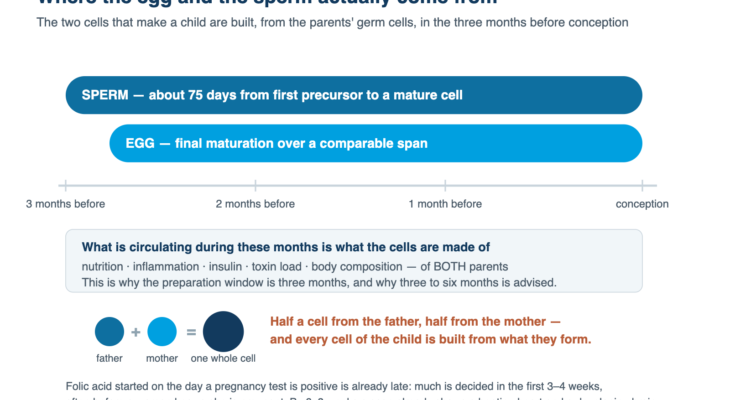
Why three months. A sperm takes about 75 days to form; an egg matures over a comparable span. The cells that make a child are built, out of the parents’ bodies, in the months before conception — so the preparation window is three months at minimum, and three to six months in practice.
What is assessed. Body composition rather than weight alone; glucose and insulin together; haemoglobin, B12, vitamin D, folate, zinc and iron; thyroid function and thyroid antibodies; inflammatory markers; blood pressure.
What is corrected. Excess fat reduced while muscle and bone are protected; raised insulin brought down; nutritional deficiency repaired; inflammation settled; immune and thyroid activity addressed; chronic medication reviewed and, where the reports allow, reduced under the prescribing doctor. Most of it moves within one to three months.
Where it does most. Recurrent miscarriage or a previous affected pregnancy; a known anomaly where counselling still gives a reasonable chance; excess fat, raised insulin and PCOD; allergy and autoimmune activity; underweight.
Where it does not reach. A blocked tube, the chromosomal anomaly itself, a genuinely reduced egg supply. It does not replace fertility treatment.
The practical point. Where a couple has three to six months, the work belongs before conception — when the options are widest and the cells are still being made.
A couple who have been trying for five years. She is 161 cm and 41 kg. He is 184 cm and 96 kg. They have had infertility treatment for most of those five years, and one IVF cycle that produced a pregnancy and then an early miscarriage. Nobody has told either of them that they are, between them, wrong in opposite directions — that she is as far below what her body needs as he is above it, and that this is not a detail of appearance.
A woman who arrives saying she is “a little overweight”. She is 162 cm and 72 kg. She has no symptoms and no diagnosis. Her bloods come back anaemic with a haemoglobin of 11, vitamin D very low, zinc low, folate low, and both ESR and CRP raised. She had come about her weight. She had no idea she was carrying an inflammatory and nutritional deficit into a pregnancy she was already planning.
A third couple, three IVF failures and two miscarriages behind them. She is overweight with polycystic ovaries. He is lean, allergic, and has taken a course of antibiotics almost every month for a recurrent respiratory infection. Between them they have been investigated exhaustively for infertility. Neither has been treated for the state of their health.
None of these three couples was asking the wrong question. They were asking it too late, and about the wrong body. The question that had never been put to them is the one this article is about: before a pregnancy is attempted, what condition are the two people starting it actually in — and can that be corrected first?
For a great many couples the answer is yes, and the window in which it matters is narrow, specific and almost always missed.
Health care and medical care
Medical care treats a disease once it has appeared. It puts a name to a set of symptoms and uses medicines, procedures and surgery to control what that disease is doing. It is the right response to a crisis, and in obstetrics it saves lives daily.
Health care is a different job. It works on the biology underneath — nutrition, activity, rest, and the load of what the body has to clear — so that the conditions which allow disease to establish and persist are corrected. It does not replace medical care and it is not an alternative to it. The two run alongside each other, and they answer different questions.
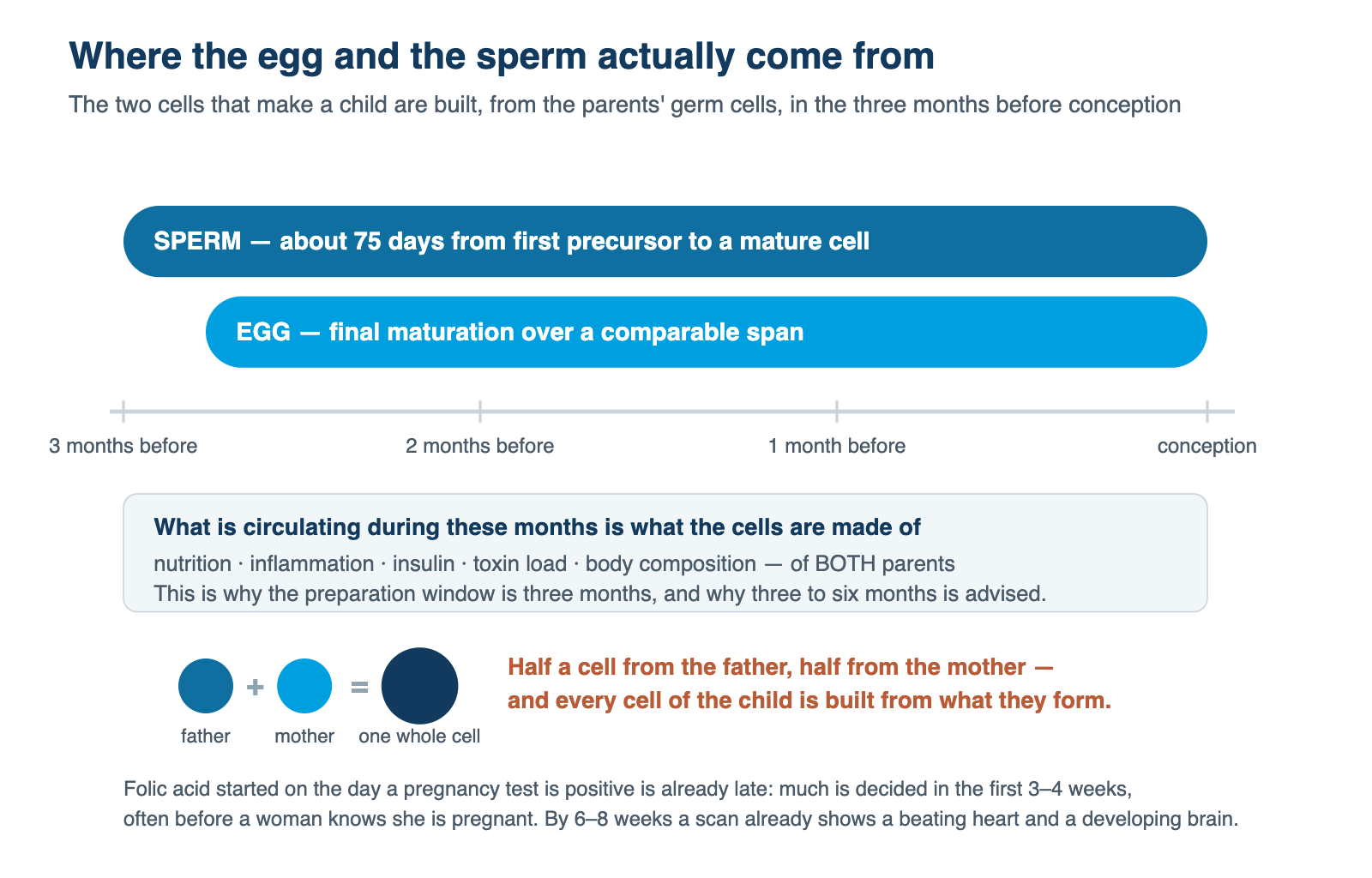
In fertility the split is unusually stark. A couple who cannot conceive are sent to an infertility specialist, and the specialist does infertility medicine — hormones, timing, insemination, IVF. That is the correct speciality and often the correct treatment. But almost nobody, at that point, examines the two people themselves. The first step should be a health checkup, not an infertility checkup.
The test of the difference is a question a couple can ask themselves before they start: are we being treated for not conceiving, or are we being made fit to conceive? Those are not the same thing.
What preparation means here
It means correcting the measurable biological load that both parents carry into a conception — excess fat, raised insulin, inflammation, nutritional deficiency, disturbed sleep and untreated immune activity — during the three months in which the egg and the sperm that will make the child are actually being formed.
Why three months, and not three weeks
This is the part that decides everything else, and it is simple biology.
A baby begins as two half cells. The sperm carries half the genetic material and the egg carries the other half; they meet and form one complete cell, and every cell in that child’s body is built from it. Neither of those two half cells appears on the day of conception. Both are made in the months before.
A sperm takes about 75 days to develop, from the earliest precursor to a mature cell capable of fertilising. An egg’s final maturation runs over a comparable span. So the sperm and the egg that will make a child in October were being assembled, out of that couple’s blood, in July — out of whatever nutrition, inflammation, insulin and toxin load was circulating then.
This is why the preparation window is three months at minimum, and why in practice the advice is to allow three to six months before trying: three months to correct, then a further month or two for gametes formed under the corrected conditions to mature and be used.
The published preconception literature arrives at the same number from a different direction. The Lancet’s 2018 preconception series notes that the preconception period “is often defined as the three months before conception”, and — more pointedly — reports that one of the few supplementation trials to begin before conception found no effect on birth weight unless the supplement was given at least three months before conception, and to women who were not underweight.[1] Both halves of that sentence matter here: the timing was the difference between an effect and no effect, and being underweight cancelled the benefit.
It is also why “starting folic acid when the test is positive” is late. Much of what matters is decided in the first three to four weeks after conception — often before a woman knows she is pregnant. By six to eight weeks a good ultrasound already shows a beating heart and a developing brain. The organ systems were laid down before the pregnancy was noticed.
What correcting nutrition has actually been shown to do for the baby
It is worth separating what is proven from what is reasonable, because a great deal is said about nutrition and babies, and not all of it is settled.
Proven, and not seriously disputed. Periconceptional folic acid reduces the risk of neural tube defects — spina bifida and anencephaly — by as much as 70%.[1] That is the single clearest demonstration that what is in a mother’s blood before and around conception determines whether a structure forms correctly. It is also the reason the whole preconception argument is credible: the principle is already accepted, it is simply applied to one nutrient and one defect.
Well supported. Iron deficiency in the mother follows what the same review calls a critical period model — meaning that repletion after a certain point “fails to rectify structural impairments to developing brain structures”.[1] Iron given late does not undo what its absence did earlier. Preconception zinc deficiency disrupts post-implantation fetal and placental development in animal models.
Established, and directly about both parents. Maternal obesity is associated with gestational diabetes, macrosomia, congenital anomalies, stillbirth, low birth weight and unsuccessful breastfeeding. Paternal obesity has been linked to impaired fertility “by affecting sperm quality and quantity”, and is associated with increased chronic disease risk in the offspring.[1]
The summary is this: for one class of defect the effect of preconception nutrition is proven and large; for several others the biology is coherent and the associations are consistent; and for the rest it is a reasonable expectation, not a demonstrated fact. That is enough to justify correcting what is measurably wrong before a conception. It is not enough to promise an outcome.
A health checkup, not an infertility checkup
The second patient above is the whole argument in one person. She had no symptoms. She thought she had a weight problem. What she actually had was anaemia, three nutritional deficiencies and two raised inflammatory markers — none of which she would have discovered by being investigated for infertility, because none of them is an infertility test.
The useful preconception panel is not exotic. It asks:
Body composition — not weight alone, but how much of that weight is fat, and how much is muscle and bone.
Glucose and insulin together. A fasting glucose can be entirely normal while insulin is high. That is prediabetes, and the patient has no idea. (See below.)
Nutritional status — haemoglobin, vitamin B12, vitamin D, folate, zinc, iron studies. Folate and choline intake both deserve attention here, for the reason set out under nutrition below.
Thyroid function, and thyroid antibodies — not TSH alone.
Inflammatory markers — ESR and CRP.
Blood pressure, which any couple can now measure at home.
Most of what this finds is correctable, and correctable quickly. Inflammatory markers commonly settle within a month. Nutritional deficiencies are corrected within one to three months in most cases. That is the encouraging half of the finding: the reason to look is that so much of what is found can be put right before it matters.
Insulin, before it is ever called diabetes
In couples in their twenties and thirties, the commonest metabolic finding is not diabetes. It is a normal glucose reading held in place by an abnormally high insulin level.
The body is compensating. The pancreas is producing more and more insulin to keep the blood sugar in range, and because the number the patient is shown — the glucose — looks fine, nobody is alarmed. The patient is entirely unaware. Meanwhile the raised insulin is itself driving fat storage, hormonal disturbance and, in women, very often the ovarian picture described in the next section.
This is why glucose alone is an inadequate preconception test, and why insulin belongs beside it.
Body composition: what the scale cannot tell you
Two rules, both of which cut against how weight is usually discussed.
First: reduce fat, not muscle and bone. Unscientific weight reduction — crash dieting, extreme restriction — takes muscle and bone with it, and leaves the patient lighter and metabolically worse. The goal of correction is the opposite: increase muscle and bone mass, reduce fat mass. A number on a scale cannot distinguish these, which is why body composition, not weight, is the measurement that matters.
Second: Indian bodies carry high fat at a lower weight. The working rule used here is height in centimetres minus 110 as normal for an Indian adult. Height minus 100 is the upper normal, and it is a Western figure. Treating height minus 100 as the target is how a couple can be told they are fine while carrying enough excess fat to disturb ovulation.
Underweight is not the safe side of this. The first couple above had to be corrected in opposite directions — his weight down, hers up — and in practice underweight often corrects faster than overweight. In a structured programme a 15–20% reduction in weight over three months is achievable where there is excess fat to lose.
There is a further reason to take muscle seriously in young adults specifically. Muscle and bone are built up to about the age of 25; after that the natural direction is decline. A generation growing up on computer games rather than physical games arrives at the preconception years with less muscle and bone and more fat than the generation before it — which is a fair description of why lifestyle disease keeps appearing earlier.
PCOD: metabolic first, hormonal second
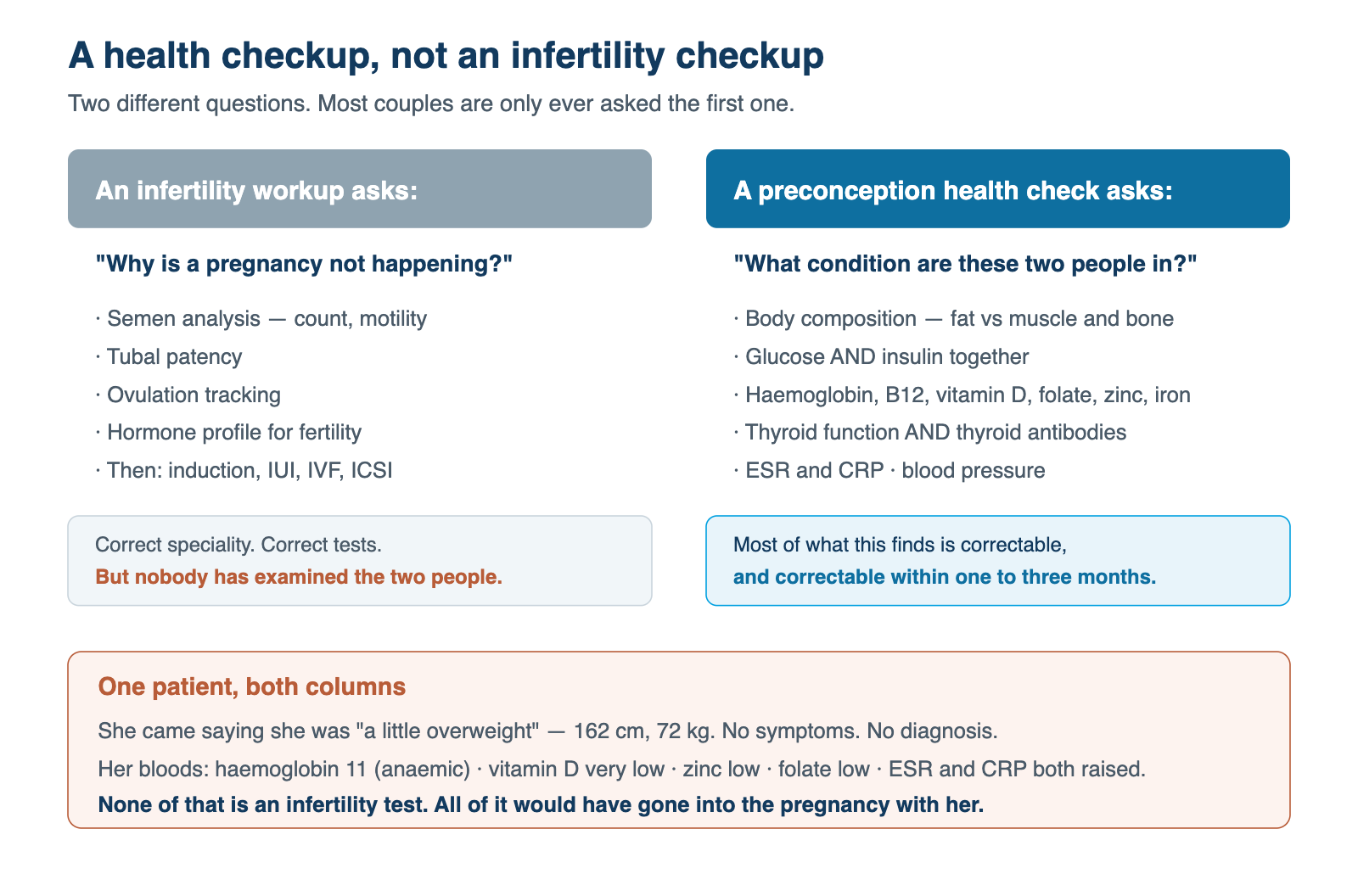
Polycystic ovarian disease is usually presented to patients as a hormonal problem. The sequence is worth stating properly, because it determines what actually helps.
It generally begins as a metabolic irregularity. Excess fat accumulates — and excess fat accumulation is itself a sign that metabolism has gone wrong, not merely a cosmetic outcome. That excess fat drives hormonal imbalance. The hormonal imbalance produces anovulation: the egg is not released at the right time. The cysts that give the condition its name are immature eggs, embedded in the ovary because they never completed maturation. The pituitary hormones FSH and LH become irregular, androgen expression rises, and that produces the hirsutism and male-pattern hair loss that so many patients recognise before any doctor mentions ovaries.
Read in that order, the implication is direct. Inducing ovulation without correcting the metabolic layer beneath it treats the last step in the chain. Correcting body composition and metabolism first — and then, if ovulation still does not occur, inducing it — treats the chain in the order it formed.
Ovarian reserve, and the thing that is sometimes mistaken for it
A woman told her ovarian reserve is low is usually told, in the same breath, that nothing can be done about it. That is broadly true, and there is an important exception worth knowing about.
The usual assessment is AMH, FSH and the size and follicle count of the ovaries. The picture that prompts the bad news is small ovaries, low AMH and a high FSH — the pituitary shouting because the ovary is not answering.
Where the reserve is genuinely reduced, it does not come back. Eggs are not manufactured in adult life. No correction restores a follicle pool that has gone. That limit is real and should be stated plainly.
But not every unresponsive ovary is an empty one. There is a recognised condition — resistant ovary syndrome, described originally as Savage syndrome — in which the ovary contains a normal population of follicles and a normal AMH, yet fails to respond to gonadotropins, so FSH and LH run high. The defect is at the receptor, not in the supply: either a rare loss-of-function mutation of the FSH receptor, or, in some patients, antibodies against the FSH receptor that block the ovarian response. The autoimmune evidence is genuinely contradictory — some groups find such antibodies, others find none.[2]
The reason to know this exists is that these ovaries are not finished. Roughly 13% of women with resistant ovary syndrome conceive spontaneously after low-dose hormone treatment.[2] The receptor, in other words, can start answering again.
This centre has seen a small number of women in whom FSH fell and conception followed after correction. That is an observation, not a trial, and it comes with two honest qualifications. It does not happen for everyone, and where the egg number is genuinely low it should not be expected. And resistant ovary syndrome is formally defined by a normal AMH — so where AMH is truly low, the picture is diminished reserve rather than resistance, and the outlook is the one described above.
What follows practically is modest but real: an unresponsive ovary is worth characterising properly — AMH, FSH, follicle count, and thyroid and other autoimmune markers — before anyone concludes that the door is shut. If there is an immune or metabolic component, that component is treatable, whatever else is not.
The immune layer, and why “the baby is an outsider”
Two things sit here, and they are connected.
Allergy is an overreaction. An immune system that responds to a harmless protein with sneezing, wheezing, itching or a monthly respiratory infection is an immune system that is not calibrated. The third couple above is the illustration: the husband’s allergy and recurrent infection were treated as his own separate nuisance, unrelated to the couple’s fertility, for years. After correction he could go to the seaside without the sneezing and infection that had always followed. Air quality is not controllable; how an immune system responds to it substantially is.
Autoimmunity is the more serious version. In the thyroid, the picture that used to dominate Kerala was multinodular goitre from iodine deficiency, and iodised salt largely solved it. What dominates now is Hashimoto’s thyroiditis — an autoimmune disease in which the immune system attacks the thyroid gland. The standard treatment is thyroxine, and thyroxine works: it replaces the hormone the damaged gland can no longer make. But it treats the deficiency, not the cause. The immune problem is left behind, untreated.
That matters more in pregnancy than anywhere else, for a reason that is easy to state and rarely explained to patients. The baby is, immunologically, an outsider. Half its genetic material is the father’s. A pregnancy survives because the mother’s immune system performs an elaborate set of tolerances that stop it rejecting the fetus. Where autoimmune activity is already running, that mechanism is under strain. Placental circulation can be affected. This is why fertility specialists give low-molecular-weight heparin in recurrent miscarriage, and why thyroid antibody status — not just TSH — belongs in a preconception panel.
Correcting metabolism and inflammation does, in this centre’s experience, bring autoimmune antibody levels down. That is the layer worth working on before conception rather than after.
Inherited does not mean fixed
Couples with diabetes or hypertension in the family often assume the matter is settled — that they will get it, and their child will get it.
The genetics are not negotiable. The epigenetics are. A person cannot change their DNA sequence. They can change which of those genes are expressed, and the factors that decide expression — nutrition, activity, rest, toxin load, body composition — are exactly the ones a correction programme works on.
What follows is modest, and worth stating precisely: correcting the parents’ own health before conception reduces the likelihood of transmitting a disadvantageous pattern of expression to the child. It does not edit the child’s genes. A strong family history is a reason to prepare more carefully, not a reason to conclude that preparation is pointless.
The father’s half
Half the genetic material comes from the father, and roughly half the modifiable risk does too — yet in most fertility consultations he is assessed for a sperm count and otherwise left alone.
His 75 days matter as much as hers. His body composition, his insulin, his nutritional status, his allergy or autoimmune activity and his chronic medication are all being expressed in the cells he is manufacturing during the preparation window. In the first couple, the correction that mattered most was the husband’s. In the third, it was the husband’s allergy and recurrent infection.
A preconception programme that examines only the woman is doing half the job.
Where IVF and ICSI fit — and where correction fits alongside them
This is the section most likely to be misread, so it is worth being exact.
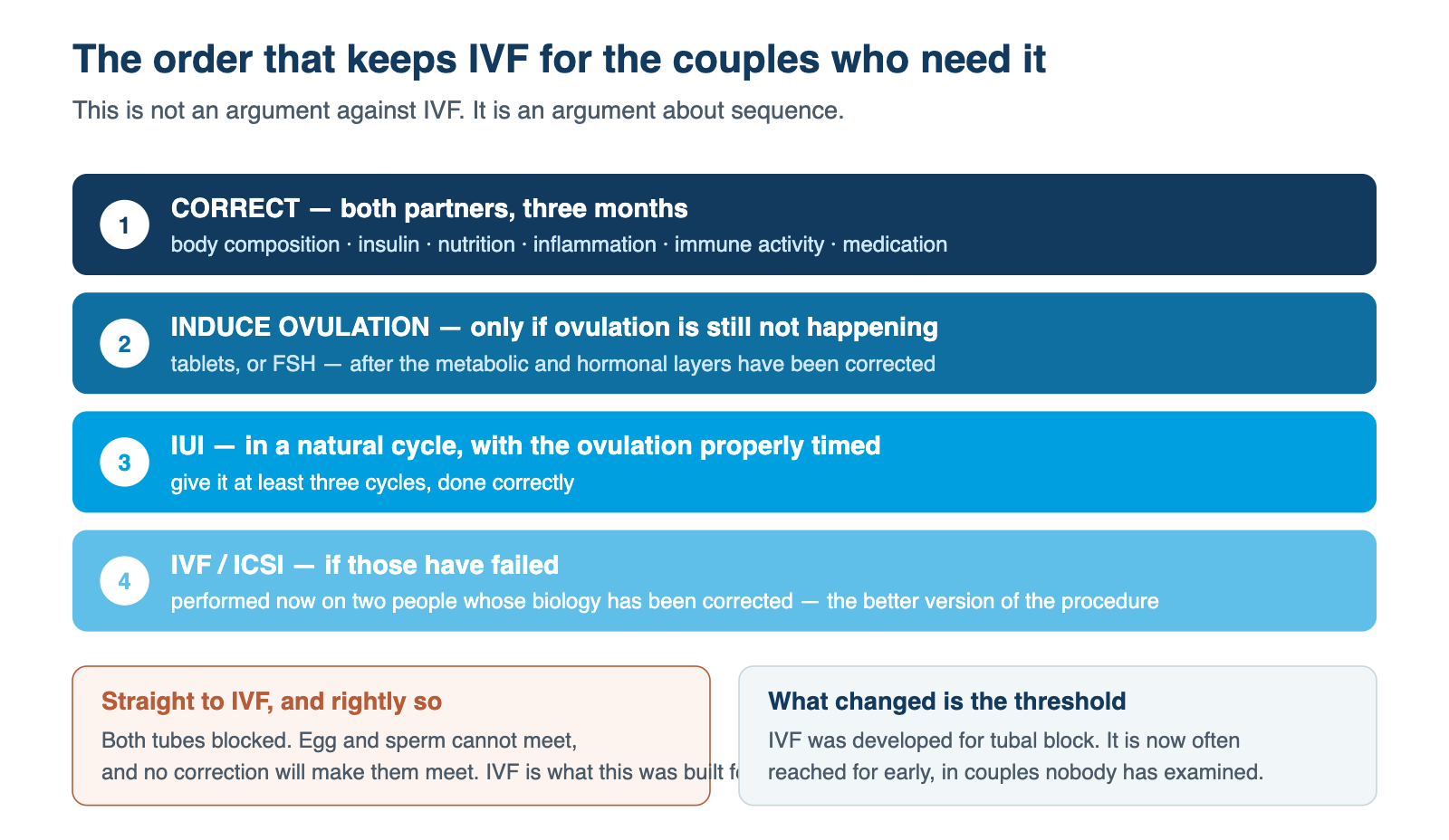
IVF was developed for a specific problem: tubal block. Where the tubes are obstructed, egg and sperm cannot meet, and no amount of correcting anybody’s health will make them meet. IVF solves that, and it is a genuine advance. ICSI — injecting a single sperm directly into an egg — was developed for the situation where a sperm cannot penetrate the egg unaided.
What has changed is not the technique but the threshold. These are now often reached for early, as a shortcut, in couples whose actual problem is that neither of them is in a fit state to conceive. Both procedures work around nature rather than restoring it, and it is honest to say that the underlying problem is not corrected by either.
The position here is therefore not anti-IVF. It is sequential:
Correct first — body composition, metabolism, nutrition, inflammation, immune activity, medication.
Then induce ovulation if ovulation is not occurring.
Then IUI — intrauterine insemination, in a natural cycle, with the ovulation properly timed. Give it at least three cycles done correctly.
Then IVF or ICSI, if those have failed or if there is a structural indication such as tubal block from the start.
Done in that order, the number of couples who need IVF or ICSI at all falls — and for those who do need it, the procedure is being performed on two people whose biology has been corrected rather than two people who have not been examined. Where correction is done first, the result of the procedure is also better. The third couple above had already had three IVF failures and two miscarriages; after correction they conceived without IVF. That is one couple’s experience, not a rule, and it is offered as an illustration of the sequence rather than a promise of the outcome.
Nature’s own selection — and how a couple can let it work
This is the part of reproductive biology that is least explained to patients, and it is the part that gives preparation most of its point.
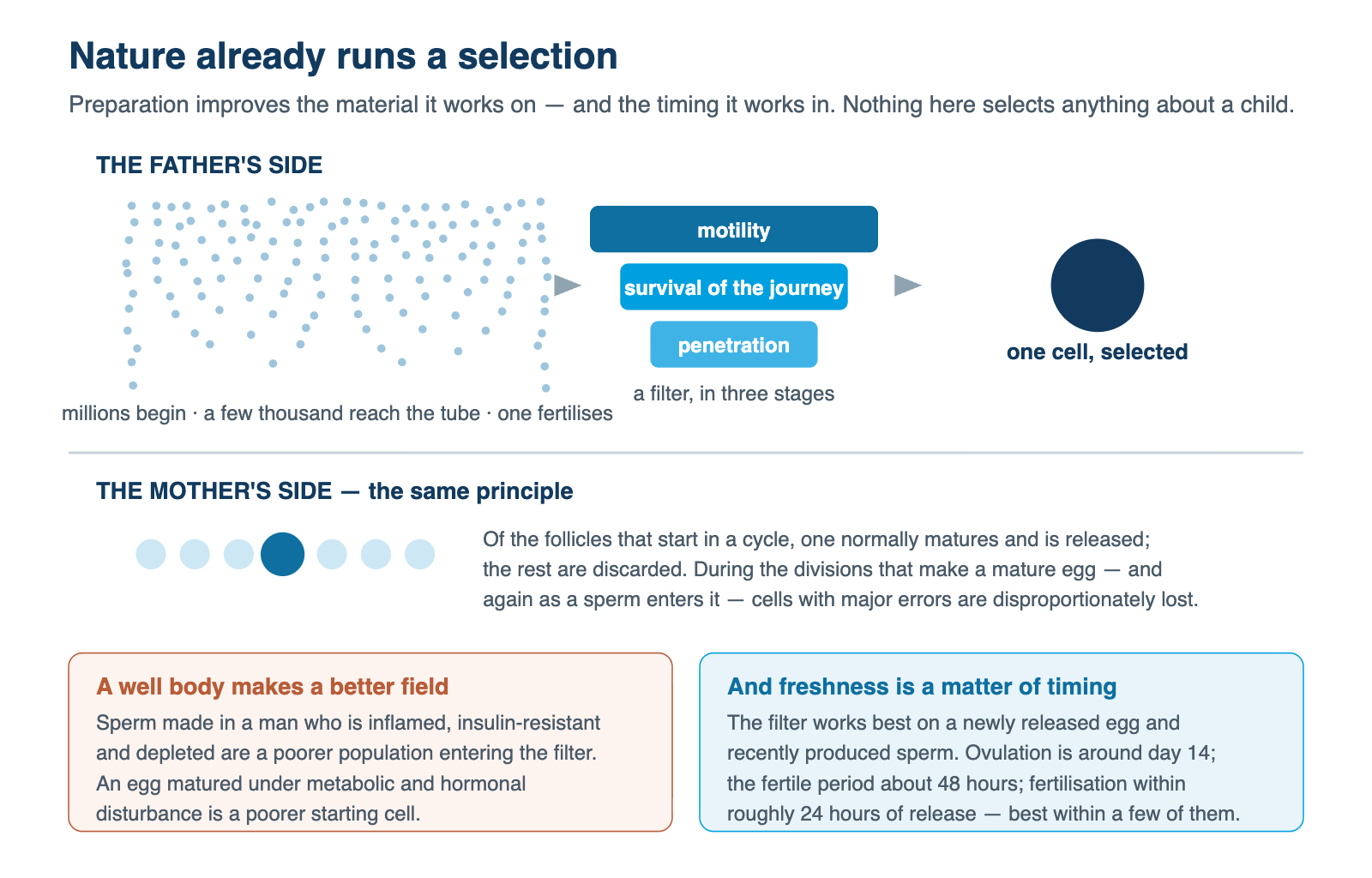
Conception is not a lottery with one ticket. A single ejaculate contains millions of sperm, and only one will fertilise. Between release and fertilisation there is a long filter: the ones that cannot swim well enough do not arrive, the ones that cannot survive the journey do not survive it, and the one that finally penetrates the egg has passed a series of tests that the others failed. On the woman’s side there is a parallel filter. Of the follicles that begin developing in a cycle, one normally matures and is released; the rest are discarded. And during the divisions that produce a mature egg, and again at the moment a sperm enters it, cells with major errors are disproportionately lost.
Selection, in other words, is already happening. It is a natural quality-control system, and it is running whether a couple thinks about it or not.
Two things follow, and they are the practical heart of this article.
First, the system works better when the body is running it well. Sperm produced in a man who is inflamed, insulin-resistant and nutritionally depleted are, as a population, poorer — fewer good candidates entering the filter, and a weaker filter. An egg matured in an ovary under metabolic and hormonal disturbance is a poorer starting cell. Correcting the two parents does not select anything; it improves the field from which nature selects, and the conditions in which nature does the selecting.
Second, freshness matters, and freshness is a matter of timing. The filter is most effective when both cells are at their best — a newly released egg and recently produced sperm. A couple who have spent three months preparing and then leave the timing to chance are handing back part of what they gained.
Timing: the window is narrower than most couples think
Ovulation occurs around day 14 of a regular cycle. The fertile period is about 48 hours, and fertilisation should occur within roughly 24 hours of the egg being released — with the best window narrower still, a matter of hours around ovulation itself.
The principle behind the precision is simple: the egg should be fresh, and the sperm should be fresh. Modern diagnostics can pinpoint ovulation accurately, and a couple who have spent three months preparing should not then leave the timing to chance.
An important qualification: in a woman with irregular cycles — which obesity, thyroid disease and PCOD all produce — the day-14 assumption fails, and this is precisely the group in which a pregnancy is noticed late.
Medication before conception — and how it actually comes down
A medicine taken daily does not act only on the organ it was prescribed for. It circulates through the same body that is manufacturing sperm and maturing eggs, and after conception it reaches an embryo. Some drugs act on those cells directly; others do it indirectly, by depleting the nutrients the cells are built from.
So the sensible aim, for anyone on regular treatment, is to reach conception off the medication altogether where that proves possible — and, where it does not, on the lowest effective dose of the safest available drug. Either way the work belongs in the months before, not during the pregnancy, when the options narrow sharply.
That reduction is not achieved by stopping anything. It is achieved by correcting the biology underneath the prescription, under medical supervision, and letting the readings decide each step. Where the metabolic picture corrects, diabetes and blood-pressure medicines follow. Where inflammation and immune activity settle, allergy and autoimmune treatment can follow. In epilepsy and psychiatric illness the work is slower and the aim is usually optimisation — the safer drug, at the lower dose, with control confirmed — rather than withdrawal.
How this is done, condition by condition, is set out in the other articles in this series. A couple planning a pregnancy who are on treatment for diabetes, blood pressure, thyroid disease, arthritis or an autoimmune condition, psoriasis, fatty liver, or a psychiatric illness will find the specific sequence for their own condition in the Related reading below — including which medicines come down first, what has to be true before a step is taken, and how long it usually takes. That reading is the practical next step, and it is best done before the preparation months begin, not after.
When the pregnancy is already under way
The fourth patient conceived within a year of marriage. At her antenatal checkup her HbA1c came back high — she had not known she was diabetic. She was 167 cm and 75 kg. She was started on insulin, and even on insulin her sugars would not come under control.
With structured lifestyle correction her blood sugar came under control within two to three days without insulin injection; her HbA1c did not go above 6 for the rest of the pregnancy, and she delivered a healthy baby at term.
Two things should be taken from this, and only two. The first is that correction is possible during a pregnancy and can be done safely under supervision. The second, and the more important, is that every part of that episode was avoidable. A preconception check would have found the HbA1c before there was a fetus involved, at a point when there was time to correct it properly. The case is an argument for the checkup, not a reassurance that late is fine.
And it does not stop at delivery
The same work continues past the birth, and it is worth knowing before you start. Through the breastfeeding months the mother is still the child’s food supply, and her own depletion — iron, B12, vitamin D, protein — is expressed in the milk. When the baby begins other food, the composition of that food matters more than the quantity: real food rather than processed, adequate protein, fat quality rather than fat avoidance, no added sugar, and the iron, B12, vitamin D and zinc that Indian children lack as reliably as their parents do. And through childhood, physical activity builds the muscle and bone that are largely finished by about the age of twenty-five — which means a child raised on a screen instead of on play arrives at their own preconception years with less muscle, less bone and more fat, ready to hand the same disadvantage on. Correct it once and the correction carries forward.
Where this does most, and where it does least
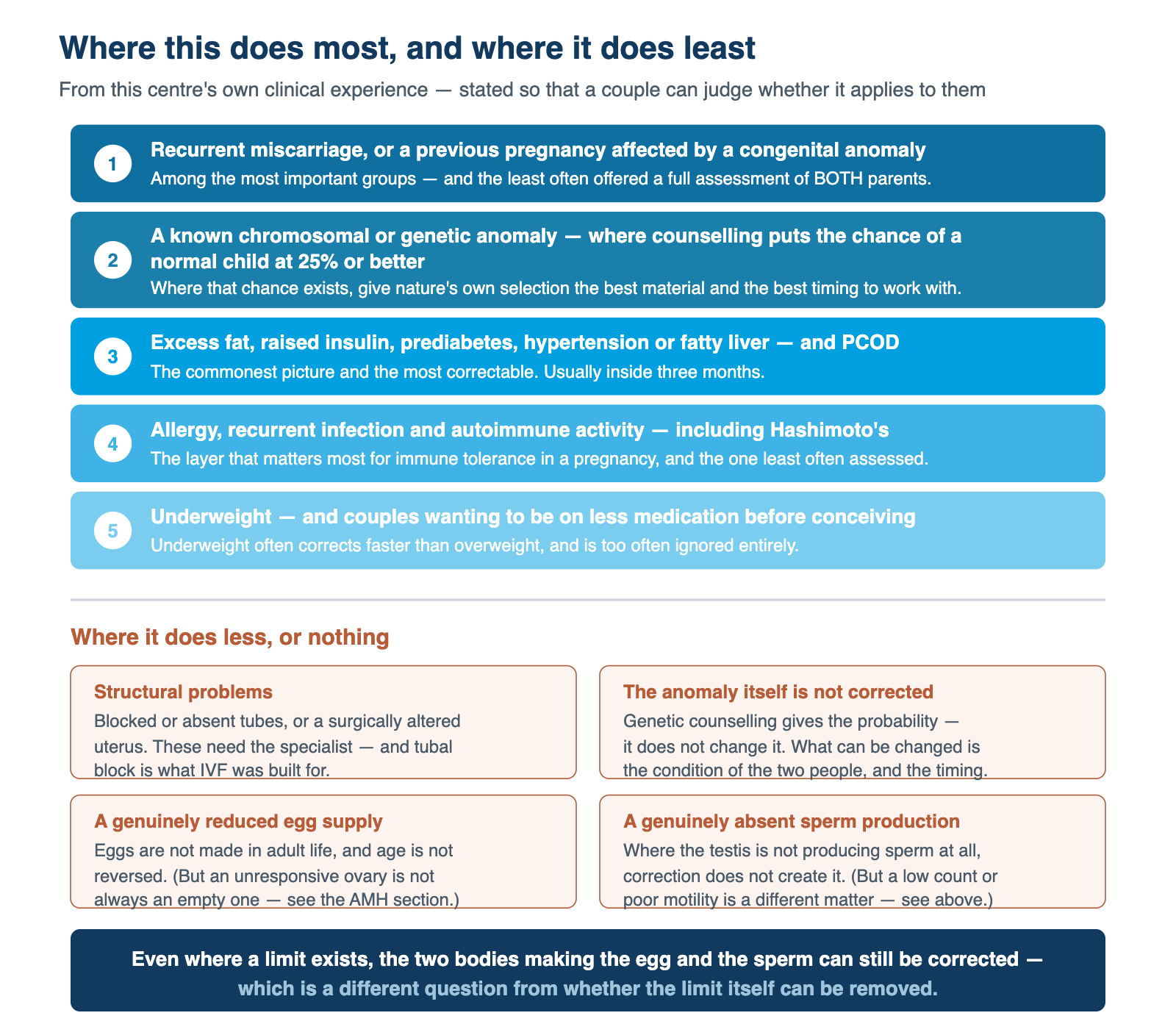
The honest ranking, and the reason to trust the rest of the article.
Where it does most
Couples with excess fat, raised insulin, prediabetes or type 2 diabetes, hypertension or fatty liver.
PCOD with anovulation driven by a metabolic picture.
Nutritional deficiency and unrecognised anaemia — very common, very correctable.
Allergy, recurrent infection and early autoimmune activity, including Hashimoto’s.
Underweight, which corrects faster than overweight and is too often ignored.
Couples on diabetes or blood-pressure medication who want to be on less of it before conceiving.
Couples with recurrent miscarriage, or a previous pregnancy affected by a congenital anomaly. This is among the most important groups, and among the least often offered a full assessment of both parents.
Couples where a chromosomal or genetic anomaly is known in one partner, and genetic counselling puts the chance of a normal child at 25% or better. Where that probability exists, the natural selection described earlier is the thing to work with: correcting both parents, allowing the filter the best possible material, and timing the attempt properly, so that the chance which does exist is given every advantage.
Anyone who simply wants to prepare properly and has three to six months.
Where it does less, or nothing
Structural problems do not correct. A blocked or absent fallopian tube, a surgically altered uterus, absent sperm production from primary testicular failure — none of these is a metabolic problem and none of them responds to correcting metabolism. These need the specialist, and often need ART.
A chromosomal anomaly itself is not corrected. Genetic counselling belongs here, and it does an important job — but it is worth being clear about what that job is. Genetic counselling tells a couple the probability of an affected baby. It does not change it. What can be worked on is different and complementary: the condition of the two bodies producing the egg and the sperm, the natural selection that happens among millions of sperm and among the eggs of successive cycles, and the timing of when a fresh egg meets a fresh sperm. This centre has followed a woman carrying a chromosomal translocation, with several congenital anomalies and repeated miscarriages behind her, through the correction to a healthy son; a later pregnancy conceived without preparation or monitoring miscarried; and after both partners were corrected together, a healthy daughter followed. That is one family’s experience, not a rule. It is the reason this limit is written as “the anomaly is not corrected” rather than “nothing can be done”.
What clinically supported lifestyle correction is
The phrase needs explaining, because it is neither a diet plan nor general advice to eat well and exercise.
Clinically supported means it is done under a doctor, on measurements. Blood parameters and body composition are recorded at the start, the correction is set against what those show, and the same measurements are repeated to decide what happens next. Nothing changes because time has passed; it changes because a reading has moved.
Lifestyle correction means the work is done through nutrition, activity, rest and reduction of toxin load rather than through a drug — correcting the conditions that produced the problem instead of adding a treatment on top of it.
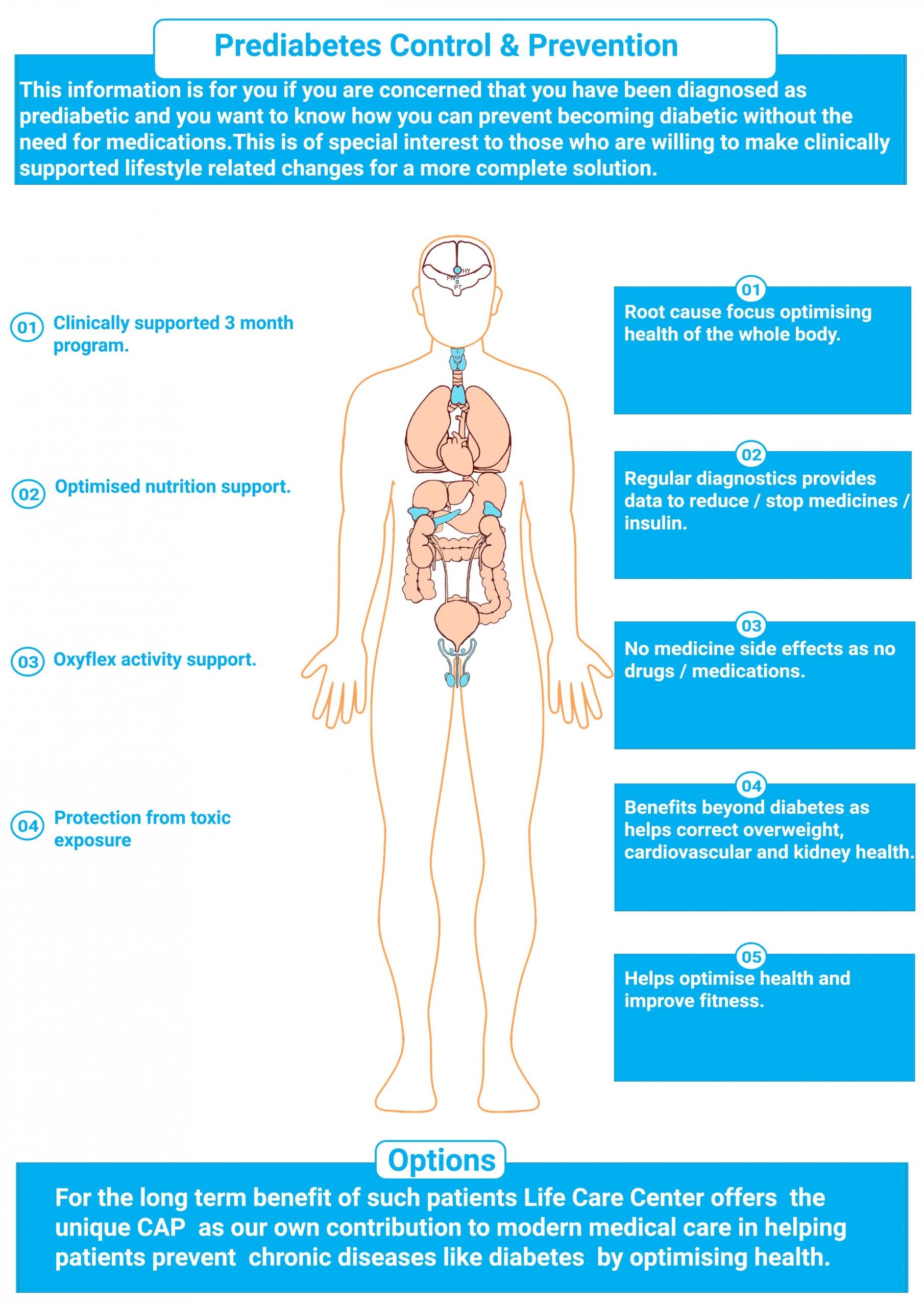
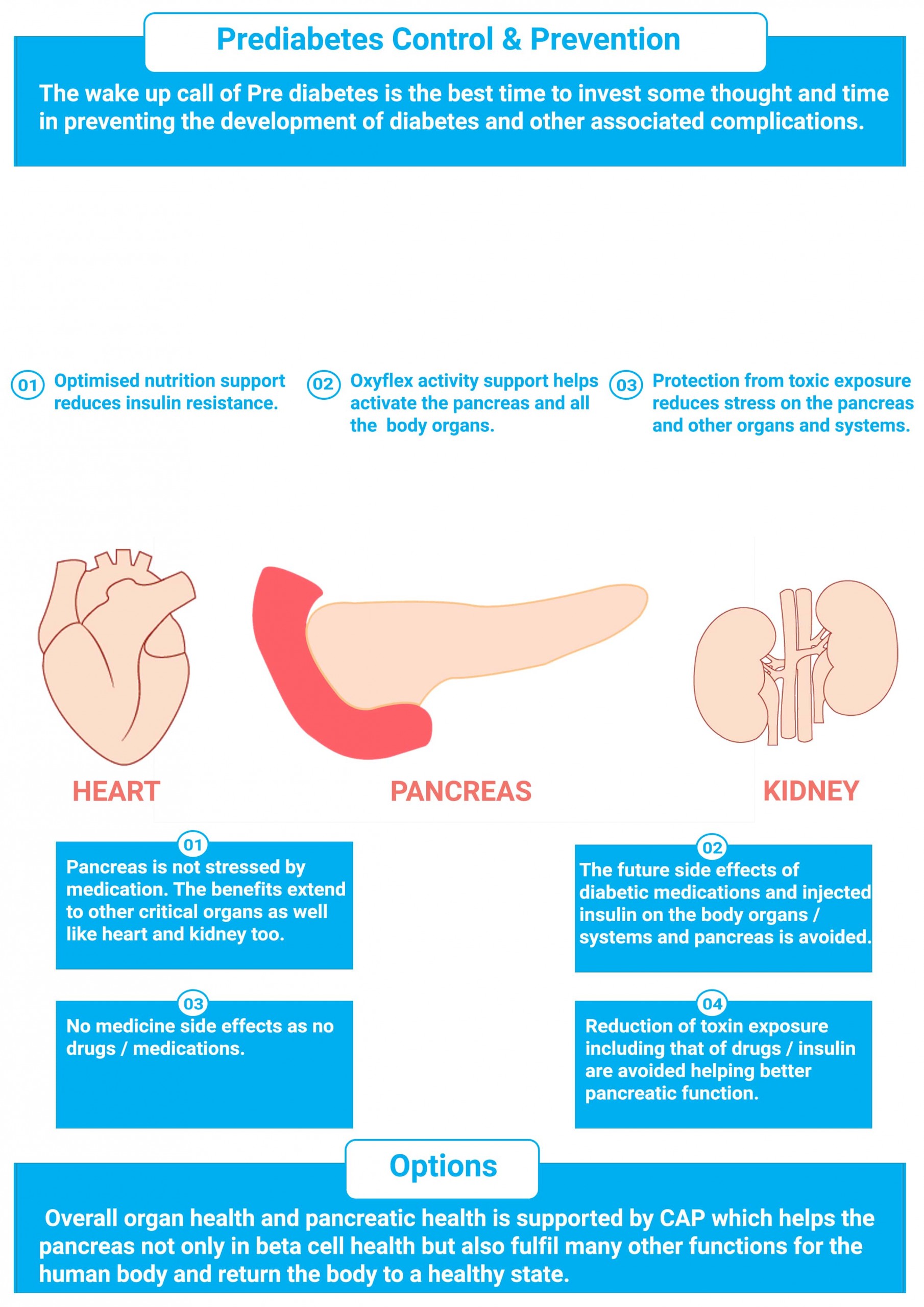
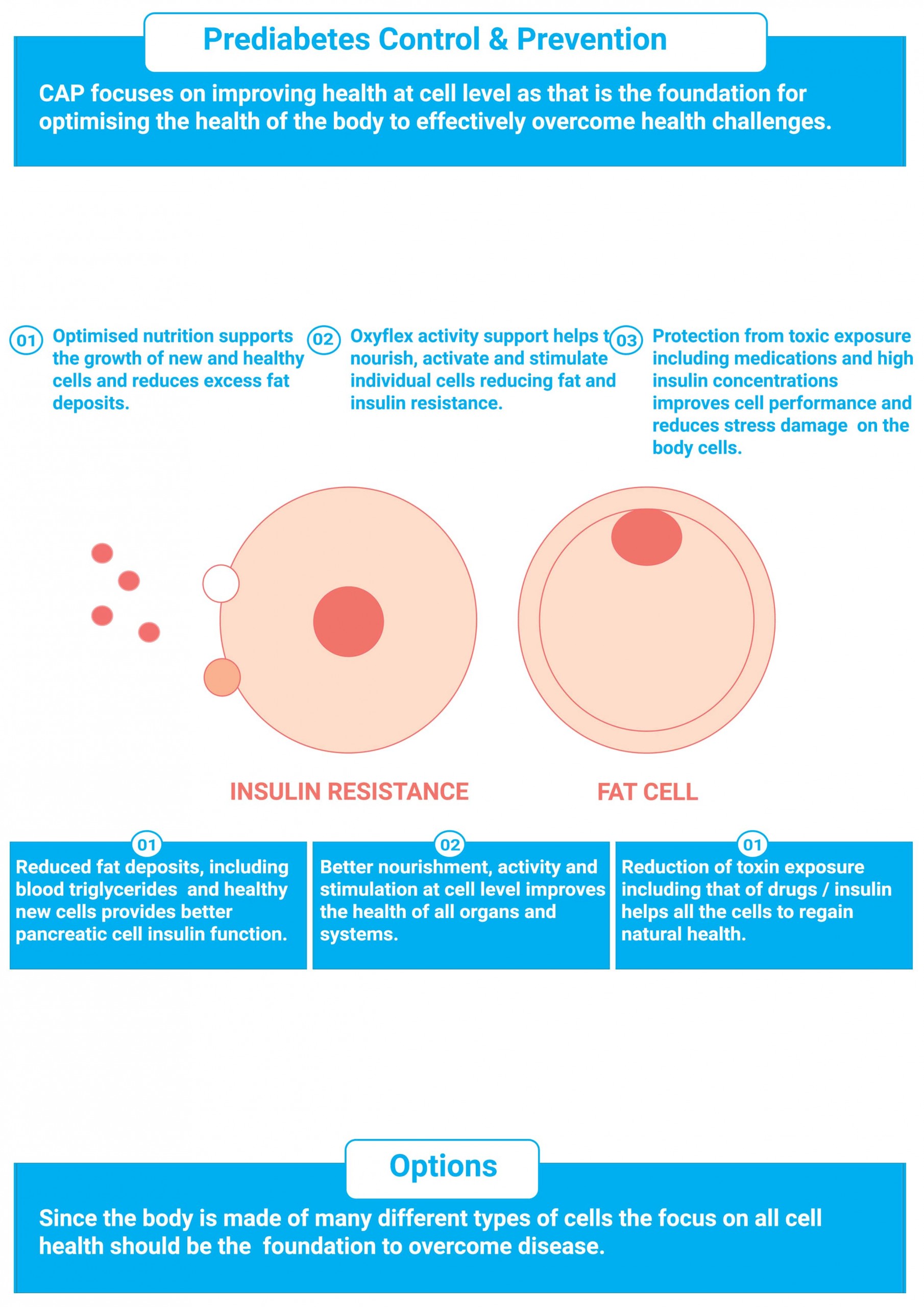
CAP — the cell activation protocol. The body is somewhere near 50 trillion cells, and every one of them needs the same few things. Activity raises circulation, so that nutrition actually reaches tissue and waste is actually carried away. That is what activating a cell means — improving supply and drainage, everywhere at once. It is also why one correction improves several apparently unrelated problems together, and why correcting a couple’s general health reaches the small number of cells that are becoming an egg and a sperm.
In one line: the same four corrections, applied to the whole body, measured before and after, under a doctor.
The four domains
The correction itself is not complicated to describe, though it takes work to do.
| Domain | What it means in the preconception window |
|---|---|
| Optimal nutrition | Correct what the blood panel actually shows — deficiency by deficiency — rather than a generic supplement. Adequate protein. Fat quality and omega balance. Carbohydrate understood by the patient, not merely restricted. |
| Activity that reaches every cell | Structured, taught physical activity, scaled to what the person can do, sufficient to improve circulation so that nutrition reaches tissue and waste is cleared. This is how muscle and bone are protected while fat is reduced. |
| Rest and sleep | Regular, adequate sleep — the period in which repair actually happens, and the first thing lost in the months when a couple are anxious about conceiving. |
| Minimum toxin load | Smoking and alcohol out. Colours, preservatives and taste enhancers reduced — see the note on ultra-processed food below. Avoidable cosmetic and synthetic exposures reconsidered. Air quality is largely not controllable; the immune response to it substantially is. |
Applied together over three months, the intent is to give every one of the body’s roughly 50 trillion cells better nutrition, better circulation and less to clear — including the small number of them that are becoming an egg and a sperm.
On colours, preservatives and processed food, precisely. A 2024 dose-response meta-analysis of ultra-processed food in pregnancy found, comparing highest with lowest intake, a 19% higher risk of gestational diabetes (RR 1.19, 95% CI 1.10–1.27, across 44 studies and 180,824 women) and a 28% higher risk of pre-eclampsia (RR 1.28, 1.03–1.59). The dose-response was direct: each additional 100 g/day of ultra-processed food was associated with 27% more gestational diabetes. The same analysis found no significant association with preterm birth, low birth weight or small-for-gestational-age.[3] That is the accurate position — two clear associations, three absent ones — and it is a better reason to reduce processed food before a pregnancy than any broader statement would be.
Watch the sessions
English session — Planning a Baby? Both Parents Need These 90 Days – PCOD, Thyroid, IVF Failure, Recurrent Miscarriage
Malayalam session — കുഞ്ഞിന്റെ ആരോഗ്യത്തിനായി 90 ദിവസത്തെ തയ്യാറെടുപ്പ് | PCOD, Thyroid, IVF Failure, Miscarriage
English channel — 90% of Medicines Are for Lifestyle Diseases — Can They Be Reversed?
Malayalam channel — 90% മരുന്നുകളും ജീവിതശൈലി രോഗങ്ങൾക്ക്! മാറ്റാനാകുമോ?
Questions couples actually ask
We have been trying for two years. Should we do this, or go to an IVF centre?
Both, and in that order. Correction takes three months; it does not delay anything if the fertility investigations run alongside it. And if IVF is eventually needed, it will be performed on two people whose biology has been corrected rather than two people nobody has examined — which is the better version of the same procedure.
My reports came back normal. Is there anything left to correct?
Often a great deal. A reading inside the reference range is not the same as an optimal one, and the preconception panel asks different questions from a routine check: body composition rather than weight, insulin alongside glucose, thyroid antibodies rather than TSH alone, and the nutritional deficiencies that produce no symptoms at all. The patient described earlier had no symptoms and no diagnosis — and was anaemic, deficient in three nutrients, and inflamed.
My husband’s semen analysis is normal. Does he still need to do this?
Yes. A normal count and motility describe the cells; they say nothing about the man producing them. His insulin, body composition, nutritional state, allergy and chronic medication are all being written into the sperm he is making during the same three months. Half the genetic material is his, and so is roughly half of what can be corrected.
I am on medication. Can my own doctor reduce it for me before we conceive?
Ask, and see. But be clear about what you are asking for. Reducing medication safely is not a decision made in a consultation; it is the result of correcting the biology that made the prescription necessary, measured before and after, with each step taken on the readings. That is a different discipline from prescribing, and most specialist practice — for good reasons of time and training — is built around the medicine rather than around the correction. If your doctor does this and will supervise it, that is the ideal arrangement. If not, what you need is a structured programme that does, and your own doctor kept informed throughout.
Is this an alternative to fertility treatment?
No. It is what should happen before it, and alongside it. Correction does not open a blocked tube and it does not replace a procedure that is genuinely indicated. What it changes is the condition of the two people the procedure is being performed on.
How long does it really take?
Three months is the minimum, because that is how long the cells take to form. Three to six months is what is advised in practice: three months to correct, then one or two more so that the egg and the sperm being used were both formed under the corrected conditions.
What if we cannot do all of it?
Do the part you can, and start with the measurement. Most of what a preconception panel finds — deficiency, anaemia, raised insulin, inflammation — corrects within one to three months and does not require anything heroic. The couples who get least from this are not the ones who could not do everything; they are the ones who never found out what was wrong.
Related reading
Autoimmune diseases — the inflammation-and-repair framing behind the immune section here, including Hashimoto’s.
Age-related lifestyle diseases — insulin resistance set out in full, the same layer described here before it has a name.
Arthritis — methotrexate, biologics and how reduction is actually done, which matters for any couple planning a pregnancy on those drugs.
Fatty liver — the organ that most often accompanies the metabolic picture found at a preconception check.
Weight-loss injections and diabetes — weight lost as fat rather than as muscle and bone, which is the measurement principle used throughout this article.
Kidney disease — the clearest statement in the series of what a structural limit is and why it does not reverse.
Psoriasis and psoriatic arthritis — the two halves of the immune system, defence and repair.
Cancer and health optimization — how this series states the limits of what optimization can do.
References
- Stephenson J, Heslehurst N, Hall J, et al. Before the beginning: nutrition and lifestyle in the preconception period and its importance for future health. Lancet 2018;391(10132):1830–41. PMID 29673873.
- Mu Z, Shen S, Lei L. Resistant ovary syndrome: pathogenesis and management strategies. Frontiers in Medicine 2022;9:1030004. PMID 36341241.
- Talebi S, Mehrabani S, Ghoreishy SM, et al. The association between ultra-processed food and common pregnancy adverse outcomes: a dose-response systematic review and meta-analysis. BMC Pregnancy and Childbirth 2024;24:369. PMID 38750456.
About the author and the centre
Dr Jolly Thomson MBBS MD trained and practised in obstetrics, gynaecology and infertility treatment — MBBS (Government Medical College, Kottayam, 1981 batch), DGO and MD in Obstetrics and Gynaecology (Government Medical College, Thiruvananthapuram, 1989 batch). She practises today in a different field: clinically supported lifestyle correction — reversing lifestyle-related disease and optimising health. The material in this article comes from both halves of that career. The cases described are her own patients, and the observations are of people she has followed herself.
Why this will be unfamiliar. Lifestyle is mentioned in almost every consultation and used as a clinical discipline in almost none. It is normally handed over as advice at the end of the visit — eat less, walk more — and after that nothing is measured, nothing is staged, and no one is accountable for the result. Most patients have never met the alternative, and most doctors were never taught it. That gap is the reason for this article.
Clinically supported lifestyle correction with the cell activation protocol (CSLC-CAP) is the method set out above. It corrects four things together, because every cell depends on all four: what reaches it (nutrition), what moves it (physical and mental activity), what repairs it (rest and sleep), and what burdens it (toxin load). Correcting one while the other three stay wrong is why ordinary advice so often fails. It runs under a doctor and it is judged on measurement — blood parameters and body composition, the same tests repeated, deciding each next step. The window is about 90 days because that is roughly how long the body takes to rebuild the cells being corrected. It is a method for improving the body’s underlying condition — not a substitute for the treatment a specialist has advised.
Where the method came from. Not from a laboratory. It came out of this practice — preconception care for the couple, mother and baby through pregnancy, childbirth, and mother and newborn afterwards. Where lifestyle was corrected in a structured way, she saw better pregnancy rates, fewer miscarriages, and fewer complications: gestational diabetes and hypertension, premature birth, illness in the newborn. What worked before a pregnancy turned out to work in the lifestyle diseases themselves, and that is how the method reached the rest of the practice.
Life Care Centre, Thevara, Kochi is where the cases described here were seen, and where the method is practised.
Important note
This article is general health education. No medicine should be started, stopped, reduced or changed except under medical supervision. This centre does not offer or endorse sex determination or sex selection, which are offences in India.
CSLC-CAP is a methodology and treatment for health optimization — to improve quality of life, and to reduce the need for medication and surgical interventions. Out-patient treatment with frequent telemedicine follow-up, under doctor supervision.