Kidney Disease: Protecting Renal Function and Reducing Medication — Early Detection Before Dialysis, with CSLC-CAP in Kochi

Kidney Disease: Protecting Renal Function and Reducing Medication — Early Detection Before Dialysis, with CSLC-CAP in Kochi
- Dr Jolly Thomson
- अगस्त 30, 2026
- 0 Comments
A creatinine of 1.3 comes back on a routine panel. The reading is at the top of the range, or just past it, and the sentence that follows is almost always the same: nothing to worry about, we will keep an eye on it.
That sentence is where most kidney disease is lost. Not because it is unkind or careless, but because it is looking at the wrong number, at the point where the right ones would still have shown something worth acting on.
This article is about what those numbers are, why the kidney is different from every other organ this practice works with, and what can and cannot be recovered once function has started to fall.
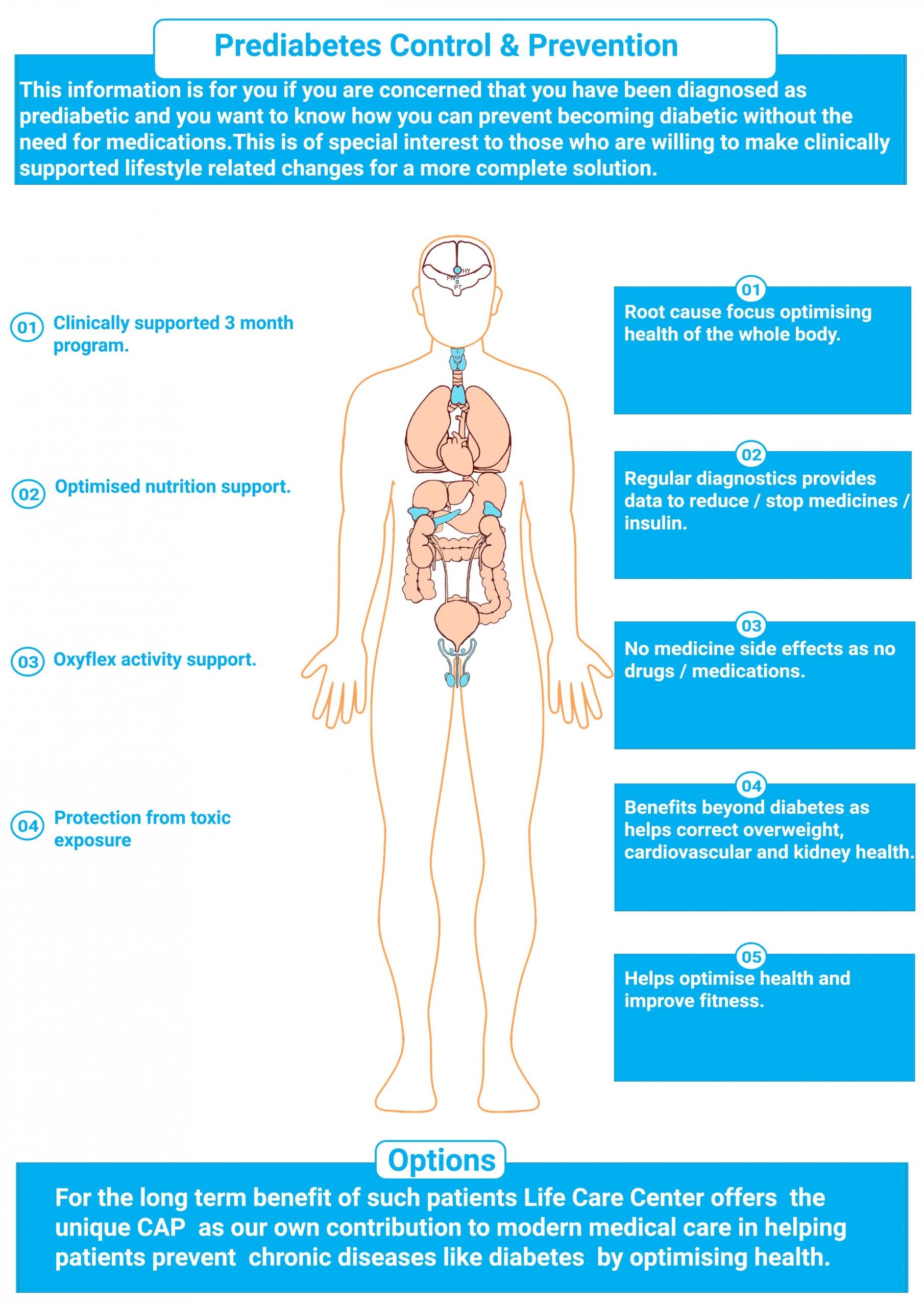
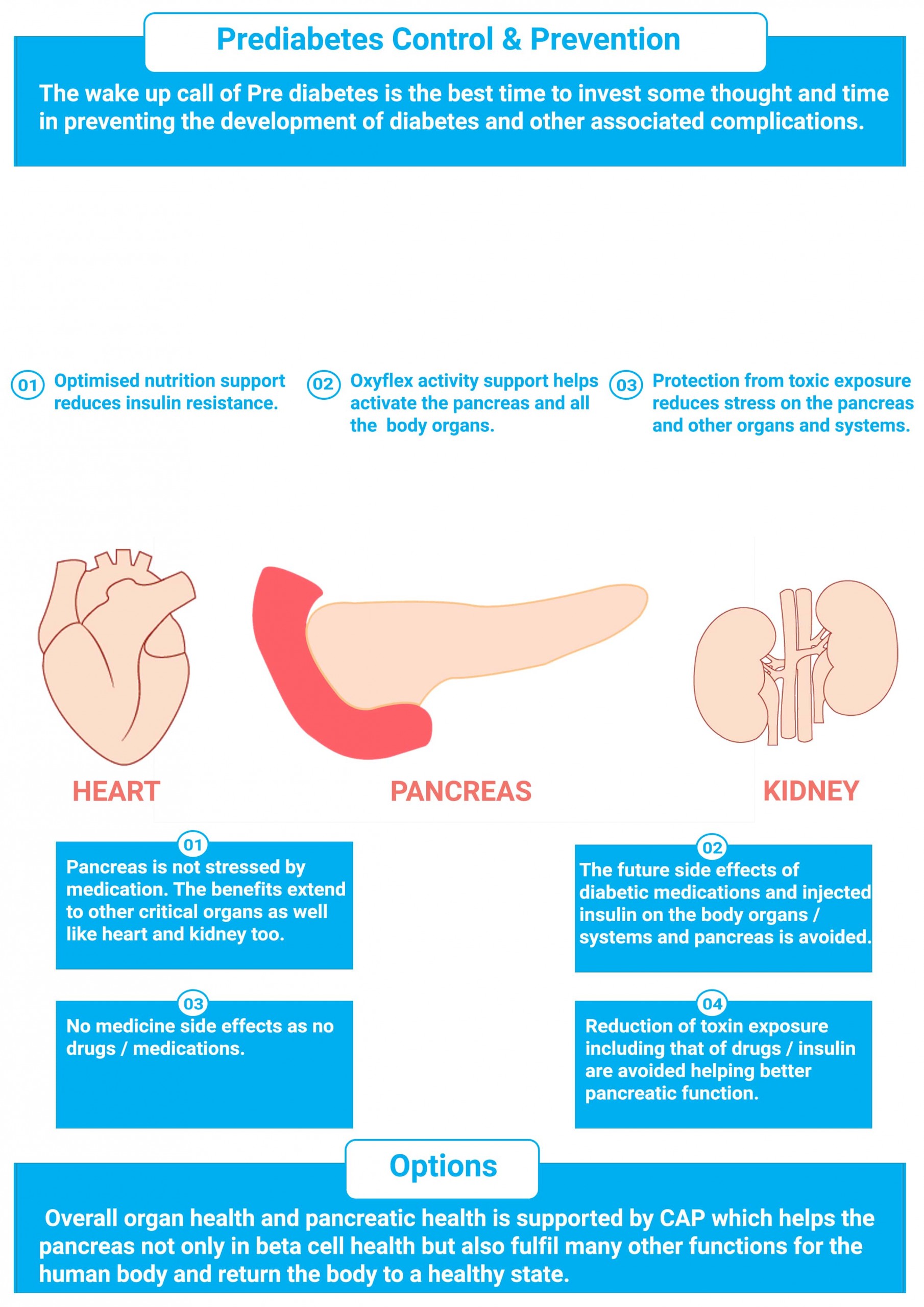
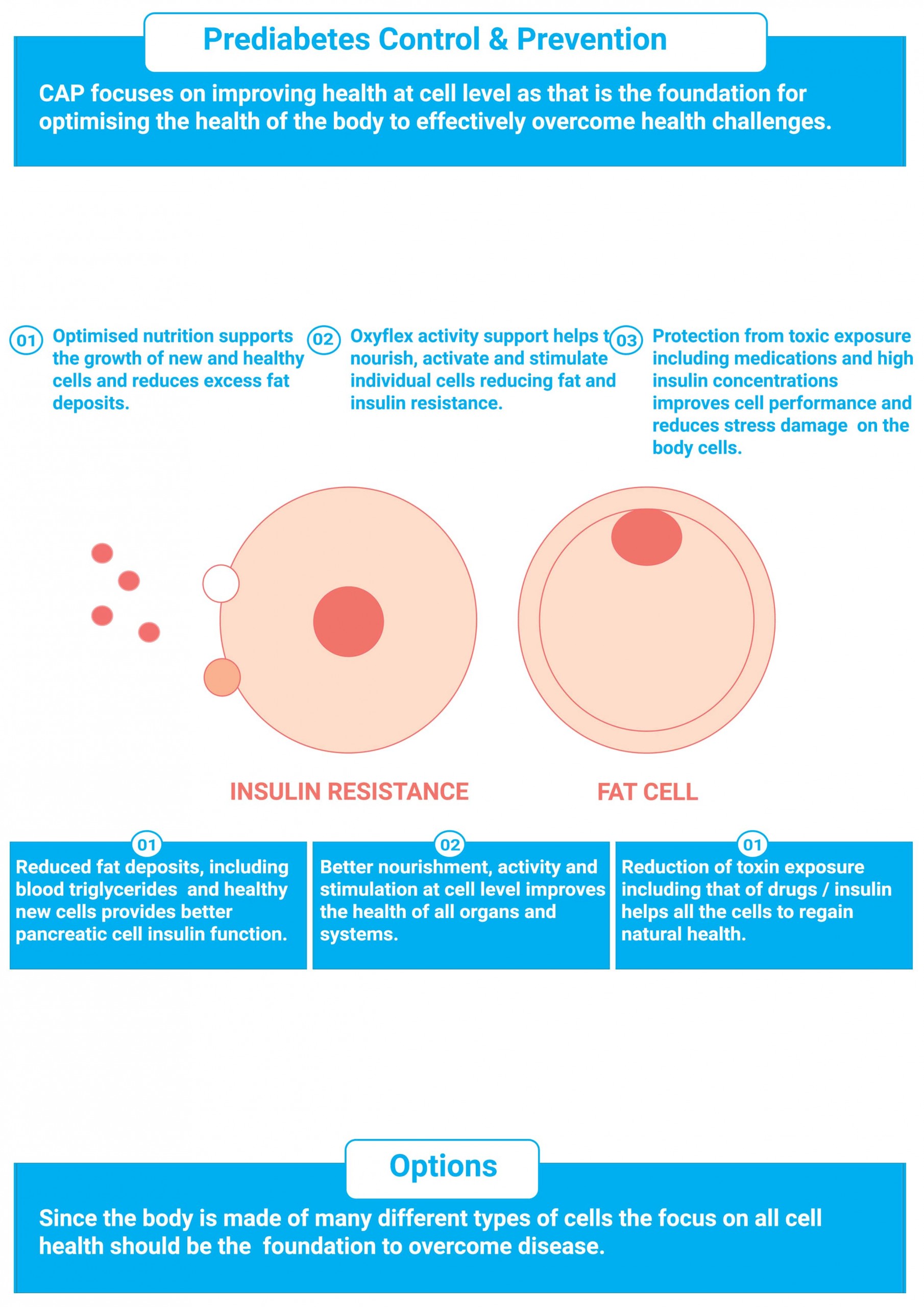
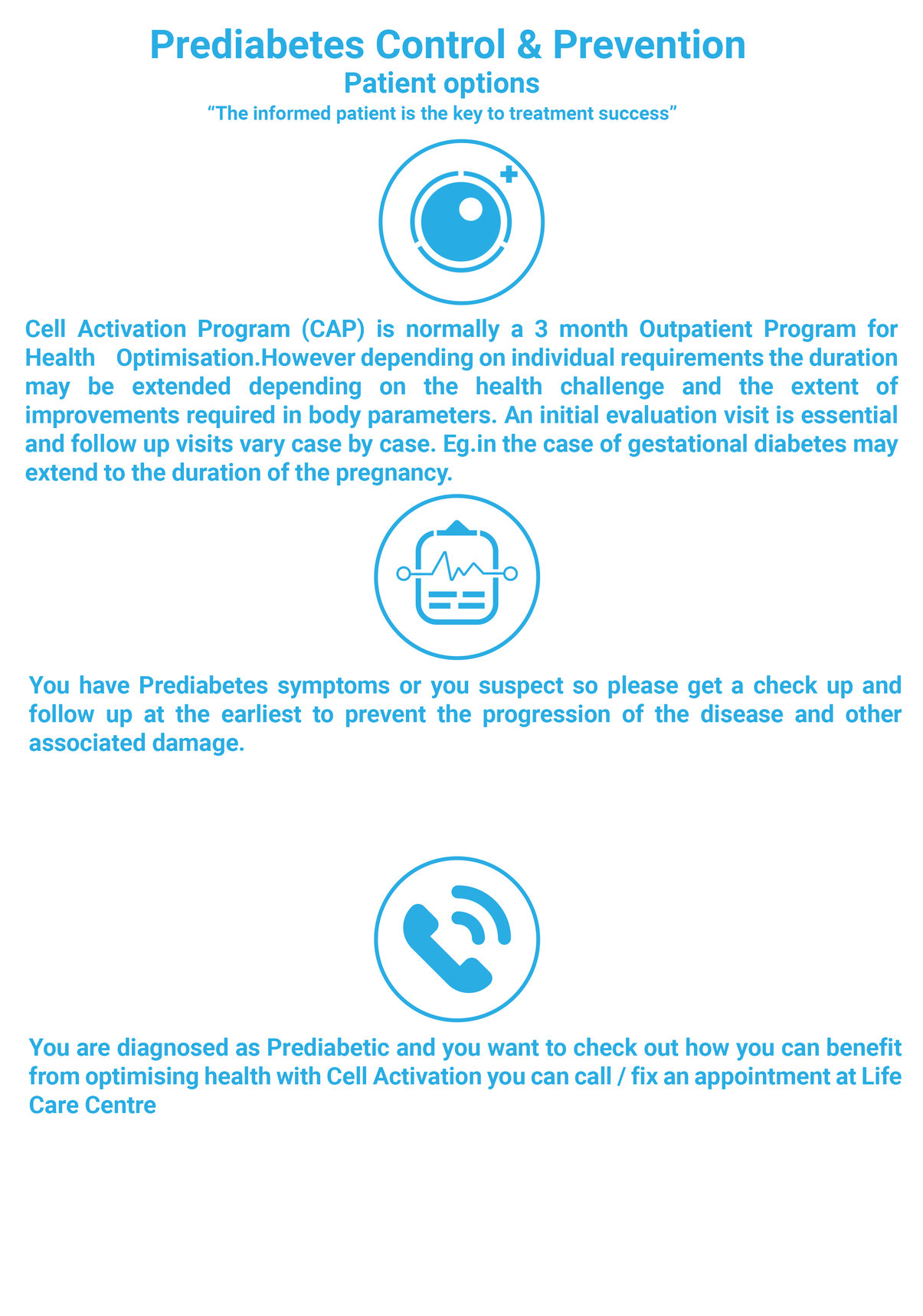
CSLC-CAP is a methodology and treatment for health optimization — a clinically supervised lifestyle-correction approach that works on root causes, delivered at Life Care Centre, Kochi, under modern-medicine doctors. Its purpose is to improve quality of life and to reduce the need for medication and surgical intervention.
Health care and medical care
Medical care treats disease once it has appeared. Health care works on the condition of the body itself, so that it is better able to resist illness and to repair. Both are necessary, and they are not the same work.
In the kidney the division is unusually stark, and it is worth stating without softening: no medicine raises kidney function. Blood pressure tablets lower blood pressure. Diabetes medicines lower blood sugar. Both are necessary and both prevent other catastrophes. Neither guarantees the kidney. A patient can have well-controlled numbers on paper for years while the function underneath them continues to fall.
The practical sequence follows from that, and it does not change. Relief first, from whatever is currently working. Correction alongside it. And then, as symptoms settle and repeat testing confirms it, the medicines come down. In that order, and never the other way round.
What “improvement” means here — and what it does not
This is the section that matters most in this article, because the kidney is not forgiving in the way other organs are.
The kidney does not regenerate. The liver does. The kidney is built from a fixed number of filtering units — nephrons — roughly one to one and a half million in each kidney, two to three million in total, and the body makes no more of them. When kidney function declines, what that means is that nephrons have been lost. Those are not coming back.
So improvement here means two things, and they are different. It means recovering function in nephrons that are impaired but not destroyed — which is genuinely possible, and sometimes substantial. And it means stopping the loss of the ones that remain, which is possible at every stage and is the more important of the two.
The honest limits, stated plainly:
- Nephrons already destroyed do not return. Whatever is recovered comes from tissue that was still alive.
- Below an eGFR of 60 — stage 3 — the chance of recovering function is much lower. The realistic aim then is to stabilise where you are and protect what is left, which is worth a great deal and is not the same as reversal.
- Where an organ has already failed, this is not the answer. A patient in established renal failure needs nephrology care, and some need dialysis or transplantation. Nothing here substitutes for that.
- The inherited forms remain inherited. Polycystic kidney disease does not stop being genetic. What changes is what else is loading the kidney.
Against those limits sits the claim this practice makes, and the conditions attached to it are the whole point of it. Around ninety per cent of dialysis and transplantation could be avoided — but only where people know that kidney disease is silent, where decline is looked for early rather than waited for, and where what is found is then corrected rather than only medicated.
The reasoning is worth setting out, because it is not a claim that medicine does not work. Controlling symptoms with medication alone does not prevent renal damage. A well-controlled blood sugar in type 2 diabetes, a quiet lupus, a stable IgA nephropathy — in each of these the numbers on the page can look acceptable while nephrons continue to be lost underneath them.
And medication is not neutral here. Everything taken has to be cleared by the kidney, so every drug adds to its workload. Some do more than that: long-term medication can itself damage the kidney — immunosuppressants notably, but the diabetes and blood pressure medicines too.
So the answer is not more medicine, or better medicine. It is early detection, correction of what is actually driving the damage, and monitoring that continues afterwards. That is what the ninety per cent rests on, and without those three it does not hold.
Where detection is late — at stage 4 or stage 5 — the account changes, but it does not become nothing. Much of the lost function will not return. What remains available is to slow the decline, to delay dialysis or transplantation, and to improve how the person actually feels and lives in the meantime.
All of this is clinical experience across many years of practice, offered as experience rather than as trial data.
Why the kidney is the organ that decides
Asked which single organ matters most when treating a patient — with medicine or with correction — the answer here is the kidney, and the reasoning is practical rather than sentimental.
Every other organ leaves you room to work. Failing kidneys take the room away. Once function is low enough, protein has to be restricted, potassium has to be restricted, fluid has to be restricted, and electrolytes have to be watched. At exactly the point where the body most needs building material to repair with, you are no longer allowed to supply it.
That is the argument for finding it early. Not because early disease is more dangerous, but because early disease is the only stage at which you still have the freedom to treat it properly.
There is a second reason, and it applies to everyone taking anything: medicines are cleared by the kidney. Every additional drug adds to its workload. In a patient whose function is already falling, the prescription itself becomes part of the load.
The four numbers, and why creatinine alone misleads
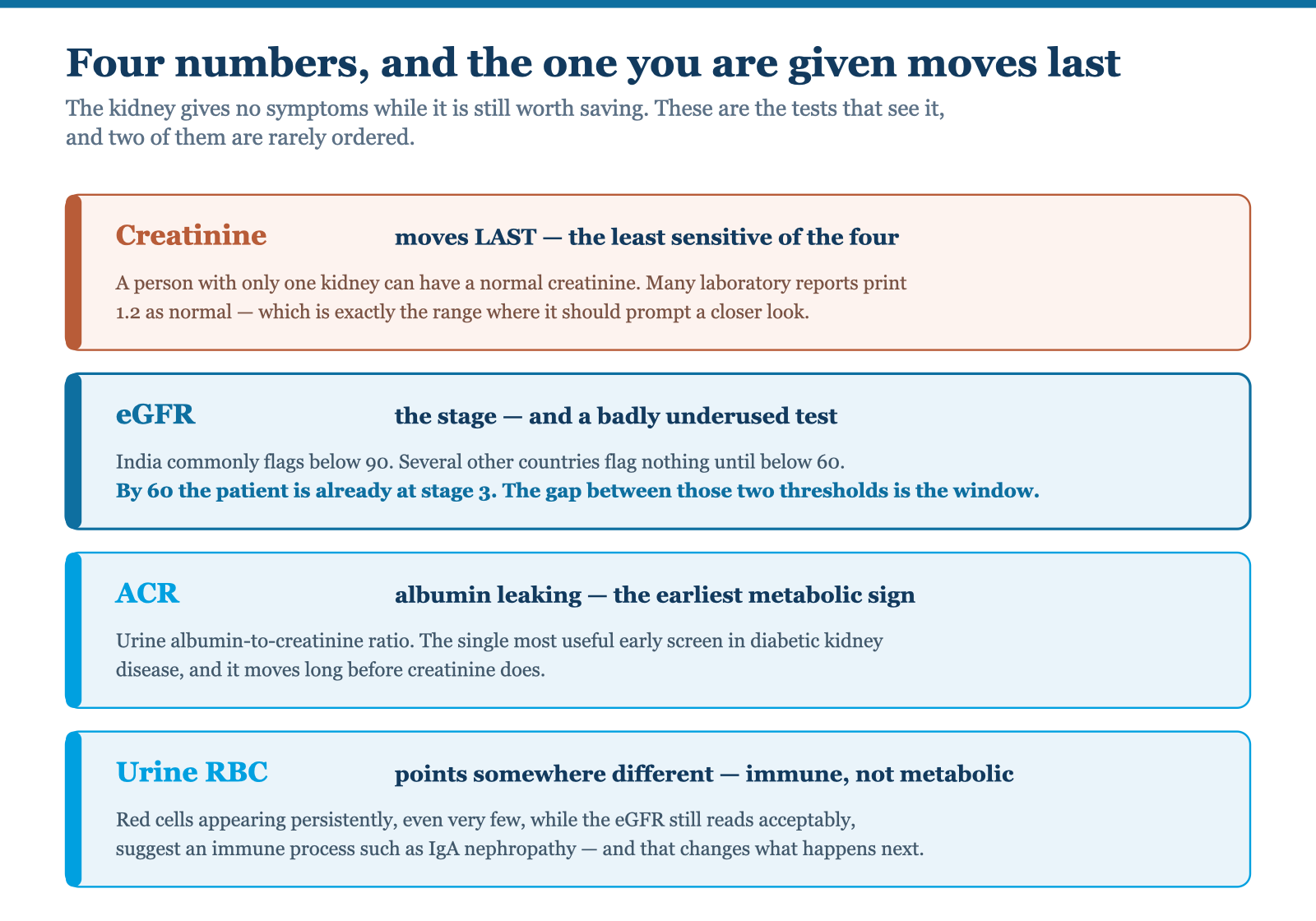
Creatinine is the number patients are handed, and it is the least sensitive of the four. A person with a single kidney can have an entirely normal creatinine. By the time it is clearly abnormal, a great deal has already gone. And it is routinely dismissed in exactly the range where it should prompt action — 1.2, 1.3 — because many laboratory reports print those as normal.
eGFR — the estimated glomerular filtration rate — is, in this practice’s view, a badly underused test. It is worth knowing that reference practice differs: in India a result below 90 is commonly flagged, while in a number of other countries nothing is flagged until it falls below 60. By 60 the patient is already at stage 3. The gap between those two thresholds is precisely the window in which something can still be done.
ACR — the urine albumin-to-creatinine ratio — is the single most useful early screening test in diabetic kidney disease, and it moves long before creatinine does. It is also, in ordinary practice, the one most often not ordered.
Red blood cells in the urine are the fourth, and they point somewhere different. Persistent urinary RBCs — even very few, but recurring — in someone whose eGFR is still acceptable suggest an immune process rather than a metabolic one, and that changes what should happen next.
The practical instruction that follows is simple: kidney function belongs in the annual blood panel, alongside the blood count and the lipids, from childhood onwards. Not because most people have kidney disease, but because the ones who do have no symptoms to warn them.
Two kinds of damage, and why the difference decides the outcome
This distinction is not usually explained to patients, and almost everything about what to expect depends on it.
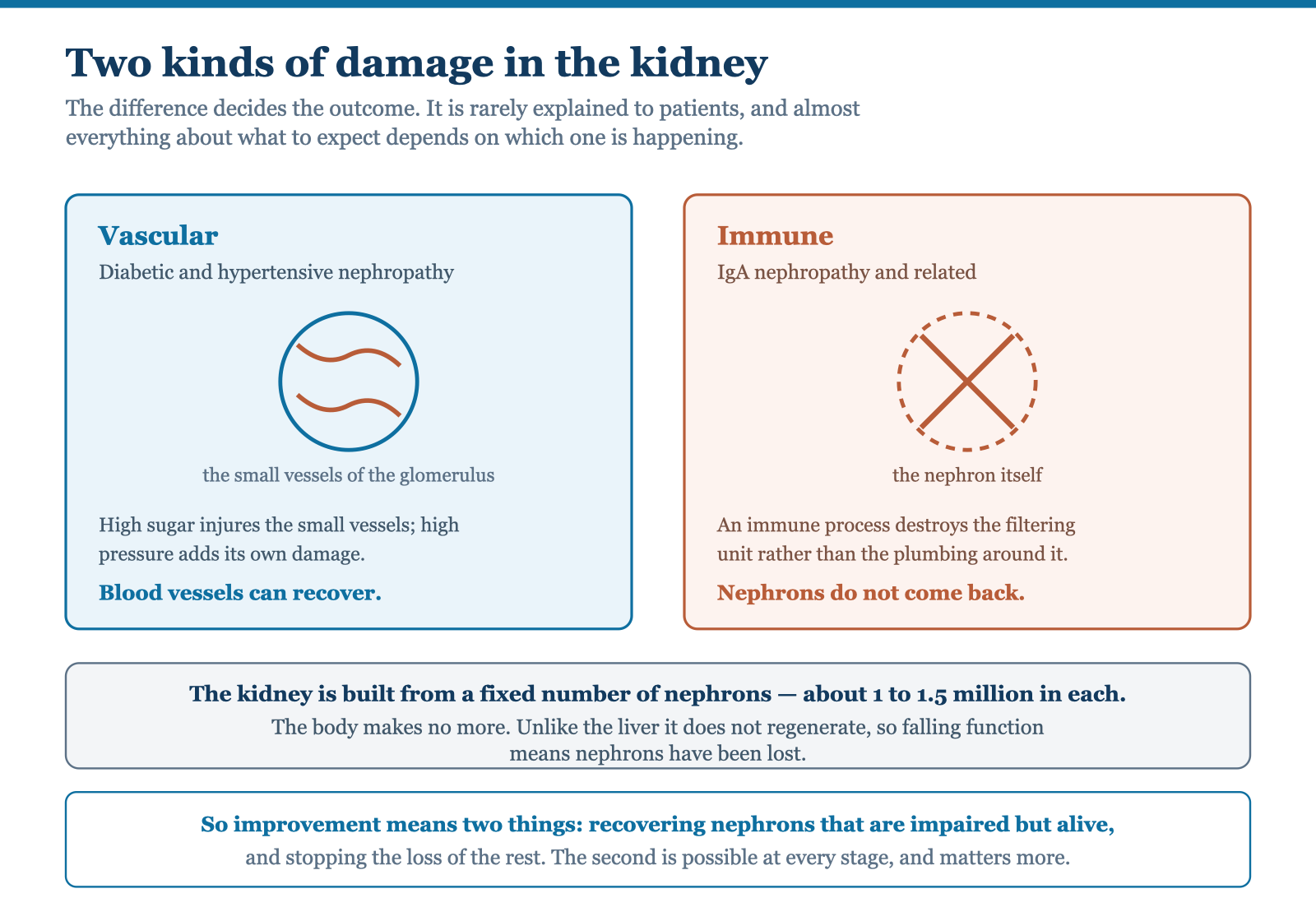
In diabetic and hypertensive nephropathy the damage is mainly vascular. High sugar injures the very small vessels of the glomerulus; high pressure does its own damage alongside. Blood vessels can recover. That is why, in early diabetic kidney disease, a creatinine of 1.1 to 1.3 can often be brought back below one, and why albumin leaking into the urine can stop.
In IgA nephropathy the nephron itself is damaged, by an immune process rather than a metabolic one. Function is correspondingly much harder to regain. The work is still worth doing — halting progression in an autoimmune nephropathy is a real result — but it is a different claim, and it should not be dressed up as the first one.
IgA nephropathy, and the childhood episode nobody follows up
IgA nephropathy is an autoimmune disease, and it frequently begins in childhood after an infection. It presents either as nephritis — blood appearing in the urine — or as nephrotic syndrome, where protein is lost through the urine in quantity.
With proper treatment most children recover from that acute episode, and this is where the problem starts: the episode is treated, the child gets better, and everybody forgets it. But in some of them a slow degradation continues quietly underneath for years.
Any child who has had a nephritis or a nephrotic syndrome should have their kidney function followed afterwards — urine albumin and urinary red cells, repeated. If those keep appearing, the immune process is still running, and eGFR needs watching too.
One practical point on diagnosis. A biopsy is the only way to prove IgA nephropathy, and if immunosuppressive treatment is being considered then it is necessary, because you do not give those drugs on a guess. But a biopsy is not required in order to begin lifestyle correction. Where a patient is frightened of the procedure or would rather not have it, the correction can be started and the response watched on the same markers that would have been followed anyway. That is a decision for the patient and their family to make with their doctors.
Diabetes, and the part played by insulin itself
Diabetes and blood pressure are the two commonest routes to chronic kidney disease, and the diabetic route contains something patients are rarely told.
In type 2 diabetes — which is ninety per cent or more of what is seen — insulin is not deficient. It is normal or high, and frequently very high. Yet a widespread belief, even in a state as health-aware as Kerala, is that type 2 diabetes involves insulin deficiency, and patients accept insulin injections on that basis.
That matters for the kidney specifically, because high circulating insulin causes sodium retention, and sodium retention raises blood pressure. So the sequence that plays out is: weight gain, then raised blood pressure, then diabetes — and then treatment that raises insulin further, whether by injection or by the many oral agents that push the pancreas to produce more. The high insulin is itself doing damage.
Alongside that, uncontrolled sugar injures the small vessels of the glomerulus directly. Both mechanisms point the same way, and both respond to the same correction.
Blood pressure and the kidney are one system
Patients are often surprised that their blood pressure has anything to do with their kidneys. In fact the kidney is the organ that controls blood pressure.
It releases renin, which sets off the renin–angiotensin–aldosterone cascade — angiotensin built by the liver, aldosterone released by the adrenal gland sitting on top of the kidney — and that system governs not only pressure but blood volume and the excretion of sodium, potassium and calcium. Most blood pressure medicines work on precisely this mechanism.
Which produces a loop worth understanding. If atherosclerosis narrows the vessels supplying the kidney — and someone with narrowing in the heart’s arteries may well have it here too — flow to the kidney falls, renin rises, and blood pressure goes up. So new or suddenly worsening hypertension is a reason to look at the kidney, not only to prescribe for the pressure. Early on the function may still read normal; later the eGFR falls, or albumin appears, or red cells do.
Where this does most, and where it does least
The ranking below is from clinical experience in this practice, not from trial data, and is offered in that spirit.
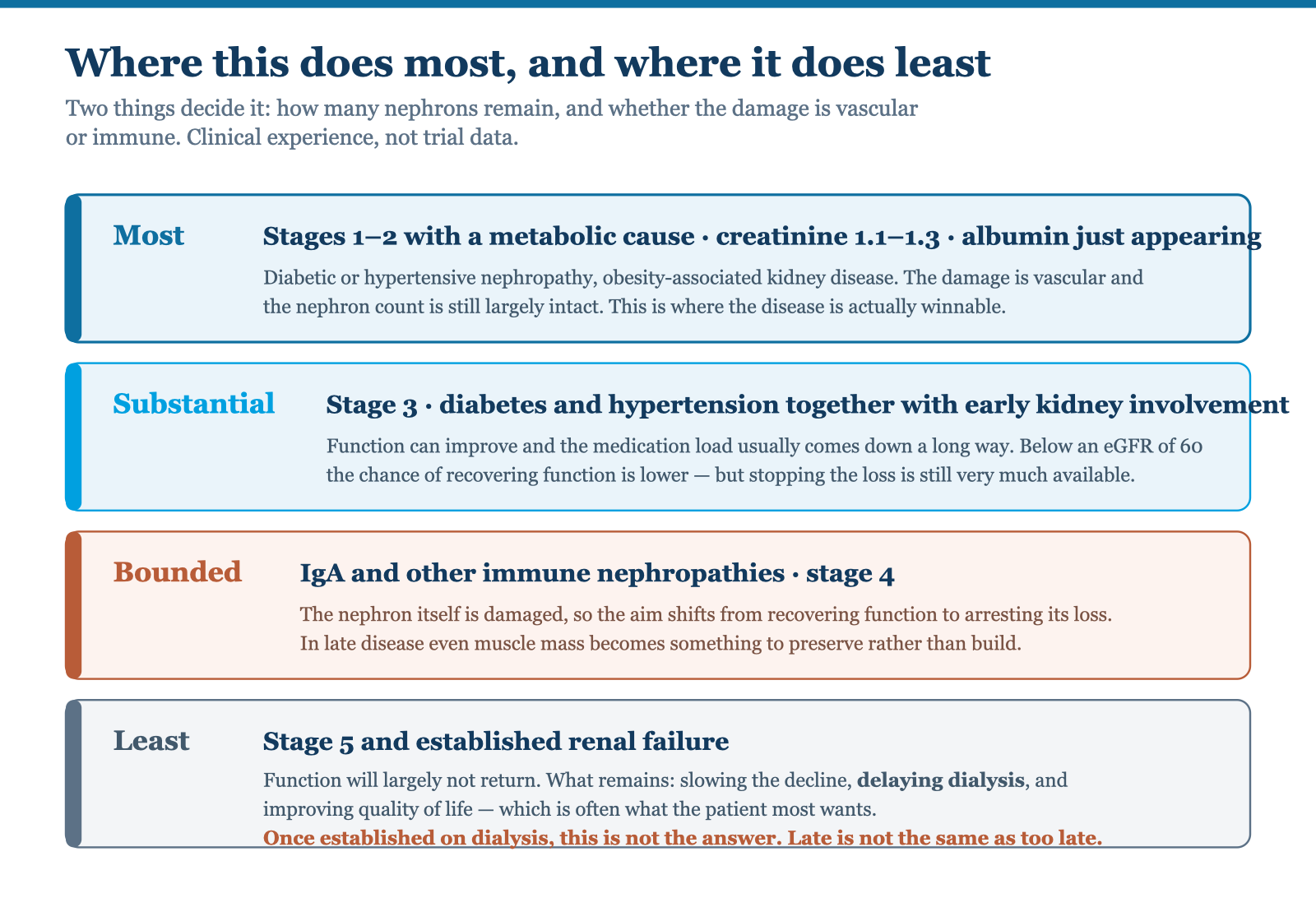
Most — stages 1 and 2 with a metabolic cause: diabetic or hypertensive nephropathy, obesity-associated kidney disease, a creatinine sitting at 1.1 to 1.3, albumin beginning to appear in the urine. Here the damage is vascular, the nephron count is still largely intact, and this is where the disease is actually winnable.
Substantial — stage 3, and patients carrying diabetes and hypertension together with early kidney involvement. Function can improve, and the medication load can usually come down a long way.
Real, but bounded — IgA nephropathy and other immune nephropathies, and stage 4. The aim shifts from recovering function to arresting its loss. In late-stage disease even muscle mass becomes something to preserve rather than build.
Least — stage 5, and established renal failure. Function will largely not return at this point. What is still available is slowing the decline, delaying dialysis or transplantation, and improving quality of life day to day — which for many patients is the thing they most want. Once someone is established on dialysis, there is not enough working kidney left for this to be the answer.
The fats decide the inflammation
Every one of these conditions — diabetic nephropathy, hypertensive nephropathy, obesity-associated kidney disease, IgA nephropathy — is an inflammatory disease. And inflammation is governed by fat rather than by protein, which is the opposite of where dietary advice usually starts.
Omega-6 fatty acids drive inflammation; omega-3 fatty acids drive the anti-inflammatory, healing side. A modern diet delivers a great deal of the first and very little of the second — largely through cooking oil, and through something most people believe to be straightforwardly healthy.
Nuts. Almonds, pistachios, cashews and the oils pressed from them are all high in omega-6. They are genuinely nutritious in other respects, which is exactly why the point needs making: eaten freely, on top of a diet already heavy in cooking oil, they push the balance further towards inflammation.
There is a further consequence worth drawing out. Very nearly every medicine used for these conditions is anti-inflammatory in one way or another — the pressure medicines, the asthma and allergy medicines, the painkillers, the steroids. They work by suppressing the omega-6 pathway. There is a parallel route to the same place, which is to supply enough omega-3 that the pathway is not running so hard in the first place. That is what the nutrition here is aimed at, and it is why correcting it can reduce what the prescription has to do.
This is not a general instruction to eat well. It is the mechanism the correction acts on.
Obesity, visceral fat and the ratio that is actually tracked
Obesity travels with almost all of this, and the Indian thresholds are not the Western ones. A BMI of 23 is the upper end of normal for Asian populations, against 25 elsewhere — and in practice, at a BMI of only 20 or 21, fat percentage and waist circumference are frequently already high.
Which is why BMI is not what is followed here. The measurement that matters is the lean-to-fat ratio — with body fat around 15 per cent in men and 20 to 25 per cent in women as the target — and within that, visceral fat specifically. Reducing visceral fat is the common object across all of this: kidney stones, IgA nephropathy, diabetes, hypertension.
In advanced kidney disease the goal shifts. Muscle mass is then something to protect rather than to build, with fat mass the only thing being reduced.
Movement, when the patient is exhausted
People with kidney disease are rarely dealing with kidney disease alone. Perhaps a third arrive with arthritis or general weakness on top of it, and many have neuropathy, retinopathy or heart disease alongside. Fatigue is close to universal. Conventional exercise advice fails this group entirely.
The movement used here is done lying down and then sitting, working through the body in a set order, graded to what the person can actually manage. It is possible for someone waiting for bypass surgery, or who gets angina on minimal exertion. Nobody is pushed: the intensity is set by what the heart will tolerate, and in kidney disease the heart is usually compromised too.
Most people reach noticeably better flexibility within a month or two, with muscle mass protected while fat mass falls.
Medication — how reduction actually happens
Nobody is asked to stop a medicine in order to start this. The sequence is the other way round.
Relief comes first, from whatever is currently working. Correction runs alongside it. Then, as symptoms settle and repeat testing confirms the change, the medicines come down — gradually, doctor-led, and driven by the reports rather than by how somebody feels. No dose is changed alone.
In earlier-stage kidney disease — through stage 3, and into stage 4 where eGFR is still above 20 — most patients come off the great majority of their diabetes and blood pressure medication within about a month. An HbA1c in the tens can come down towards six over three months where the protocol is followed closely.
One medicine is worth describing exactly, because it is used differently here. The SGLT2 inhibitors work by pushing glucose out through the urine, and they are the class preferred in this setting because they do not drive weight gain the way many diabetes drugs do. But they are used occasionally — once or twice a week, around a heavier meal — and not daily. The reason is specific to this organ: on that medicine the urine is persistently sweet, which is an invitation to bacteria. And every medicine, this one included, has to be cleared by the kidney.
Kidney stones, and why they keep coming back
A stone forms when crystals come out of solution in the urine — usually oxalate or uric acid — because there is too little water, too much solute, or both. As it grows it damages the kidney around it and can obstruct flow.
Modern treatment is effective: shock-wave therapy breaks the stone up and it passes. What it does not do is change why the stone formed. So the diet stays the same, and the stone comes back, and it is treated again. Patients arrive here having had the procedure three or four times, by which point creatinine is no longer normal.
What changes the pattern is unremarkable and effective: enough water, identifying which crystal type is forming and adjusting the diet to it, reducing the toxin load, and bringing visceral fat down.
There is a further reason that matters specifically to stone-formers. The metabolic waste of medicines is excreted through the urine as well, and it adds to the solute load — which is exactly what invites crystals to form. So in someone who makes stones, bringing blood sugar, blood pressure and cholesterol under control without medication counts for more than it does in most patients: it removes solute as well as treating the cause, and it works alongside the increase in fluid intake rather than instead of it.
Polycystic kidney disease
Polycystic kidney disease is inherited — autosomal dominant, so a child of an affected parent carries a high chance of it — and cysts progressively damage the surrounding kidney. It is usually picked up on an ordinary abdominal ultrasound, which remains one of the most informative and least expensive tests available.
Being genetic does not make lifestyle correction irrelevant. It makes it more important. The inherited disease sets the floor; everything else added on top decides how fast you reach it. Keeping blood pressure controlled, not becoming diabetic, and not becoming obese are the things that determine how long the remaining function lasts.
Children, and the reactions that do not look like allergies
A pattern worth putting in front of parents. Children on repeated courses of antibiotics for recurrent respiratory infection — once or twice a month in some cases — are worth asking a different question about: what was eaten in the two or three days before it started. Colours, preservatives, and food heavy in omega-6.
Because there is a category of food reaction that does not announce itself. No itching, no weals, nothing immediate — but a delayed immune response, to commonly eaten foods including nuts, rice and wheat, and notably to chana and cowpea, which in this practice’s experience perhaps fifteen to twenty per cent of the local population reacts to. What it produces instead is recurrent infection, headache, eczema, psoriasis — and in some patients a slow decline in kidney function.
That is one of the candidate mechanisms behind slowly progressive IgA nephropathy, and it is testable. It is also the kind of thing that is never found unless somebody thinks to look.
One patient’s course
What follows is one patient, described to show how the pieces move together. It is not a typical result and is not offered as one — what any individual can expect depends on how much working kidney remains.
He came in with diabetes and high blood pressure of long standing, an eGFR that had fallen to around sixty, and an HbA1c of twelve. He was on insulin and on several other diabetes medicines. On the numbers he was at the point where the door starts closing.
The insulin and the diabetes medicines came off early, under supervision and on repeat testing, with only occasional use of a single agent around heavier meals. Over ninety days the HbA1c came down from twelve to about six. The eGFR did not merely stabilise; it rose, into the nineties — and the albumin that had been leaking into his urine stopped.
What made that possible was where he was caught. The damage was vascular and metabolic rather than immune, and enough nephrons were still alive to recover. Had the same patient arrived two or three years later, the honest account would have been a different one: hold the line, protect what is left, and avoid dialysis for as long as possible. That is a good outcome too. It is simply not this one.
The four optimization domains
| Domain | What it addresses |
|---|---|
| Optimal nutrition | Supplying the full range of nutrients the body needs in order to repair, in a nutrient-dense form with minimal additives. In kidney disease the balance of fats acts directly on the mechanism, since these are inflammatory diseases — omega-3 raised and supplied alongside the antioxidants and minerals that protect it. Where function is reduced, protein, potassium and fluid are handled according to what the kidney can still clear. |
| Optimal exercise | Gentle, segmental movement performed lying down and then sitting, graded to what the person can manage, with intensity set by what the heart will tolerate. No gym or equipment, so it remains possible with fatigue, neuropathy or cardiac disease. In advanced kidney disease the aim is to preserve muscle mass while fat mass falls. |
| Rest and sleep | Recovery, without which repair and metabolic regulation do not function well however good the nutrition. Disturbed sleep and insulin resistance worsen one another, and both bear on the kidney. |
| Reduced toxin load | Lowering avoidable exposure — colourings, preservatives and taste enhancers first, then alcohol and tobacco. This matters more here than anywhere else in the series: a kidney with reduced function is already struggling to clear ordinary waste, and every unnecessary compound, medicines included, is added to that work. |
Delivered together and consistently, these same four domains are intended to create favourable conditions at cell level: better delivery of oxygen and nutrients into cells, and better clearance of waste out of them.
Watch the full sessions
The session below covers this subject in full, with the Malayalam version of the same discussion beneath it. The two foundation sessions explain the approach itself.
English — kidney function, GFR and ACR, and what can be protected:
Malayalam — the same discussion:
English — the approach itself:
Malayalam — the approach itself:
Why the first 90 days matter
The active phase is ninety days because that is roughly the period over which a large proportion of the body’s cells are renewed, and over which corrected inputs show up in measurements rather than only in how someone feels. In kidney disease the measurements are unusually good ones — eGFR, ACR, urinary red cells and creatinine all move on their own schedule and can be followed closely.
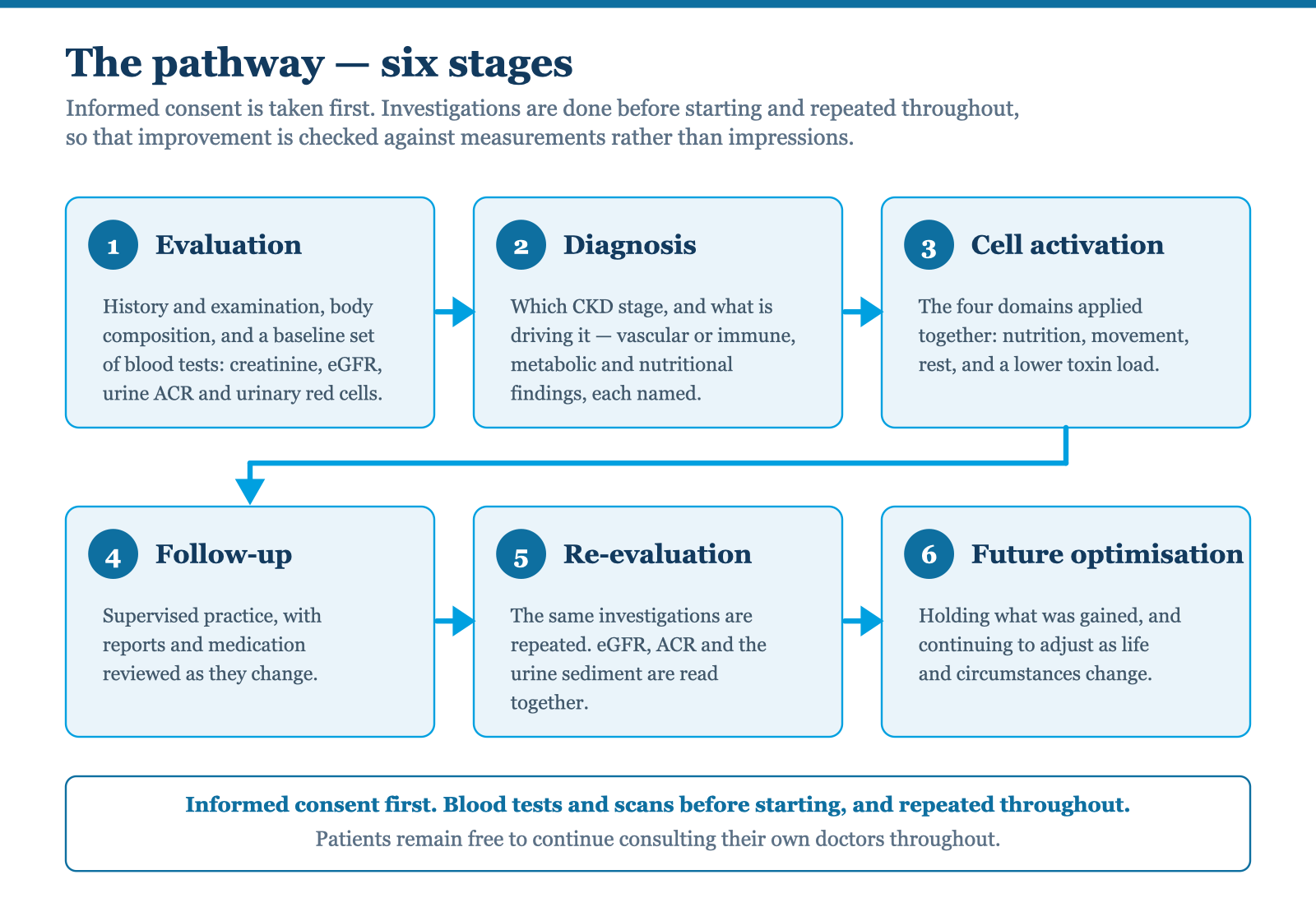
Monitoring is close, and in kidney disease it has to be, because medication reduction depends on it and because sugars can move quickly once the body’s own control starts working underneath them. Follow-up continues remotely where distance requires it, using the same reports.
Suitability
To take part, a patient must be clinically stable, and fit mentally and physically — able to understand, learn and practise the routine, able to take at least a liquid diet along with the centre’s nutritional support, and able to do gentle exercise lying down and sitting. A patient should be able to walk in, with support if necessary. The first 90 days must be given real priority. Where physical or mental limitation prevents independent practice, a family member enrolls alongside — and in the more difficult cases, that family support is what decides the result.
It is not suitable where an organ has already failed — established renal failure requiring dialysis in particular, very poor cardiac function, a decompensated liver, or a degree of cognitive or psychological instability that makes learning the routine impossible. There has to be enough working body left to repair with.
It is also worth saying what happens when it does not work. Where a patient is not improving — most often because circumstances have made the protocol impossible to follow rather than because the biology has refused — the course is to continue under nephrology care. That care is theirs throughout in any case: patients remain free to keep consulting their own doctors, and are encouraged to.
Frequently asked questions
My creatinine is 1.3 and I have been told it is nothing to worry about. Is it?
It is worth looking at properly rather than worrying about. Creatinine is the least sensitive of the kidney tests and can stay near-normal while a good deal of function has already gone — someone with a single kidney can have a normal creatinine. The useful next step is an eGFR, a urine albumin-to-creatinine ratio, and a check for red cells in the urine. Those three see the problem far earlier, and in early diabetic kidney disease a creatinine in that range can often be brought back below one.
Can kidney function actually improve, or only be slowed down?
Both, and which one depends on the stage and the cause. Nephrons that have been destroyed do not come back — the kidney does not regenerate the way the liver does. But nephrons that are impaired rather than destroyed can recover, and in early diabetic or hypertensive kidney disease that recovery can be substantial. Below an eGFR of 60 the chance of recovering function is much lower, and the realistic aim becomes stopping further loss, which is worth doing at any stage.
Will this get me off dialysis?
No. Once a patient is established on dialysis, there is not enough working kidney left for this to be the answer, and saying otherwise would be dishonest. The claim being made is about the years before that point — that where decline is found early and its drivers corrected, a large proportion of people who currently reach dialysis need not have. But late is not the same as too late. At stage 4 or 5, before dialysis has started, much of the lost function will not come back — and the decline can still be slowed, the start of dialysis delayed, and how someone feels day to day improved.
Do I need a biopsy?
If immunosuppressive treatment is being considered, yes — those drugs should not be given on a presumption. If the question is whether to begin lifestyle correction, no: it can be started and the response followed on the same urine and blood markers that would have been watched anyway. Whether to have the procedure is a decision for you and your family with your doctors.
I have diabetes. Does taking insulin protect my kidneys?
In type 1 diabetes insulin is not optional and the question does not arise. In type 2 — which is the large majority — insulin is usually normal or high rather than deficient, and high circulating insulin causes sodium retention, which raises blood pressure, which is itself hard on the kidney. Controlling sugar matters a great deal. But controlling it in a way that pushes insulin higher is not the same as protecting the kidney, and no glucose-lowering medicine guarantees kidney function. None of this is a reason to change any dose without the doctor treating you.
Are nuts bad for my kidneys?
Not bad, but easy to overdo. Almonds, pistachios and cashews are nutritious and are also high in omega-6, which drives the inflammatory side of the immune response. Eaten freely on top of a diet already heavy in cooking oil, they shift a balance that is already tilted. What matters is the proportion of omega-6 to omega-3 across the whole diet rather than any single food being forbidden.
My stones keep coming back after treatment. Why?
Because the procedure removes the stone and not the reason for it. Stones form when crystals — usually oxalate or uric acid — come out of solution because of too little water, too much solute, or both. Unless water intake, the diet and the visceral fat change, the same conditions produce the same stone. Repeated cycles of this are one of the routes by which people arrive with a creatinine that is no longer normal.
Related reading
- Weight-Loss Injections and Diabetes — insulin resistance and body composition, which drive the commonest cause of kidney disease.
- Fatty Liver: Reversing Liver Fat and Fibrosis — the same metabolic pattern in the organ that does regenerate, which is the instructive contrast.
- Psoriasis and Psoriatic Arthritis — the immune mechanism and the omega-6 to omega-3 balance, set out in more detail.
- Autoimmune Diseases: Reversing Autoimmune Inflammation — relevant to IgA nephropathy and to lupus affecting the kidney.
- Age-Related Lifestyle Diseases: Reversing Insulin Resistance and Inflammation — the background against which all of this sits.
- CSLC-CAP — approach summary and information sheet — consent, investigations, the pathway and eligibility in one place.
Important note
⚠️ IMPORTANT: This article is educational and is not medical advice. Do not start, stop or change any medication without your treating doctor’s supervision.
The clinical observations described here are from this practice, reported as clinical experience rather than as a trial. Individual results depend on how closely the protocol is followed and on how much capacity the body still has to repair. Whether to accept or decline any treatment is a decision for the patient and their family. Use this article to ask better questions of your own doctors, and to decide together.