Weight-Loss Injections and Diabetes: Why Structured Lifestyle Correction Decides the Result — CSLC-CAP in Kochi

Weight-Loss Injections and Diabetes: Why Structured Lifestyle Correction Decides the Result — CSLC-CAP in Kochi
- Dr Jolly Thomson
- अगस्त 29, 2026
- 0 Comments
A patient in their forties has been carrying a great deal of excess weight and a diagnosis of type 2 diabetes for most of a decade. They have read about the injections. They know somebody who is taking one and has lost weight on it. Their question, when they finally ask it, is the question almost everybody arrives with: should I take it?
It is the wrong question, and not because the answer is no.
These medicines work. They work better than anything medicine has had before them, and two of them have been shown to prevent heart attacks and kidney failure, which is a great deal more than weight loss. Anyone who tells you otherwise has not read the trials. But every one of them is licensed — in the manufacturer’s own first line — as an addition to a reduced-calorie diet and increased physical activity. The medicine answers how much a person eats. It does not answer what the weight coming off is made of, and it does not answer what happens in year three. That is the other half, and it is the half nobody is telling.
This article is about that half: what structured lifestyle correction actually does in obesity and diabetes, why it matters more rather than less when someone is taking one of these medicines, and where the honest limits of both sit.
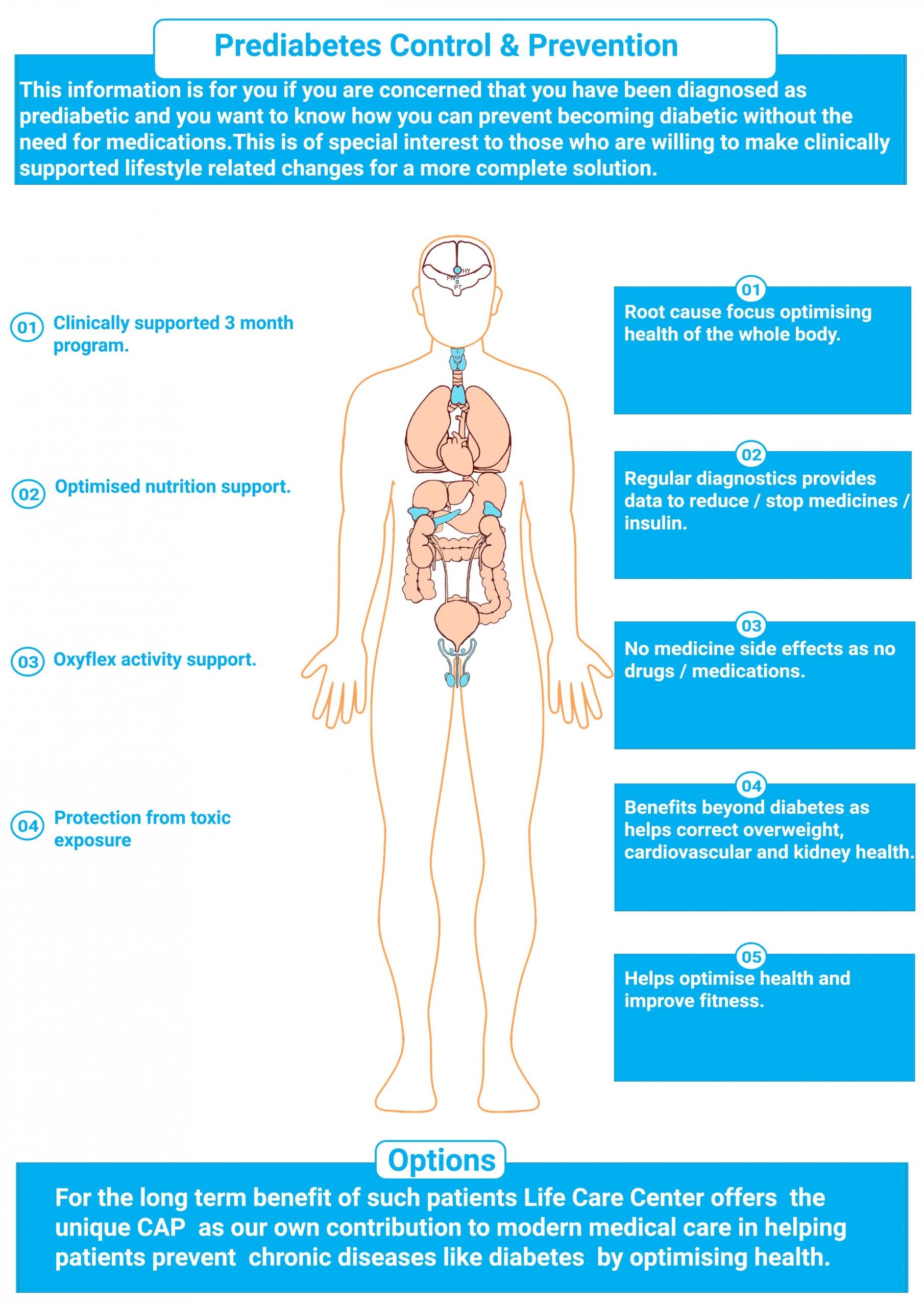
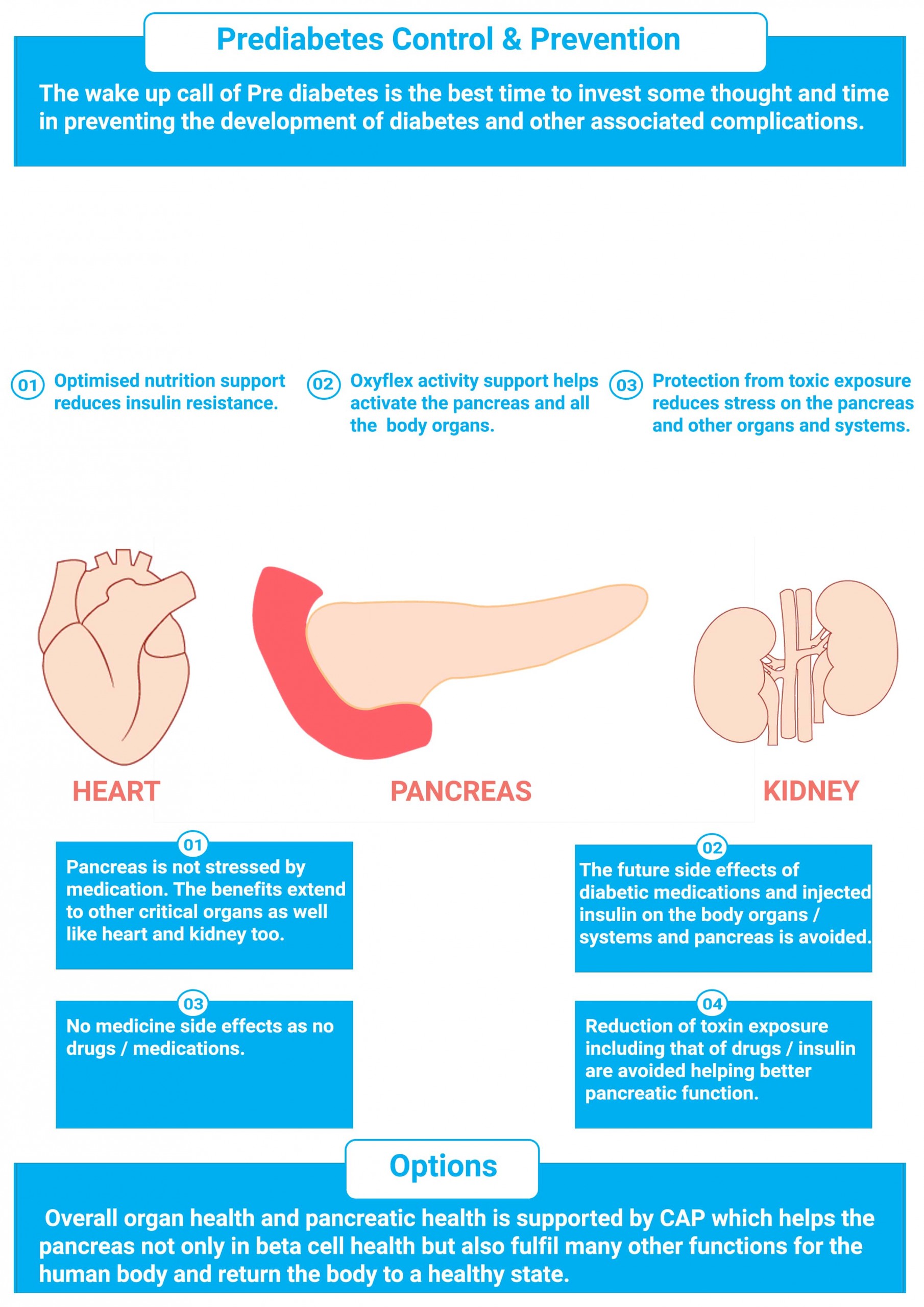
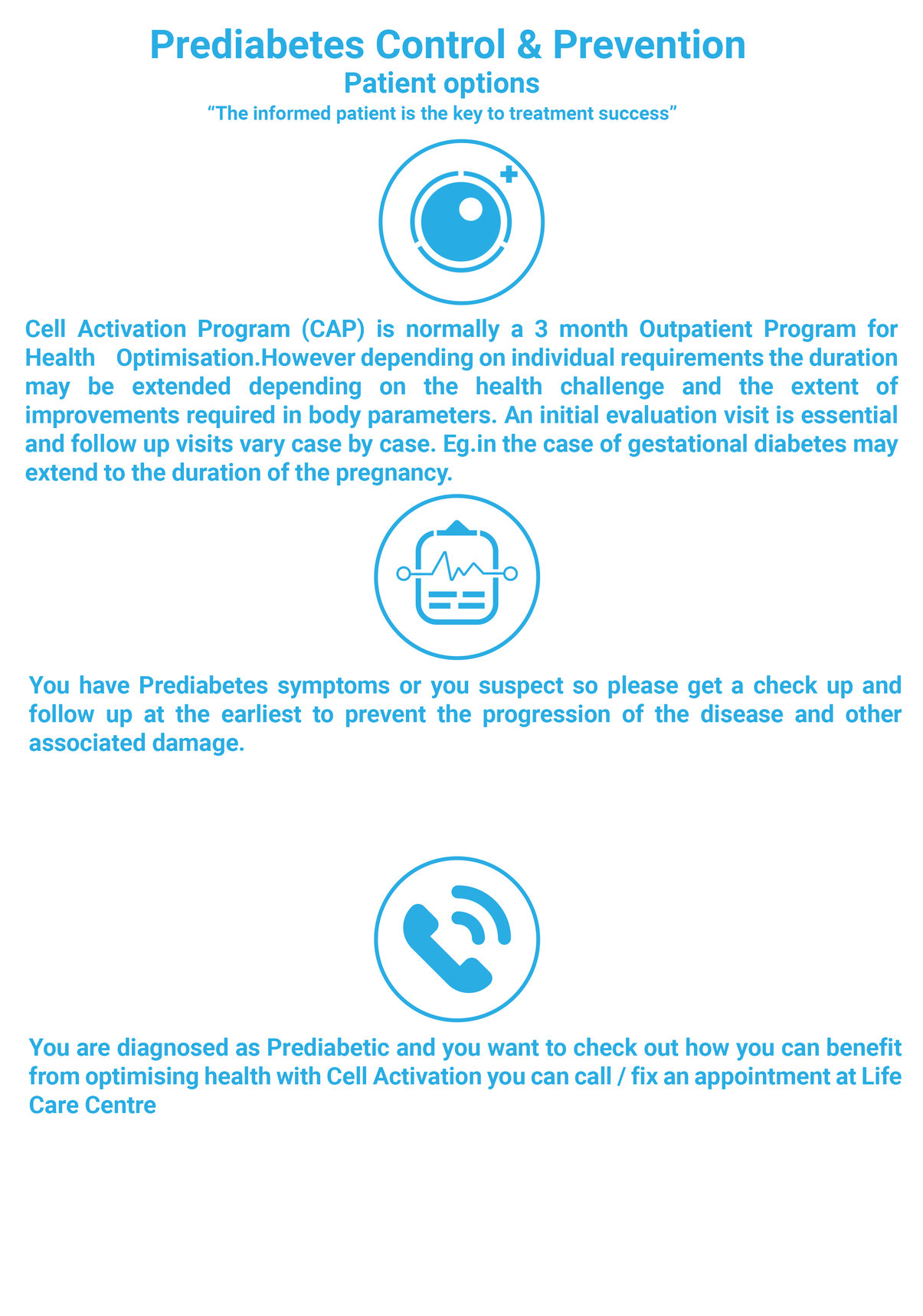
CSLC-CAP is a methodology and treatment for health optimization — a clinically supervised lifestyle-correction approach that works on root causes, delivered at Life Care Centre, Kochi, under modern-medicine doctors. Its purpose is to improve quality of life and to reduce the need for medication and surgical intervention.
Health care and medical care
Medical care treats disease once it has appeared. Health care works on the condition of the body itself, so that it is better able to resist illness and to repair. Both are necessary, and they are not the same work.
Diabetes is where the difference is starkest, because the standard advice contains the answer and stops one step short of it. Every patient with type 2 diabetes has been told to lose weight and to exercise. That advice is correct. It is also, for most people, undeliverable on its own — which is precisely why a class of medicines that removes appetite has become the biggest development in the field in thirty years. The gap those medicines filled was never a gap in knowledge. It was a gap in delivery.
Structured lifestyle correction fills the same gap by a different route: not by suppressing hunger, but by correcting what the body is short of, teaching what to eat and how much, restoring movement in a form the person can actually manage, and measuring the result every month. The work here is closer to a teaching course than to a treatment — the patient leaves knowing how to manage their own body, which is not something a prescription can hand over.
The practical sequence follows from that, and it does not change. Relief first, from whatever is currently working. Correction alongside it. And then, as symptoms settle and repeat testing confirms it, the medicines come down. In that order, and never the other way round.
What “remission” means here — and what it does not
The word used in diabetes should be remission, not cure and not reversal, because remission has an agreed definition and the other two do not.
Remission means normal blood glucose sustained without glucose-lowering medication. In practice, in this centre, what is being tracked alongside it is a set of things that can be counted: HbA1c, fasting insulin and the degree of insulin resistance, C-peptide as a measure of how much pancreas is still working, lipids, waist circumference, kidney function, and — the one that matters most and is looked at least — the ratio of lean mass to fat mass, measured monthly.
It is not a claim that the tendency has gone. The honest limit here, as in every condition this practice works with, is structural rather than diagnostic:
- Type 1 diabetes is an autoimmune disease where insulin-producing cells have been destroyed by the immune system. Insulin is not optional and does not become optional. But the cause of the immunological derailment can be an infection, a toxin or a nutritional imbalance, which can be corrected — and that matters if it is detected before the islet cells are wholly destroyed by the autoimmune reaction.
- Where the pancreas has genuinely lost its reserve — measured, not assumed — what correction can do is protect what remains and reduce the load on it. That is worth a great deal.
- Established damage does not reverse. Nerve damage that is already established, a kidney already substantially scarred, an eye with vision already reduced — these are structural, and the work here is to stop them progressing rather than to undo them.
- The inherited tendency remains. What changes is whether it is currently doing damage.
Diabetes is not one disease, and which one it is decides everything
When someone says “I have diabetes”, the sentence does not say what to do. It does not even say which disease is being discussed. That is the reason for testing before treating, and it is the reason a good deal of avoidable harm happens.
- Type 2 — ninety to ninety-five per cent of what is seen. The insulin is present, often in large amounts; the body has stopped responding to it. This is the one that responds to corrections.
- Type 1 — five to ten per cent, usually beginning in childhood. Autoimmune: the immune system destroys the insulin-producing cells, typically over two to three years until pancreatic function is gone. Insulin for life.
- LADA — the slow, adult-onset autoimmune form. It looks like type 2 at first and is frequently treated as type 2 for years.
- MODY — the inherited single-gene forms, seen in families where several generations were diagnosed young.
- Gestational diabetes — in pregnancy, and it should never be treated as something that ends with the delivery. That mother carries roughly ten times the later risk of type 2.
- Fibrocalculous pancreatic diabetes — the calcific pancreatitis of south India, which belongs particularly to this region. Tropical pancreatitis accounts for around seventy per cent of all chronic pancreatitis in southern India, and Kerala has among the highest rates in the country. The picture is a lean, young patient with abdominal pain going back to childhood and oily stools. It is diagnosed on a scan, not on a blood test.
Within type 2 itself there is a division that matters more than the label does: how much pancreas is left. One patient has abundant reserve and a very high circulating insulin — the pancreas able to produce as much as is asked of it. Another, often thin, has only just enough. Two people can walk in with the same blood sugar reading and need quite different work.
The consequence is a warning worth stating plainly. If someone’s diabetes is actually autoimmune and it has not been recognised, putting them on tablets or on one of these injections can push the remaining cells harder and tip them towards ketoacidosis. Misclassification is not rare — studies put it as high as fifteen per cent, and some series suggest that up to a third of adults labelled type 2 may in fact have type 1 or LADA. Before anyone starts one of these medicines, somebody should know which disease is being treated.
What the weight-reduction medicines are
Three generations of them are now in use, and they do quite different things.
- The older appetite suppressants — phentermine, phentermine with topiramate, naltrexone with bupropion. These work on brain chemistry, on hunger.
- The absorption blockers — orlistat, which blocks the enzyme that digests fat so that part of it passes through unabsorbed; and voglibose and its class, which slow the breakdown of starch so that the sugar rise after a meal is gentle rather than sharp. Neither of these touches the appetite at all.
- The incretin medicines — semaglutide, tirzepatide, and now tablets. These are long-acting copies of a hormone the gut already releases after a meal. They act on the appetite centres of the hypothalamus, slow the stomach’s emptying, and change the food-reward pathway.
Two things have changed the picture in India within the last eighteen months. Orforglipron, the first oral small-molecule GLP-1, was approved in April 2026 — which matters less for convenience than for price, because a small molecule can be manufactured in a chemical plant rather than grown in cells. And semaglutide came off patent in India in March 2026. Who can afford these medicines is changing while this is being written.
What they all have in common, incretins included, is worth saying without euphemism: they are appetite medicines. Very good ones. The weight comes off because the person eats less. Mechanism studies on this class found the loss came from reduced appetite and reduced intake, with no measured rise in energy expenditure. There is no separate fat-burning process going on. (One agent still in trials, retatrutide, adds a hormone that does appear to raise expenditure — it is not approved yet for clinical use.)
What the trials actually show
These figures are the manufacturers’ own, from their own trials, and they should be given generously.
| Finding | Trial |
|---|---|
| Semaglutide 2.4 mg: −14.9% of body weight at 68 weeks, against −2.4% on placebo | STEP 1 |
| Tirzepatide 15 mg: −20.9% at 72 weeks, against −3.1% | SURMOUNT-1 |
| Orforglipron, oral: −11.2% to −12.4% at 72 weeks, against −2.1% | ATTAIN-1 |
| 20% fewer major cardiac events in people with obesity and established cardiovascular disease, without diabetes | SELECT |
| 24% fewer major kidney events and 18% fewer cardiovascular events in diabetic kidney disease — 45 people treated to prevent one | FLOW |
The last two are not weight numbers. They are hard outcome data, and they are the strongest argument these medicines have.
The side effects should be given just as fairly. Nausea, vomiting and constipation are the commonest and the usual reason people stop. Gallstones occur with rapid loss, and pancreatitis rarely. Bone is affected: fractures in people over seventy-five have been reported at four times the rate seen on placebo — 2.4% against 0.6% — alongside reduced bone density. In an eye that already has advanced retinopathy, a fast fall in blood glucose can transiently worsen it. And these medicines are not for use in pregnancy.
Then there is the problem nobody counts as a side effect, which in practice is the biggest one. People stop taking them. In a real-world cohort of more than two thousand patients, fourteen per cent had stopped within three months, a quarter within six, and half within a year. The median time on treatment was under eleven months.
The sentence printed on every label
On the FDA labels for both of the leading weight-loss agents, in the indications section, the same phrase appears: “as an adjunct to a reduced-calorie diet and increased physical activity.”
It is worth pausing on that, because it settles an argument that is usually conducted as though it were open. The manufacturers are not claiming their medicine works alone. Every trial quoted above was run with a diet and exercise programme in both arms. The question was never medicine against lifestyle. The question is who is going to deliver the lifestyle half — because in the trials it was delivered by a research team, and outside them it is usually delivered by a photocopied sheet.
The trials themselves show what that difference is worth. Compare the placebo arms, where no drug was given and only the support varied:
| Trial | Lifestyle support everyone received | Placebo arm lost |
|---|---|---|
| STEP 1 | Unsupervised advice: a 500 kcal deficit, 150 min/week | 2.4% |
| SURMOUNT-1 | Brief monthly counselling | 3.1% |
| STEP 3 | 8-week low-calorie diet plus 30 counselling visits | 5.7% |
Same class of patient, same companies, no drug in any of those columns — and the result more than doubles as the support intensifies. The drug arm rose with it too, from 14.9% to 16.0%. These are separate trials rather than a head-to-head comparison, and that has to be conceded; but the direction is not ambiguous, and it is the manufacturers’ own data.
One trial went further and tested the actual sequence. In SURMOUNT-3, patients did twelve weeks of intensive lifestyle intervention first — 1,200–1,500 kcal, at least 150 minutes a week, at least fourteen sessions. Seventy-two per cent reached five per cent loss, averaging −6.9%, on lifestyle alone. Over the following seventy-two weeks the drug arm lost a further 18.4%. And the placebo arm — the same people, who had just achieved seven per cent — put 2.5% back on as the intensive support tapered away. The diet did not fail. The maintenance did.
What the weight is made of
This is the part that decides whether weight loss was worth having, and it is almost never discussed.
The manufacturers measured it themselves, properly, with DXA scanning — the most accurate instrument available. In the body-composition sub-study of STEP 1, of the weight lost, about 10.4 kg was fat and about 6.9 kg was lean tissue. Across this class of medicines, twenty-five to forty per cent of everything that comes off is lean. Lean means muscle. And where muscle goes, bone follows — which is the most likely explanation for the fracture signal in the elderly.
The point to take from that is not that the drugs are bad. It is that these were the results obtained with a monitored low-calorie diet and an exercise programme included in the trial, and the lean tissue still went. A body losing weight fast will take it from wherever it can unless something specifically prevents that.
What structured correction aims at is a different target altogether. Not weight down — fat down, with muscle and bone up. Not “losing muscle more slowly”: muscle increasing, in kilograms, while fat falls.
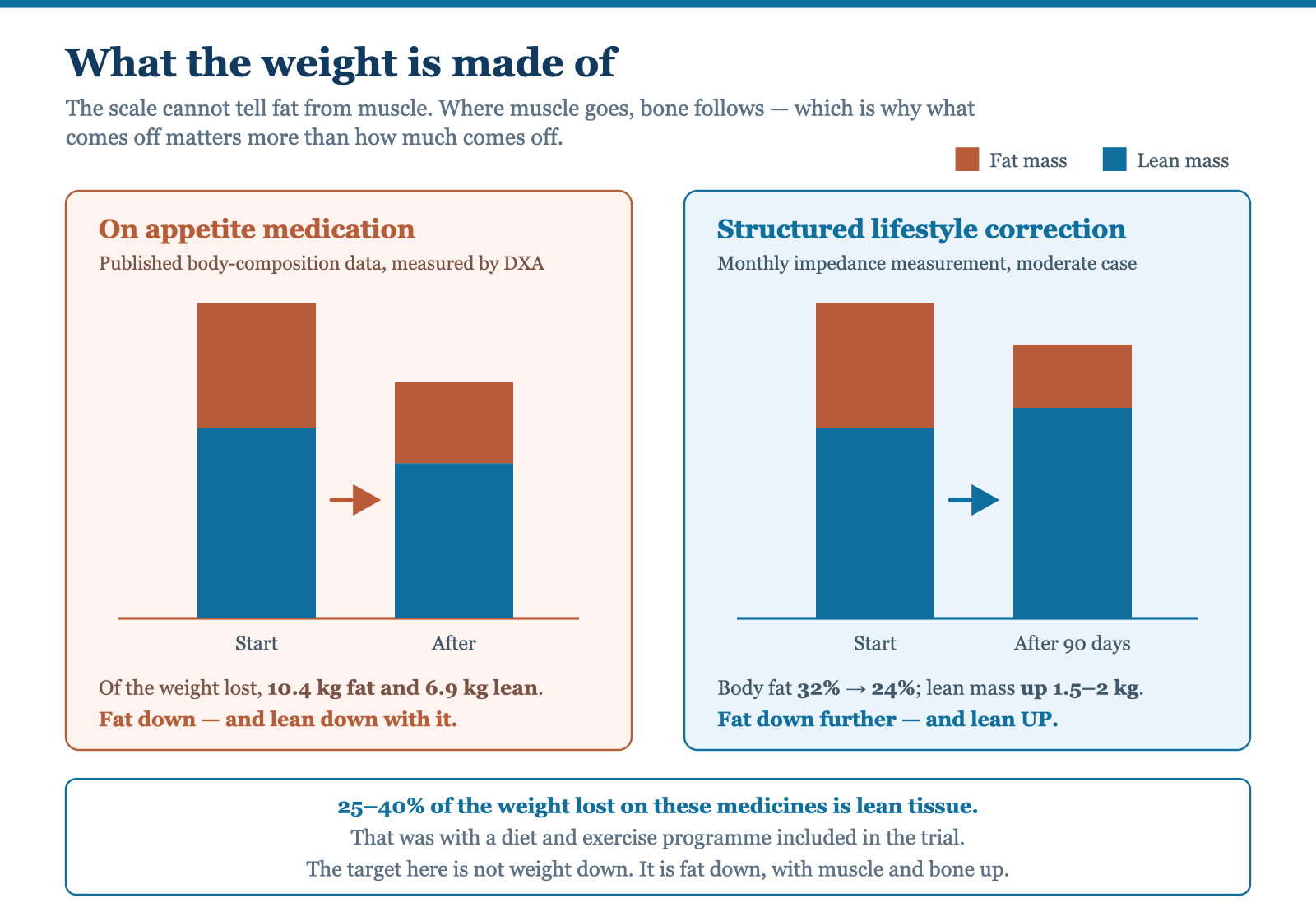
In this practice the figure looked at every month is the fat mass, not the number on the scale. In a moderate case, what is looked for across the active phase is body fat falling from around thirty-two per cent to around twenty-four, with lean mass rising by roughly one and a half to two kilograms. Those are two separate facts, and the second is the difficult one. It is also the one that matters: it means the fat lost was more than the total weight lost, because muscle was being added while fat was being removed. The published drug figures cannot say that.
The instrument used is bioelectrical impedance, monthly, on the same machine in the same way. It is not as exact as a DXA scan in absolute terms, and that should be said rather than glossed over. For following which direction a person is moving month to month it is very good, it costs almost nothing, and it involves no radiation. A monthly DXA is a research instrument — it is in those trials because a journal required it, not because it changes what is done for the patient. Impedance measurement is not used in pregnancy, or in anyone with a pacemaker or other implanted electronic device.
Food is handled on the same principle. What is reduced is calories, carbohydrate, saturated fat and non-essential fat — while ensuring the full range of nutrition is present. Restriction without nutrition is what costs people their muscle.
Craving is a symptom, and symptoms have causes
If a medicine is needed because the craving cannot be held, it is worth asking first why the craving is there. In this practice four causes come up repeatedly, and three of them are correctable without any appetite medicine at all.
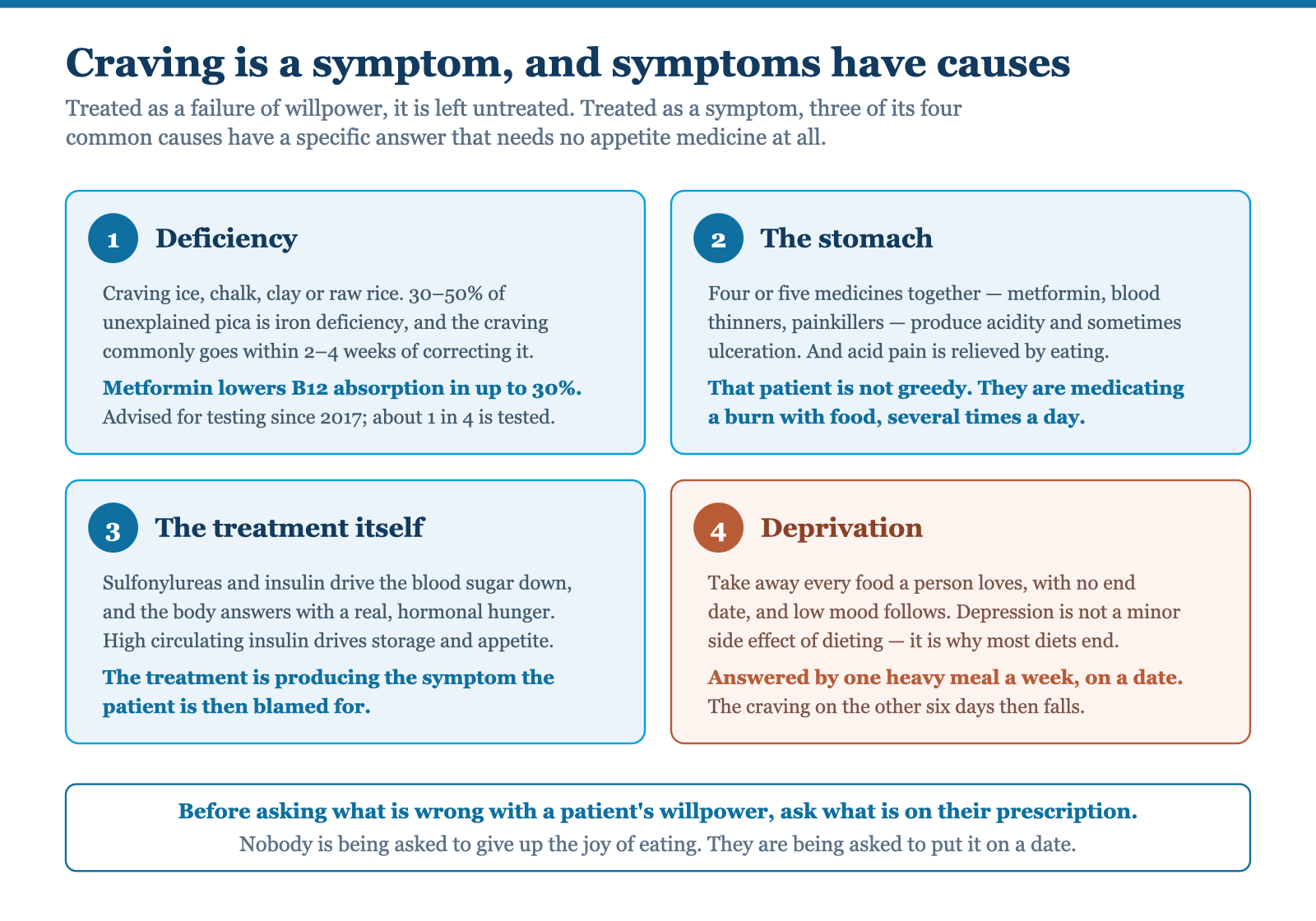
One — deficiency. Pica, the craving for ice, chalk, clay or raw rice, is the visible version: thirty to fifty per cent of unexplained pica turns out to be iron-deficiency anaemia, and the craving commonly resolves within two to four weeks of correcting the iron. The one that belongs specifically to this audience is vitamin B12. Metformin reduces B12 absorption in up to thirty per cent of long-term users. The American Diabetes Association has advised testing for it since 2017. Roughly one patient in four is ever tested.
Two — the stomach. Four or five medicines taken together — metformin, blood thinners, painkillers — produce acidity and sometimes ulceration. Acid pain is relieved by eating. That patient is not greedy; they are medicating a burn with food, several times a day, and generally nobody has explained to them that this is what they are doing.
Three — the treatment itself. Sulfonylureas and insulin drive blood sugar down, and the body answers with a real, hormonal hunger. High circulating insulin drives both storage and appetite. The treatment is producing the symptom the patient is then blamed for.
Four — deprivation, which is the subject of the next section.
So before asking what is wrong with a patient’s willpower, the more useful question is what is on their prescription. That is one of the reasons medication is brought down as early as symptoms and repeat tests allow — doctor-led, on markers, and never by the patient alone.
What follows from correcting those causes is a clinical observation rather than a trial finding, and should be read as such. When the nutrition is corrected properly — the actual deficiencies, not a general diet — the craving settles in most patients within a few weeks. And then they lose interest in starting the injection. They do not refuse it. They stop needing it.
The day in the week to look forward to
Patients on this programme are asked to eat one heavy meal a week — a real one, the food they like. It is not a lapse that is tolerated. It is a designed part of the treatment, for four reasons.
- Metabolic. Week after week of low intake and the body reads it as scarcity and settles into a conserving mode. One heavy meal tells the system that food is not short.
- Psychological. Take away every food a person loves, with no end date, and low mood follows. Depression is not a minor side effect of dieting. It is why most diets end.
- Social. A wedding, a birthday, festivals like Onam, Christmas, Diwali, Eid al-Fitr. A programme that makes someone sit apart from their own family will not last, and it should not.
- And the one that bears on everything above: when there is a day to look forward to, the craving on the other six days falls.
Nobody is being asked to give up the joy of eating. They are being asked to put it on a date.
Around that one meal, medicines are sometimes used — and it is worth being exact about what is being described, because this is prescription medicine, chosen for one patient after assessment and under supervision. It is not a recipe and nothing here should be assembled at home. The fat in that meal can be handled with orlistat, which is not an appetite drug at all but an enzyme blocker, and for a single meal is exactly the right tool. The starch and the sugar rise can be softened with voglibose. In a patient who is diabetic or pre-diabetic — and only there — a low-dose SGLT2 inhibitor moves glucose out through the urine; that one is not for everybody, and someone with normal sugars neither needs it nor should have it.
Because the exposure is once a week rather than every day, side effects and dependence are minimal — which is the whole difference between a medicine used at a moment and a medicine used for life. One practical detail is worth giving away: orlistat reduces the absorption of vitamins A, D, E and K. On that day the supplement moves at least two hours away from it. The meal does not move; the supplement does.
Where these medicines sit in this programme
The policy is straightforward, and it is not the one people expect.
A patient who arrives already taking one of these injections is asked to continue it — particularly if they are morbidly obese. Take it away and the craving returns immediately, and then the patient cannot follow the programme at all. That helps nobody.
A patient who is not taking one may be offered it. If someone says the craving is more than they can hold, that is a real clinical problem, and it does not deserve to be answered with encouragement. For a morbidly obese patient with uncontrolled craving, the beginning is genuinely easier with an appetite suppressant. The absorption blockers and the glucose excretors are used occasionally rather than daily, as described above.
The logic in one line: the medicine buys compliance; the correction decides what the weight is made of and what is still there afterwards. Scaffolding, not the building — and scaffolding comes down when the building stands.
The aim, stated plainly, is the least medicine possible and no surgery.
Comparing at ninety days — and why that comparison flatters us
There is no trial that has put this programme head to head against these injections. Not one. What follows is published trial data and this practice’s own clinical results, and those are not the same kind of evidence. That has to be said before any numbers are given.
Their headline figures are roughly fifteen per cent for semaglutide, twenty-one for tirzepatide and eleven to twelve for the tablet — over sixty-eight to seventy-two weeks. The active phase here is ninety days, so ninety days is the window where a like-for-like comparison is even possible.
At ninety days, nobody is on the dose those headlines were earned at. Semaglutide reaches 2.4 mg only at week sixteen; tirzepatide reaches 15 mg only at week twenty. In real-world data from a cohort of 2,306 patients, the figures at three months look like this:
| Real-world cohort (N = 2,306) | 3 months | 6 months | 12 months |
|---|---|---|---|
| Whole cohort | 5.5% (IQR 3.0–8.0) | 9.4% | 14.4% |
| Semaglutide (n = 1,614) | 5.7% | 9.8% | 15.6% |
| Tirzepatide (n = 117) | 7.1% | 11.9% | 14.1% |
The industry’s own definition of a working response at ninety days is set at the same level. The labels instruct the prescriber to stop or escalate if the patient has not lost three per cent by twelve weeks on one agent, five per cent on another, four per cent by sixteen weeks on a third. Three to five per cent at ninety days is the regulatory bar.
Across this programme, what is looked for in ninety days is between ten and twenty per cent of body weight, and five to ten per cent in the first month alone. Patients are told the scale in those terms: twenty per cent in ninety days is a distinction, fifteen is a first class, ten is a pass, and below ten is not a pass. In practice almost nobody finishes below ten, and most land between fifteen and twenty.
That range is a range for a reason. The percentage depends on how much fat there was to lose — the heavier the patient, the larger the number, which is exactly what would be expected if fat is the target, and not what would be expected if people were simply being starved.
And the comparison has to be handled honestly, because a ninety-day window flatters this side of it. Their curve is still climbing at day ninety; this one is finishing. Wait a year and their number is larger. So the claim is not that ninety days beats them. The claim is that at ninety days the two are in a similar range — and that the questions worth asking are what the weight was made of, and what is still true at month twelve.
Afterwards — both approaches have an “after”
Both companies published what happens on stopping, and both published honestly.
With semaglutide, about two-thirds of the lost weight returns within a year of stopping, and the improvements in sugar, blood pressure and lipids revert with it: 17.3% down at the end of treatment, and 5.6% down a year after it ended.
The tirzepatide trial was built the other way round. Everyone took the drug for thirty-six weeks and lost an average of 20.9%; only then were they divided, half continuing and half switched to a placebo. Over the following fifty-two weeks those who stopped regained 14.0%, while those who continued lost a further 5.5%. At the end, 89.5% of those who continued were still holding at least 80% of what they had lost, against 16.6% of those who stopped. Both groups were nevertheless still lighter than when they began — 25.3% and 9.9% below their starting weight respectively — so what the trial shows is substantial regain, not a return to the starting point.
That is not a failure of the drug. It is the drug telling the truth about itself: it is a treatment, not a cure, and blood-pressure tablets behave the same way without anyone calling it a scandal. But somebody has to answer the question of what the plan is for year three. If the answer is “stay on it indefinitely”, that is a legitimate answer — the family should simply be told at the start rather than discover it at the end.
The same question deserves the same honesty in the other direction. The ninety days are the active phase, not the finish; the real endpoint, symptom-free and moving freely, is three to six months. And the benefit lasts as long as the practice does. If a patient stops practising, the biology shifts back and the symptoms return. That is as true in diabetes and blood pressure as in anything else. No permanent result is being sold on the strength of ninety days of anything.
When it does come back, it is not a moral failure. The triggers are ordinary life — family trouble, travel, stress, an infection, or simply a stretch where it could not be kept up. The biology reverts. The person has not failed. What is taught is to catch it early: a flare detected early, a short course of medicine for immediate relief, which is part of the treatment and not a defeat; and where the practice has lapsed for a long time, a restart of the supervised correction for three to six months, then maintenance, then tapering again.
So both approaches have an “after”. Weight-reduction medicine is a prescription that has to continue. CSLC-CAP is a lifestyle-correction methodology, and the practice has to continue. The difference is what a person is left holding — and what it costs them every month.
Where this does most, and where it does least
The ranking below is from clinical experience in this practice, not from trial data, and is offered in that spirit.
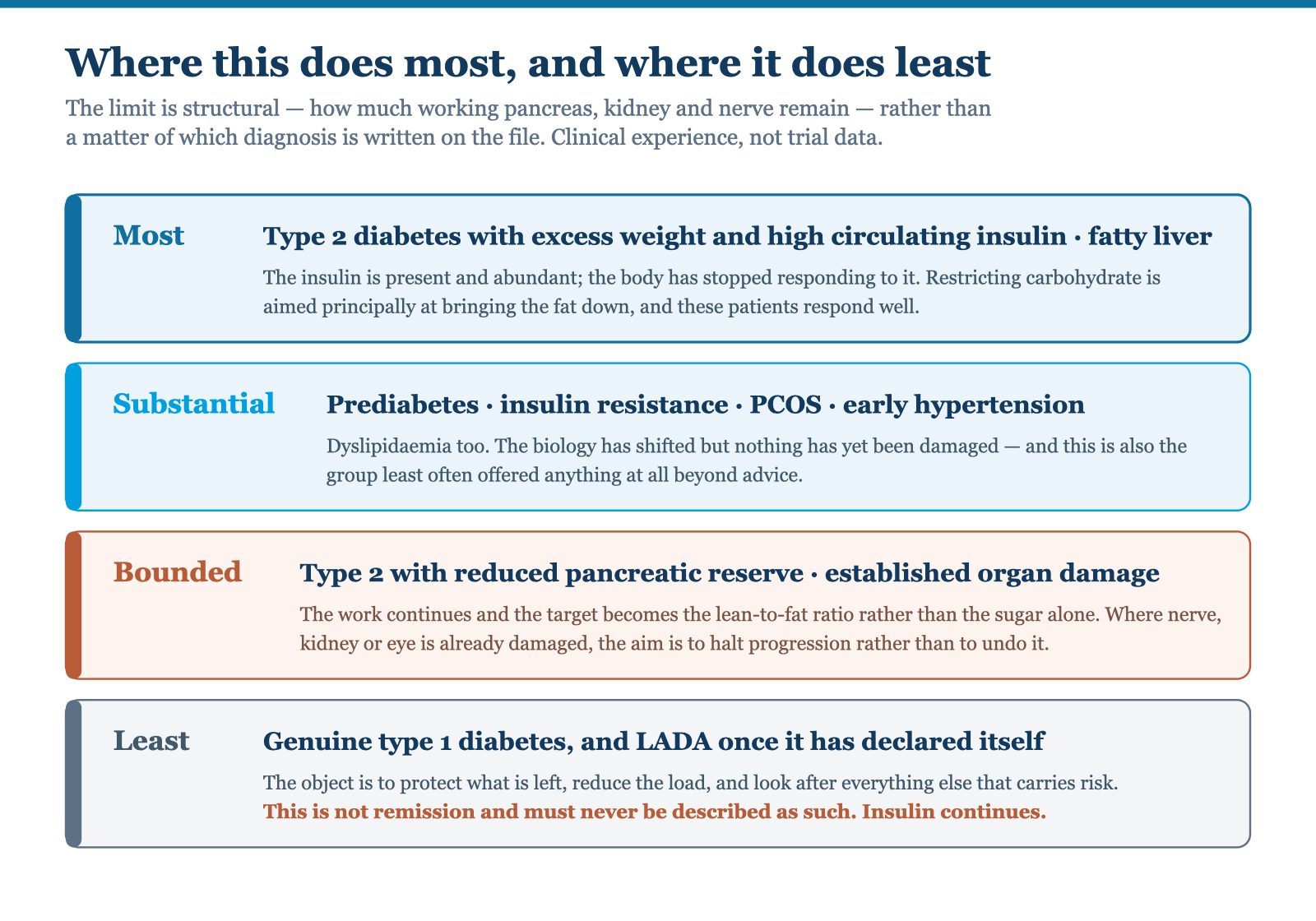
Most — type 2 diabetes with excess weight and high circulating insulin. Here the insulin is present and abundant; the problem is that the body has stopped responding to it. Restricting carbohydrate is aimed principally at bringing the fat down, and these patients respond well. Fatty liver sits alongside it, and is the comorbidity where correcting the metabolism comes closest to being the treatment itself.
Substantial — prediabetes, insulin resistance, polycystic ovary syndrome, early hypertension, dyslipidaemia. These are the conditions where the biology has shifted but nothing has yet been damaged, and they are also where patients are least often offered anything except advice.
Real, but bounded — type 2 with reduced pancreatic reserve. The work continues, the carbohydrate restriction continues, and the target becomes the lean-to-fat ratio rather than the sugar alone. In these patients the slow adult-onset autoimmune form should be ruled out before anything else is concluded.
Least — genuine type 1, and LADA once it has declared itself. Here the object is to protect what is left, to reduce the load, and to look after everything else that carries risk. It is not remission and should never be described as such. Insulin continues.
And in the conditions where something is already structurally damaged — established neuropathy, substantially scarred kidneys, an eye already treated for proliferative disease — the work is to halt progression rather than to reverse it. That is still worth doing.
Testing before treating
Three tests decide a great deal, and two of them are rarely ordered.
C-peptide measures how much insulin the pancreas is still making. Injected insulin contains no C-peptide, which is why the test still works after years of insulin treatment. It must be taken with a paired glucose sample at the same moment — a low C-peptide when the blood sugar is also low means nothing. And in kidney disease it reads falsely high, by two to five times, so a reassuring result in that setting may be reporting the kidney rather than the pancreas.
GAD antibody answers a different question: whether the process is autoimmune. This distinction matters, because in early autoimmune diabetes the C-peptide can still look perfectly acceptable. C-peptide does not diagnose LADA. The antibody does. The C-peptide tells you how much pancreas is left; the antibody tells you why it is going. They are two questions and both are needed.
Body composition, monthly — which is where the weight is actually coming from, and the subject of an earlier section.
Alongside those sit the ordinary tests that get overlooked in exactly this group of patients: B12, iron, vitamin D and thyroid function. Before a patient’s symptoms are attributed to diabetic neuropathy, it is worth knowing whether anyone has checked the B12 — given that metformin is a well-documented cause of that deficiency, and that the deficiency is itself an under-recognised cause of neuropathy.
There is a specific and important situation this testing addresses. A young person diagnosed at around eighteen, put on insulin four times a day, told they have type 1, and who has believed that for years — without anyone ever having measured whether the pancreas is still working. Where testing shows the C-peptide preserved, that patient can very often be managed as a type 2, through correction, without insulin and without the standard diabetic medicines. That is a repeated clinical observation in this practice.
Someone who genuinely has type 1 and stops insulin can die within days. Nothing above is a reason for anybody to reduce insulin. This is a blood test, ordered and read by a doctor who is examining the patient. If the C-peptide is low, the insulin stays.
Medication — how reduction actually happens
Nobody is asked to stop a medicine in order to start this. The sequence is the other way round, and it is the same in every condition this practice works with.
Relief comes first, from whatever is currently working — including, where it is already in use, the injection. Correction runs alongside it. Then, as symptoms settle and repeat testing confirms the change, the medicines come down: doctor-led, on the basis of markers, gradually, and never because the patient has decided or because they read something. In diabetes that reduction is watched particularly closely, because a dose that was right for an uncorrected body can become too much for a corrected one — which is a good problem, and a supervised one.
Whether to accept or decline a treatment is a decision for the patient and their family. Changing the dose of a prescribed medicine requires the doctor who prescribed it.
When several conditions improve together
Most people with type 2 diabetes are carrying something else with it, and the something else is usually treated by a different department.
What is repeatedly seen here is that when the underlying biology is corrected, the parallel conditions move at the same time — not as a pleasant side effect, but because they were sitting on the same foundation. Blood pressure settles. Triglycerides fall. Fatty liver improves. Knee pain that had been attributed to age improves as load and inflammation both come down. Sleep improves, which then improves the insulin resistance, which improves the sleep.
The corollary matters clinically. A patient who arrives about one problem should have the others looked at, because the pattern is rarely confined to one organ. Someone with eighteen years of diabetes who has never had their liver examined is a common presentation rather than an unusual one.
This is also where the drugs’ own strongest evidence should be acknowledged without argument. In someone who has had a stent and is carrying thirty extra kilograms, a twenty per cent reduction in major cardiac events is not something to argue with a cardiologist about.
The four optimization domains
| Domain | What it addresses |
|---|---|
| Optimal nutrition | Supplying the full range of nutrients the body needs in order to repair, including dietary fibre, in a nutrient-dense form with minimal additives. What is reduced is calories, carbohydrate, saturated fat and non-essential fat — with every nutrient still present, which is what protects lean tissue during weight loss. Identified deficiencies, B12 and iron in particular, are corrected specifically rather than generally. |
| Optimal exercise | Gentle, segmental movement performed lying down and then sitting, working through the body part by part in a set order, graded to what the person can manage. No gym or equipment is involved, so it remains possible with obesity, fatigue, neuropathy or poor stamina — the exact group who cannot use a conventional exercise prescription. It is structured to build muscle rather than merely to burn calories. |
| Rest and sleep | Recovery, without which repair and metabolic regulation do not function well however good the nutrition. Disturbed sleep and insulin resistance worsen one another, and obstructive sleep apnoea is common in this group of patients and frequently undiagnosed. |
| Reduced toxin load | Lowering avoidable exposure — alcohol and tobacco first, then additives and unnecessary chemical load. Alcohol is significant here for two reasons at once: its effect on the liver, and its contribution to both blood sugar instability and calorie load. |
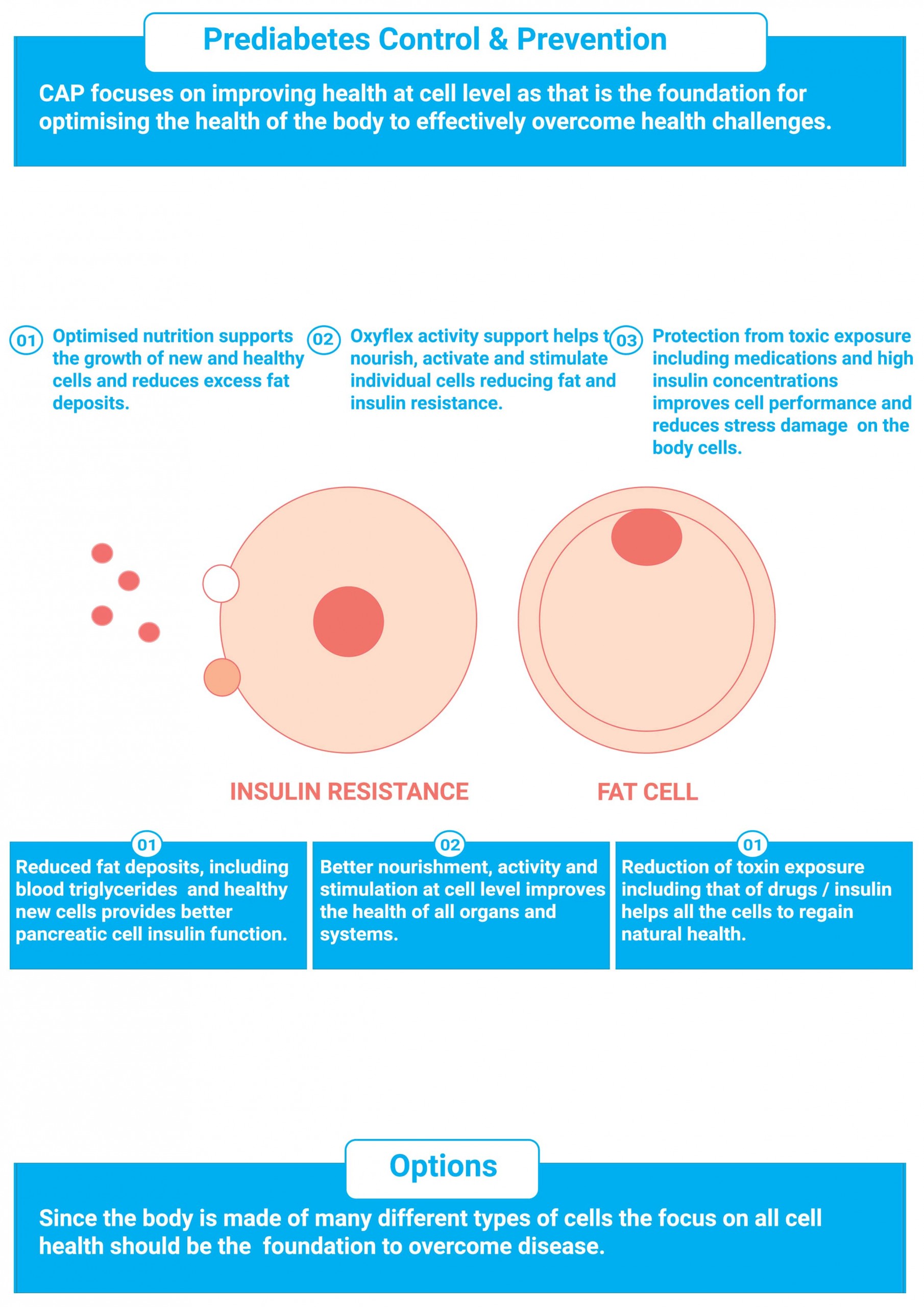
Delivered together and consistently, these same four domains are intended to create favourable conditions at cell level: better delivery of oxygen and nutrients into cells, and better clearance of waste out of them.
Watch the full sessions
The two live sessions below cover this subject in full — the Malayalam session broadcast on 22 August 2026, and the English session on 29 August 2026. The two foundation sessions explain the approach itself.
English — diabetes and the weight-loss injections (live, 29 August 2026):
Malayalam — diabetes and the weight-reduction injection (broadcast 22 August 2026):
English — the approach itself:
Malayalam — the approach itself:
Why the first 90 days matter
The active phase is ninety days because that is roughly the period over which a large proportion of the body’s cells are renewed, and over which corrected inputs show up in measurements rather than only in how someone feels. It is also, not coincidentally, the interval at which HbA1c becomes meaningful — that test reports the state of the previous three months, because it reflects glycated red cells being cleared and replaced.
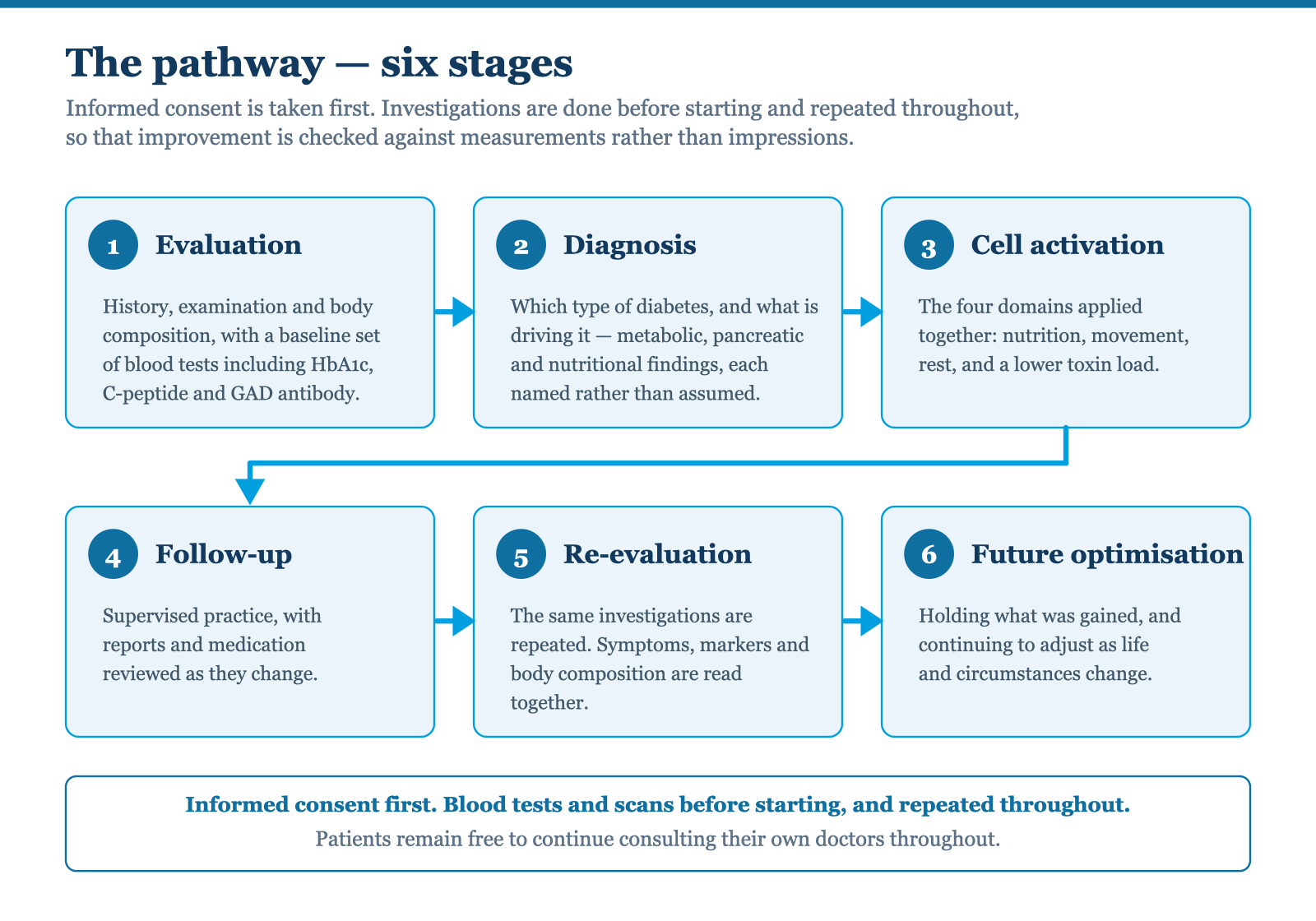
Full nutritional support runs through the first ninety days and then tapers over the following three months to a maintenance phase. Measurement is monthly throughout — body composition, and whichever blood markers the individual case requires. The purpose of measuring that often is not reassurance; it is that the medication reduction depends on it, and reducing medication on the basis of how somebody feels is not safe.
Suitability
To take part, a patient must be clinically stable, and fit mentally and physically — able to understand, learn and practise the routine, able to take at least a liquid diet along with the centre’s nutritional support, and able to do gentle exercise lying down and sitting. A patient should be able to walk in, with support if necessary. The first 90 days must be given real priority. Where physical or mental limitation prevents independent practice, a family member enrolls alongside — and in the more difficult cases, that family support is what decides the result.
It is not suitable where an organ has already failed — severely reduced kidney function, very poor cardiac function, a decompensated liver, or a degree of cognitive or psychological instability that makes learning the routine impossible. There has to be enough working body left to repair with. Anyone who is pregnant or planning a pregnancy should raise that first, since it changes both the assessment and what medication is appropriate: these weight-reduction medicines are not for use in pregnancy, and that is a conversation to have before conceiving rather than after.
It is also worth saying what happens when it does not work. Where a patient is not improving — most often because circumstances have made the protocol impossible to follow rather than because the biology has refused — the course is to continue under diabetes care. That care is theirs throughout in any case: patients remain free to keep consulting their own doctors, and are encouraged to.
Frequently asked questions
Should I stop my weight-loss injection to start this programme?
No. Patients who arrive already taking one are asked to continue it, particularly if they are morbidly obese — removing it brings the craving straight back and makes the programme impossible to follow. The correction is built around the medicine, and reduction of any medication is considered later, on repeat testing.
If the medicines work, why do I need lifestyle correction at all?
Because every one of these medicines is licensed as an addition to a reduced-calorie diet and increased physical activity — that is the manufacturer’s own indication, and every trial was run that way. The medicine determines how much a person eats. It does not determine what the weight coming off is made of, and published body-composition data show that twenty-five to forty per cent of it is lean tissue. It also does not determine what happens after it is stopped, when about two-thirds of the loss returns within a year.
How much weight loss is expected in ninety days?
Across this programme, between ten and twenty per cent of body weight in ninety days, and five to ten per cent in the first month alone. It is a range rather than a figure because it depends on how much fat there was to lose — the heavier the patient, the larger the percentage, which is what would be expected if fat is the target. Separately, in a moderate case, body fat is looked for falling from around thirty-two per cent to around twenty-four, with lean mass rising by one and a half to two kilograms. Those describe different patients and should not be added together.
Can diabetes be cured?
The accurate word is remission — normal blood glucose sustained without glucose-lowering medication — and it applies to type 2, not to type 1. Remission is not the same as the tendency having gone: it depends on how much pancreatic reserve remains, and it lasts as long as the practice does. Where reserve is genuinely low, the realistic aim is to protect what is left and reduce the load on it, which is worth doing and is not remission.
I am on insulin. Can I come off it?
It depends on what type of diabetes you have. If yours is type 2 diabetes — yes, you can come off it. If it is type 1 diabetes, then the insulin stays.
Nobody should reduce insulin on the strength of something they have read or watched.
Why measure body composition instead of just weighing?
Because the scale cannot tell the difference between losing fat and losing muscle, and the difference is what decides whether the weight loss was worth having. Muscle loss brings bone loss with it, which is the most likely reason fractures have been reported at four times the rate in patients over seventy-five on these medicines. The target here is not weight down but fat down with muscle and bone up, and only a body-composition measurement can show whether that is happening. It is done monthly by bioelectrical impedance — less exact than a DXA scan in absolute terms, but reliable for direction, inexpensive and repeatable. It is not used in pregnancy or with a pacemaker or other implanted electronic device.
What happens when the ninety days finish?
The ninety days are the active phase, not the finish; the real endpoint of symptom-free, free movement is three to six months. Nutritional support tapers over the three months that follow, into a maintenance phase with periodic review. The benefit lasts as long as the practice does — if it lapses, the biology shifts back. That is not a moral failure, and the triggers are ordinary: illness, travel, stress, family trouble. What is taught is to catch it early, take a short course of medicine for immediate relief if that is what is needed, and restart the supervised correction if the lapse has been a long one.
Related reading
- Age-Related Lifestyle Diseases: Reversing Insulin Resistance and Inflammation — insulin resistance and inflammaging, which is the mechanism underneath type 2 diabetes itself.
- Fatty Liver: Reversing Liver Fat and Fibrosis — the comorbidity that travels with type 2 diabetes most often, and where reports rather than symptoms lead the reduction of medicines.
- Arthritis: Reducing Medication and the Need for Surgery — the clearest account in this series of what “structural” means as a limit, and why weight loss alone does not settle a joint.
- Autoimmune Diseases: Reversing Autoimmune Inflammation — the immune mechanism behind type 1 and LADA, and what “reversal” means where a tendency is inherited.
- Cancer: Health Optimization Alongside Oncology Care — relevant to the raised cancer risk that long-standing obesity and diabetes carry.
- CSLC-CAP — approach summary and information sheet — consent, investigations, the pathway and eligibility in one place.
Important note
⚠️ IMPORTANT: This article is educational and is not medical advice. Do not start, stop or change any medication — least of all insulin — without your treating doctor’s supervision.
The clinical observations described here are from this practice, reported as clinical experience rather than as a trial; no trial has compared this programme with these medicines. The published trial figures quoted are the manufacturers’ own. Individual results depend on how closely the protocol is followed and on how much capacity the body still has to repair. Whether to accept or decline any treatment is a decision for the patient and their family. Use this article to ask better questions of your own doctors, and to decide together.