Autoimmune Diseases: Reversing Autoimmune Inflammation — Health Optimization in Kochi with CSLC-CAP
Autoimmune Diseases: Reversing Autoimmune Inflammation — Health Optimization in Kochi with CSLC-CAP
- Binoy
- अगस्त 06, 2026
- 0 Comments
An autoimmune condition can make the body feel like an adversary. It is a reasonable feeling and a mistaken one. The immune system is not an enemy — it is the body’s own repair and defence system, operating in conditions that have gradually turned against it.
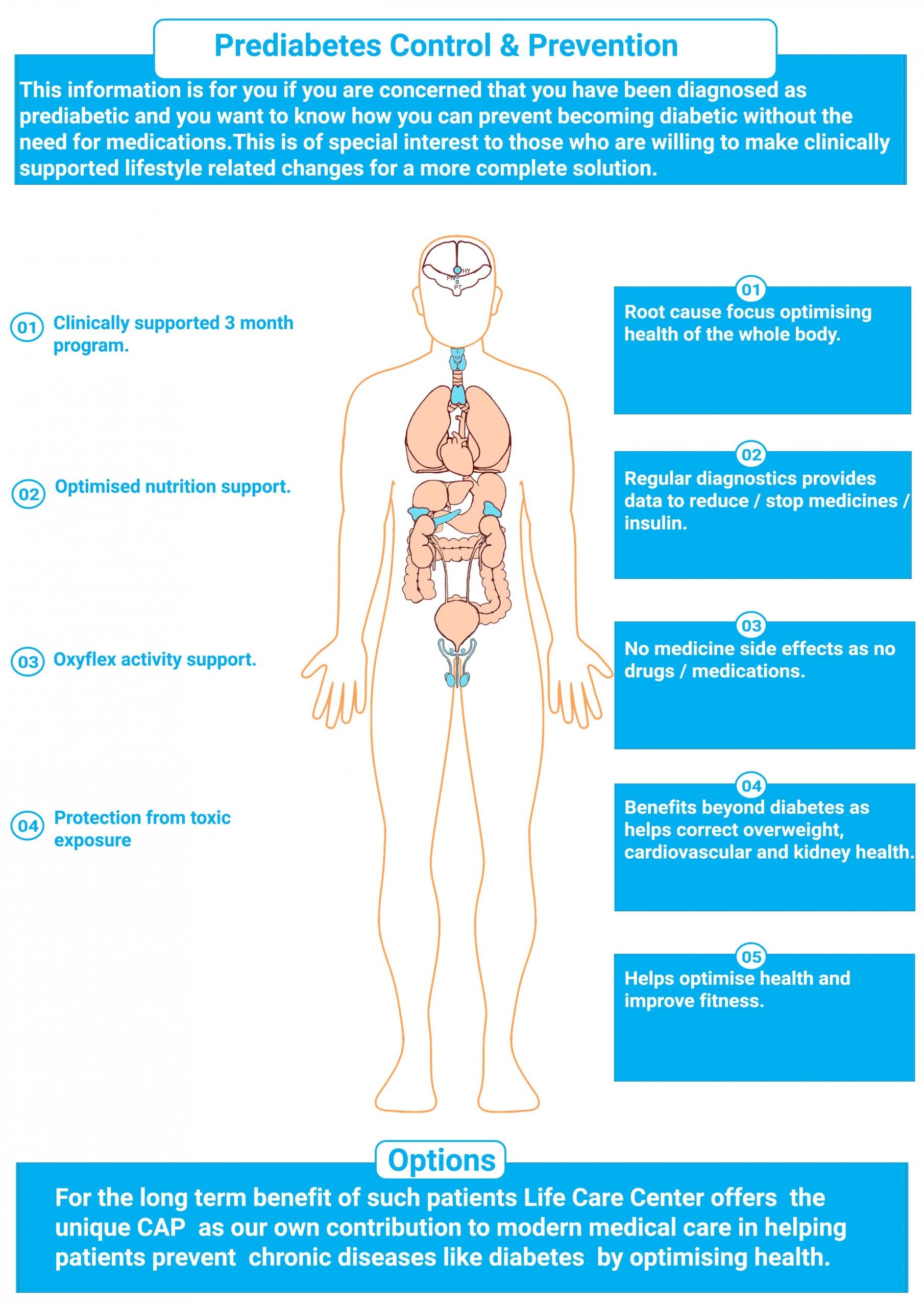
CSLC-CAP is a methodology and treatment for health optimization — a clinically supervised lifestyle-correction approach that works on root causes, delivered at Life Care Centre, Kochi, under modern-medicine doctors. Its purpose is to improve quality of life and to reduce the need for medication and surgical intervention. It rests on a simple proposition: when the body is given optimal nutrition, appropriate stimulation, genuine rest and a lower toxin load, its own systems have the best available conditions in which to correct their biology and repair at the cellular level.
What “reversal” means here — and what it does not
When a long-term inflammatory condition becomes quiet — symptoms settle, inflammatory and disease-activity markers fall on repeat testing, and medication can often be reduced under supervision — the established clinical term is remission. It is a defined, measurable state, used daily in rheumatology.
The everyday word reversal describes the same thing in plainer language: the direction of the disease process turns around. Used on this page it means precisely that and nothing more — a measured, documented reduction in inflammation and disease activity.
What reversal means: symptoms improve and daily function improves; inflammatory and activity measures fall on repeat testing — CRP, ESR, faecal calprotectin, and composite activity scores; the requirement for medication may reduce, gradually, doctor-supervised and test-guided.
What reversal does not mean: it is not a cure. The underlying immune tendency remains, and autoantibodies and genetic predisposition generally persist. Damage already established — joint erosion, organ scarring — is not undone by any intervention, lifestyle or medical. And it does not mean the condition cannot become active again. It can.
Outcomes also differ widely. “Autoimmune disease” covers more than eighty distinct conditions; what is achievable depends on the specific diagnosis, how long it has been present, and how much organ damage has already occurred.
What an autoimmune disease is
In an autoimmune disease the immune system — built to defend against infection — misidentifies healthy tissue as a threat and attacks it. Depending on the tissue involved this appears as painful joints, skin changes, thyroid disturbance, digestive problems, fatigue, or many other patterns.
Common examples include rheumatoid arthritis, Hashimoto’s thyroiditis, vitiligo and systemic lupus erythematosus. Related immune-mediated inflammatory conditions such as psoriasis and inflammatory bowel disease are often discussed alongside them. Allergic conditions are a separate category: they are immune-mediated hypersensitivity reactions to external triggers rather than an attack on the body’s own tissue. Autoimmune conditions are chronic and fluctuating, with quiet periods and active periods.
Why the immune system turns against the body
There is rarely a single cause. Current understanding points to a combination of genetic susceptibility, environmental triggers, chronic stress, disturbed sleep, gut-microbiome shifts, nutritional imbalance and a background of persistent low-grade inflammation. Over time these factors can leave the immune system derailed and misdirected by an environment it was never designed for — reacting when it should not, and losing tolerance for the body’s own tissue. Improving that environment is therefore a rational target: it restores the conditions in which immune regulation can re-establish itself.
Health care and medical care
Medical care begins once disease has appeared. It diagnoses, controls flares and, where necessary, suppresses an overactive immune response with medication. This work is essential and CSLC-CAP does not displace it. But its target is the disease itself, not the terrain in which the disease develops.
Health care works upstream, on that terrain — nutrition, activity, rest and a low-toxin, low-inflammation environment — so that the immune, metabolic and hormonal systems have sound general conditions in which to function.
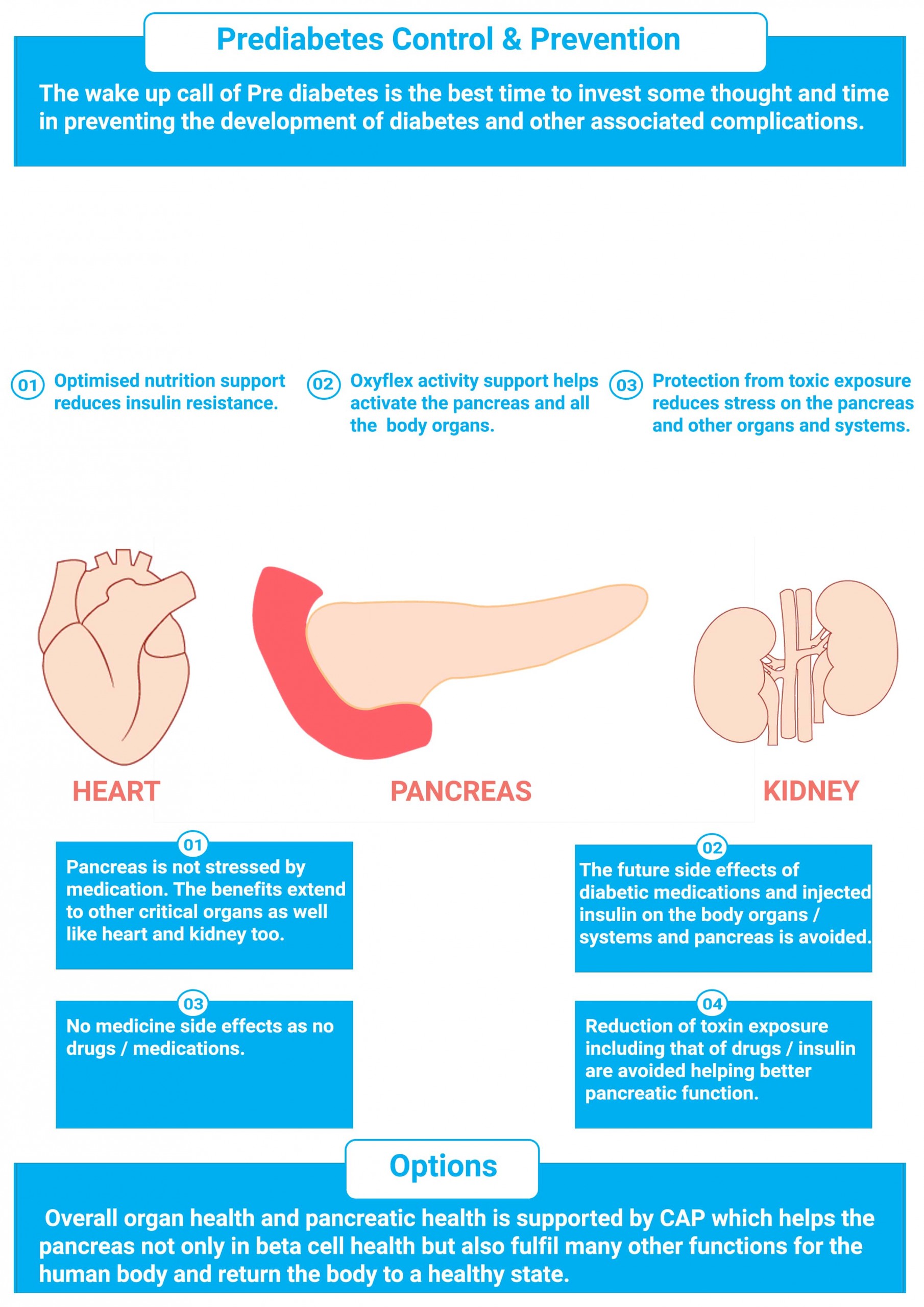
CSLC-CAP is health care delivered under modern-medicine supervision. The aim is optimization of biology rather than suppression of disease alone. In practice the sequence is straightforward: existing prescribed medicines continue unchanged at the outset; as symptomatic relief appears and inflammatory markers improve on repeat testing, doctors may consider reducing medicines one at a time, always supervised and always guided by test results.
| Aspect | Medical care | Health care (CSLC-CAP) |
| Primary aim | Diagnose and control disease and flares | Optimize underlying biology so systems have good conditions for balance |
| Main tools | Medication, procedures, specialist management | Optimal nutrition, activity, rest, a low-toxin environment |
| Focus | The disease | The terrain the disease develops in |
| Timing | Once disease has appeared | Upstream and ongoing, guided by repeat testing |
| Supervision | Modern-medicine doctors | Modern-medicine doctors |
Inflammaging: why inflammation and ageing share a lever
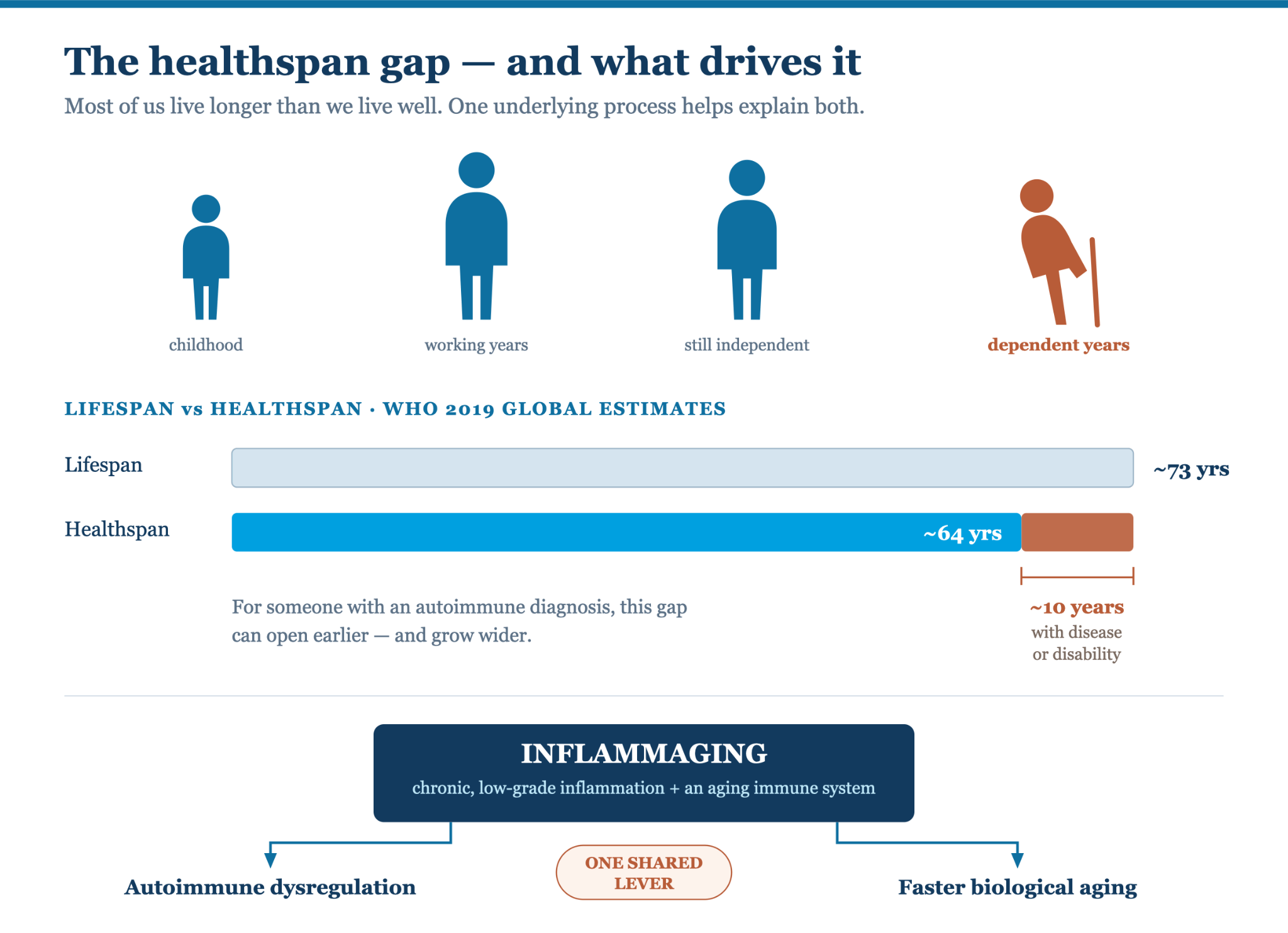
Inflammaging is chronic, low-grade inflammation that accumulates with age and which, alongside an aging immune system (immunosenescence), can push immune regulation toward mis-calibration. It links two processes long studied separately: autoimmunity and biological aging.
Research associates inflammaging with persistent activation of the innate immune system, the senescence-associated secretory phenotype released by ageing cells, metabolic dysregulation, and shifts in the gut microbiome. Age-related changes in immune-cell populations may contribute to a gradual loss of self-tolerance.
The implication is striking. The same inflammatory load that pushes an immune system toward over-reactivity is also associated with faster biological aging. Lowering that load is therefore a single lever acting on both — which is what the four optimization domains are designed to influence.
Healthspan and lifespan
Healthspan is the number of years lived in good health; lifespan is simply the number of years lived. WHO 2019 estimates put global life expectancy at about 73 years and healthy life expectancy at about 64 — roughly a decade spent living with disease or disability. Where an autoimmune condition is present, that gap tends to open earlier and widen. The objective is not merely more years, but more healthy years.
CSLC-CAP: the four optimization domains
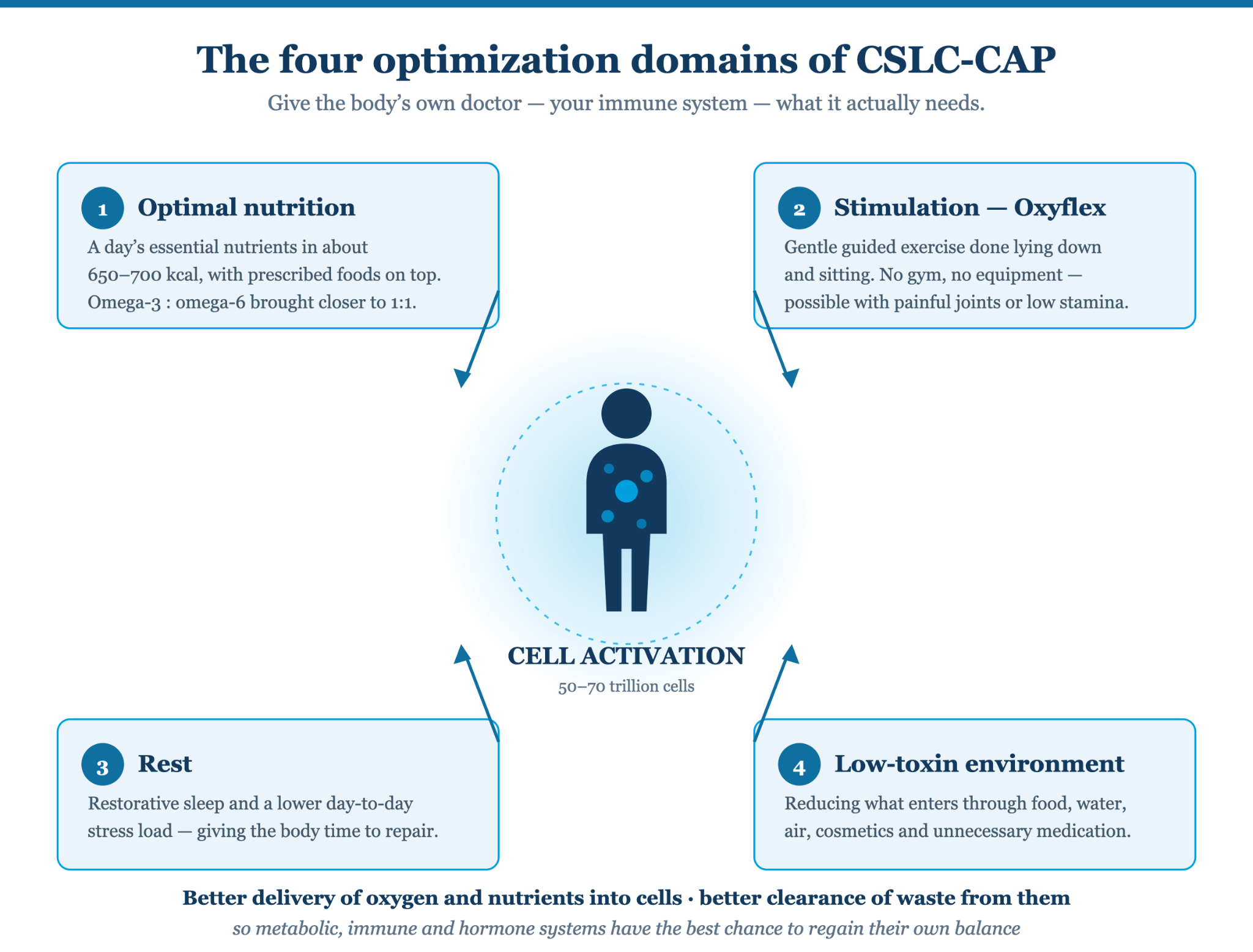
CSLC-CAP — Clinically Supported Lifestyle Correction with Cell Activation Protocol — is a structured, doctor-supervised out-patient methodology. It works on four everyday inputs.
| Domain | Principle | Rationale |
| Optimal nutrition | Nutrient-dense rather than calorie-dense intake, structured so that the day’s essential nutrients — vitamins, minerals, amino acids, essential fatty acids and dietary fibre — are reliably supplied, with foods planned individually alongside. Additive load is deliberately minimised. | Cells cannot repair or replace themselves without adequate raw material. The plan also works to bring the omega-3 to omega-6 balance considerably closer together. |
| Optimal stimulation — Oxyflex | Structured, segmental, systematic physical and mental stimulation performed lying down and sitting. | To provide stimulation to the whole body at cellular level and support circulation, metabolism and immune regulation. |
| Rest | Restorative sleep, recovery, and a lower day-to-day stress load. | Repair is largely a resting-state process; sleep and reduced stress are associated with lower inflammation. |
Oxyflex is a set of gentle guided exercises done at home — lying on the bed and then sitting up, working through the body one part at a time in a set order, following a simple chart. No gym and no equipment are involved, so it remains possible for someone with painful joints, stiffness or limited stamina. The intention is to support circulation and the delivery of oxygen and nutrients to the tissues.
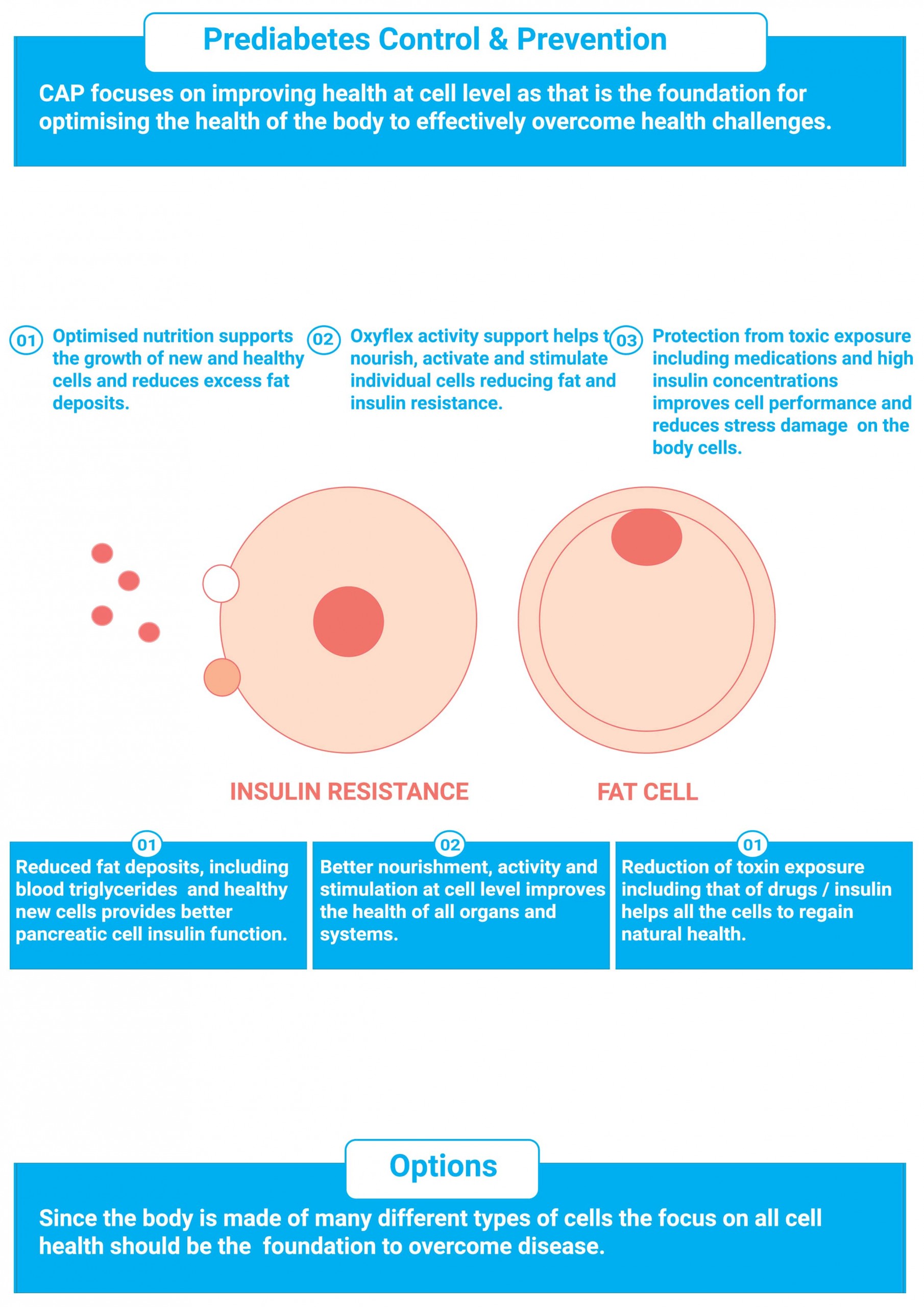
Delivered consistently, these four inputs create favourable conditions at the cellular level — the state the protocol refers to as cell activation: better delivery of oxygen and nutrients into cells, and better clearance of waste from them.
Background — the foundation video for the channel: a fourteen-minute introduction to the reasoning behind these four domains, the role of the immune system, the omega-3 to omega-6 balance, and what is meant by a toxin.
Why the first 90 days matter: the body is replacing itself
The first ninety days are treated as the active phase for a biological reason. The body is not a fixed structure; it continuously dismantles and rebuilds itself, and several of the cell populations most involved in inflammatory disease are among the fastest to turn over.
Most white blood cells live less than a week. The immune cells driving inflammation, and the cells lining the airways and digestive tract, are largely replaced within one to two weeks. Cell by cell, the body of three months from now is substantially not the body of today.
That is the opportunity. Where optimal nutrition, appropriate stimulation, genuine rest and a lower toxin load are present during that rebuilding, a large proportion of the damaged cells being cleared are replaced by healthier ones. Based on the lifespan of these cell populations, the working estimate is that around 80–90% of the fast-renewing damaged cells may be replaced within roughly 90 days.
This also explains why relief often arrives sooner than expected. Symptoms ease, and inflammatory markers fall on repeat testing, well before a slow pharmacological effect would be anticipated — because what is happening is the replacement of the cells that were generating the inflammation.
What the active phase involves
- One to two hours a day of Oxyflex through the initial 90 days, or until body composition is corrected. Once the lean-mass to fat-mass ratio is corrected, 30–45 minutes a day maintains it.
- Nutritional support at full strength during the active phase, then tapered gradually over the following three months into a maintenance phase with minimal support.
- Priority. Work, travel and the food environment at home need to be arranged so the daily schedule is genuinely followed and reviews are kept. Where travel, occupational load or family demands make that impossible, the protocol tends not to deliver — this is the commonest limiting factor.
By around three months many patients are able to reduce medication substantially, and some come off regular immunosuppressive medication — always gradually, always on the evidence of repeat testing. The approach then changes character: if a trigger arises, the aim is early detection of the flare and control with the minimum medication required, rather than continuous suppression.
The six-stage pathway
Every course begins with informed consent and a clear discussion of what the methodology involves. It then proceeds through six stages, anchored throughout in objective testing.
- 1. Evaluation — detailed history, baseline blood tests and scans.
- 2. Diagnosis — a clear picture of the conditions present and their markers.
- 3. Cell Activation — the individualised optimization plan across the four domains.
- 4. Follow-up — close, structured supervision.
- 5. Re-evaluation — repeat testing to track change objectively.
- 6. Future Optimisation — refinement for the long term, guided by results.
Where symptomatic relief occurs and reports show reduction in inflammatory and disease-activity markers, medication doses can be reduced or tapered under close medical supervision. Under particular circumstances — infection, significant physical or mental stress, or interruption of the protocol — specific guidance is given on recognising a flare early, and anti-inflammatory medication is restarted as and when required under medical guidance.
Nutrition, gut health and immune balance
Evidence associates certain patterns — Balanced nutrition, adequate omega-3 and vitamin D status, regular movement, sound sleep, reduced stress and a microbiome-supportive diet — with a lower inflammatory load. A large proportion of the immune system is situated in and around the gut, which is one reason nutrition and the microbiome recur throughout this approach. These findings provide the rational basis for the four domains.
Supervised, gradual reduction of medication
Anti-inflammatory and immunosuppressive medicines perform essential work: they control disease activity and prevent organ damage. Long-term corticosteroids and certain anti-inflammatory drugs, however, suppress broadly — dampening not only the inflammation that produces symptoms but also part of the body’s own repair and resolution response. The aim, here as in modern medicine generally, is therefore the lowest dose that keeps the condition properly controlled. No medicine should be reduced or stopped independently, and a steroid should never be stopped suddenly.
Where symptoms have settled and repeat testing shows measurable change, the supervising doctors may consider whether medication can be minimised — gradually, under medical supervision, guided by objective repeat testing. Consultation with a patient’s own family doctor or specialist continues freely throughout.
The thyroid conditions
Hashimoto’s thyroiditis. Thyroxine replaces a hormone the gland can no longer produce in sufficient quantity. Dose reduction, and in some cases tapering off, occurs commonly with CSLC-CAP — determined by test results rather than by symptoms: repeat TSH, free T4 and thyroid antibodies at set intervals, small steps, re-testing before each further change. This is a medical decision; thyroxine is never self-adjusted.
Graves’ disease. In clinically stable patients, tapering off anti-thyroid medication may also be possible, followed in the same way with regular thyroid function and antibody testing.
One clear exception. Where the thyroid has been surgically removed or treated with radioiodine, the gland is absent — thyroxine is then lifelong replacement for something the body cannot produce, and it continues. Nothing in this approach alters that.
If symptoms return
Autoimmune conditions run in cycles of active and quiet periods. Even after a long quiet spell, symptoms can return. This is a flare, and it is a normal feature of how these conditions behave.
Certain factors are known to make a flare more likely — infection, a stretch of poor sleep, major stress, and in some conditions sun exposure or hormonal change. Reduction of medication carries its own recognised risk of renewed activity; that risk belongs to the medicine being reduced, not to the person.
Flares also occur for no identifiable reason, in people following everything correctly. A flare is not evidence of failure. Indeed, being too fatigued or unwell to maintain the routine is frequently among the first signs of a flare rather than its cause.
This is why the maintenance phase exists — not as a condition to be earned, but as monitoring: continued periodic testing, scheduled review, and the four domains kept in place, so that renewed activity is identified early and treated small rather than late and large. Where a flare begins, prompt review and, where needed, a short course of medication are part of the plan rather than a sign that something has gone wrong.
Multiple conditions together
Autoimmune disease rarely travels alone. Most patients carry more than one diagnosis — an autoimmune condition alongside some combination of diabetes, raised blood pressure, heart disease, thyroid disorder, obesity or arthritis. Because the four domains act on biological factors shared across all of these, the same inputs are relevant to several conditions simultaneously. That is the argument for a whole-person approach where multiple diagnoses coexist.
Reducing medication is not the sole objective, and frequently not the principal one. The aim is improvement in underlying biology and metabolism. In most patients with an autoimmune condition other problems have accumulated alongside it — weight, blood sugar, blood pressure — and correcting these often contributes more to daily quality of life than anything else.
Conditions commonly seen
Joints and connective tissue — rheumatoid arthritis · psoriatic arthritis · ankylosing spondylitis and axial spondyloarthritis · systemic lupus erythematosus · Sjögren’s syndrome · scleroderma · vasculitis, once stabilised on medication
Skin — psoriasis · vitiligo · alopecia areata · lichen planus · eczema and allergic conditions, which are hypersensitivity rather than autoimmunity but share the same inflammatory drivers
Thyroid — Hashimoto’s thyroiditis · Graves’ disease
Digestive — inflammatory bowel disease (Crohn’s disease, ulcerative colitis) · coeliac disease
Kidney — IgA nephropathy · nephrotic syndrome
Frequently accompanying — obesity, type 2 diabetes, raised blood pressure, fatty liver and metabolic syndrome. These respond particularly well where the protocol is followed, and improvement in them raises overall quality of life considerably.
Suitability
Not everyone is suitable. Suitability is determined by the centre’s doctors after review of records, examination, and a full set of tests.
The methodology is suitable where the patient is clinically stable and ambulant, not in acute crisis or active flare; can take part in gentle guided exercise performed lying down and sitting, without needing to be fit or athletic; is able to understand, learn and practise what is involved; can tolerate at least a liquid diet and take the nutritional support provided; and can give the first 90 days genuine priority.
A family member enrolls alongside where physical or mental limitation makes the routine difficult to follow independently, and where the patient is under 18, in which case at least one parent participates throughout. Children under 10 are not usually taken.
Assessed individually: kidney disease — at CKD stage 4 or earlier there is no contraindication, the aim being to prevent or delay progression; at stage 5, where the patient is not yet on dialysis and creatinine is under 5 mg/dL, the methodology can be undertaken as a supportive measure to slow progression, improve quality of life and delay the need for dialysis or transplant. Also assessed individually: vasculitis once stabilised on medication; and pregnancy, eating disorder, active cancer treatment or transplant, which are relative rather than absolute considerations.
Not commenced: where psychiatric illness is unstable. The methodology depends on understanding and daily practice, and that requires attention first.
The protocol may be discontinued on any day. Where it is discontinued, consultation with the previous doctor and continuation of conventional treatment is the appropriate course. Where clinical relief is not occurring, that is stated plainly and the patient is referred back.
Where this is available
CSLC-CAP is delivered on an out-patient basis at Dr Jolly Thomson’s Life Care Centre, Maliekal Road, Thevara, Kochi, Ernakulam district, Kerala. Patients attend from across Kerala, from other Indian states and from outside India, so the structure is built around scheduled review visits rather than admission. Informed consent and a detailed set of blood tests and scans precede commencement; abnormal tests are repeated throughout, so progress is assessed on reports alongside symptomatic change. Consultation is available in English and Malayalam, and every stage is supervised by modern-medicine doctors.
Initial consultation is available by telemedicine or as a direct out-patient visit; for patients outside Kerala a telemedicine consultation with current medical records is the usual starting point. Where the methodology is commenced, evaluation and investigation take place at the centre, with a minimum of three visits one week apart, each occupying a day. Patients travelling from a distance generally arrange to stay nearby for at least two weeks, extending to four and in some cases twelve, according to their condition. Follow-up continues as telemedicine support and scheduled visits, provided by the centre’s doctors and the CAP Care Team — a consultant doctor, a CAP counsellor, a CAP trainer and a pharmacist — through the initial 90 days and beyond as required.
Life Care Centre, Maliekal Road, Thevara, Kochi 682013 · +91 484 2881860 / +91 94959 89534
Frequently asked questions
Can an autoimmune disease be reversed with lifestyle correction?
Autoimmune conditions are long-term conditions and no cure can be promised. What lifestyle correction addresses is more specific: relief from symptoms, and measurable reduction in the inflammatory and disease-activity markers that track the condition. Some patients see clear improvement. Outcomes differ between individuals and depend on the diagnosis, its duration, existing organ damage, how fully the principles are followed, and the body’s remaining capacity to repair.
Is CSLC-CAP a cure?
No. It is a doctor-supervised methodology for health optimization, working on root causes. Where this article uses the word “reversal” it means a measured, sustained reduction in inflammation and disease activity — remission, not cure. The underlying tendency remains, and symptoms can return.
Does medication have to be stopped?
No. Existing medicines continue at the outset. Where symptoms settle and repeat testing shows improvement, doctors may consider reducing the dose step by step — gradually, under medical supervision, guided by reports. No medicine should be reduced or stopped independently, and a steroid should never be stopped suddenly.
Is this available for patients outside Kerala?
Yes. A telemedicine consultation with current medical records is the usual starting point. Where the methodology is commenced, evaluation and investigation take place in Kochi — a minimum of three visits, one week apart. Patients from outside Kerala generally stay nearby for about two weeks, sometimes four and in some cases twelve, according to the condition. Consultation thereafter continues by telemedicine.
What is Oxyflex?
A set of gentle guided exercises performed at home, lying on the bed and then sitting up, working through the body one part at a time in a set order, following a simple chart. No gym or equipment is involved, so it remains possible for someone with painful joints, stiffness or limited stamina.
Important note
This article is provided for general education and awareness. It does not constitute medical advice, diagnosis or treatment, and it is not a substitute for consultation with a doctor. Individual outcomes vary.
Dr Jolly Thomson, MBBS, MD — Life Care Centre, Thevara, Kochi. Last reviewed: August 2026.
Youtube Live
Live Topic
“Autoimmune Diseases: Why Does the Body Attack Itself? How Can an Overactive Immune System Be Calmed?“
Presented by
Dr. Jolly Thomson’s Life Care Centre